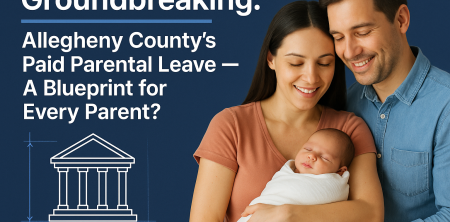
When you welcome a new baby, or bring an adopted child home, or even face the unimaginable grief of a stillbirth, the last thing you should be worrying about is how to pay the bills. Yet, for far too long in the United States, that's been the brutal reality for millions of new parents. We've watched as other industrialized nations offer robust parental leave policies, while our own federal government has lagged behind, leaving families to scramble. But here in Pennsylvania, specifically Allegheny County, something truly groundbreaking happened that could change the game for parents across the nation. On October 20-22, 2026, Allegheny County, home to the vibrant city of Pittsburgh, didn't just pass a new policy; it made history by becoming the very first county in the entire U.S. to mandate paid parental leave for its workers. This isn't just a local ordinance; it's a powerful statement and a potential blueprint for the rest of us. Let's really dig into the immense benefits of paid parental leave in Pennsylvania, using Allegheny County as our prime example.
A Historic First: Allegheny County Leads the Way
The significance of Allegheny County's move cannot be overstated. In an absence of a federal paid leave law, individual states and, even more rarely, local municipalities have had to step up. What Allegheny County did was take a massive leap forward, setting a precedent that many hope will ripple outwards. Championed by County Executive Sara Innamorato, this isn't some small, token gesture. We're talking about a policy that requires businesses employing 15 or more individuals to provide a substantial 12 weeks of fully paid leave. This isn't just for birth parents either; it explicitly includes those who choose to adopt, recognizing that the need for bonding and adjustment is universal regardless of how a child joins the family. Crucially, it also extends to parents who experience the profound tragedy of a stillbirth, offering them essential time to grieve and heal without the added burden of financial insecurity. This holistic approach to parental leave is genuinely commendable and speaks volumes about the county's commitment to supporting its families.
Think about that for a moment: 12 weeks. Fully paid. For businesses with 15 or more employees. This isn't just about Allegheny County; it's about demonstrating that such a policy is not only feasible but profoundly beneficial. It throws down the gauntlet, challenging other regions and even the federal government to consider why they haven't adopted similar measures. This policy isn't just about economic fairness; it's about recognizing the fundamental human need for connection, care, and recovery during one of life's most transformative periods. It acknowledges that the early days of a child's life, or the immediate aftermath of a profound loss, are not moments when financial strain should dictate a parent's ability to be present.
The Immediate Financial Security for New Parents
Perhaps the most obvious and immediate benefit of paid parental leave in Pennsylvania, as exemplified by Allegheny County, is the financial security it offers. Let's be honest, welcoming a new child, whether through birth or adoption, is expensive. There are hospital bills, baby gear, increased utility costs, and a host of other new expenses. For many families, the idea of taking unpaid leave, or even partially paid leave, is simply untenable. It often means choosing between crucial bonding time with a newborn and keeping a roof over their heads or food on the table.
A 12-week period of fully paid leave removes this agonizing choice. Parents can focus on their child's needs and their own recovery without the constant gnawing worry of lost income. This isn't just about immediate relief; it contributes to long-term financial stability. When parents don't have to deplete their savings, take on debt, or return to work prematurely out of necessity, they are in a much stronger position to manage future financial challenges. This stability can prevent a cascade of negative economic outcomes that often plague families without adequate parental leave support, from housing insecurity to food scarcity. It's a foundational piece of support that helps families thrive from the very beginning.
Promoting Crucial Parental Bonding and Child Development
Beyond the financial aspects, the benefits of paid parental leave in Pennsylvania extend deeply into the realm of family well-being and child development. Those early weeks and months are absolutely critical for parent-child bonding. For infants, consistent care and interaction with primary caregivers are essential for developing secure attachments, which in turn lay the groundwork for cognitive, emotional, and social development. When parents are forced to return to work too soon, this vital bonding time is cut short, potentially impacting these crucial developmental milestones.
For mothers, paid leave allows for essential physical recovery from childbirth, which can take weeks or even months. It also provides the time and reduced stress necessary to establish breastfeeding, if they choose to do so, an act that has well-documented health benefits for both mother and child. For fathers and non-birthing parents, paid leave ensures they can be equally present and engaged in the early caregiving, fostering a strong parental bond that benefits the entire family dynamic. It challenges traditional gender roles in parenting, encouraging shared responsibility and allowing both parents to actively participate in their child's formative weeks. This isn't just a nicety; it's an investment in healthy family structures and resilient children.
Addressing the Plight of Stillbirth: Compassion in Policy
One of the most poignant and often overlooked aspects of Allegheny County's policy is its inclusion of stillbirth. This is a truly compassionate and progressive element that distinguishes it from many other leave policies. The loss of a child through stillbirth is an unimaginable trauma, leaving parents grappling with profound grief, physical recovery (for the birthing parent), and a complex emotional journey. Yet, historically, many workplaces offered little to no dedicated leave for this specific tragedy, forcing parents to return to work while still deep in mourning, often using up sick days or vacation time that they desperately needed for healing.
By providing 12 weeks of fully paid leave for stillbirth, Allegheny County acknowledges the depth of this loss and offers parents the critical time and space they need to grieve, seek support, and begin the arduous process of healing, all without the added stress of financial burden. This demonstrates a profound understanding of human suffering and a commitment to supporting employees through their darkest times. It sends a powerful message that employees are valued not just for their productivity, but as whole people who deserve dignity and compassion during life's most challenging moments. This particular aspect of the benefits of paid parental leave in Pennsylvania truly sets a new standard for corporate and societal empathy. (See: CDC on parental leave benefits.)
Boosting Employee Morale and Retention for Businesses
While some businesses might initially balk at the idea of a paid parental leave mandate, the truth is that such policies often yield significant benefits for employers as well. High employee morale and strong retention rates are direct outcomes. When employees feel supported and valued by their employers, especially during significant life events like welcoming a child, their loyalty and engagement naturally increase. They are less likely to seek employment elsewhere, reducing turnover costs which can be substantial – think about recruitment, hiring, and training expenses for new staff.
A company that offers generous paid parental leave becomes a more attractive place to work, helping it draw in top talent, especially in competitive industries. It projects an image of a progressive, employee-centric organization. Furthermore, employees returning from paid leave are often more refreshed, focused, and productive, having had the necessary time to bond with their families and recover. They haven't been forced to rush back, potentially still dealing with stress or exhaustion, which can lead to reduced productivity and increased errors. So, while it's a mandate, the benefits of paid parental leave in Pennsylvania can certainly create a win-win scenario for both employees and the businesses that employ them. For more context, see homeschool curriculums for busy parents.
A Model for National Change and Work-Life Balance
Allegheny County's bold move isn't just about its residents; it's a powerful statement in the ongoing national debate about work-life balance and corporate responsibility. In a nation where a federal paid leave law remains elusive, local initiatives like this become vital models. They demonstrate that paid parental leave isn't a radical, unattainable ideal, but a practical, implementable policy that can genuinely improve lives. This action adds significant weight to the arguments of advocates pushing for broader state and federal legislation. It proves that businesses can adapt, and communities can thrive with such policies in place.
The policy highlights a growing societal expectation that companies should take a more active role in supporting their employees' lives outside of work. It challenges the antiquated notion that work and family life are entirely separate spheres, recognizing instead their intricate interdependence. As more counties and states observe the positive outcomes in Allegheny County – from healthier families to more stable workforces – the pressure will mount for wider adoption. It's a snowball effect, and Allegheny County has just given it a mighty push, showing the nation the tangible benefits of paid parental leave in Pennsylvania and beyond.
Economic Impact and Community Health
Let's talk about the broader economic and community health implications. When families have financial stability during parental leave, it lessens the strain on public assistance programs. Parents aren't forced to choose between work and childcare, which can often be prohibitively expensive, leading to a stronger, more engaged workforce over time. Children who receive ample parental care in their early months are often healthier, require fewer medical interventions, and perform better academically later in life. This translates to reduced healthcare costs and a more educated future workforce, benefiting the entire community.
Moreover, local businesses, particularly those in the HR and payroll software sectors, legal services, and insurance, will likely see new opportunities. Companies will need robust HR compliance solutions to manage these new leave requirements. There's a commercial intent here for "HR compliance solutions" and "employee benefits packages." "Paid parental leave benefits comparison" will become a common search term for both employees and employers. This creates a small but significant economic ripple, fostering growth in supporting industries while simultaneously strengthening the social fabric of the community. It's a testament to how progressive social policy can also drive economic activity and improve overall public health metrics.
Addressing Potential Challenges and the Path Forward
Of course, no significant policy change comes without its challenges. Businesses, especially those on the cusp of the 15-employee threshold, will need clear guidance and perhaps even support in implementing these new requirements. There might be initial adjustments to staffing and scheduling. However, these are often manageable with proper planning and resources. This is where educational consulting, like what my own Lynch Consulting Group offers, can be invaluable for businesses navigating new compliance landscapes. We need to ensure that the spirit of the law is upheld without creating undue burden for employers who are genuinely trying to do right by their staff.
The path forward involves continuous monitoring of the policy's impact, gathering data on its effectiveness, and being open to refinement. Other counties and states looking to replicate Allegheny County's success will learn from its experience. This isn't a static solution; it's a dynamic social contract that requires ongoing engagement and commitment from all stakeholders – government, businesses, and employees alike. But the initial step, the bold declaration of paid parental leave as a right, is an undeniable triumph, showcasing the real benefits of paid parental leave in Pennsylvania.
The Broader Implications for Equity and Social Justice
Finally, we must consider the equity and social justice implications of this policy. Paid parental leave disproportionately benefits lower-income families and single-parent households who often cannot afford unpaid leave. It helps to close wage gaps and reduces the economic vulnerability faced by marginalized communities. When access to parental leave is tied to an employer's goodwill or an employee's ability to forgo income, it creates an uneven playing field. A mandate like Allegheny County's helps to level that field, ensuring that all eligible parents, regardless of their economic status, have the opportunity to care for their families during critical times.
This policy is a significant step towards a more equitable society, one where the fundamental right to family care is recognized and supported. It’s an affirmation that caring for a new child, or grieving a profound loss, is not a luxury for the privileged few, but a societal imperative. It challenges us to think about what truly constitutes a supportive community and how we can best equip every child and every family for success. The benefits of paid parental leave in Pennsylvania, specifically in Allegheny County, are a beacon of progress, shining a light on a more just and humane approach to work and family life. (See: AP News on US parental leave policies.)
The Impact on Maternal and Paternal Mental Health
Let's not forget the crucial aspect of mental health. The transition to parenthood, while joyful, can also be incredibly stressful, leading to increased risks of postpartum depression and anxiety for birthing parents, and even for non-birthing parents. The pressure to return to work prematurely, coupled with financial strain and sleep deprivation, can exacerbate these mental health challenges. Paid parental leave offers a crucial buffer, allowing parents the time to adjust, seek support, and prioritize their mental well-being without the added burden of financial worry.
Studies consistently show that mothers who take paid leave experience lower rates of postpartum depression. For fathers and partners, paid leave allows them to be more present and supportive, which also positively impacts the birthing parent's mental health. This shared responsibility and reduced stress contribute to a healthier home environment for everyone, especially the new baby. It acknowledges that mental health is just as important as physical health during this transformative period, and that supporting parents' mental well-being is an investment in the entire family's stability and happiness. The benefits of paid parental leave in Pennsylvania, by fostering mental wellness, contribute to a stronger, more resilient community. For more context, see parental control apps for mental health.
Comparisons to Other States and International Standards
It’s helpful to put Allegheny County’s policy into a broader context. While some states like California, New Jersey, New York, and Rhode Island have established statewide paid family leave programs, Allegheny County is pioneering this at the county level for its own employees and now for businesses within its jurisdiction. Nationally, the Family and Medical Leave Act (FMLA) provides 12 weeks of *unpaid*, job-protected leave for eligible employees. This stark contrast highlights how far ahead Allegheny County is moving compared to the federal baseline.
Internationally, the U.S. lags significantly behind most other developed nations. Countries like Sweden offer over a year of paid leave, shared between parents, with a high percentage of salary replacement. Canada provides up to 61 weeks of parental benefits. Even countries with less generous policies still typically offer several months of paid leave. Allegheny County’s 12 weeks, while not matching the most progressive international standards, is a significant step towards bringing Pennsylvania closer to what many other industrialized nations consider a basic human right. This comparison underscores the urgent need for broader adoption of similar policies across the United States, showcasing the potential for the benefits of paid parental leave in Pennsylvania to spark a national conversation.
The Role of Educational Consulting in Implementation
Implementing a policy like Allegheny County's paid parental leave requires careful planning and execution, especially for businesses that might be new to such mandates. This is precisely where educational consulting services, like those offered by Lynch Consulting Group, become indispensable. We can assist businesses in understanding the intricacies of the new law, developing compliant HR policies, integrating leave tracking into existing payroll systems, and training management and employees on their rights and responsibilities.
Our expertise helps businesses transition smoothly, minimizing disruptions and ensuring they meet all legal requirements. For example, we can help design clear communication strategies for employees, create sample leave request forms, and provide guidance on how to manage staffing during periods of extended leave. The goal is to make compliance as straightforward as possible, allowing businesses to focus on their core operations while still providing essential support to their employees. This consultative approach helps unlock the full benefits of paid parental leave in Pennsylvania, ensuring both employers and employees understand and can navigate the new landscape effectively.
A Deeper Look at the Economic Multiplier Effect
Beyond the direct financial relief for families, paid parental leave can have a broader economic multiplier effect within the community. When parents receive income during leave, they continue to spend money on local goods and services, supporting local businesses. This sustained consumer spending can help stabilize local economies, especially during times of demographic change or economic uncertainty.
Consider the alternative: if parents are forced into unpaid leave or leave the workforce entirely, their reduced spending power can create a drag on the local economy. They might delay major purchases, cut back on non-essential items, and struggle to afford childcare, which itself is a significant economic sector. By ensuring continued income, paid leave acts as an economic stabilizer, keeping money flowing through the community. This isn't just about individual families; it's about the overall fiscal health and vibrancy of Allegheny County. The benefits of paid parental leave in Pennsylvania thus ripple out, supporting a more robust and resilient local economy.
Frequently Asked Questions About Paid Parental Leave in Pennsylvania
What exactly is paid parental leave?
Paid parental leave is a benefit that allows employees to take time off from work to care for a new child (either by birth, adoption, or foster care) or to grieve a stillbirth, while still receiving a portion, or all, of their regular salary. It's distinct from unpaid leave, like that offered by the federal FMLA, because it provides financial compensation during the leave period. For more context, see online teacher training revolution. (See: New York Times on paid parental leave.)
Who is eligible for paid parental leave under the Allegheny County policy?
The Allegheny County policy applies to businesses employing 15 or more individuals. Eligible employees are those who are welcoming a new child through birth or adoption, or who have experienced a stillbirth. The policy provides 12 weeks of fully paid leave for these events.
Does this policy apply to all businesses in Pennsylvania?
No, this specific mandate applies only to businesses within Allegheny County that meet the 15-employee threshold. While it's a significant step, it does not yet extend statewide. However, it serves as a powerful model for other counties and the state of Pennsylvania to consider similar legislation.
How does paid parental leave differ from FMLA?
The Family and Medical Leave Act (FMLA) is a federal law that provides eligible employees with up to 12 weeks of *unpaid*, job-protected leave for specific family and medical reasons, including the birth or adoption of a child. The key difference is that FMLA leave is unpaid, whereas Allegheny County's policy mandates *paid* leave, ensuring financial security during the time off.
What are the benefits for employers who offer paid parental leave?
Employers often see increased employee morale, higher retention rates, reduced turnover costs (recruitment, hiring, training), improved productivity from returning employees, and an enhanced ability to attract top talent. It projects an image of a progressive and employee-centric organization, fostering loyalty and engagement.
What if my employer in Allegheny County doesn't comply with the policy?
If you believe your employer in Allegheny County is not complying with the paid parental leave mandate, you should first consult your company's HR department. If the issue remains unresolved, you may need to seek guidance from local labor authorities or an attorney specializing in employment law to understand your rights and options.
Could this policy lead to a statewide paid parental leave law in Pennsylvania?
It's certainly a possibility! Allegheny County's pioneering move creates a strong precedent and provides real-world data on the positive impacts of paid parental leave. This can significantly bolster advocacy efforts for a statewide policy, demonstrating that such a measure is both feasible and beneficial for families and businesses across Pennsylvania.
Trending Now
Frequently Asked Questions
What is Allegheny County's paid parental leave policy?
Allegheny County has implemented a groundbreaking paid parental leave policy that mandates 12 weeks of fully paid leave for employees working in businesses with 15 or more individuals. This policy covers birth parents, adoptive parents, and those who experience stillbirth, marking a significant advancement in parental support.
How does Allegheny County's parental leave compare to other areas in the U.S.?
Allegheny County's policy is historic as it is the first in the U.S. to mandate paid parental leave at the county level. While some states have enacted similar measures, federal paid leave remains absent, making this local ordinance a potential model for others across the nation.
Who is eligible for paid parental leave in Allegheny County?
Eligibility for paid parental leave in Allegheny County includes employees of businesses with 15 or more workers. The policy supports birth parents, adoptive parents, and parents who experience stillbirth, ensuring comprehensive coverage for all new parents.
What are the benefits of paid parental leave?
Paid parental leave offers numerous benefits, including improved mental health for parents, enhanced bonding with the child, and reduced financial stress during a critical period. It supports families during significant life changes, fostering a healthier environment for both parents and children.
Can Allegheny County's paid leave policy serve as a model for other regions?
Yes, Allegheny County's paid parental leave policy serves as a pioneering model for other regions. Its success may inspire similar initiatives in other counties and states, highlighting the importance of supporting families during crucial moments and addressing the lack of federal paid leave.
What's your take on this? Share your thoughts in the comments below — we read every one.

