```html
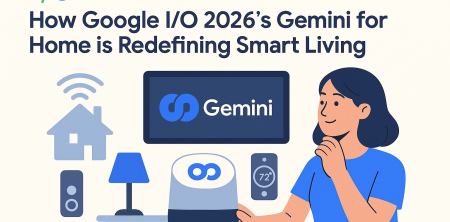
The tech landscape has always been a battleground for innovation, but at Google I/O 2026, the spotlight was firmly on the future of smart homes with the introduction of Gemini for Home. This new initiative aims to revolutionize how we interact with technology daily, pushing the boundaries of artificial intelligence (AI) into the very fabric of our households. With AI-powered smart devices taking center stage, the implications for consumers are vast, raising questions about both convenience and privacy.
The Rise of AI in the Home
As smart-home technology has matured, consumers have become accustomed to the benefits of automation and connectivity. From smart speakers to connected appliances, the integration of AI has transformed how we manage our homes. However, the introduction of Gemini for Home marks a significant shift towards a more agentic form of AI—one that not only responds to commands but also anticipates needs and preferences.
This evolution signifies a move from reactive devices to proactive assistants. Imagine a home where your AI understands your daily routine, making adjustments to lighting, temperature, and even groceries without you needing to lift a finger. This is the vision that Google is aiming for, and it’s already sparking excitement among tech enthusiasts.
Gemini for Home: A Closer Look
At its core, Gemini for Home is designed to create a seamless integration of AI into various household devices, enhancing user experience by making technology more intuitive. According to Google’s announcement, Gemini for Home will leverage advanced machine learning algorithms to learn from user interactions, effectively personalizing the smart home experience.
Features may include:
- Contextual Awareness: Devices understanding the user's location and situation, adapting their functionality accordingly.
- Voice Interactivity: Improved natural language processing that enhances communication with devices.
- Automated Task Management: AI taking over mundane tasks, such as adjusting schedules or managing household supplies.
This emphasis on an AI-first approach is not just a gimmick; it represents a foundational shift in how we view home technology. With Gemini for Home, users are not merely interacting with devices; they are engaging with a sophisticated system designed to enhance their lifestyle.
Implications for Privacy and Surveillance
While the excitement surrounding Google I/O 2026 is palpable, it also brings underlying concerns about privacy and surveillance. As smart devices become more interconnected and capable, the data they collect grows exponentially. With Gemini for Home’s agentic AI, the potential for misuse of personal data increases, raising questions about how information is gathered, stored, and used.
Critics argue that with AI deeply integrated into our homes, there is a risk of creating an environment that monitors user behavior continuously. This could lead to an erosion of personal privacy, with families unknowingly surrendering sensitive information to corporations. Google has acknowledged these concerns, emphasizing the importance of user control and transparency in how AI operates in their homes.
The Market Response
The introduction of Gemini for Home has already begun to send ripples across the smart home market. Competing tech companies are likely to accelerate their own AI developments in response to Google’s innovations. Brands such as Amazon and Apple will need to rethink their strategies to maintain market relevance.
For consumers, the question becomes whether they will choose to adopt these new technologies or cling to their existing systems. As Gemini for Home rolls out, households might find themselves evaluating whether convenience outweighs potential risks. The narrative of replacement versus enhancement will play a significant role in consumer decision-making.
Consumer Adoption: Will They Embrace Change?
As Google pushes AI deeper into everyday devices, the question of consumer adoption looms large. Many households have already integrated smart technology into their lives. However, the leap to a fully AI-driven experience may be daunting for some. The success of Gemini for Home hinges not only on the technology itself but also on how well it resonates with everyday users. (See: Understanding ergonomics and smart devices.)
Adoption rates will likely depend on several factors:
- Education: Users need to understand the capabilities and benefits of Gemini for Home. Educational campaigns will be crucial in demystifying AI for the average consumer.
- Affordability: The economic aspect cannot be ignored. If users perceive Gemini products as too expensive or not providing sufficient value, they may resist the shift.
- Trust: Addressing privacy concerns head-on will be essential in building user confidence. Transparency about data usage and the implementation of robust security measures will play a vital role.
Ultimately, the degree to which consumers embrace Gemini for Home will shape the future landscape of smart homes. Will they adapt to this new AI paradigm, or will they prefer to stick with their tried-and-true devices?
The Role of Competition in the AI Space
As Google unveils its ambitious plans for Gemini for Home, the competitive landscape of AI technology is set to heat up. Major players like Amazon, Apple, and Microsoft will have to respond to Google’s advances, potentially leading to rapid innovations across the board. This competition could benefit consumers through improved products and pricing.
For example, Amazon's Alexa has long been a staple in smart homes, but with Google's enhanced offerings, it might need to innovate further—perhaps by enhancing voice recognition or broadening its device compatibility. The challenge for all competitors is to not only keep pace with Google's advancements but to also offer unique features that can differentiate their products. For more on this, see OpenAI's bold predictions.
This tech arms race may lead to significant advancements in AI capabilities, influencing everything from product design to user experience. But it also raises ethical considerations about how far companies will go to outdo one another. The balance between innovation and consumer safety will be a crucial aspect to monitor.
Expert Insights: Predictions for the Future
As the tech community reflects on the developments from Google I/O 2026, industry experts are weighing in on what the future holds. Many believe that the introduction of Gemini for Home is just the tip of the iceberg in smart home evolution.
Dr. Emily Chen, a prominent AI researcher, suggests that we might see a shift in consumer expectations regarding home automation. "People will begin to expect their devices to be not just smart, but intuitive. They won’t want to think about scheduling or managing devices; they will want their technology to do it for them. This will drive further advancements in AI capabilities,” she explains.
Meanwhile, cybersecurity expert Mark Johnson warns of the potential risks. “The more we rely on AI in our homes, the more attractive they become as targets for cyberattacks. Companies must prioritize security measures to protect user data, or they risk facing significant backlash,” he notes.
These insights highlight the dual-edged sword that is emerging technology. As we stand on the brink of a new era in smart home living, both consumer excitement and caution will play significant roles in shaping the outcomes.
Potential Use Cases for Gemini in Everyday Life
The practical applications of Gemini for Home are vast, offering a glimpse into a future where households operate more efficiently and intelligently. Here are some potential use cases that could enhance daily living:
- Personalized Routines: Gemini could learn from a user’s habits, automatically adjusting lighting, music, and climate settings to match their daily routines, creating a personalized environment that evolves with them.
- Smart Cooking: Imagine a kitchen where your smart oven understands your preferred cooking styles and suggests recipes based on available ingredients. Gemini may enable devices to communicate with each other to create a seamless cooking experience.
- Health Monitoring: With health and wellness becoming increasingly important, Gemini could integrate with wearables to adjust home settings based on the user’s health data, promoting overall wellbeing.
These scenarios highlight the potential for AI to enhance not just convenience but also quality of life. As Google strives to make these visions a reality, consumers will need to weigh the benefits against the associated challenges.
The Broader Implications for Society
The advancements showcased at Google I/O 2026 extend beyond individual households and into broader societal implications. As smart homes become more ubiquitous, the way we interact with technology will fundamentally change. This shift could lead to greater accessibility for those with disabilities, allowing for more customized solutions tailored to individual needs.
On the other hand, the widespread adoption of AI-driven devices could deepen existing digital divides. Not everyone has equal access to the latest technologies or the means to adopt them. Policymakers and tech companies will need to consider how to ensure equitable access to these innovations, preventing further social stratification. (See: Google I/O coverage on AI advancements.)
As we move forward into an increasingly connected future, it will be critical to engage in conversations about the ethical considerations surrounding AI. Discussions on data privacy, surveillance, and the role of technology in our lives will shape how society embraces these changes.
Future Trends in Smart Home Technology
As Google I/O 2026 ushers in the Gemini for Home initiative, several trends are anticipated to shape the smart home landscape in the coming years. Here are some key trends that are likely to emerge:
- Increased Interoperability: As various companies develop their own AI systems, the need for standards that ensure compatibility will become essential. Users will prefer systems that can communicate across different platforms without the frustration of juggling multiple apps and interfaces.
- Enhanced Security Protocols: With rising concerns over data privacy, manufacturers will need to invest in developing robust security measures. Expect features like biometric authentication and advanced encryption to become commonplace.
- Sustainability Focus: As climate change continues to be a pressing issue, there will be a push for smart home devices that promote energy efficiency. This could include AI systems that optimize energy usage and smart appliances that minimize water consumption.
- Health and Wellness Integration: With the ongoing integration of health technologies, we can expect devices that monitor not just our physical health but also our mental wellbeing. AI could provide supportive environments that promote relaxation and stress relief.
These trends indicate a shift towards smarter, more responsible technology that prioritizes user needs and societal implications. As consumers become more aware of their choices, companies will need to adapt accordingly.
FAQs About Gemini for Home
What is Gemini for Home?
Gemini for Home is Google’s latest initiative aimed at integrating advanced AI into smart home technology, allowing devices to not only respond to commands but to anticipate user needs and preferences.
How does Gemini for Home ensure user privacy?
Google emphasizes user control and transparency, stating that consumers will have the ability to manage how their data is collected and used. Security measures will also be in place to protect personal information.
Will Gemini for Home work with existing smart devices?
While specific details about compatibility have yet to be fully disclosed, Google has indicated a commitment to interoperability, suggesting that Gemini for Home will be designed to work with a variety of existing smart home devices.
What are the potential benefits of using Gemini for Home?
Potential benefits include increased convenience, personalized experiences, improved energy efficiency, and enhanced home management capabilities, all driven by intelligent AI technology.
How can consumers adopt Gemini for Home technology?
Consumer adoption will likely hinge on education about the benefits, affordability of devices, and trust in the technology. Google is expected to launch educational campaigns to help consumers understand and embrace these innovations.
What challenges could arise from the adoption of Gemini for Home?
Challenges may include privacy concerns, the digital divide affecting accessibility, and the potential for technological dependency. It will be crucial for companies to address these issues proactively.
The Future of Smart Home Integration
As we look ahead, the integration of smart home technologies is expected to evolve significantly. Companies are likely to explore deeper integrations with home security systems, energy management, and even smart city frameworks. For instance, imagine a scenario where your home not only manages your comfort but also communicates with municipal systems to optimize energy consumption across entire neighborhoods. (See: Research on AI in smart home technology.)
This level of integration could lead to smarter resource allocation, reducing overall energy costs and promoting sustainability. For example, smart homes equipped with solar panels could adjust their energy consumption in real-time based on grid demand, ensuring that excess energy is fed back into the system. This would not only reduce costs for homeowners but also contribute to a more stable and resilient energy grid.
Another potential area of growth is in the realm of elder care and assistance. Smart homes could become pivotal in supporting aging populations by enabling remote monitoring of health metrics, ensuring safety, and facilitating communication with caregivers. This could ease the burden on families and healthcare systems alike, fostering a more compassionate approach to elder care. Related reading: the shocking AI breakthrough.
Integrating AI with Home Robotics
Robotics is another arena where we can expect significant advancements through AI integrations like Gemini for Home. Imagine robots that can assist with household chores, from vacuuming to cooking, all while learning user preferences over time. These robots could seamlessly integrate with other smart devices, creating a coordinated network that enhances everyday living.
For instance, a robot might begin preparing dinner while adjusting the thermostat and dimming the lights as dinner time approaches, all based on the user’s habitual patterns. The potential for home robotics extends beyond mere convenience; it could redefine household dynamics, allowing families to spend more quality time together while machines handle the mundane tasks.
Investing in Smart Home Technology
As consumers consider adopting Gemini for Home and similar technologies, investment in smart home devices may become a priority. According to recent industry reports, the global smart home market is expected to reach $174 billion by 2025, growing at a CAGR of 28.5%. This rapid growth indicates a strong consumer interest in smart technologies, and savvy investors may recognize opportunities within this burgeoning sector.
For consumers, investing in such technologies might not just be about convenience, but also about enhancing the home's value. Smart homes are increasingly seen as more desirable on the real estate market, and potential buyers are often willing to pay a premium for homes equipped with the latest technology. This trend will likely continue, making early adoption a potentially wise financial decision.
Conclusion: The Future of Smart Homes is Here
As we reflect on the announcements from Google I/O 2026, it’s clear that Gemini for Home represents a pivotal moment in the evolution of smart living. The integration of AI into everyday devices promises convenience and personalization but also poses challenges that must be addressed.
The journey ahead will require collaboration between tech companies, consumers, and regulators to ensure that as we embrace these innovations, we do so responsibly. The future is bright for smart homes, but it’s up to all of us to shape how this technology integrates into our lives. With Gemini for Home leading the charge, we may be on the brink of a truly revolutionary change in how we experience our daily lives.
```
Trending Now
Frequently Asked Questions
What is Google Gemini for Home?
Google Gemini for Home is an initiative introduced at Google I/O 2026 aimed at revolutionizing smart living. It focuses on integrating advanced AI into household devices, allowing them to not only respond to commands but also anticipate user needs and preferences for a more intuitive smart home experience.
How does Gemini for Home enhance smart devices?
Gemini for Home enhances smart devices by utilizing advanced machine learning algorithms that learn from user interactions. This enables devices to personalize the smart home experience, adapting their functionality based on contextual awareness and improving communication through advanced natural language processing.
What are the benefits of AI in smart homes?
The benefits of AI in smart homes include improved automation, enhanced connectivity, and the ability to manage household tasks more efficiently. AI-powered devices can learn user routines, making proactive adjustments to lighting, temperature, and other settings without manual input, thereby increasing convenience.
What features can we expect from Gemini for Home?
Expected features of Gemini for Home include contextual awareness, where devices adapt based on user location and situation, and improved voice interactivity through enhanced natural language processing. These features aim to create a seamless and personalized smart home experience.
How does Gemini for Home affect privacy?
While Gemini for Home offers enhanced convenience through its proactive AI capabilities, it also raises concerns about privacy. As devices learn from user interactions, there are implications regarding data handling and user consent that consumers should consider when adopting these technologies.
Have you experienced this yourself? We'd love to hear your story in the comments.

