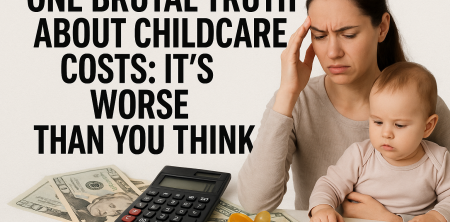
If you're a parent in the U.S., you don't need a research paper to tell you that childcare costs are spiraling out of control. You feel it in your wallet, you see it in your monthly budget, and you probably talk about it with every other parent you know. But here's the kicker: new data suggests the situation is even more dire than many realize. According to fresh research from the Bank of America Institute, released on October 21, 2026, childcare expenses are now outpacing rent and even medical care in their rate of increase. Think about that for a second. We're talking about basic necessities – housing and healthcare – and childcare is somehow climbing faster. It's an alarming trend that's putting immense pressure on families nationwide, forcing tough choices and fundamentally reshaping household economics.
This isn't just about a few extra dollars here and there. We're witnessing a systemic strain on family budgets, with the average U.S. family now dedicating a staggering 8% of their monthly income to childcare. That number isn't just a statistic; it's a direct violation of the federal affordability guideline, which suggests that childcare shouldn't exceed 7% of a household's income. When you consider that nearly 8% of families are now shelling out over $2,000 per month for childcare – a figure that has more than doubled in just three years – you start to grasp the sheer scale of this financial burden. It’s a crisis that touches everything from workforce participation to long-term financial stability, and it demands our immediate attention.
The Unprecedented Surge: Childcare Outpacing Key Necessities
Let's really dig into what the Bank of America Institute's findings mean. When a core expense like childcare is rising faster than rent, you know we're in uncharted territory. For decades, housing has been the benchmark for household budget strain, often consuming the largest chunk of disposable income for many families. Similarly, medical costs have been a perennial concern, often leading to bankruptcies and significant debt. To see childcare costs surpass both of these in their growth trajectory is, frankly, astounding. It signals a fundamental shift in the economic landscape for families with young children.
This isn't just a localized phenomenon, either. The report indicates a nationwide trend, suggesting that no region is immune to this escalating pressure. Families, regardless of their geographic location or income bracket, are feeling the squeeze. It forces us to ask: what exactly is driving this unprecedented surge, and why are we seeing such a dramatic acceleration in recent years? The answers are complex, interwoven with broader economic forces, labor market dynamics, and societal shifts that have unfortunately conspired to make raising a family in America an increasingly expensive endeavor.
The $2,000 Threshold: A New Normal for Many Families
The statistic that nearly 8% of families are now spending upwards of $2,000 per month on childcare is particularly revealing. Just three years ago, the share of families hitting this financial benchmark was less than half that. This isn't just an incremental increase; it's an exponential leap that signifies a rapid erosion of financial flexibility for a significant portion of the population. For context, $2,000 a month is roughly equivalent to a mortgage payment in many parts of the country, or a substantial car loan, or even a significant portion of a student loan repayment plan. To add that kind of expense on top of existing financial commitments is simply unsustainable for many.
When families are consistently allocating such a substantial portion of their income – well above the federal affordability guideline of 7% – to childcare, it leaves very little room for anything else. Forget about saving for a down payment, retirement, or even an emergency fund. For many, it's a constant juggling act just to keep their heads above water. This financial strain doesn't just impact their current quality of life; it has profound long-term implications for their economic mobility and overall financial well-being, creating a ripple effect that touches every aspect of their lives.
Exceeding the Affordability Guideline: A Systemic Failure
The federal affordability guideline of 7% isn't some arbitrary number pulled out of thin air. It's a threshold designed to ensure that childcare costs don't become an undue burden on families, recognizing that once you cross that line, other essential needs start to suffer. The fact that the average U.S. family is now spending 8% of their monthly income on childcare means we've collectively sailed past that recommended maximum. This isn't just an individual struggle; it's a systemic failure to provide accessible and affordable care for our youngest citizens.
This overshoot has tangible consequences. It means less money for healthy food, fewer opportunities for educational enrichment outside of school, delayed medical appointments, and increased stress within households. It also forces parents, particularly mothers, to make agonizing decisions about their careers. When the cost of childcare rivals or even exceeds a parent's take-home pay, working outside the home can quickly become a net financial loss, rather than a gain. This reality has far-reaching implications for gender equity in the workplace and the overall health of our economy.
The Disproportionate Impact on Women's Employment
One of the most concerning aspects of this childcare crisis is its disproportionate impact on women's employment opportunities. When childcare costs become prohibitive, it is often the mother who steps back from her career. This isn't a reflection of choice for many, but rather a harsh economic reality. If one parent's salary barely covers childcare, or if it's less than the cost, the family often decides that one parent should stay home. Historically and statistically, that parent is more often the mother. (See: CDC on childcare and development.)
This dynamic not only hinders individual women's career progression and earning potential but also has broader societal implications. It reduces the overall workforce participation rate, shrinks the pool of available talent, and exacerbates existing gender pay gaps. Furthermore, it can trap women in a cycle of economic dependence, making it harder to re-enter the workforce later on, and impacting their long-term financial security, including retirement savings. The childcare crisis isn't just a parenting issue; it's a profound economic and social equity issue.
Demand Surges, Supply Stumbles: The Core Drivers of Cost Inflation
So, what's fueling this fire? The Bank of America Institute points to a crucial imbalance: increased demand coupled with a severe shortage of childcare workers. It's a classic supply-and-demand problem playing out in a sector that's absolutely vital for families and the economy. As more people move to certain areas – a trend often referred to as domestic migration – the demand for childcare in those regions naturally rises. New families moving in means more children needing care, but the infrastructure to support them often lags behind. For more context, see 9 Mind-Blowing Homeschool Curriculums for Busy Parents in 2026.
Compounding this demand surge is the chronic shortage of childcare workers. This isn't a new problem, but it's been exacerbated by several factors, including low wages, demanding work conditions, and the lingering effects of the pandemic. Many childcare professionals, despite their crucial role, earn wages that are barely above the poverty line, often without benefits. This makes it incredibly difficult to attract and retain qualified staff. When centers are understaffed, they can't operate at full capacity, limiting the number of children they can enroll. Fewer spots available, coupled with high demand, inevitably drives up prices for the limited supply, creating a vicious cycle of unaffordability.
The Broader Economic Ripple Effects: Beyond the Family Budget
The impact of escalating childcare costs extends far beyond individual family budgets. This issue is intricately linked to broader economic trends like inflation and workforce participation. When families are shelling out so much for childcare, they have less discretionary income to spend on other goods and services, which can dampen consumer demand and overall economic growth. Businesses struggle to find workers when parents, particularly mothers, are forced out of the workforce due to unaffordable care.
Consider the long-term implications. A generation of children potentially receiving less-than-optimal care because their parents can't afford quality options, or parents delaying having children altogether due to financial fears, could have profound demographic and societal consequences. This isn't just about economic hardship today; it's about shaping the workforce of tomorrow and the fabric of our communities for decades to come. Policymakers and businesses need to recognize that investing in affordable childcare isn't just a social good; it's an economic imperative.
Searching for Solutions: What Can Be Done?
Given the complexity and widespread impact of this crisis, finding effective solutions for childcare costs requires a multi-faceted approach. We can't simply wish the problem away. One area of focus must be increasing the supply of qualified childcare workers. This means better pay, improved benefits, and professional development opportunities to make childcare a more attractive and sustainable career path. Government subsidies or tax credits for childcare workers could be a crucial step here, acknowledging the vital role they play in our economy.
Another avenue involves expanding access to affordable childcare options. This could mean increased public funding for childcare programs, similar to how we fund public education, or greater investment in employer-sponsored childcare initiatives. We also need to explore innovative models, like co-op childcare arrangements or community-based solutions, that can offer high-quality care at a lower cost. Federal and state governments also have a role to play in streamlining regulations and offering direct financial assistance to families, perhaps through expanded childcare subsidies or tax relief tailored to these specific expenses.
Navigating the Financial Landscape: Advice for Parents
While systemic changes are desperately needed, parents are living this reality right now and need practical strategies to cope with rising childcare costs. First, it's crucial to thoroughly research all available childcare assistance programs in your state and local community. Many parents don't realize the full scope of aid that might be accessible, from state subsidies to federal programs like the Child Care and Development Fund (CCDF). Don't leave money on the table; investigate every potential resource.
Secondly, consider flexible spending accounts (FSAs) or dependent care flexible spending accounts (DCFSAs) offered through your employer. These allow you to set aside pre-tax money for childcare expenses, effectively lowering your taxable income and saving you a significant amount over the year. Thirdly, explore different types of care. While a full-time daycare center might be ideal, a family daycare home, a nanny share with another family, or even a part-time arrangement with family members could offer considerable savings without compromising quality. Finally, create a detailed family financial plan that explicitly accounts for childcare costs, allowing you to budget effectively and identify areas where you might be able to cut back to absorb these essential expenses.
The Road Ahead: Advocacy and Policy
Ultimately, addressing the childcare crisis will require sustained advocacy and thoughtful policy changes. Parents, educators, and community leaders need to continue raising their voices, demanding that policymakers prioritize this issue. We need to frame childcare not as a private burden, but as a public good – an essential component of a thriving economy and a healthy society. This means pushing for legislation that increases funding for childcare, supports childcare workers, and makes quality care truly accessible and affordable for all families. (See: Brookings Institution on childcare costs.)
The current trajectory of childcare costs is simply unsustainable. It's pushing families to the brink, stifling economic growth, and disproportionately impacting women. The data from the Bank of America Institute is a stark warning that we can no longer ignore. It's time for comprehensive action, not just incremental adjustments, to ensure that every child has access to quality care and every parent has the opportunity to participate fully in the workforce without sacrificing their family's financial well-being.
The Impact of Quality: Beyond Just Affordability
When we talk about childcare, it's easy to get caught up in the cost, and for good reason. But we can't forget about quality. Affordable childcare that doesn't provide a safe, stimulating, and enriching environment for children isn't really a solution. High-quality early childhood education has a demonstrable, long-lasting impact on a child's cognitive, social, and emotional development. Kids who attend good programs are more likely to succeed in school, have better health outcomes, and even earn more as adults. For more context, see Miacademy vs Time4Learning 2026: Why Millions Are Making This Crucial Homeschool Choice.
The challenge is that quality often comes at a higher price. Qualified educators, smaller child-to-staff ratios, age-appropriate learning materials, and safe facilities all contribute to the overall cost. When families are already struggling to afford basic care, the idea of paying even more for "high-quality" care can feel impossible. This creates a difficult trade-off, where parents might have to choose between a cheaper, less ideal option and an expensive one that stretches their budget to the breaking point. This isn't just about providing a babysitting service; it's about investing in the foundational years of a child's life, and our society needs to figure out how to make that investment accessible to everyone, not just the privileged few.
State-by-State Variations: A Patchwork of Policies and Prices
While the Bank of America Institute report highlights a national trend, it's important to remember that childcare costs and the policies addressing them vary wildly from state to state. What might be an affordable option in one state could be completely out of reach in another. Some states have more robust subsidy programs, while others offer minimal assistance. Regulations regarding child-to-staff ratios, staff qualifications, and facility requirements also differ, which can influence both cost and quality.
For example, states like Washington D.C., Massachusetts, and New York consistently rank among the most expensive places for childcare, often costing families upwards of $20,000 per year for infant care. Meanwhile, states like Mississippi and Arkansas tend to have lower costs, though still significant relative to average incomes in those areas. This patchwork approach means that a family's financial burden largely depends on where they live, creating inequities and complicating national solutions. Understanding your specific state's landscape, including its regulations and available aid, is a critical first step for any parent navigating this system.
Employer-Sponsored Childcare: A Growing but Limited Solution
In response to the crisis, some employers are stepping up, recognizing that childcare challenges directly impact their workforce productivity and retention. Employer-sponsored childcare benefits can take many forms: on-site daycare centers, subsidies for external care, partnerships with local providers to secure discounted rates, or even just offering dependent care flexible spending accounts (DCFSAs) as mentioned earlier. These initiatives can be a huge boon for employees, reducing their financial stress and allowing them to stay in the workforce.
However, this is still a relatively limited solution. Many small and medium-sized businesses simply don't have the resources to offer comprehensive childcare benefits. Even among larger corporations, it's not a universal offering. While a welcome development, employer-sponsored care can't be the sole answer to a systemic problem. It often benefits higher-income employees at larger companies, leaving many others still struggling. For widespread impact, we need broader government and community-based solutions that ensure all families, regardless of where their parents work, have access to affordable care.
The Expert Perspective: Economists and Child Development Specialists Weigh In
Economists have been sounding the alarm on childcare for years, framing it not just as a social issue but as a critical piece of economic infrastructure. They argue that without accessible and affordable childcare, economic growth is stifled, labor force participation drops, and societal inequalities deepen. Investing in childcare is seen as an investment in human capital, yielding significant returns in terms of increased tax revenue, reduced welfare dependence, and a more productive workforce.
Child development specialists, on the other hand, emphasize the non-economic benefits. They highlight the crucial role of early learning environments in shaping brain development, social skills, and emotional regulation. When children receive high-quality care, they are better prepared for school and life, reducing the need for costly interventions later on. Both perspectives converge on a similar point: ignoring the childcare crisis isn't just hurting families today; it's undermining our future prosperity and well-being as a society. This dual understanding is essential for crafting policies that are both economically sound and developmentally appropriate. For more context, see 8 Essential Curriculums Every Homeschool Parent Needs to See for 2026.
FAQs About Childcare Costs in the U.S.
Q1: Why are childcare costs rising faster than inflation and other necessities?
A1: Several factors contribute to this. There's a severe shortage of qualified childcare workers, often due to low wages and demanding conditions, which limits the supply of available care. At the same time, demand for childcare is increasing as more parents enter the workforce. The cost of operating childcare facilities, including rent, utilities, insurance, and compliance with regulations, also continues to climb. Unlike some other sectors, it's difficult to achieve economies of scale in childcare because quality care requires specific child-to-staff ratios, meaning you can't just cut corners on staffing to lower costs.
Q2: What is the federal affordability guideline for childcare, and how are families doing against it?
A2: The federal affordability guideline, established by the U.S. Department of Health and Human Services, suggests that childcare expenses should not exceed 7% of a family's household income. Unfortunately, the Bank of America Institute's research shows that the average U.S. family is now dedicating 8% of their monthly income to childcare, meaning most families are exceeding this recommended maximum. For many, especially those with infants or multiple children, this percentage is significantly higher.
Q3: How do childcare costs impact women's employment?
A3: Childcare costs disproportionately affect women's employment. When care becomes unaffordable, it's often the mother who reduces her work hours or leaves the workforce entirely because, historically and statistically, their income might be lower or their career trajectory is more flexible. This not only hinders women's career advancement and earning potential but also contributes to the gender pay gap and reduces overall workforce participation. Re-entering the workforce after an extended break can also be challenging.
Q4: What are some practical steps parents can take to manage high childcare costs?
A4: Parents can explore several options. First, research state and local childcare assistance programs and subsidies, as eligibility requirements vary. Second, utilize employer-sponsored benefits like Dependent Care Flexible Spending Accounts (DCFSAs), which allow you to pay for childcare with pre-tax dollars. Third, consider alternative care arrangements such as family daycare homes, nanny shares with another family, or relying on trusted family members for part-time care. Finally, create a detailed family budget that explicitly accounts for childcare to identify where you can cut other expenses.
Q5: What role do governments play in addressing the childcare crisis?
A5: Governments at federal, state, and local levels have a crucial role. They can increase funding for childcare subsidies to make care more affordable for low and middle-income families. They can also invest in the childcare workforce by providing grants for higher wages, benefits, and professional development, which helps attract and retain qualified staff and expand the supply of care. Additionally, governments can support the creation of new childcare facilities, streamline regulations, and promote innovative care models to increase access and affordability.
Q6: Is employer-sponsored childcare a widespread solution?
A6: While a growing number of employers are offering childcare benefits, it's not yet a widespread solution. These benefits, which can include on-site care, subsidies, or partnerships with providers, are a significant help to employees who have access to them. However, many businesses, particularly smaller ones, may not have the resources to offer comprehensive programs. Therefore, while beneficial, employer-sponsored childcare alone cannot solve the systemic national crisis; broader policy changes are still necessary.
Trending Now
Frequently Asked Questions
Why are childcare costs so high in the U.S.?
Childcare costs in the U.S. are increasing rapidly due to various factors including rising demand, limited supply of quality childcare providers, and increased operational costs. Recent data indicates that childcare expenses are outpacing rent and medical care, putting a significant financial strain on families.
How much do families spend on childcare?
On average, U.S. families now allocate about 8% of their monthly income to childcare. This figure exceeds the federal affordability guideline of 7%, with many families paying over $2,000 per month, a number that has more than doubled in just three years.
What impact do high childcare costs have on families?
High childcare costs force families to make tough financial choices, affecting workforce participation and long-term financial stability. The increasing burden can reshape household economics and lead to significant lifestyle changes for many parents.
Are childcare costs rising faster than other expenses?
Yes, recent research shows that childcare costs are rising faster than essential expenses like rent and medical care. This alarming trend highlights a systemic issue affecting family budgets across the nation.
What is the federal guideline for affordable childcare costs?
The federal affordability guideline suggests that childcare expenses should not exceed 7% of a household's income. However, many families are currently spending around 8%, indicating a significant financial strain.
Agree or disagree? Drop a comment and tell us what you think.

