```html
Understanding Phonemic and Phonological Awareness
When we talk about laying a solid foundation for reading and writing, two terms often come up: phonemic awareness and phonological awareness. Understanding these concepts is crucial for educators, parents, and caregivers alike, especially when it comes to teaching kindergarteners. But what do these terms mean, and how do they impact a child's literacy journey?
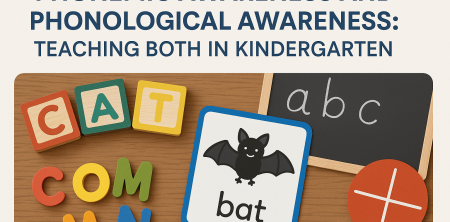
Phonological awareness is a broad skill that encompasses the ability to recognize and manipulate various units of sounds in spoken language. This includes recognizing words, syllables, and onsets and rimes — basically, it’s the big umbrella under which phonemic awareness sits. Phonemic awareness, on the other hand, is more specific; it refers to the ability to hear, identify, and manipulate individual sounds, or phonemes, in words. For example, in the word 'cat,' children should be able to identify the sounds /k/, /æ/, and /t/ and understand that changing one sound can create a new word, such as 'bat.'
The Importance of Phonemic Awareness in Kindergarten
Phonemic awareness is a critical skill for early literacy development, particularly in kindergarten, where children transition from learning to speak to learning to read. It has been shown that children who have strong phonemic awareness skills are better equipped to decode words and learn to read. Research indicates that phonemic awareness skills are a strong predictor of later reading success. In fact, the National Reading Panel (2000) concluded that phonemic awareness instruction is essential for children who are just starting to read.
Moreover, phonemic awareness is not just about hearing sounds; it’s about understanding how sounds work together in language. This is particularly relevant in kindergarten, where children are often first introduced to phonics, the relationship between letters and sounds. Mastering phonemic awareness in this early stage sets the groundwork for more advanced literacy skills, enabling children to tackle reading materials independently.
How Phonological Awareness Supports Literacy Development
While phonemic awareness focuses on individual sounds, phonological awareness includes a wider range of sound units. This broader awareness is equally vital as it helps children develop their listening skills and understand the rhythm and melody of language. Activities that promote phonological awareness often involve rhymes, syllables, and sound patterns, making them engaging and enjoyable for young learners.
Research supports the idea that children who exhibit strong phonological awareness are more likely to do well in reading and spelling. Since phonology is closely tied to the phonetic aspect of language, children who can identify and manipulate sounds at various levels will have more tools at their disposal when learning to read. Additionally, phonological awareness can help children with oral language skills, which are essential for effective communication.
Key Strategies for Teaching Phonemic Awareness in Kindergarten
Teaching phonemic awareness effectively requires a structured approach. Here are some key strategies that can make a significant difference:
- Use of Sound Games: Engage children with sound games where they can practice isolating sounds in words, blending sounds together, and segmenting sounds. For example, clapping out the sounds in a word can be both fun and educational.
- Rhyming Activities: Incorporate rhymes into classroom routines. Singing songs or reading books with rhyming text helps children become aware of sounds and syllable patterns, enhancing their phonological skills.
- Phoneme Manipulation: Teach children how to manipulate sounds in words. Activities like changing a single sound in a word to create a new one are particularly effective. For instance, ask them to change the /m/ in 'mat' to /h/ to form 'hat.'
- Word Play: Use playful language activities to foster phonemic awareness. This could include tongue twisters or silly sentences that emphasize sound changes.
Integrating Phonological Awareness Activities
While phonemic awareness is vital, integrating phonological awareness activities into the kindergarten curriculum is equally important. Here are some practical methods: (See: Early reading development resources.)
- Clapping Syllables: Encourage children to clap out the syllables in their names or favorite words. This activity not only makes learning fun but also helps them understand the structure of words.
- Sound Sorting: Use picture cards and have children sort them based on beginning sounds or rhyming patterns. This visual and kinesthetic approach reinforces their understanding of sounds.
- Storytime with a Twist: During storytime, pause to emphasize rhyming words and sounds. Ask children to predict what might happen next based on sound patterns.
- Interactive Songs: Incorporate songs that emphasize different sounds and rhythms. Children are more likely to remember sounds when they’re paired with movement and music.
Creating a Phonemic Awareness Curriculum
Building a comprehensive phonemic awareness curriculum for kindergarten is essential for fostering early literacy skills. While it’s crucial to focus on phonemic awareness, integrating phonological awareness into your curriculum will provide a well-rounded approach to teaching literacy. Here’s how you can structure your curriculum:
- Assessment Tools: Begin with assessing students' phonemic and phonological awareness. Use simple assessments that gauge students' abilities to identify sounds and syllables.
- Weekly Themes: Create weekly themes focused on specific phonemes. For example, one week you might explore the sound of /b/, using words like 'bat,' 'ball,' and 'bubble.'
- Daily Activities: Plan daily activities that build on the weekly themes, including sound games, rhyming activities, and phoneme manipulation.
- Parental Involvement: Encourage parents to participate in their child’s phonemic awareness journey. Provide them with strategies to reinforce learning at home, such as reading together and playing sound-based games.
Current Trends in Phonemic Awareness Instruction
As education evolves, so do the methods of teaching phonemic awareness in kindergarten. Recent trends emphasize a balanced literacy approach that integrates phonemic and phonological awareness with other literacy components like vocabulary development and comprehension. The emphasis is no longer solely on phonics drills; it also includes interactive and playful learning.
Technology is also making an impact. Many educators are using educational apps and online resources designed to enhance phonemic and phonological awareness skills through engaging games and activities. These resources can provide immediate feedback and are often tailored to the individual needs of students, making them particularly effective.
The Role of Teacher Training in Phonemic Awareness Instruction
To effectively teach phonemic awareness and phonological awareness, teachers must have a strong understanding of these concepts themselves. Professional development programs focused on early literacy can provide educators with the tools and resources they need to implement effective instruction. Training can cover:
- Understanding Phonemic and Phonological Awareness: Teachers should be well-versed in the differences between the two and their respective roles in literacy development.
- Effective Instructional Strategies: Training should equip teachers with a variety of strategies for teaching phonemic and phonological awareness, including both direct instruction and playful, interactive methods.
- Assessment Techniques: Educators should learn how to assess students' skills in these areas effectively, enabling them to tailor instruction to meet individual needs.
Challenges in Teaching Phonemic Awareness
While the benefits of teaching phonemic awareness in kindergarten are clear, challenges certainly exist. Some common obstacles include:
- Diverse Learner Needs: Kindergarten classrooms often contain children with a wide range of abilities, including English language learners and those with learning difficulties. Tailoring instruction to meet these diverse needs can be challenging.
- Time Constraints: With a packed curriculum, finding time to incorporate phonemic and phonological awareness activities can be difficult for teachers.
- Parental Support: Not all parents may understand the importance of phonemic awareness, which can limit their ability to reinforce these skills at home.
Effective Assessment Methods for Phonemic Awareness
Assessing phonemic awareness in kindergarten is key to understanding where each child is in their literacy journey. Various methods can be employed to gauge phonemic skills. These assessments can be both formal and informal:
- Informal Observations: Teachers can observe children during phonemic awareness activities to see how they interact with sounds. Note which children can easily manipulate phonemes and which may struggle.
- Phoneme Isolation Tasks: Ask children to identify specific sounds in words. For example, present them with the word "dog" and ask, "What is the first sound you hear?"
- Blending and Segmenting Tests: Provide children with a set of sounds and ask them to blend them into a word or segment a word into its individual sounds. This helps assess both their understanding and their ability to manipulate sounds.
- Use of Phonemic Awareness Screening Tools: There are various standardized tools available specifically designed for assessing phonemic awareness in young children. These can provide valuable data to guide instructional decisions.
Supporting Phonemic Awareness at Home
Parents can play a crucial role in reinforcing phonemic awareness skills outside of school. Here are some fun and engaging activities that families can do together:
- Reading Together: Choose books that emphasize rhyming and sound patterns. Ask your child to identify and repeat rhyming words or sounds as you read.
- Sound Scavenger Hunts: Create a scavenger hunt where children look for items around the house that start with a specific sound. This can be a fun way to reinforce sound recognition.
- Sing Songs: Singing songs that have repetitive phrases and rhymes helps children recognize sounds in a playful way. Look for songs that emphasize sound changes or alliteration.
- Play I Spy: Use variations of the classic game "I Spy," focusing on sounds. For example, "I spy with my little eye something that begins with /s/." This will encourage children to listen for sounds in their environment.
Expert Perspectives on Phonemic Awareness
Educational experts emphasize the long-term effects of strong phonemic awareness skills. According to Dr. Timothy Shanahan, an education researcher, "Phonemic awareness is a critical predictor of reading success. Children who can manipulate sounds are much more likely to become proficient readers." This perspective highlights the importance of targeting phonemic skills in the early years, particularly in kindergarten. (See: Literacy and child development.)
Additionally, Dr. Susan B. Neuman, a professor at the University of Michigan, suggests, "The integration of phonological activities in daily routines can enhance a child's oral language development. It’s not just about phonics; it’s about making connections between sounds, words, and meanings." Her insights suggest that phonemic awareness is not a standalone concept but rather part of a larger literacy framework that includes vocabulary and comprehension.
Frequently Asked Questions (FAQ)
What is phonemic awareness, and why is it important for kindergarteners?
Phonemic awareness is the ability to hear, identify, and manipulate individual sounds (phonemes) in words. It's crucial for kindergarteners because it lays the foundation for reading and writing skills, helping them decode words and develop spelling skills.
How can I tell if my child has strong phonemic awareness skills?
Look for signs such as your child’s ability to rhyme, blend sounds into words, and segment words into individual sounds. Activities like asking your child to identify sounds in their names or familiar words can also serve as informal assessments.
What are some effective activities to improve phonemic awareness at home?
Engage your child with activities such as clapping syllables, singing rhyming songs, playing sound-based games like "I Spy," and reading books with rhymes. These fun activities reinforce sound recognition and manipulation skills.
Are there specific phonemic awareness programs I should consider for my child?
Yes, several phonemic awareness programs are available, both online and in educational settings. Look for programs that emphasize interactive and playful learning, with assessments to monitor progress. Programs like Heggerty Phonemic Awareness and the Read Well curriculum are well-regarded.
Can phonemic awareness skills be developed in children with learning difficulties?
Absolutely! Children with learning difficulties can benefit from targeted phonemic awareness instruction. Using multisensory techniques and individualized support can enhance their understanding and engagement.
What should I do if I’m unsure how to support my child’s phonemic awareness?
If you’re unsure, consider reaching out to your child’s teacher for guidance. They can provide resources and activities tailored to your child’s needs. Additionally, educational websites often have resources for parents to help with phonemic awareness at home.
Building Phonemic Awareness Through Playful Learning
Play is a fundamental part of learning in early childhood, and integrating phonemic awareness into play can significantly boost children's engagement and retention of these essential skills. Here are some fun and creative ways to incorporate phonemic awareness into play:
- Letter Sound Bingo: Create bingo cards with pictures of objects that start with different phonemes. As you call out a sound, children can cover the corresponding picture. This not only reinforces sound recognition but also keeps the activity interactive.
- Phonics Puzzles: Use puzzles that require children to match letters with corresponding pictures or sounds. For example, a picture of a cat can be matched with the letter 'C' and the sound /k/. This activity allows children to visualize the connection between letters and sounds.
- Storytelling with Sound Effects: Encourage children to create stories using sound effects for different characters or actions. This can help them become more aware of sounds and phonetics creatively.
- Sound Charades: Play charades where children act out animal sounds, vehicle sounds, or household noises. This activity helps children focus on the auditory aspects of sounds and enhances their listening skills.
Statistics on Phonemic Awareness and Reading Success
Several studies have highlighted the link between phonemic awareness and reading success. According to the International Literacy Association, children who receive phonemic awareness instruction show up to a 30% increase in reading fluency compared to those who do not. Additionally, a study published in the Journal of Educational Psychology found that children who participated in phonemic awareness programs increased their decoding skills by nearly 50% in just one school year.
Furthermore, the National Institute for Literacy reports that 80% of struggling readers in third grade have difficulties with phonemic awareness. This statistic underscores the importance of early intervention and the need for effective phonemic awareness instruction in kindergarten to set a solid reading foundation.
Tips for Collaborating with Teachers
As a parent, collaborating with your child’s teacher can enhance their phonemic awareness development. Here are some tips:
- Regular Communication: Maintain open lines of communication with your child's teacher. Discuss your child's progress and ask how you can support learning at home.
- Share Ideas: Bring up activities or strategies that have worked at home. This can give teachers insight into your child's learning style and preferences.
- Attend Workshops: Participate in workshops or seminars offered by the school focused on literacy. These can provide you with additional tools and strategies to support your child at home.
- Request Resources: Ask your teacher for recommended books, games, or activities that reinforce phonemic awareness. They may have valuable resources tailored to your child's needs.
The Lasting Impact of Phonemic Awareness
Developing strong phonemic awareness in kindergarten lays a critical foundation for a child’s academic success. Research consistently shows that children who master phonemic awareness skills are more likely to excel in reading, writing, and overall literacy throughout their educational journeys. This foundational skill not only facilitates reading but also encourages a love for books and learning that can last a lifetime. By investing time and resources into phonemic awareness, parents and educators are making a significant positive impact on children's futures.
Conclusion: Fostering Lifelong Readers through Phonemic Awareness
Teaching phonemic and phonological awareness in kindergarten is not merely a box to check off; it’s a critical step in fostering lifelong readers. By providing children with the tools they need to understand and manipulate sounds in language, we set them up for success in their reading journeys. Through engaging activities and a supportive learning environment, educators can nurture these essential skills in their students. As we continue to explore effective methods for teaching literacy, phonemic awareness will undoubtedly remain a cornerstone of early education.
```
Trending Now
Frequently Asked Questions
What is the difference between phonemic awareness and phonological awareness?
Phonological awareness is a broad skill that includes recognizing and manipulating sounds in spoken language, such as words, syllables, and onsets. Phonemic awareness, a subset of phonological awareness, focuses specifically on identifying and manipulating individual sounds, or phonemes, in words.
Why is phonemic awareness important for kindergarteners?
Phonemic awareness is crucial for early literacy development, especially in kindergarten. It helps children decode words and is a strong predictor of future reading success. Mastering phonemic awareness lays the groundwork for understanding phonics and enhances overall reading skills.
How can I teach phonemic awareness to my child?
To teach phonemic awareness, engage your child in activities that involve sound manipulation, such as rhyming games, sound matching, and segmenting words into individual sounds. Use playful approaches to make learning fun and interactive, which can significantly enhance their understanding of sounds.
What activities promote phonological awareness in young children?
Activities that promote phonological awareness include singing songs, playing rhyming games, clapping syllables in words, and using language-based games that emphasize sound recognition. These engaging activities help children develop their ability to recognize and manipulate sounds in language.
How does phonemic awareness affect reading development?
Phonemic awareness significantly impacts reading development by enabling children to decode words effectively. Research shows that children with strong phonemic awareness skills perform better in reading and writing, as they understand how sounds work together in language, leading to greater literacy success.
What did we miss? Let us know in the comments and join the conversation.

