```html
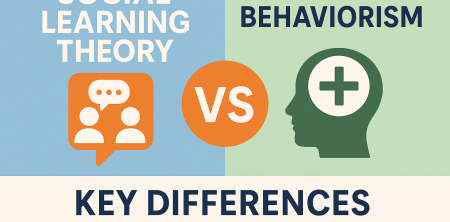
In the field of psychology and education, two influential frameworks dominate discussions on how individuals acquire knowledge and behavior: social learning theory and behaviorism. Both approaches offer unique insights, but they differ fundamentally in their understanding of how learning occurs. Let's explore these differences in depth, examining key concepts, historical context, practical implications, and their relevance in contemporary educational settings.
1. Understanding Behaviorism
Behaviorism emerged in the early 20th century as a response to introspective psychology, which emphasized internal mental states. Pioneered by figures like John B. Watson and B.F. Skinner, behaviorism posits that all behaviors are learned through interaction with the environment. Watson famously stated, "Give me a dozen healthy infants, well-formed, and my own specified world to bring them up in, and I’ll guarantee to take any one at random and train him to become any type of specialist I might select.” This highlights the belief that behavior is a product of conditioning, not innate qualities.
At its core, behaviorism focuses on observable behaviors rather than internal thoughts or emotions. It operates on two primary types of conditioning: classical conditioning (as illustrated by Pavlov's dogs) and operant conditioning, which emphasizes reinforcement and punishment. Through these mechanisms, behaviorists argue that behaviors can be modified and learned over time.
2. Diving into Social Learning Theory
Developed by Albert Bandura in the 1960s, social learning theory expanded the understanding of learning beyond the confines of behaviorism. Bandura introduced the idea that learning can occur through observation, imitation, and modeling, without direct reinforcement. His famous "Bobo doll experiment" demonstrated that children could learn aggressive behaviors simply by watching adults interact with a doll in a particular way.
Social learning theory posits that cognitive processes play a significant role in learning. This approach emphasizes the importance of attention, retention, reproduction, and motivation—elements often overlooked by strict behaviorists. Bandura argued that individuals do not merely respond to stimuli but actively process information from their environment, leading to learned behaviors that can be quite complex.
3. Key Differences: Learning Mechanisms
One of the most striking differences between social learning theory vs behaviorism lies in their views on learning mechanisms. Behaviorism primarily relies on reinforcement and punishment as the main drivers of behavior change. In contrast, social learning theory posits that individuals can learn through observation alone, without the need for direct rewards or punishments.
For instance, consider a classroom scenario where a teacher demonstrates a mathematical concept. A behaviorist would focus on the reinforcement or correction provided to students after they perform the task. On the other hand, a proponent of social learning theory would highlight how students can acquire the mathematical skill by merely observing the teacher's methods, regardless of immediate feedback.
4. Role of Cognitive Processes
In behaviorism, cognitive processes are largely dismissed. Behaviorists argue that internal thought processes are unnecessary for understanding behavior. They contend that the environment largely shapes behavior through conditioning. In contrast, social learning theory acknowledges that cognitive processes are integral to learning. Bandura introduced the concept of self-efficacy, which reflects an individual's belief in their ability to succeed, as a critical factor influencing whether or not they will engage in a particular behavior.
This distinction is crucial. For educators, recognizing that students possess internal thought processes that can affect their learning outcomes means that motivational strategies and methods to boost self-efficacy can play a significant role in student success. Attending to students' beliefs about their capabilities can lead to more effective teaching practices.
5. Applications in Education
Both social learning theory and behaviorism have profound implications for educational practices. In a behaviorist approach, teachers often employ techniques such as reinforcement schedules to encourage desired behaviors. For example, a teacher might use a sticker chart to reward students for homework completion, effectively shaping their behavior through positive reinforcement. (See: Behaviorism overview on Wikipedia.)
On the other hand, social learning theory encourages collaborative learning environments where students can observe and model their peers. Group projects and peer teaching initiatives allow students to learn from one another, reinforcing the idea that observation is a powerful tool in the learning process. By fostering an environment where students can learn from their peers, educators can create a more dynamic learning experience that leverages both observation and modeling.
6. Real-World Examples
Let’s consider a real-world application of both theories. In a behaviorist context, if a student struggles with reading, a teacher might use a phonics program that rewards each mastered skill with a point system or tangible rewards. This method focuses on observable changes in reading behavior and relies on reinforcement to improve literacy skills.
Conversely, within a social learning framework, the same teacher might implement reading circles, where students take turns reading aloud and provide constructive feedback to one another. Here, the emphasis is on students observing their peers’ reading techniques and strategies, which can enhance their skills through imitation and collective problem-solving.
7. Current Relevance and Research
The ongoing debate between social learning theory and behaviorism remains relevant in today’s educational landscape. Recent research has increasingly acknowledged the importance of social contexts and cognitive processes in learning. Studies have shown that collaborative learning significantly enhances academic performance, suggesting that social learning principles can lead to better outcomes than traditional behaviorist approaches.
Moreover, advancements in technology—such as online learning platforms—have provided new avenues for social learning. Virtual classrooms allow for peer interaction, where students can observe and learn from each other in real-time, further validating Bandura’s assertions. This shift underscores the importance of integrating both learning theories into modern educational practices.
8. Challenges and Limitations
Despite their strengths, both theories face challenges. Critics of behaviorism argue that it fails to account for creativity and complex human behaviors that cannot be easily measured or conditioned. For instance, not all learning is straightforward; students may resist behaviors despite reinforcement due to a lack of intrinsic motivation.
Similarly, social learning theory is sometimes criticized for not sufficiently addressing the impact of individual differences, such as personality traits and prior knowledge, on the observational learning process. While Bandura's model emphasizes the power of role models, it may not account for how varying backgrounds influence the way individuals perceive and replicate behaviors.
9. Integrating Both Theories in Practice
Rather than viewing social learning theory and behaviorism as mutually exclusive, many educators now advocate for an integrated approach. By recognizing the merits of both theories, teachers can create comprehensive learning environments that cater to diverse student needs.
For example, a blended learning model might combine direct instruction (behaviorist) with peer collaboration and group activities (social learning). By utilizing both frameworks, educators can harness the power of reinforcement while also fostering observational learning and cognitive engagement, leading to a richer educational experience.
10. Further Insights on Social Learning Theory
Social learning theory has implications that extend beyond traditional classroom settings. For instance, in workplace environments, organizations often utilize social learning practices to enhance employee training and development. Mentorship programs, where experienced employees model behaviors for new hires, are a direct application of Bandura's principles. Research indicates that employees who undergo training through observation and peer interactions tend to adapt more quickly and retain information better compared to those who learn solely through structured lectures. (See: CDC on social learning theory.)
Furthermore, social media platforms have transformed how people learn informally. Users often watch tutorials, follow influencers, and engage in community discussions, exemplifying social learning in action. A study from the Pew Research Center found that 73% of teens use platforms like YouTube to learn something new, showcasing how observation and imitation have become primary learning methods in the digital age.
11. Behaviorism in Modern Day Practices
Behaviorism continues to influence many modern educational practices. Techniques derived from this theory are evident in the use of behavior modification strategies to address learning disabilities and behavioral issues in children. For instance, Applied Behavior Analysis (ABA) is widely used for children with autism, employing reinforcement strategies to teach new skills and reduce undesired behaviors.
In addition, gamification in education is a contemporary application of behaviorist principles. By incorporating game elements like points, levels, and rewards into learning activities, educators can motivate students to engage with content. Research indicates that students exhibit increased motivation and engagement when they know that their efforts will be rewarded, thus aligning with behaviorist philosophy.
12. Expert Perspectives on Learning Theories
Many educational experts weigh in on the ongoing discussions surrounding social learning theory and behaviorism. Dr. Carol Dweck, a leading psychologist known for her work on growth mindset, emphasizes the importance of combining both theories to foster an environment where students can thrive. She suggests that while behaviorism helps shape initial learning habits through reinforcement, social learning is essential for deeper understanding and collaborative skills.
Likewise, educational theorist Dr. Richard E. Mayer highlights the significance of cognitive processes in learning. He argues that while behaviorist approaches can improve immediate performance, social learning strategies that engage cognitive processes lead to more meaningful learning experiences. His research on multimedia learning illustrates how observation and interaction with content can enhance retention and understanding.
13. Comparative Statistics
Numerous studies provide statistical insights into the efficacy of both learning theories. A meta-analysis of over 100 research studies by the American Psychological Association found that students who engaged in collaborative group learning performed better on assessments compared to those who studied independently. Specifically, collaborative learning resulted in an average improvement of 25% in test scores.
In contrast, behavior-oriented interventions have shown success in specific contexts. A report by the Institute of Education Sciences revealed that schools implementing behavior management systems saw a 20% decrease in disciplinary referrals, illustrating the effectiveness of reinforcement in shaping student behavior. These statistics highlight the distinct advantages of each theory depending on the educational context and objectives.
14. Frequently Asked Questions
What is the primary focus of behaviorism?
Behaviorism primarily focuses on observable behaviors and the ways they can be shaped through reinforcement and punishment. It does not consider internal cognitive processes crucial for learning.
How does social learning theory differ from behaviorism?
Social learning theory emphasizes learning through observation, imitation, and modeling, incorporating cognitive processes. Unlike behaviorism, it highlights that people can learn without direct reinforcement.
Can both theories be applied in the same educational setting?
Yes, many educators advocate for an integrated approach, utilizing techniques from both theories to address diverse learning needs and foster a richer educational experience.
What role does self-efficacy play in social learning theory?
Self-efficacy refers to an individual's belief in their capability to perform a task. In social learning theory, it influences whether a person will attempt to imitate a behavior observed in others.
Are there specific subjects where one theory is more effective than the other?
Different subjects may benefit from different approaches. For example, behaviorism may be more effective in foundational subjects like math, where reinforcement can solidify basic skills, while social learning may enhance subjects like language arts, where collaboration and observation are critical for development.
What are some practical ways to integrate social learning theory and behaviorism in a classroom?
Combining both theories can be accomplished through project-based learning, where students work in teams to complete assignments, while also receiving timely feedback and rewards for their contributions. Teachers can create opportunities for peer modeling while providing reinforcement for individual achievements, ensuring that all students engage actively with the material.
How can technology enhance social learning theory in education?
Technology can facilitate social learning by providing platforms for discussion, collaboration, and sharing of resources. Online forums, video conferencing, and collaborative tools like Google Docs allow students to interact, observe, and learn from each other outside of traditional classroom settings.
What are the implications of understanding these theories for educators?
Understanding the distinctions between social learning theory and behaviorism equips educators with a broad toolkit for addressing diverse learning needs. By leveraging both approaches, teachers can tailor their strategies to enhance student engagement and achievement, helping every student reach their potential.
Ultimately, understanding the distinctions between social learning theory vs behaviorism is crucial for educators, psychologists, and anyone interested in the mechanisms of learning. While both theories provide valuable insights, their practical applications may yield stronger results when used together, enriching the learning landscape for students of all ages.
```
Trending Now
Frequently Asked Questions
What is the main difference between social learning theory and behaviorism?
The main difference lies in their understanding of learning; behaviorism focuses on observable behaviors shaped by environmental interactions and conditioning, while social learning theory emphasizes learning through observation and imitation, allowing for learning without direct reinforcement.
Who developed social learning theory?
Social learning theory was developed by Albert Bandura in the 1960s. He expanded the concept of learning to include observation and modeling, demonstrating that individuals can learn behaviors by watching others.
What are the key concepts of behaviorism?
Key concepts of behaviorism include classical conditioning, which involves learning through association, and operant conditioning, which focuses on reinforcement and punishment as mechanisms for shaping behavior. Behaviorism emphasizes observable actions rather than internal mental states.
How does social learning theory apply in educational settings?
In educational settings, social learning theory suggests that students can learn effectively by observing peers and teachers. This model encourages collaborative learning environments where imitation and modeling play crucial roles in skill acquisition and behavior development.
What was Bandura's Bobo doll experiment?
Bandura's Bobo doll experiment demonstrated that children could learn aggressive behaviors by observing adults interact with a doll. This study provided evidence for social learning theory, showing that behavior can be learned through observation rather than direct reinforcement.
Have you experienced this yourself? We'd love to hear your story in the comments.

