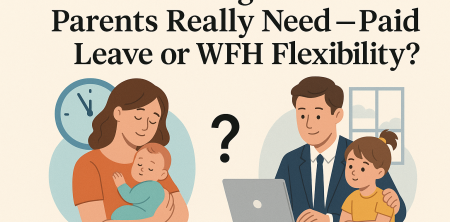
As an educator who's spent years in the trenches, from K-12 classrooms to university administration, I've seen firsthand the relentless demands placed on families. It's not just about textbooks and lesson plans; it's about the entire ecosystem supporting a child's development, and central to that is a parent's ability to be present. So, when we talk about workplace benefits for parents, especially the ongoing debate of paid family leave vs work from home flexibility, it's not merely an HR policy discussion. It’s about fundamental support for families, impacting everything from a child's early development to a parent's career trajectory and overall well-being. This isn't just theory; it's lived experience for millions.
Consider the significant shifts happening across the nation. North Carolina, for example, is making waves by expanding its paid parental leave program for state employees, effective October 1, 2026. This isn't a small tweak; it’s a substantial increase to 12 weeks for both mothers and fathers. What’s truly remarkable here is that North Carolina is becoming the first state in the South to offer such parity in the public sector. That's a huge step forward, signaling a growing recognition of the vital role both parents play in a child's early life. But North Carolina isn't alone. In the same year, 2026, other states like Delaware, Maine, Maryland, and Minnesota are also beginning to pay benefits under new paid family and medical leave programs. These are genuine advancements, and frankly, they're long overdue.
Yet, amidst these promising developments, a stark reality persists: a significant gap between these evolving family-friendly work policies and what many working parents actually experience. This gap is particularly pronounced for lower-income families who frequently lack access to crucial benefits like paid leave and, indeed, work-from-home flexibility. It's a two-tiered system, and it leaves far too many struggling. So, the question isn't just "What's better?" but "What's accessible and truly impactful for all?" Let's dive into the nuances of paid family leave vs work from home flexibility and explore what each truly offers to the modern parent.
1. Paid Family Leave: The Gift of Presence
Paid family leave is, in essence, the financial bridge that allows parents to step away from their jobs without financial ruin. It’s not just about taking time off; it’s about being truly present during critical life moments. Whether it's the arrival of a new baby, an adoption, or caring for a seriously ill family member, paid leave ensures that a parent doesn't have to choose between their paycheck and their family's urgent needs. The North Carolina initiative, offering 12 weeks of paid leave for both parents, is a shining example of this principle in action. It acknowledges that both mothers and fathers need time to bond with a newborn, navigate the chaos of a new family dynamic, or manage a crisis.
The impact of this cannot be overstated. When parents, particularly fathers, are given paid leave, research consistently shows improved child development outcomes, reduced parental stress, and even increased rates of breastfeeding. For mothers, it can lead to better physical and mental health post-partum. This isn't just anecdotal; it's backed by data. A parent who isn't worrying about how to pay the rent while also trying to recover from childbirth or care for a sick child is a parent better equipped to handle those responsibilities. It’s a foundational benefit that supports the very core of family stability.
2. Work-from-Home Flexibility: Redefining the Daily Grind
Work-from-home flexibility, often referred to as remote work, offers a different kind of support: the ability to integrate work with daily family life without the rigid confines of a traditional office. For many parents, this means no more brutal commutes, the capacity to pick up kids from school, or being present for a child's unexpected sick day without having to burn through precious PTO. It's about autonomy over one's schedule and location, which can significantly reduce the daily logistical headaches that plague working parents.
The rise of remote work, accelerated by the pandemic, has fundamentally reshaped our understanding of where and how work can be done. For some, it's been a revelation, allowing them to reclaim hours previously lost to commuting and repurpose them for family time or personal well-being. It can also offer a sense of control that is often lacking in the corporate world, empowering parents to design a workday that better suits their family's unique rhythm. Imagine being able to attend a daytime school play without needing to take a full day off, or helping with homework during a natural lull in your work tasks. That's the promise of genuine flexibility.
3. The Crucial Difference: Time Off vs. Work Integration
Here's where the comparison of paid family leave vs work from home flexibility gets really interesting: they serve fundamentally different purposes. Paid family leave is about providing a defined period of complete absence from work, allowing for singular focus on family needs without the pressure of job duties. It's a pause button. It's for those moments when being physically and mentally 'on' for work is simply not feasible or desirable, such as immediately after childbirth or during a severe illness.
Work-from-home flexibility, conversely, is about integrating work into the fabric of daily family life. It doesn't typically mean an absence from work, but rather a re-imagining of its structure. You're still working, but you're doing so in a way that allows for greater fluidity between your professional and personal responsibilities. It's about juggling, but with more control over the balls you're trying to keep in the air. Understanding this distinction is key to determining which benefit holds more value for a particular family at a particular time.
4. Economic Impact on Families: A Tale of Two Benefits
The economic implications of paid family leave vs work from home flexibility are distinct and significant. Paid family leave directly addresses the immediate financial strain that often accompanies major life events. Without it, many families, particularly those with lower incomes, face an impossible choice: go without pay and risk financial hardship, or return to work prematurely, potentially impacting health and bonding. This is why the movement towards mandatory paid leave is so vital; it acts as a safety net, preventing families from falling into poverty during vulnerable periods.
Work-from-home flexibility, while not directly providing a wage during a period of non-work, can offer substantial economic benefits through cost savings. Eliminating commutes means saving on gas, public transport, car maintenance, and even professional wardrobes. For families with young children, it can also significantly reduce or even eliminate childcare costs for certain hours of the day, a massive expense for many households. While it doesn't replace income during a leave, it can free up existing income for other needs and improve a family's overall financial resilience. (See: importance of parental presence.)
5. Addressing the Equity Gap: Who Benefits Most?
This is where the rubber meets the road, and where my experience as an educator comes into sharp focus. The source material rightly highlights a persistent gap: lower-income working parents often lack access to both paid leave and work-from-home flexibility. This isn't just unfortunate; it's a systemic problem that exacerbates inequality. Professional and white-collar workers are far more likely to have access to these benefits, creating a clear divide.
Paid family leave, especially when legislated at a state or federal level, has the potential to be a great equalizer. When it's a universal right, it benefits everyone, regardless of their job title or income bracket. Work-from-home flexibility, on the other hand, is often tied to the nature of the job itself. Not every job can be done remotely; think of manufacturing, retail, healthcare support, or many essential service roles. So, while remote work offers immense benefits to those who can access it, it inherently leaves out a large segment of the workforce, particularly those in blue-collar or service industries. This distinction is critical when discussing equitable access to family-friendly policies. For more context, see AI tools transforming family life.
6. Impact on Gender Equality: Shifting the Burden?
The discussion of paid family leave vs work from home flexibility also has profound implications for gender equality in the workplace and at home. Traditionally, the burden of childcare and family care has fallen disproportionately on women. Paid parental leave, particularly when offered equally to both parents, as seen in North Carolina's new policy, is a powerful tool for challenging these norms. When fathers take leave, it signals that childcare is a shared responsibility, potentially leading to more equitable division of labor at home and reducing the 'motherhood penalty' in careers.
Work-from-home flexibility can be a double-edged sword for gender equality. While it offers women more control and can help them balance work and family, there's a risk that it could reinforce traditional gender roles if not managed carefully. Women might find themselves taking on more domestic tasks simply because they are physically present at home, even while working. The key here is not just the flexibility itself, but the broader cultural norms and expectations within a household and workplace. True equality requires both structural support (like paid leave) and intentional practices around flexible work.
7. The Employer's Perspective: Retention, Productivity, and Morale
From an employer's standpoint, the investment in either paid family leave or work-from-home flexibility isn't just about being 'nice'; it's often a strategic business decision. Companies that offer robust paid leave programs often see higher employee retention rates. Parents, knowing they are supported during critical life events, are more likely to return to their jobs and feel a stronger sense of loyalty. This reduces turnover costs, which can be substantial.
Similarly, work-from-home flexibility can lead to increased employee morale and, paradoxically, often higher productivity. When employees feel trusted and empowered to manage their schedules, they tend to be more engaged and less stressed. Reduced commute times can also mean more focused work hours. In the competitive landscape for talent, particularly for skilled positions, offering these benefits isn't just a perk; it's becoming a necessity to attract and retain top performers. It's a clear signal that the company values its employees as whole people, not just as cogs in a machine.
8. The Hybrid Approach: The Best of Both Worlds?
For many families and employers, the most effective solution isn't an either/or choice between paid family leave vs work from home flexibility, but rather a thoughtful integration of both. Imagine a scenario where a parent has access to comprehensive paid leave for the initial bonding period after a birth or adoption, and then transitions back to work with significant work-from-home flexibility. This hybrid approach allows for the crucial dedicated time off when it's most needed, followed by the ongoing adaptability that helps integrate work and family life over the long term.
This is where forward-thinking policy and corporate culture truly shine. It's about recognizing that family needs evolve. A new baby requires intense, dedicated time off, but a school-aged child benefits from a parent's ability to be present for school events or unexpected illnesses without constant stress. Offering both types of benefits creates a more resilient and supportive work environment, fostering loyalty and ensuring that parents don't feel they have to choose between their career and their family's well-being. It’s not just a trend; it's the future of truly family-friendly workplaces.
9. Navigating the Future: What's Next for Family-Friendly Policies?
The advancements we're seeing in states like North Carolina, Delaware, Maine, Maryland, and Minnesota are incredibly encouraging. They represent a growing recognition that supporting families isn't just a social good; it's an economic imperative. However, the work is far from over. The persistent gap for lower-income parents remains a critical challenge that needs to be addressed through broader, more universal policies. We need to move beyond a system where access to these vital benefits is a privilege, often tied to one's income or profession.
The conversation around paid family leave vs work from home flexibility will undoubtedly continue to evolve. As technology advances and societal norms shift, we'll likely see even more innovative approaches to work-life integration. What's clear is that the demand for these types of benefits isn't going away. Parents are increasingly vocal about their needs, and employers and policymakers are, slowly but surely, responding. My hope, as someone deeply invested in the well-being of our students and the stability of their families, is that we continue to push for policies that truly support all parents, ensuring every child has the best possible start in life, and every parent has the opportunity to thrive both professionally and personally.
10. The Psychological Well-being of Parents: Beyond the Tangible Benefits
We've talked a lot about the practical and economic benefits of paid family leave vs work from home flexibility, but let's not overlook the profound impact these policies have on the psychological well-being of parents. The mental load carried by working parents, especially mothers, is immense. Juggling work responsibilities, childcare, household management, and personal needs can lead to chronic stress, burnout, and even mental health issues like anxiety and depression.
Paid family leave offers a crucial respite, a dedicated period where the primary focus can be on family. This isn't just about physical recovery after childbirth; it's about mental recovery, bonding, and establishing new routines without the crushing pressure of simultaneously performing at work. It validates the importance of family care, telling parents that their dedication to their children is valued and supported. This can significantly reduce feelings of guilt and inadequacy that often plague parents trying to do it all. (See: paid family leave policies.)
Work-from-home flexibility, while not a complete break, can also be a game-changer for mental health. The ability to avoid a stressful commute, to be present for a child's school drop-off or pick-up, or to simply have a few moments of quiet in your own home between tasks can dramatically reduce daily stressors. It offers a sense of control and autonomy that combats the feeling of being constantly overwhelmed. When parents feel more in control of their schedules and responsibilities, they're generally happier, less stressed, and more engaged in both their work and family lives. This translates to better overall well-being for the entire family unit.
11. Measuring Success: Key Metrics and Data Points
When discussing paid family leave vs work from home flexibility, it’s not enough to just talk about the qualitative benefits; we need to look at the data. How do we actually measure the success of these policies? For paid family leave, key metrics often include employee retention rates post-leave, the number of fathers utilizing leave (a good indicator of shifting gender norms), and reported improvements in parent and child health outcomes. States that have implemented paid leave programs often track these figures to assess the program's effectiveness and make adjustments. For more context, see impact on kids' development.
For work-from-home flexibility, metrics can include employee satisfaction scores related to work-life balance, reductions in absenteeism, and, of course, productivity metrics. Companies might compare the output of remote teams versus in-office teams, or track the impact on employee turnover for flexible roles. A study by Stanford found that remote workers were 13% more productive than their in-office counterparts, often due to fewer breaks and sick days, and a quieter work environment. These tangible data points help employers and policymakers understand the real-world impact and return on investment for these family-friendly initiatives.
12. Global Perspectives: How Other Nations Approach Family Support
It's worth taking a moment to see how the United States stacks up globally when it comes to paid family leave vs work from home flexibility. Many developed nations offer significantly more comprehensive paid parental leave than what's typically available here. For example, countries like Sweden offer 480 days (about 16 months) of paid parental leave per child, which can be split between parents, with a portion specifically earmarked for fathers to encourage their participation. Canada provides up to 63 weeks of parental benefits. These aren't just incremental increases; they represent a fundamentally different philosophy towards family support.
While the concept of widespread work-from-home flexibility gained traction globally during the pandemic, many European countries already had stronger legal frameworks or cultural norms around flexible working arrangements, including the "right to disconnect" from work communications outside of hours. Comparing our policies to these global leaders helps highlight where we have room to grow. It shows that robust family support isn't just an aspirational goal; it's a proven model in many parts of the world, leading to healthier families and more stable economies.
13. The Role of Government and Legislation: Driving Universal Access
The conversation about paid family leave vs work from home flexibility often comes down to individual employer policies, but the most impactful change often comes from government legislation. As highlighted by states like North Carolina and Minnesota, statewide paid family leave programs create a safety net for all eligible workers, regardless of their employer's size or benevolence. This is crucial for addressing the equity gap we discussed earlier.
Federal legislation, like the Family and Medical Leave Act (FMLA), provides job-protected leave, but it's unpaid and only applies to certain employers and employees. A national paid family leave program would be a game-changer, ensuring universal access and preventing families from facing financial hardship during critical times. While work-from-home flexibility is harder to legislate universally due to the nature of different jobs, government can still play a role by incentivizing employers to offer flexible work options and by investing in broadband infrastructure to make remote work more accessible in rural areas. Ultimately, consistent and comprehensive legislation is the surest path to ensuring these vital benefits are available to everyone who needs them.
14. Frequently Asked Questions about Paid Family Leave vs Work From Home Flexibility
Q1: What's the main difference between paid family leave and work-from-home flexibility?
Paid family leave is a period of full absence from work with pay, designed for specific life events like a new child or serious family illness. Work-from-home flexibility means you're still working, but you have the option to do your job remotely, integrating work into your home life more fluidly.
Q2: Which benefit is better for new parents?
For new parents, paid family leave is generally more crucial in the immediate aftermath of birth or adoption. It provides dedicated time for bonding and recovery without work pressures. Work-from-home flexibility can then be a great support when transitioning back to work, offering ongoing adaptability.
Q3: Do employers benefit from offering these policies?
Absolutely. Employers often see higher employee retention, improved morale, reduced absenteeism, and sometimes even increased productivity. It helps attract top talent and signals a supportive company culture, which can lead to a more loyal and engaged workforce. For more context, see extreme education policies affecting families. (See: impact of paid leave on families.)
Q4: Are these benefits only for mothers?
No, not anymore. Progressive paid family leave policies, like North Carolina's, offer equal leave to both mothers and fathers, promoting shared parenting responsibilities. Work-from-home flexibility is also beneficial for any parent, regardless of gender, who needs to balance work and family life.
Q5: Is work-from-home flexibility possible for all jobs?
Unfortunately, no. Many jobs, especially in sectors like manufacturing, healthcare, and retail, require a physical presence. This is a significant challenge when discussing equitable access to work-from-home benefits, and highlights why paid family leave is essential for all workers.
Q6: How do these policies impact a child's development?
Paid family leave, especially, has been linked to improved child development outcomes, including better health, stronger parent-child bonding, and even higher academic achievement later on. Work-from-home flexibility allows parents to be more present for daily needs, which also contributes to a stable and supportive home environment.
Q7: What is the "equity gap" in access to these benefits?
The equity gap refers to the disparity in access to paid leave and remote work, where lower-income workers and those in blue-collar or service industries are far less likely to have these benefits compared to higher-income, white-collar professionals. This exacerbates existing inequalities.
Q8: What's the "hybrid approach" to these benefits?
The hybrid approach combines both paid family leave and work-from-home flexibility. For example, a parent might take several weeks of paid leave after a child's birth, then transition back to a job that offers significant remote work options. This offers both intense, dedicated time off and ongoing daily flexibility.
Q9: Is the U.S. unique in its approach to family leave?
Yes, the U.S. lags behind many other developed nations, which often offer significantly more generous and comprehensive paid parental leave programs. This global comparison highlights the room for growth in U.S. family-friendly policies.
Q10: What can be done to expand access to paid family leave and work-from-home flexibility?
Government legislation at state and federal levels is key to creating universal paid family leave programs. For work-from-home, incentives for employers, investment in broadband infrastructure, and cultural shifts towards valuing flexible work can help expand access.
Trending Now
- this guide on this controversial texas education policy just got even more extreme
- This Unprecedented Global Crackdown on Homeschooling Rights Will Make You Furious
- Outrageous: Parents Sue Netflix Over Autoplay and Kids’ Data — Is Your Child At Risk?
- 7 Astonishing 2026 College Admissions Trends That Will Redefine Your Strategy
Frequently Asked Questions
What are the benefits of paid family leave for parents?
Paid family leave provides parents with the necessary time to bond with their newborns or care for sick family members without the stress of losing income. This support is crucial for early childhood development and helps parents manage their work-life balance more effectively.
How does work-from-home flexibility benefit parents?
Work-from-home flexibility allows parents to better manage their time and responsibilities, enabling them to be present for their children while also fulfilling their job requirements. This arrangement can lead to improved mental health and job satisfaction for working parents.
What changes are being made to paid parental leave in North Carolina?
North Carolina is set to expand its paid parental leave program for state employees to 12 weeks for both mothers and fathers, effective October 1, 2026. This makes it the first Southern state to offer such equal benefits, highlighting the importance of both parents in early child development.
What challenges do lower-income families face regarding parental leave?
Lower-income families often struggle with access to paid family leave and work-from-home options, creating a two-tiered system. This disparity can lead to increased stress and difficulty in balancing work and family responsibilities, impacting both parents' well-being and children's development.
Why is paid leave considered essential for child development?
Paid leave is essential for child development as it allows parents to be present during critical early stages of their child's life. This presence supports emotional bonding, enhances cognitive development, and helps create a stable environment for children to thrive.
Agree or disagree? Drop a comment and tell us what you think.


0 Responses