```html
Introduction
When it comes to understanding child development, few theories have had as profound an impact as those of Swiss psychologist Jean Piaget. One of the cornerstones of his work is the concept of irreversibility in Piaget's theory, which plays a critical role in how young children comprehend the world around them. This aspect of his theory relates to the cognitive limitations that preschoolers face as they navigate their understanding of physical and conceptual transformations. In this article, we’ll explore what irreversibility means, how it manifests in preschool learning, and why it matters for educators and parents alike.
Who Was Jean Piaget?
Jean Piaget was a pioneering figure in developmental psychology. Born in 1896 in Switzerland, he dedicated his life to studying children’s cognitive development. His work laid the foundation for much of what we know today about how children learn and think. Piaget proposed that children move through four stages of cognitive development: the sensorimotor, preoperational, concrete operational, and formal operational stages. Each stage signifies different capabilities and ways of understanding the world, with irreversibility primarily discussed within the second stage, known as the preoperational stage, which typically encompasses ages two to seven.
What Is Irreversibility?
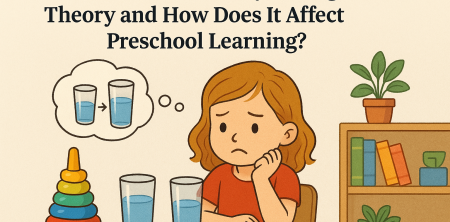
In Piaget's framework, irreversibility refers to the inability of young children to mentally reverse a sequence of events or operations. This limitation is particularly noticeable in the preoperational stage, where children often struggle to understand that actions can be undone. For instance, if you pour water from a tall glass into a short, wide glass, a preschooler might believe there’s less water in the second glass, despite knowing that the amount remains unchanged. This cognitive limitation can lead to misunderstandings in various contexts, affecting their reasoning and problem-solving abilities.
Key Characteristics of Irreversibility
Irreversibility in Piaget's theory manifests in several distinct characteristics:
- Inability to Reverse Actions: Children often cannot envision the reversal of actions. For example, if you break a cookie in half, a child might not grasp that it can be put back together.
- Focus on Appearance: Preschoolers tend to focus on the immediate visual aspects of a situation rather than understanding underlying principles. They may think a taller, thinner glass holds more water simply because of its appearance.
- Difficulty with Conservation: Children often struggle with the concept of conservation, which means understanding that certain properties remain constant despite changes in form or appearance.
Examples of Irreversibility in Everyday Situations
Understanding irreversibility can be better grasped through practical examples. Consider a child observing the following scenario:
- Pouring Water: When water is poured from one container to another, a young child may struggle to understand that the amount of water remains the same despite the change in shape. This example illustrates their focus on visual differences rather than the concept of volume.
- Play-Doh Shapes: If a child rolls a ball of Play-Doh into a flat pancake, they may not realize that it can be rolled back into a ball again. This demonstrates their inability to mentally reverse the action.
- Food Transformation: If a sandwich is cut into halves, a child may perceive the two halves as two separate sandwiches rather than recognizing that they still constitute one whole sandwich.
The Role of Irreversibility in Preschool Learning
Understanding irreversibility is crucial for educators and parents working with preschool-aged children. Recognizing this cognitive limitation allows adults to tailor their teaching strategies effectively. Here are a few practical insights:
- Use Concrete Examples: Since preschoolers have difficulty with abstract concepts, using concrete examples can help bridge the gap. Demonstrating conservation with tangible objects can make the concept more relatable.
- Encourage Exploration: Allow children to experiment with various materials. For instance, pouring sand from one container to another can help them grasp the notion of volume more intuitively.
- Ask Open-Ended Questions: Prompt children with questions that encourage them to think critically about reversibility. Asking, "What do you think will happen if we put the cookie back together?" can stimulate their thinking.
Challenges of Irreversibility in Learning Environments
While the concept of irreversibility is prevalent among preschoolers, it can pose several challenges in learning environments: (See: Jean Piaget - Wikipedia.)
- Misunderstanding Instructions: Because children often cannot reverse actions mentally, they may misinterpret instructions. For instance, asking a child to “put the toys back where they belong” may confuse them if they cannot visualize the previous arrangement.
- Resistance to Change: Preschoolers may struggle to accept changes in routines or environments due to their limited cognitive flexibility, leading to frustration or anxiety.
- Difficulty with Problem Solving: Irreversibility can hinder children's ability to engage in problem-solving tasks, as they may not think through the steps required to reach a solution.
Addressing Irreversibility in the Classroom
Educators can implement several strategies to help children overcome challenges related to irreversibility:
- Interactive Learning: Incorporating hands-on activities allows children to manipulate objects and see the effects of their actions. This promotes understanding of concepts like conservation and reversibility.
- Storytelling and Role Play: Utilizing storytelling to depict scenarios involving changes and reversibility can help children relate to these concepts on a personal level.
- Modeling Reversibility: Teachers can demonstrate actions and their reversibility through interactive lessons. This might include showing how to build and dismantle a structure with blocks.
Understanding the Importance of Irreversibility
The implications of irreversibility in Piaget's theory extend beyond the classroom. Recognizing this cognitive limitation is vital for parents and educators alike as they guide children's development. By understanding that preschoolers often think literally and focus on appearances, adults can better support their learning and development.
Current Relevance and Implications
In today's educational landscape, understanding the concept of irreversibility in Piaget's theory remains relevant. As educators face the diverse challenges of teaching young children, recognizing cognitive limitations can aid in developing effective pedagogical strategies. As children transition from preschool to formal education, addressing concepts related to reversibility can provide a strong foundation for future learning.
Irreversibility and Cognitive Development: A Deeper Dive
Piaget’s notion of irreversibility isn't just a standalone concept; it integrates with many aspects of cognitive development. For example, the characteristic of egocentrism in preschoolers—where they have difficulty seeing things from perspectives other than their own—can amplify misunderstandings related to irreversibility. A child might not only struggle to see that a shape can be reverted to its original form but may also fail to understand that another person may have a different viewpoint or understanding of the same transformation.
Studies have shown that around the age of three to four, children begin to develop some understanding of reversible actions, but this understanding can be context-dependent. For instance, research published in journals of developmental psychology has documented that when children are provided with supportive dialogue and encouragement, they tend to show improvements in their ability to associate transformations with reversibility.
Additionally, the development of language plays a critical role in overcoming irreversibility. As children become more adept at language, they can verbalize their thoughts and reasoning, which aids in cognitive processes. Language acts as a tool for thinking, enabling children to articulate their understanding of actions and operations, which can gradually diminish the limitations imposed by irreversibility.
Statistical Insights on Irreversibility in Child Development
Research has highlighted intriguing statistical trends regarding irreversibility in child development. In a study involving over 1,000 preschool children, approximately 70% demonstrated difficulties with conservation tasks, a key indicator of irreversibility. These tasks involved scenarios where children were asked to judge the quantity of objects or liquids after they were altered in appearance. This figure is significant as it shows the prevalence of this cognitive limitation during the preoperational stage.
Another relevant statistic comes from longitudinal studies that tracked children's cognitive development over several years. These studies indicated that children who engaged in hands-on learning experiences—like those involving art, science experiments, or physical play—showed substantial improvement in their understanding of reversibility by the age of six, compared to those who had more passive learning experiences. (See: Harvard University - Child Development.)
Expert Perspectives on Overcoming Irreversibility
Experts in childhood development emphasize the importance of structured play in overcoming the challenges posed by irreversibility. Child psychologist Dr. Sarah Thompson opines, “Engaging children in activities where they can physically manipulate objects not only helps them grasp concepts better but also instills a sense of accomplishment that boosts their confidence.” This aligns with theories that suggest that experiential learning fosters deeper cognitive connections.
Similarly, educational researcher Dr. Mark Jenkins highlights the role of collaboration among peers in the learning process. He asserts, “When children work together, they often challenge each other's perspectives. This social interaction encourages them to reflect on their understanding of actions and their reversibility, leading to better cognitive development.”
Practical Applications for Parents and Educators
To effectively address irreversibility, parents and educators can incorporate several practical applications into their routines:
- Play-Based Learning: Using play as a central element of learning can help children experience transformations firsthand. For instance, cooking or baking activities allow children to see ingredients change and understand that they can revert to a previous state (e.g., mixing batter and baking a cake).
- Visual Aids: Utilizing charts or diagrams that illustrate reversible processes can also aid comprehension. For example, showing a sequence of photos where a toy is put together and taken apart can help solidify the concept of reversibility.
- Encouraging Reflection: After activities, inviting children to discuss what they did and what they learned can reinforce their understanding. Questions like, “What happened when we mixed the colors?” can help them articulate their understanding of transformations.
FAQs About Irreversibility in Piaget's Theory
What is the significance of irreversibility in Piaget's theory?
Irreversibility is significant as it highlights the cognitive limitations preschoolers face, which can affect their understanding of conservation, problem-solving, and logical reasoning. Recognizing this limitation allows educators and parents to tailor their approaches to better support children’s learning.
How can parents help their children overcome irreversibility?
Parents can help by providing hands-on learning opportunities, encouraging exploration, and using concrete examples in everyday situations. Engaging in conversations that prompt children to think about their actions and the possibility of reversal can also aid in overcoming this cognitive limitation.
At what age do children start to understand reversibility?
While the ability to understand reversibility begins to emerge during the preoperational stage (ages two to seven), significant improvement is often observed around ages six to seven, as children enter the concrete operational stage and develop more advanced cognitive skills.
Are there specific activities that can aid in teaching reversibility?
Yes, activities such as cooking, arts and crafts, and science experiments that involve transformations (like melting ice or mixing ingredients) can be particularly effective. Games that require sorting or assembling objects can also encourage children to think about actions and their reversibility. (See: CDC - Learning and Development.)
Irreversibility in Cultural Contexts
Understanding the concept of irreversibility can also vary across different cultural backgrounds. In some cultures, children may be exposed to various activities and problem-solving techniques that encourage flexibility in thinking. For instance, cultures that emphasize communal play or group activities may facilitate a stronger understanding of reversibility by allowing children to see the reactions of others to transformations and reversals. Educators can harness these cultural perspectives to create learning environments that resonate better with diverse student groups.
Long-Term Effects of Irreversibility on Learning
The effects of irreversibility can linger beyond preschool years. Research indicates that children who struggle with understanding reversibility may face challenges in subjects like mathematics and science, where logical reasoning is essential. For instance, difficulties in grasping the concept of reversibility can manifest in their ability to understand addition and subtraction. If a child doesn’t comprehend that adding and then subtracting the same number yields the original amount, they may struggle with foundational mathematics. This highlights the importance of addressing irreversibility early on to lay a solid groundwork for future academic success.
Supporting Children's Emotional Development Alongside Cognitive Growth
The journey of overcoming irreversibility is not just about cognitive milestones; it also impacts emotional development. Children who feel frustrated by their inability to understand certain concepts may develop anxiety related to learning. By providing a supportive environment where mistakes are seen as learning opportunities, caregivers can help children build resilience. Celebrating small successes in understanding reversibility can boost their confidence and encourage a positive attitude toward learning. Techniques such as positive reinforcement, patience, and encouragement can play a significant role in this emotional aspect of development.
Incorporating Technology to Address Irreversibility
In the digital age, technology can also lend a hand in teaching concepts related to irreversibility. Educational apps and games designed for preschoolers often include visual and interactive elements that allow children to experiment with reversible actions in a safe environment. For example, virtual cooking games can help children visualize how ingredients transform and revert back to original forms. These technological tools encourage exploration while making learning fun and engaging, thus helping to bridge gaps in understanding.
Final Thoughts
Irreversibility in Piaget's theory serves as a crucial concept in understanding early childhood cognition. By recognizing the limitations preschoolers face in comprehending reversibility, educators and parents can create enriched learning environments. The implications of this understanding stretch far beyond preschool settings, affecting how children engage with the world throughout their educational journeys. As we continue to explore the intricate landscape of child development, acknowledging and addressing irreversibility can lead to more effective learning strategies that truly resonate with young minds.
```
Trending Now
Frequently Asked Questions
What does irreversibility mean in Piaget's theory?
Irreversibility in Piaget's theory refers to the inability of young children to mentally reverse a sequence of events or operations. This cognitive limitation is particularly evident during the preoperational stage, where children struggle to understand that actions can be undone, affecting their reasoning and problem-solving abilities.
How does irreversibility affect preschool learning?
Irreversibility affects preschool learning by limiting children's ability to comprehend physical and conceptual transformations. For example, they may believe that changing the shape of an object alters its quantity, which can lead to misunderstandings in various learning contexts and hinder their cognitive development.
Who was Jean Piaget and why is he important?
Jean Piaget was a Swiss psychologist known for his groundbreaking work in developmental psychology. His theories on cognitive development, particularly the stages children go through, have significantly influenced our understanding of how children learn and think, making him a pivotal figure in education and psychology.
What are the stages of cognitive development according to Piaget?
Piaget proposed four stages of cognitive development: the sensorimotor stage, preoperational stage, concrete operational stage, and formal operational stage. Each stage represents different capabilities in how children understand the world, with irreversibility primarily discussed in the preoperational stage.
Why is understanding irreversibility important for educators?
Understanding irreversibility is crucial for educators because it helps them recognize the cognitive limitations of preschoolers. By acknowledging these limitations, educators can tailor their teaching methods to better support children's learning and development, facilitating a more effective educational environment.
What's your take on this? Share your thoughts in the comments below — we read every one.

