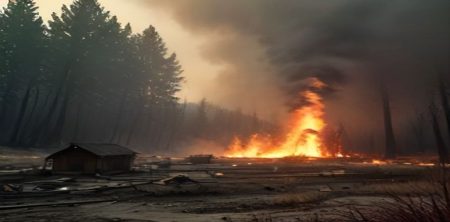
Imagine waking up one morning, looking out your window, and seeing a wall of flame consuming everything you've built. Now, imagine that even if you survive, even if your home stands, the financial aftershocks mean you can't afford to live there anymore. That's the chilling reality many homeowners are facing, especially across the American West, where wildfires are no longer a seasonal threat but a year-round menace. The recent, devastating wildfire that swept through Spokane, Washington, destroying hundreds of homes in its path, isn't just another tragic news story. It's a stark, fiery beacon, signaling a potentially catastrophic shift in the property insurance market – one that could leave millions vulnerable and significantly alter the very notion of homeownership in climate-vulnerable regions. We're talking about a genuine crisis, and its ripple effects, particularly the escalating wildfire insurance impact, are just beginning to be felt.
For years, states like California have been the canary in the coal mine, struggling with insurers pulling out or hiking rates to astronomical levels. Now, that same unsettling trend is spreading, threatening to destabilize real estate markets and trap homeowners in a bind that feels utterly unfair. This isn't just about rising premiums; it's about the fundamental availability of coverage, which directly impacts your mortgage, your property value, and your peace of mind. Let's dig into why this Spokane fire, and others like it, are more than just local disasters, and why the future of your home's insurability might be far more precarious than you think.
The Spokane Blaze: A Harbinger of Wider Insurance Woes
The wildfire that tore through Spokane was a brutal reminder of nature's raw power and the increasing vulnerability of communities nestled in or near wildland-urban interfaces. Hundreds of families lost everything, their homes reduced to ash and rubble in a matter of hours. The human cost is immeasurable, but the financial implications are equally staggering, and they extend far beyond the immediate recovery efforts. For the insurance industry, each such event is a massive payout, a drain on reserves that forces a recalculation of risk. And when these events become more frequent, more intense, and more widespread, the entire system begins to buckle. For more on this, see rising insurance costs explained.
What happened in Spokane isn't an isolated incident; it's part of a growing pattern. From the colossal infernos in California's wine country to the destructive blazes in Colorado and Oregon, wildfires are changing. They're starting earlier, burning hotter, and lasting longer, fueled by a combination of climate change-induced drought, overgrown forests, and human development creeping further into previously wild areas. This escalating risk translates directly into a spiraling wildfire insurance impact, making it harder and more expensive for homeowners to protect their most valuable asset.
California's Cautionary Tale: When Insurers Retreat
To understand the potential future for other wildfire-prone regions, we only need to look at California. The Golden State has been grappling with an insurance crisis for several years, a direct consequence of its devastating wildfire seasons. Major insurers, including State Farm, Allstate, and Farmers, have either stopped writing new policies or significantly restricted their coverage in high-risk areas. Why? Because the financial models that underpinned their operations simply don't work anymore when the risk of a total loss is so high and so frequent.
Think about it from an insurer's perspective: if you're consistently paying out billions in claims year after year, eventually you'll either go bankrupt or you'll have to drastically raise prices and reduce exposure to stay afloat. In California, this has led to a situation where homeowners in certain areas are scrambling to find coverage, often resorting to the state's FAIR Plan, an insurer of last resort, which typically offers less comprehensive coverage at higher prices. The wildfire insurance impact here is profound, creating a two-tiered system where those in high-risk zones pay a premium, literally and figuratively, for basic protection. This isn't just an inconvenience; it's a fundamental threat to property ownership.
The Domino Effect: From Premiums to Property Values
The immediate and most obvious wildfire insurance impact for homeowners is the skyrocketing cost of premiums. If you live in an area deemed high-risk, you've likely already seen your rates climb, perhaps by hundreds or even thousands of dollars annually. But the problem extends far beyond your monthly bill. When insurers pull out or make coverage prohibitively expensive, it creates a domino effect that can destabilize entire real estate markets.
Here's how it works: to get a mortgage, you absolutely need property insurance. Lenders won't finance a home that isn't protected against major perils like fire. So, if insurance becomes unavailable or unaffordable, it effectively makes homes in those areas un-mortgageable. And if a home can't be financed, its market value plummets. Who's going to pay cash for a property that could be consumed by flames next season, knowing they might not be able to get insurance even if it survives? This creates a terrifying scenario where homeowners could find themselves trapped in negative equity, unable to sell their homes or facing significant losses if they do. It's a direct threat to the wealth and stability of families who have invested their life savings in their homes. (See: wildfire insurance trends in California.)
Defining the Wildland-Urban Interface (WUI) and Its Expanding Reach
A significant factor driving the escalating wildfire risk and its subsequent insurance crisis is the expanding wildland-urban interface (WUI). This is the zone where human development meets or intermingles with undeveloped wildland vegetation. Historically, these areas were seen as idyllic, offering a blend of nature and suburban comfort. But as climate change intensifies, these very qualities become liabilities.
The WUI is a tinderbox. Homes built with traditional materials, often surrounded by flammable landscaping, provide ample fuel for fires moving out of wild areas. The very desire for a home 'among the trees' or with 'mountain views' now comes with an increasingly steep price tag, both in terms of direct fire risk and the escalating wildfire insurance impact. As populations grow and urban sprawl continues, more and more communities are finding themselves within this dangerous interface, bringing the threat of catastrophic fires closer to home for millions. The scientific community has been sounding the alarm on WUI expansion for decades, and now, the insurance industry is being forced to reckon with the consequences.
The Role of Climate Change in Supercharging Wildfires
It's impossible to discuss the modern wildfire crisis without acknowledging the undeniable role of climate change. A warmer planet means longer, hotter dry seasons, reduced snowpack, and increased drought conditions across vast swaths of the West. These factors create perfect conditions for fires to ignite and spread with terrifying speed and intensity. We covered climate change impacts on homes in more detail.
Take the example of California's multi-year drought, followed by periods of intense rainfall that led to abundant vegetation growth, which then dried out, becoming exquisite fuel. This cycle of extreme weather, amplified by global warming, is turning once-manageable fire seasons into year-round threats. The science is clear: human-caused climate change is making extreme weather events, including wildfires, more frequent and more severe. Insurers, who rely on historical data to assess future risk, are finding their models obsolete in the face of these unprecedented changes. The wildfire insurance impact isn't just an economic issue; it's a climate change casualty, making adaptation and mitigation efforts more crucial than ever.
Mitigation and Adaptation: What Homeowners and Communities Can Do
So, what can be done? While the broader issues of climate change require global action, homeowners and communities aren't entirely powerless. There are concrete steps that can be taken to reduce wildfire risk and potentially improve insurability. This is often referred to as creating 'defensible space' around your home. It involves:
- Clearing vegetation: Removing dry brush, leaves, and other flammable materials within at least 30 feet of your home. Think about a 'lean, clean, and green' zone.
- Hardening your home: Upgrading to fire-resistant roofing, siding, and windows. Enclosing eaves and vents to prevent embers from entering. These seem like small details, but they can make a huge difference in whether a home survives.
- Managing landscaping: Choosing fire-resistant plants and regularly maintaining them. Avoiding highly flammable species close to the house.
- Community-level efforts: Participating in programs like Firewise USA, which helps communities develop strategies to reduce wildfire risk through collaborative efforts. This includes creating shaded fuel breaks and maintaining common areas.
Some states are even exploring incentives for homeowners who undertake these mitigation efforts, recognizing that individual actions collectively reduce the overall risk for insurers. This proactive approach is vital not just for property protection, but for attempting to soften the harsh reality of the escalating wildfire insurance impact.
The Government's Role: Regulation, Intervention, and Support
When the private insurance market falters, governments often step in. In states like California, the FAIR Plan serves as a safety net, but it's not a long-term solution. Regulators are grappling with how to balance consumer protection with the financial solvency of insurers. Should they force insurers to stay in the market, even if it means unsustainable losses? Or should they allow rates to rise to reflect true risk, potentially making homes unaffordable for many?
These are incredibly complex questions with no easy answers. Some proposals include government-backed reinsurance programs, which would help absorb some of the catastrophic losses. Others advocate for stricter building codes in high-risk areas and significant investment in forest management and wildfire prevention at the state and federal levels. The challenge is immense, requiring a coordinated effort across various agencies and levels of government, all while confronting the urgent financial implications of the wildfire insurance impact on everyday citizens. See also home insurance challenges today.
The Economic Ripple Beyond Homeowners
The wildfire insurance impact isn't confined to individual homeowners. Its tendrils extend to the broader economy, affecting local businesses, municipal budgets, and even the labor market. When a community is devastated by fire, the immediate loss of homes often means the loss of local tax revenue. Property taxes fund schools, roads, and essential services. A significant drop in property values, or outright destruction, can severely strain a municipality's budget, leading to cuts in public services that further impact quality of life and the ability to rebuild.
Small businesses, particularly those reliant on local residents' disposable income, also suffer. If residents are struggling with insurance costs or have been displaced, they're not frequenting local shops, restaurants, or service providers. This can lead to business closures, job losses, and a downward spiral in local economic activity. The construction and rebuilding phase offers a temporary boost, but the long-term economic stability of fire-affected areas remains precarious, especially if the insurance market doesn't stabilize. The cost of materials often spikes after widespread destruction, and finding skilled labor can be a challenge, adding more pressure to recovery efforts. (See: CDC resources on wildfires.)
Psychological and Social Dimensions of Wildfire Risk
Beyond the financial and economic tolls, the wildfire insurance impact has profound psychological and social consequences. Living with the constant threat of fire, and the escalating struggle to secure or afford insurance, creates a pervasive sense of anxiety and insecurity. This isn't just about losing a house; it's about losing a sense of safety, community, and control over one's future.
Studies show that survivors of wildfires often experience post-traumatic stress, anxiety, and depression. The mental health burden is significant, extending to those who haven't lost their homes but live in constant fear. Socially, the erosion of affordable insurance can fracture communities. It can create divisions between those who can afford mitigation and rising premiums and those who cannot, potentially leading to displacement and a loss of community cohesion. The collective trauma of recurring fire seasons, coupled with the financial strain, changes the fabric of these places. It's a silent, but deeply felt, aspect of the wildfire crisis that often goes unaddressed in policy discussions focused solely on economic metrics. Related reading: property value concerns.
Emerging Technologies and Data Analytics in Wildfire Risk Assessment
The insurance industry isn't sitting idly by. They're increasingly turning to advanced technologies and data analytics to better understand and price wildfire risk. This includes using satellite imagery, drones, artificial intelligence, and sophisticated mapping tools to get a more granular view of individual property vulnerability. Instead of broad brushstrokes across entire zip codes, insurers can now assess factors like roof material, defensible space, proximity to dense vegetation, and even local topography with unprecedented detail.
While this might lead to more accurate pricing (and potentially higher premiums for some), it also offers an opportunity for homeowners. If insurers can pinpoint specific risk factors, they can also provide more targeted recommendations for mitigation. Some insurers are even partnering with tech companies to offer incentives or services to help homeowners implement these changes. The goal is to move from a reactive model of paying claims to a proactive one of risk reduction. This shift, driven by data, could redefine how homeowners interact with their insurers and how communities approach fire safety, potentially offering a glimmer of hope amidst the growing wildfire insurance impact.
What This Means for the Future of Homeownership
The long-term implications of this evolving wildfire insurance crisis are profound. If homes in vast swaths of the country become uninsurable or prohibitively expensive to insure, it will fundamentally alter the real estate landscape. We could see a significant devaluation of properties in high-risk zones, leading to a new class of climate refugees forced to relocate. Mortgage lenders will become increasingly cautious, potentially redlining entire communities based on their fire risk scores. This isn't a distant dystopian future; it's a scenario already unfolding in parts of California and now threatening other Western states. California real estate trends offers useful background here.
It also raises difficult ethical questions: Should society subsidize high-risk living? Or should individuals bear the full cost of their location choices, even if those choices were made before the full extent of climate change impacts were understood? There are no easy answers, but one thing is clear: the traditional model of property ownership and insurance is under immense pressure, and the wildfire insurance impact is forcing a reckoning with our relationship to a changing planet.
Navigating the New Reality: Advice for Homeowners
If you're a homeowner in a wildfire-prone area, or even considering purchasing property in such a region, understanding the evolving landscape of insurance is paramount. Here's some actionable advice: (See: scientific study on wildfire frequency.)
- Assess your risk: Research your property's specific wildfire risk. Many states and counties now offer online tools and maps to help you understand your vulnerability. Organizations like Cal Fire in California provide excellent resources.
- Harden your home and create defensible space: Don't wait for a mandate. Proactively implement the mitigation strategies discussed earlier. Document these efforts with photos and receipts, as some insurers may offer discounts or be more willing to cover you if you can demonstrate a reduced risk.
- Shop around aggressively: Don't settle for the first quote. Work with independent insurance brokers who have access to multiple carriers, including smaller, regional ones that might be more flexible. Be prepared for potentially higher premiums.
- Understand your policy: Read the fine print. Know exactly what's covered, what's excluded, and what your deductibles are. Pay close attention to terms like 'replacement cost value' vs. 'actual cash value.'
- Explore state-backed options: If private insurance is unavailable, understand your state's 'insurer of last resort' program (like California's FAIR Plan). While often more expensive and less comprehensive, it's better than no coverage at all.
- Engage with your community: Work with neighbors and local government to implement community-wide mitigation efforts. A stronger, more resilient community is more attractive to insurers.
- Consider the long-term: As difficult as it is, consider the long-term financial viability of staying in a high-risk area. The wildfire insurance impact is not just a temporary spike; it's a systemic shift that could continue to escalate.
Frequently Asked Questions About Wildfire Insurance Impact
What exactly is wildfire insurance? Is it separate from homeowner's insurance?
Wildfire insurance isn't typically a standalone policy you buy separately. Instead, coverage for wildfire damage is usually included as part of a standard homeowner's insurance policy, falling under the "fire" peril. However, in high-risk areas, insurers might exclude wildfire coverage, or you might find it difficult to get a standard policy at all. In those cases, homeowners may need to seek out specialized policies or rely on state-backed "fair access to insurance requirements" (FAIR) plans, which often come with higher premiums and more limited coverage.
Why are insurers pulling out of states like California and Florida?
Insurers are businesses, and they need to be profitable. When the risk of catastrophic losses becomes too high and too frequent, their financial models break down. For wildfires, climate change is making events more intense and destructive, leading to billions in payouts. For hurricanes (like in Florida), the same principle applies. When insurers can't sustainably price the risk to cover potential claims and still make a profit, they either stop writing new policies, non-renew existing ones, or significantly raise rates to reflect the true, elevated risk. It's a business decision driven by an unsustainable level of exposure.
What does "defensible space" mean, and how much does it really help with insurance?
Defensible space refers to the area around your home that has been managed and maintained to reduce the risk of wildfire. This usually involves clearing flammable vegetation, debris, and materials within a certain perimeter (often 30 to 100 feet, depending on local regulations and topography). It helps by creating a buffer zone that slows or stops the spread of fire and gives firefighters a safer area to work. Many insurers are now taking defensible space and home hardening efforts into account when assessing risk and setting premiums. Proving you've taken these steps, often with photos and documentation, can sometimes lead to discounts or make you eligible for coverage you might otherwise not get.
If I can't get private insurance, what are my options?
If private insurance companies won't cover your home, your primary option is often your state's "insurer of last resort" program. In California, it's the FAIR Plan; other states have similar initiatives. These plans are designed to provide basic property insurance for those who can't get it in the voluntary market. While they offer crucial protection, be aware that they typically come with higher premiums, higher deductibles, and more limited coverage compared to a standard policy. You might also need to purchase a separate "difference in conditions" (DIC) policy to fill gaps in coverage, like theft or liability, that aren't included in the FAIR Plan.
How does wildfire risk affect my home's mortgage?
Mortgage lenders require you to have active homeowner's insurance throughout the life of your loan. This protects their investment (the money they lent you for the home) from damage or destruction. If you can't obtain adequate wildfire insurance, or if the cost becomes prohibitively expensive, your lender could deem your property too risky. This can lead to a few scenarios: they might force-place insurance on your home (which is usually very expensive and basic), or in extreme cases, they could call your loan due. For potential buyers, the inability to secure insurance can make a home un-mortgageable, severely limiting its market value and saleability.
The wildfire in Spokane serves as a stark reminder that what was once considered a localized problem is rapidly becoming a national challenge. The property insurance market, a cornerstone of homeownership, is buckling under the weight of escalating climate risks. For homeowners, this means a future where the cost and availability of insurance could dictate where and how they live, fundamentally reshaping the American dream of owning a home. It's a sobering prospect, and one that demands our immediate attention and proactive solutions. This builds on Florida insurance crisis details.
Trending Now
Frequently Asked Questions
How do wildfires affect home insurance?
Wildfires significantly impact home insurance by increasing the risk for insurers, leading to higher premiums or even loss of coverage. Homeowners in wildfire-prone areas may find it increasingly difficult to secure affordable insurance, affecting their mortgage and property value.
What is the impact of wildfires on property values?
Wildfires can drastically reduce property values, especially in regions frequently affected by these disasters. As insurance becomes harder to obtain and more expensive, potential buyers may be deterred, leading to a decline in market demand and home prices.
Why are insurers pulling out of wildfire-prone areas?
Insurers are withdrawing from wildfire-prone areas due to the escalating frequency and severity of wildfires, which increases their financial risk. This trend is particularly evident in states like California and is now spreading to other regions, including the American West.
What should homeowners do about rising wildfire insurance costs?
Homeowners facing rising wildfire insurance costs should shop around for more competitive rates, consider risk mitigation measures for their properties, and stay informed about local regulations and assistance programs that may help offset insurance costs.
Are wildfires a year-round threat?
Yes, wildfires have become a year-round threat in many regions, particularly in the American West. Climate change and changing weather patterns contribute to this increased risk, making it essential for homeowners to be prepared and proactive about their insurance and property safety.
Agree or disagree? Drop a comment and tell us what you think.

