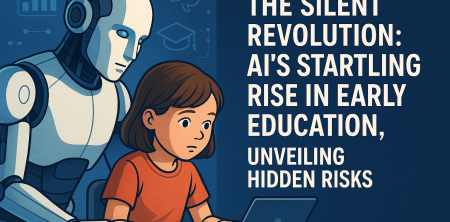
When we talk about the future of education, our minds often jump to virtual reality classrooms or personalized learning paths for high schoolers. But what if I told you that one of the most significant revolutions is quietly unfolding in our nurseries and preschools, impacting the very youngest learners? We're talking about the rapid, and frankly, somewhat alarming, integration of AI in early childhood education.
Recent data from Tapestry, a prominent platform in the early years sector, reveals a truly staggering trend. Since 2025, the use of artificial intelligence in early childhood settings has soared by a remarkable 13.5%. Think about that for a moment – a double-digit jump in just a couple of years. Today, nearly half of all early years educators, a full 46%, report actively using AI tools in their daily work. That's not a niche experiment; that's a widespread phenomenon. While this surge is largely driven by AI's undeniable ability to streamline administrative tasks, freeing up precious time for educators, it's also creating a maelstrom of concerns among those on the front lines. The speed of adoption is outpacing the development of crucial policies, leaving a vacuum where ethical considerations, safeguarding, and data protection should be. It’s a classic case of innovation running ahead of regulation, and when it involves our youngest children, that's a scenario that demands our immediate and careful attention.
The Accelerating Pace of AI Adoption in Early Years
It wasn't that long ago that the idea of AI in a kindergarten classroom might have seemed like science fiction. Yet, here we are. The 13.5% increase in AI usage since 2025 isn't just a statistic; it represents a significant shift in how early childhood education operates. For years, educators have been burdened by an ever-growing list of administrative duties – everything from detailed observation notes on child development to communication logs with parents, curriculum planning, and assessment tracking. These tasks, while vital, often pull educators away from their primary role: directly engaging with children.
Enter AI. These tools are proving to be incredibly efficient at automating many of these time-consuming administrative functions. Imagine an AI assistant that can analyze a child's play observations and suggest developmental milestones, or one that can draft personalized progress reports based on collected data. This isn't just hypothetical; it's happening now. The promise of freeing up educators to spend more quality time interacting with children, fostering their social-emotional development, and providing hands-on learning experiences is incredibly appealing. It addresses a long-standing pain point in the profession, which explains why so many educators are embracing these technologies with open arms, despite the underlying anxieties.
The Time-Saving Appeal: A Double-Edged Sword
Let's be honest, anyone who has worked in early childhood education knows the struggle of administrative overload. It's a demanding field, both emotionally and intellectually, and anything that can genuinely reduce the paperwork burden is seen as a godsend. AI, particularly generative AI, is proving to be incredibly adept at handling these tasks. Educators are using it to generate lesson plan ideas, create individualized learning activities, summarize lengthy observation notes, and even help draft communications to parents. This isn't just about saving a few minutes here and there; it's about reclaiming significant portions of the workday that were once swallowed by tasks that could often feel repetitive and cumbersome.
The argument for AI adoption often centers on this efficiency gain. If educators spend less time on paperwork, they have more time for direct child interaction, for creative lesson delivery, and for addressing individual child needs. This sounds like a win-win, right? More engaged educators, better-supported children. However, this efficiency is also the very factor that has propelled AI into our classrooms so quickly, often without the necessary foresight or infrastructure to handle its implications. It's a powerful tool, and like any powerful tool, its benefits are intertwined with its potential dangers, especially when wielded without a comprehensive understanding of its impact on such a sensitive population.
Mounting Educator Concerns: Accuracy, Safeguarding, and Data Protection
Despite the undeniable allure of time savings, early years educators are far from unreservedly embracing AI. The Tapestry research paints a clear picture of significant apprehension. A staggering 62% of educators express deep concerns about the accuracy of AI tools. This isn't a minor quibble; it's a fundamental worry about the reliability of the information AI provides, especially when that information directly impacts a child's learning and development. What if an AI misinterprets an observation? What if it generates a developmentally inappropriate activity suggestion? The stakes are incredibly high. (See: Technology's impact on youth education.)
Even more pressing are the concerns surrounding safeguarding and data protection, cited by 53% of educators. This is where the ethical dilemmas truly come into sharp focus. Early childhood settings handle incredibly sensitive personal information about children and their families. Their developmental progress, health information, family dynamics – all of this data is collected and processed. Introducing AI into this environment raises immediate red flags. Who owns this data? How is it stored? Is it truly anonymized? Can it be hacked? Can AI algorithms inadvertently perpetuate biases or make judgments that impact a child's future trajectory? These aren't abstract academic questions; they are real, tangible fears that speak to the core responsibility educators feel for the children in their care.
The Policy Lag: Playing Catch-Up in a Fast-Moving Landscape
One of the most troubling aspects of this rapid AI integration is the significant lag in policy development. Technology, especially something as transformative as AI, moves at an incredible pace. Regulatory bodies and educational institutions, by their very nature, tend to move much slower. This creates a dangerous void where AI tools are being implemented without clear guidelines, ethical frameworks, or robust oversight. It's like building a high-speed highway without traffic laws or safety barriers. For more context, see AI Teachers in Classrooms? The Real Crisis Facing Our Schools.
Without clear policies, individual educators and institutions are left to navigate complex ethical landscapes on their own. They have to decide what data can be shared with AI, how to verify AI-generated content, and what constitutes appropriate use. This lack of centralized guidance not only leads to inconsistent practices but also places an unfair burden on educators who are already stretched thin. The challenge isn't just about creating policies; it's about creating policies that are agile enough to keep pace with an evolving technology, while also being comprehensive enough to protect children's best interests.
New York City's Bold Move: A Precedent for Caution
The debate surrounding AI in early childhood education isn't confined to academic papers or internal staff meetings; it's playing out in major urban centers. A particularly significant development that underscores the growing unease came from New York City, one of the largest and most influential school districts in the world. They made a bold decision to ban generative AI tools for students from pre-kindergarten through eighth grade.
This wasn't a knee-jerk reaction. It was a calculated move driven by concerns similar to those voiced by educators in the Tapestry research: the potential for over-reliance on AI, accuracy issues, and perhaps most importantly, the impact on critical thinking and independent learning in young children. While the ban specifically targets student use, it sends a powerful message about the broader implications of introducing AI at such formative stages of development. It highlights a growing sentiment that while AI has its place, that place might not be in the hands of very young children who are still developing fundamental cognitive and social skills. New York City's decision could very well serve as a precedent, encouraging other districts and even national bodies to adopt a more cautious approach to AI in early childhood education.
Ethical Dilemmas and the Viral Debate
The discussion around AI in early years isn't just important; it's going viral. Why? Because it taps into some of our deepest societal anxieties about technology, childhood, and the future. The ethical dilemmas are profound. Is it right to expose young, developing minds to AI tools that might shape their learning patterns in ways we don't yet fully understand? What happens to creativity and problem-solving if children become too reliant on AI for answers or solutions?
Then there are the data privacy fears. Imagine a scenario where an AI system collects nuanced data on a child's emotional responses, their learning struggles, or their family background. Who has access to that data? How is it secured? Could it be used to create profiles that follow children throughout their educational journey, potentially leading to labeling or biased interventions? These aren't just theoretical questions; they're very real possibilities that fuel public concern and ignite passionate debates online and in communities. The speed at which AI is integrating into these sensitive areas, often without public discourse or transparent frameworks, is what makes this topic so compelling and, for many, deeply unsettling.
Over-Reliance vs. Enhanced Learning: Finding the Balance
One of the central tensions in the discussion about AI in early childhood education is the potential for over-reliance. While AI can certainly augment learning and support educators, there's a fine line between enhancement and dependence. For young children, the development of critical thinking, problem-solving skills, creativity, and social-emotional intelligence largely comes from direct human interaction, hands-on exploration, and grappling with challenges independently. If AI steps in too readily, does it inadvertently short-circuit these crucial developmental processes? (See: Technology in early childhood education.)
For example, if an AI tutor is always available to provide the 'right' answer, does it diminish a child's motivation to persist through difficulty or to engage in trial-and-error? If an AI analyzes a child's drawing and offers immediate feedback, does it stifle their unique artistic expression? The goal should be to leverage AI as a tool to support and enrich, not to replace or diminish the essential human elements of early childhood education. This requires careful thought, rigorous research, and a commitment to understanding the long-term impacts on child development, rather than simply chasing efficiency.
The Impact on Educator Skills and Professional Development
The rapid integration of AI also raises questions about the evolving role of the early childhood educator. Historically, these professionals have been masters of observation, intuition, and personalized interaction. Now, they're increasingly expected to be adept at using new technologies. This shift isn't just about learning new software; it's about understanding how AI influences their pedagogy and their direct relationships with children. For more context, see 8 AI Tools Quietly Revolutionizing Student Learning.
There's a real need for professional development that goes beyond basic "how-to" guides. Educators need training on critical AI literacy – understanding how algorithms work, recognizing potential biases, and evaluating the trustworthiness of AI-generated content. They need to learn how to integrate AI tools in a way that complements, rather than detracts from, human-centered teaching. This might include workshops on using AI to identify learning patterns without over-relying on its recommendations, or how to maintain authentic parent communication even when AI drafts initial messages. Without this deeper level of understanding and training, there's a risk that educators might simply become operators of AI systems, rather than informed facilitators of learning with AI as a tool.
Addressing Bias in AI Algorithms for Young Learners
One of the most critical, yet often overlooked, concerns with AI in early childhood education is the inherent bias that can be baked into algorithms. AI systems learn from data, and if that data reflects existing societal biases – whether racial, gender, or socioeconomic – the AI will perpetuate and even amplify those biases. For young children, who are in crucial stages of developing their identities and understanding the world, this is particularly dangerous.
Imagine an AI tool designed to identify developmental delays. If the data it was trained on disproportionately represented certain demographics, it might misidentify delays in children from underrepresented groups or, conversely, overlook them. Or consider an AI generating personalized learning activities; if the algorithm has implicit biases about what certain groups of children are capable of, it could inadvertently limit their exposure to diverse learning experiences. This isn't just about fairness; it's about ensuring all children have an equitable start. Developers and educators must actively audit AI systems for bias, ensuring that the datasets used for training are diverse and representative, and that the outputs are constantly reviewed for equitable outcomes. It requires a proactive and ongoing commitment to fairness and inclusivity.
Comparing AI in Early Childhood to Other Educational Stages
While AI is making inroads across all levels of education, its application in early childhood presents unique challenges and considerations compared to, say, higher education or even K-12. In university settings, AI might help students research complex topics, analyze data, or even write initial drafts of papers. The students are generally older, possess more developed critical thinking skills, and are better equipped to discern the accuracy and potential biases of AI outputs. They can use AI as a sophisticated assistant, rather than a primary source of information or instruction.
In early childhood, the situation is entirely different. Young children are still forming their fundamental cognitive processes, their sense of self, and their understanding of social dynamics. Their brains are incredibly plastic and susceptible to influence. The risk of over-reliance, the potential for stifling creativity, and the profound implications of data privacy are amplified. Moreover, the human interaction in early childhood is paramount for social-emotional development. While AI might efficiently handle administrative tasks, it simply cannot replicate the nuanced empathy, spontaneous play, and individualized emotional support that a human educator provides. Therefore, the ethical bar for deploying AI in early childhood education must be significantly higher, demanding far more caution and scrutiny than in any other educational stage. For more context, see 8 Essential Steps to Ethically Implement AI Tools in Education. (See: Latest news on education technology.)
Navigating the Future: A Call for Thoughtful Implementation
So, where do we go from here? The genie, as they say, is out of the bottle. AI is here, and its presence in early childhood education is only likely to grow. The challenge isn't to banish it entirely, but to approach its implementation with profound thoughtfulness, ethical responsibility, and a child-first mindset. This means moving beyond the initial excitement of time-saving and confronting the complex questions head-on.
We need robust, clear, and enforceable policies around data privacy and safeguarding that are specifically tailored to the unique vulnerabilities of young children. We need continuous professional development for educators that goes beyond simply teaching them how to use AI tools, and instead delves into the ethical considerations, potential biases, and best practices for integrating AI in a developmentally appropriate manner. We also need ongoing research to truly understand the long-term impacts of AI exposure on young children's cognitive, social, and emotional development. This isn't a task for technology companies alone; it requires collaboration between educators, policymakers, child development experts, parents, and AI developers.
Opportunities for Innovation and Support
Despite the concerns, the rise of AI in early childhood education also presents significant opportunities for innovation, particularly for those looking to support families and educators in this new landscape. For instance, there's a growing need for sophisticated parental control software that specifically addresses AI-enabled educational apps and platforms, giving parents greater visibility and control over their children's digital interactions. Think about tools that review AI app content for appropriateness, track data usage, and flag potential concerns.
Beyond that, the market for independent reviews of educational AI apps is booming. Parents and educators are desperately seeking unbiased assessments of these tools – their accuracy, their developmental appropriateness, and their data security practices. Cybersecurity solutions tailored for family devices and educational settings are also becoming non-negotiable, given the sensitive data involved. Finally, for those in online education, there's a clear demand for courses and workshops designed specifically for parents and educators on how to navigate the complexities of AI in education, understand its benefits and risks, and make informed decisions about its use. These are not just niches; they are critical support systems for a rapidly evolving educational ecosystem.
Frequently Asked Questions About AI in Early Childhood Education
- What exactly is "AI in early childhood education"?
- It refers to the use of artificial intelligence tools and technologies within settings like nurseries, preschools, and kindergartens. This can range from AI-powered administrative assistants for educators to personalized learning apps for children, or even sophisticated data analysis tools to track child development.
- Is AI replacing early childhood educators?
- Currently, the primary use of AI in early childhood education is to assist educators with administrative tasks, freeing up their time for direct interaction with children. While some AI tools offer personalized learning experiences for children, the consensus among experts is that AI should augment, not replace, the crucial human element in early childhood education. The social-emotional development fostered by human interaction is irreplaceable.
- What are the main benefits of using AI in early childhood education?
- The biggest benefit for educators is time-saving through the automation of administrative tasks like lesson planning, report generation, and observation summaries. For children, AI can offer personalized learning paths, adaptive content, and early identification of learning differences. However, these benefits come with significant caveats and concerns.
- What are the biggest concerns about AI in early childhood education?
- Key concerns include the accuracy and reliability of AI-generated content, safeguarding children's well-being, and robust data protection for sensitive personal information. There are also worries about potential over-reliance on AI by children, which could hinder the development of critical thinking and creativity, and the risk of perpetuating algorithmic biases.
- How does AI affect children's data privacy?
- AI systems often require access to personal data to function effectively, including children's developmental progress, learning styles, and sometimes even emotional responses. This raises significant privacy questions: Who owns this data? How is it stored and secured? Could it be used for purposes beyond education, or be vulnerable to breaches? Strong policies and transparent practices are essential.
- Are there specific policies or regulations for AI in early childhood education?
- Unfortunately, policy development is lagging significantly behind AI adoption. While some larger districts, like New York City, have taken steps to restrict generative AI for younger students, comprehensive, unified guidelines for AI in early childhood education are generally lacking. This creates a patchwork of approaches and leaves educators and parents in a tricky spot.
- How can parents ensure AI tools are used safely and ethically with their children?
- Parents should proactively ask their child's educators about the AI tools being used, how data is collected and protected, and the rationale behind their use. They can also seek out independent reviews of educational AI apps, utilize parental control software, and engage in open discussions with their children about digital literacy and AI. Advocacy for stronger policies is also vital.
- What role does professional development play in AI integration?
- Professional development is crucial. Educators need training not just on how to operate AI tools, but on critical AI literacy. This includes understanding potential biases, ethical implications, and how to integrate AI in a developmentally appropriate way that enhances, rather than detracts from, human interaction and learning. It's about becoming informed facilitators, not just users.
The integration of AI into early childhood education is a revolution we can't ignore. While the efficiency gains for educators are compelling, the concerns around accuracy, safeguarding, and data privacy are equally potent. The path forward demands more than just rapid adoption; it requires a deliberate, ethical, and collaborative approach to ensure that as we leverage the power of AI, we do so in a way that truly serves the best interests of our youngest learners. Our children deserve nothing less than our most thoughtful consideration as we shape their educational future.
Trending Now
- our breakdown of the startling truth about why parents are quietly quitting the rat race by 2026
- our breakdown of outrageous: washington parents’ rights bill sparks fierce battle — what you need to know
- this guide on your data stolen in the canvas breach? here’s how a class action could get you justice!
- read the full story
Frequently Asked Questions
How is AI being used in early childhood education?
AI is increasingly being integrated into early childhood education to streamline administrative tasks such as observation notes, communication logs, and curriculum planning. Nearly 46% of early years educators are now using AI tools, reflecting a significant shift in how education operates for the youngest learners.
What are the risks of using AI in preschool settings?
The rapid adoption of AI in preschool settings raises several concerns, including ethical considerations, safeguarding issues, and data protection. The speed of AI integration is outpacing the development of necessary policies, creating a potential risk for the youngest children.
Why is AI adoption increasing in early education?
The adoption of AI in early education has surged by 13.5% since 2025, primarily due to its ability to alleviate the administrative burden on educators. This allows teachers to focus more on direct interaction with children, enhancing the overall educational experience.
What impact does AI have on early childhood educators?
AI tools are significantly impacting early childhood educators by freeing up time spent on administrative tasks. This allows educators to devote more time to teaching and interacting with children, although it also brings about concerns related to ethical use and data privacy.
What is the future of AI in early childhood education?
The future of AI in early childhood education looks promising but requires careful consideration of ethical and regulatory issues. As AI continues to evolve, it is crucial to develop policies that ensure the safety and well-being of young learners while leveraging the benefits of technology.
Agree or disagree? Drop a comment and tell us what you think.

