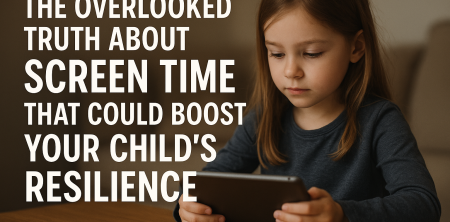
As a seasoned educator, I've seen firsthand how quickly parenting trends can sweep through our communities, often leaving parents feeling overwhelmed and uncertain. We're constantly bombarded with advice, particularly now that social media acts as a megaphone for every new philosophy. It’s no wonder many of us find ourselves scratching our heads, wondering if we’re doing it all wrong. This is particularly true when we talk about the great debate of screen time vs outdoor play parenting advice – a topic that consistently sparks passionate discussions among parents, educators, and even pediatricians.
Just recently, we saw this play out when Hannah Love Mooney, wife of singer Shay Mooney, ignited a viral discussion in September 2026. Her advocacy for rethinking screen time and prioritizing resilience in children struck a chord, emphasizing age-appropriate challenges over the instinct to constantly protect. It’s a powerful message, especially when you consider the sheer volume of information – and misinformation – parents navigate daily. The Baby Safety Alliance even launched its "Before You Try, Verify" campaign in September 2026, a crucial initiative urging parents to critically evaluate viral parenting trends and products. Why? Because parenting advice, unfortunately, often spreads faster than facts, and the stakes are incredibly high. An estimated 70,000 children under five are treated in emergency rooms annually for nursery product-related injuries. That number alone should give us pause and make us question everything we consume online.
So, how do we cut through the noise? How do we find that sweet spot between embracing technology's benefits and ensuring our children develop into well-rounded, resilient individuals? It’s not about choosing one over the other in a rigid, black-and-white fashion. It's about understanding the nuances, weighing the evidence, and making informed decisions that genuinely serve our children’s best interests. Let's dig into some of the key considerations and expert perspectives on this ever-present challenge.
1. The Viral Echo Chamber and Its Dangers: Why 'Verify' is Vital
The internet, for all its wonders, has a knack for amplifying voices, regardless of their expertise. When it comes to parenting, this can be particularly perilous. A well-meaning post from an influencer can quickly become gospel for thousands, even if it lacks scientific backing or, worse, poses potential safety risks. The Baby Safety Alliance’s "Before You Try, Verify" campaign isn't just a catchy slogan; it's a desperate plea for critical thinking in an age of instant information. They launched this campaign in September 2026 for a reason, citing the alarming statistic of 70,000 children under five annually requiring emergency room treatment for nursery product-related injuries. That’s a stark reminder that not all advice, especially regarding products, is created equal.
As parents, our emotional desire to do what's best for our children makes us incredibly susceptible to compelling narratives. We want the secret formula, the hack that will guarantee success. This vulnerability is precisely what makes viral parenting trends so potent. But what happens when those trends are based on anecdotes rather than evidence? Or when they promote products that haven't undergone rigorous safety testing? The answer, unfortunately, can be devastating. We have to train ourselves to pause, to question, and to seek out reputable sources before implementing any new advice or purchasing any new product that promises to revolutionize our parenting journey. Think of it this way: if a doctor prescribed medication based solely on a TikTok video, would you take it? Of course not. Why should parenting advice be any different?
2. Hannah Love Mooney's Call for Resilience: Beyond Bubble Wrap Parenting
Hannah Love Mooney’s viral discussion in September 2026 hit a nerve, and rightly so. Her advocacy for fostering resilience in children, moving beyond constant protection, resonates deeply with many educators like myself. In a world where every scraped knee feels like a catastrophe and every challenge is met with immediate parental intervention, are we inadvertently hindering our children's ability to cope? Mooney’s perspective suggests we might be. She argues for age-appropriate challenges, allowing children to encounter difficulties, learn from them, and develop that crucial inner strength that will serve them throughout their lives.
This isn't to say we should throw our kids into dangerous situations. Absolutely not. It's about finding that delicate balance between safeguarding their well-being and allowing them the space to grow through struggle. Resilience isn't something you can teach from a textbook; it's forged in the crucible of experience. When a child falls, picking themselves up (with a little comfort, of course) teaches them more than being perpetually cushioned from every bump. When they face a problem in a game or a social interaction, figuring it out themselves, rather than having us swoop in to solve it, builds problem-solving skills and self-efficacy. This philosophy directly impacts how we view screen time vs outdoor play parenting advice: one offers structured, often passive engagement, while the other naturally presents opportunities for grit and problem-solving.
3. The Allure of Screens: Understanding Their Appeal and Pitfalls
Let's be honest, screens are incredibly alluring, not just to kids but to us adults too. They offer instant entertainment, information, and connection. For children, the vibrant colors, interactive games, and endless content libraries can be captivating. This isn't inherently evil; there are genuine educational benefits to well-chosen screen time. Interactive apps can teach early literacy and numeracy, virtual tours can open up the world, and even well-produced documentaries can spark curiosity about science and history. The problem arises when screen time becomes the default, the primary mode of engagement, or a digital pacifier used to quiet every moment of boredom or frustration. (See: CDC on screen time recommendations.)
The pitfalls are well-documented: excessive screen time can lead to sedentary lifestyles, impacting physical health. It can interfere with sleep patterns due to blue light exposure, and the constant stimulation can sometimes hinder the development of attention spans. Perhaps most critically, it can displace other vital activities, particularly outdoor play, imaginative play, and face-to-face social interactions. When children are constantly glued to a tablet, they're not building forts, climbing trees, or negotiating complex social dynamics with their peers. Finding the right balance in screen time vs outdoor play parenting advice means recognizing the legitimate benefits of screens while being acutely aware of their potential downsides.
4. The Unrivaled Power of Outdoor Play: More Than Just Fresh Air
If screens offer a world of digital wonders, outdoor play offers a tangible, multi-sensory universe that no app can replicate. When a child is outside, they are engaging every part of their being. They’re running, jumping, climbing, balancing – developing gross motor skills and coordination. They’re touching dirt, leaves, and bark, experiencing different textures. They’re hearing birdsong, the rustle of leaves, the distant hum of traffic, sharpening their auditory senses. They’re seeing the vastness of the sky, the intricate patterns of nature, and the changing light, fostering visual development and spatial awareness. For more context, see This Unseen Crisis Is Draining Parents’ Wallets.
Beyond the physical and sensory benefits, outdoor play is a critical incubator for creativity, problem-solving, and social-emotional development. A stick becomes a sword, a branch, a magic wand. A patch of grass becomes a secret base, a tree, a mighty mountain to conquer. Children learn to negotiate space, share equipment, resolve conflicts, and collaborate on imaginary adventures. They learn about risk assessment – how high is too high to climb? How fast is too fast to run? These are real-world lessons that build confidence and resilience in ways that passive screen engagement simply cannot. This is why, in any discussion about screen time vs outdoor play parenting advice, outdoor experiences must be prioritized and protected.
5. Crafting a Balanced Digital Diet: Practical Tips for Parents
So, how do we actually implement this balance? It starts with intentionality. We can't just hope our kids will naturally gravitate towards outdoor play when a captivating screen is always within reach. First, establish clear, age-appropriate screen time limits. The American Academy of Pediatrics (AAP) offers guidelines, suggesting no screen time (other than video chatting) for children under 18 months, and for children 18-24 months, only high-quality educational programming watched with a parent. For ages 2-5, they recommend limiting screen use to 1 hour per day of high-quality programming. For older children, the focus shifts to ensuring screen time doesn't displace sleep, physical activity, or other essential activities.
Beyond the clock, consider the content. Is it educational? Interactive? Does it promote creativity or passive consumption? Co-viewing with your child can turn screen time into an opportunity for discussion and learning. Create "screen-free zones" in your home, like the dinner table or bedrooms, and establish "screen-free times," such as an hour before bedtime. Most importantly, model good habits yourself. If you're constantly on your phone, your children will internalize that behavior. Make outdoor play and family activities a non-negotiable part of your routine. This isn't about deprivation; it's about providing a rich, varied environment that supports holistic development, and that's the core of good screen time vs outdoor play parenting advice.
6. The Role of Technology in Outdoor Exploration: An Unexpected Ally?
Now, this might sound contradictory in a discussion about screen time vs outdoor play parenting advice, but technology doesn't always have to be the enemy of outdoor play. In fact, it can sometimes be an incredible ally. Think about it: apps that identify plants and birds, digital scavenger hunts that incorporate GPS, or even a simple camera on a smartphone that encourages a child to look for beauty and detail in nature. These tools can transform a simple walk into an engaging learning adventure.
The key here is using technology as a bridge to the natural world, not as a replacement for it. Imagine a child using a nature identification app to learn the name of a tree or a bird they spot. Or using a pedometer app to track their steps on a hike, turning physical activity into a game. The goal isn't to have them glued to the screen while outside, but rather to use the screen as a tool to enhance their interaction with the environment. This nuanced approach allows us to leverage the best of both worlds, fostering curiosity and scientific inquiry while still getting those vital doses of fresh air and physical activity.
7. Cultivating a Family Culture of Exploration and Discovery: Beyond the Screen
Ultimately, navigating the complexities of screen time vs outdoor play parenting advice boils down to cultivating a family culture that values exploration, discovery, and connection. This isn't just about setting rules; it's about shaping an environment where these activities are naturally woven into the fabric of daily life. It means making a conscious effort to schedule family walks, bike rides, or trips to the local park or nature preserve. It means encouraging imaginative play, providing open-ended materials like blocks, art supplies, and dress-up clothes, and allowing children the freedom to get messy and experiment.
Creating this culture also involves being present and engaged ourselves. Put your own phone down during family time. Join your kids in their outdoor adventures. Ask open-ended questions about what they see, hear, and feel. Share your own sense of wonder about the natural world. When children see their parents valuing these experiences, they are far more likely to embrace them. This isn't just about limiting screen time; it's about filling the void with something far richer and more meaningful, building memories and skills that will last a lifetime.
8. The Long-Term Impact: Resilience, Creativity, and Critical Thinking
When we focus on balancing screen time with outdoor play, we're not just addressing immediate concerns; we're investing in our children's long-term development. The benefits of ample outdoor play and mindful screen use extend far beyond physical health. Children who spend significant time exploring the natural world tend to develop stronger problem-solving skills. They learn to adapt to changing environments, to assess risks, and to creatively use what's around them. This builds genuine resilience – the ability to bounce back from challenges, a trait that Hannah Love Mooney so powerfully advocated for. (See: WHO guidelines on physical activity.)
Furthermore, exposure to diverse environments and experiences nurtures creativity. When a child isn't constantly fed pre-packaged digital content, their own imagination has space to flourish. They invent games, construct narratives, and see possibilities where others might not. This creativity is invaluable in a rapidly changing world. Couple this with the critical thinking skills honed by evaluating information (a skill highlighted by the "Before You Try, Verify" campaign), and you have a recipe for well-rounded, adaptable individuals. It’s about more than just keeping kids busy; it’s about equipping them for life, which is the ultimate goal of any good screen time vs outdoor play parenting advice. For more context, see The Brutal Truth: Why Your Child's Mental Health Care is a Battle.
9. Beyond the 'Either/Or' Fallacy: Embracing a Holistic Approach
The persistent debate over screen time vs outdoor play parenting advice often frames the issue as an either/or choice, forcing parents into a false dichotomy. But genuine, effective parenting rarely fits into such rigid categories. Our goal isn't to eradicate screens entirely, nor is it to let children roam unsupervised with unlimited access. Instead, it’s about adopting a holistic approach that recognizes the unique contributions of both digital tools and natural environments to a child’s development.
Think of it as a well-balanced diet for the mind and body. Just as we wouldn't exclusively feed a child vegetables or only provide them with sugary treats, we shouldn't limit their experiences to just screens or just the outdoors. The optimal path involves thoughtful integration, where technology serves as a tool for learning and connection, and outdoor play remains the cornerstone for physical, emotional, and creative growth. This means being flexible, observing your child’s individual needs, and constantly re-evaluating what’s working and what isn’t. It’s a dynamic process, not a static rulebook. By focusing on intentionality, content quality, and most importantly, active parental engagement, we can help our children thrive in both the digital and natural worlds, fostering a generation that is both technologically savvy and deeply connected to the world around them.
10. The Scientific Backing: What Research Really Says
It's easy to get caught up in anecdotal evidence or what "feels right," but as an educator, I always lean into what the research tells us. When it comes to screen time vs outdoor play parenting advice, the scientific community has been quite clear, though the nuances are important. Studies consistently show that excessive screen time, particularly passive viewing, is linked to several negative outcomes. For example, a 2019 study published in JAMA Pediatrics found that higher screen time in young children (ages 3-5) was associated with lower structural integrity of brain white matter tracts that support language and literacy skills. This isn't to say screens are brain-damaging, but it does suggest that too much can impact developing neural pathways.
On the flip side, the benefits of outdoor play are equally well-supported by science. Research from the American Academy of Pediatrics highlights that outdoor play improves physical health, reduces the risk of obesity, and enhances motor skills. Beyond the physical, studies have shown that children who spend more time in nature exhibit better attention spans, reduced symptoms of ADHD, and improved cognitive function. A 2018 review in Environmental Health Perspectives, for instance, compiled evidence suggesting that exposure to green spaces positively impacts children's mental health and cognitive development. It's not just "good for them" in a general sense; there are measurable, physiological, and psychological benefits. This isn't about shaming parents; it's about empowering us with the data to make the best choices.
11. Expert Perspectives: Pediatricians, Psychologists, and Educators Weigh In
When you're sifting through all the screen time vs outdoor play parenting advice, it helps to hear from the professionals who dedicate their lives to child development. Pediatricians, like those at the American Academy of Pediatrics (AAP), emphasize the importance of balancing screen time with physical activity, sleep, and face-to-face interactions. Their guidelines aren't arbitrary; they're based on extensive research into child health and development. They stress that the quality of screen content and parental co-viewing are just as important as the quantity.
Child psychologists often point to the critical role of unstructured play – especially outdoor play – in fostering executive functions like planning, problem-solving, and self-regulation. Dr. Peter Gray, a research professor of psychology, has extensively written about the decline of free play and its implications for children's mental health and resilience. He argues that children need ample opportunities for self-directed play to develop independence and social skills. From an educational standpoint, what I've seen in classrooms mirrors this: children with richer play experiences often demonstrate stronger social competence, better adaptability, and more creative approaches to learning. These experts aren't against technology, but they consistently advocate for ensuring it doesn't overshadow the foundational experiences children need to thrive.
12. Frequently Asked Questions about Screen Time vs Outdoor Play
As parents, we've got a lot of questions, so let's tackle some common ones about screen time vs outdoor play parenting advice:
Q: Is all screen time bad for my child?
A: Not at all! The key is quality and balance. Educational apps, video calls with family, or even well-produced documentaries can be beneficial. The concern arises with excessive, passive, or age-inappropriate content that displaces other important activities like sleep, physical activity, and imaginative play.
Q: How much outdoor play do children really need?
A: Most experts recommend at least 60 minutes of moderate-to-vigorous physical activity daily for children and adolescents, much of which should ideally happen outdoors. However, even smaller chunks of outdoor time throughout the day can be incredibly beneficial for mental and physical health.
Q: What if my child prefers screens to outdoor play?
A: This is common, especially with the allure of digital content. Start by setting clear limits and making outdoor play an attractive, non-negotiable part of the routine. Join them outside, make it fun, or introduce novel outdoor activities like scavenger hunts. Sometimes, just being present and engaged yourself can shift their interest.
Q: Can educational apps replace outdoor learning experiences?
A: While educational apps can supplement learning, they can't fully replicate the multi-sensory, hands-on experiences of outdoor learning. Learning about gravity by dropping objects in a park is different from watching a video about it. Outdoor play offers real-world context and engagement that apps can only simulate.
Q: How do I manage screen time when I need a break or need to get things done?
A: It's a real challenge, and every parent needs a moment! Consider using screen time strategically for short, clearly defined periods with high-quality, engaging content. Alternatively, set up "invitation to play" areas with open-ended toys, art supplies, or sensory bins that can keep children occupied independently for a while, offering you a much-needed breather without relying solely on screens.
Trending Now
Frequently Asked Questions
How does screen time affect children's resilience?
Screen time can play a role in building resilience when used appropriately. It can provide age-appropriate challenges that encourage problem-solving and adaptability, allowing children to learn from failures and successes in a safe environment.
What is the debate around screen time versus outdoor play?
The debate centers on whether screen time detracts from physical activity and social interaction. However, it's essential to find a balance, as both screen time and outdoor play can contribute to a child's development when managed wisely.
What should parents consider about viral parenting trends?
Parents should critically evaluate viral parenting trends, as they can often spread misinformation. Initiatives like the Baby Safety Alliance's 'Before You Try, Verify' campaign encourage parents to research and verify advice before implementing it.
How can parents make informed decisions about screen time?
Informed decisions about screen time involve weighing the evidence, understanding the potential benefits and risks, and considering age-appropriate challenges that can enhance a child's resilience rather than solely restricting technology.
What are the risks of ignoring screen time guidelines?
Ignoring screen time guidelines can lead to negative outcomes, including increased risk of injury from unsafe products and a lack of resilience in children. An estimated 70,000 children under five are treated annually for nursery product-related injuries, highlighting the importance of cautious parenting.
What's your take on this? Share your thoughts in the comments below — we read every one.


0 Responses