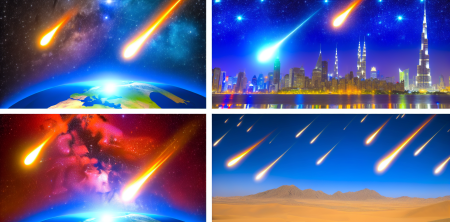
Since early March 2026, a remarkable increase in fireball sightings has captivated skywatchers across the United States and around the globe. Despite occurring during a period devoid of any known regular meteor streams, reports of stunning meteor events have surged, sparking both excitement and curiosity among astronomers and space enthusiasts alike.
A Surge in Fireball Sightings
Witness accounts and observational data indicate that fireball sightings have dramatically increased in frequency. These bright meteors, often described as shooting stars, have been spotted streaking across the night sky, leaving luminous trails that can light up the landscape. The surge in sightings has not only been restricted to the U.S.; reports have come in from various countries around the world.
Recoveries of Meteorite Fragments
Adding to the intrigue, fragments of meteorites have recently been recovered in several locations, including Germany, Ohio, and Texas. These fragments are believed to potentially originate from the interstellar object known as 3I/ATLAS, which has garnered attention since its discovery. The recovery of these meteorites provides a unique opportunity for scientists to study material from outside our solar system, offering insights into the composition of interstellar bodies.
The 3I/ATLAS Connection
The meteoric activity seems to be linked to the debris stream from 3I/ATLAS, an interstellar object that has piqued the interest of astronomers since its entry into our solar system. As the Earth passes through the debris left behind by such bodies, the likelihood of fireballs increases significantly. The fragments that have been recovered may offer critical data to better understand the origins and behaviors of interstellar objects.
What Are Fireballs and Why Do They Matter?
Fireballs are a type of meteor that is significantly brighter than a typical meteor. They are caused when a meteoroid enters the Earth's atmosphere at high speed, causing the air around it to heat up and produce a brilliant light. These events are not only visually spectacular but also important for scientific research. Analyzing the characteristics of these meteors can help us understand the composition of celestial objects and their potential impact on Earth.
Upcoming Celestial Events
As the excitement around meteor sightings continues, astronomers are also preparing for several upcoming celestial events. One notable event is the approach of a sun-grazing comet, which is expected to come remarkably close to Earth.
The Sun-Grazing Comet
The sun-grazing comet is projected to be positioned approximately 0.5 astronomical units (AU) from the Sun and Earth in late April 2026. The perihelion, or the point at which the comet will be closest to the Sun, is anticipated to occur on April 19, followed by its closest approach to Earth on April 25. This close encounter will offer an excellent opportunity for astronomers and enthusiasts to observe the comet as it travels through our solar system.
Implications for Astronomy and Public Interest
The recent spike in fireball sightings and the upcoming comet approach have reignited public interest in astronomy. With many people turning their eyes to the sky, amateur astronomers, educators, and science communicators have an opportunity to engage the public in discussions about meteors, comets, and the broader universe. Events like meteor showers and comet appearances often serve as gateways for deeper exploration into space science and the mysteries of the cosmos.
How to Observe Meteor Showers
For those interested in catching a glimpse of these celestial phenomena, here are some tips on how to effectively observe meteor showers:
- Find a Dark Location: Choose a spot away from city lights and pollution for the best visibility.
- Check the Weather: Clear skies are essential for optimal viewing conditions.
- Be Patient: Give your eyes time to adjust to the darkness; it may take 20-30 minutes.
- Use a Blanket or Recliner: Lying down can provide a comfortable view of the sky.
- Look Up: Meteor showers can occur in all parts of the sky, so take your time to look in different directions.
Conclusion
The increase in fireball sightings and the approach of the sun-grazing comet are thrilling developments for both amateur and professional astronomers. As we witness these celestial events unfold, it serves as a reminder of the dynamic nature of our universe and the continual discoveries waiting just above us. Whether you are a seasoned astronomer or a curious observer, these phenomena offer a unique opportunity to connect with the cosmos and appreciate the wonders of space.

