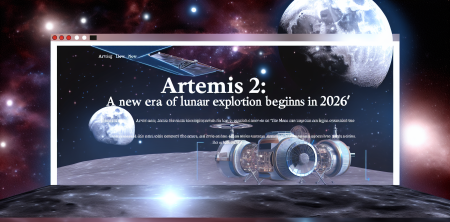
NASA is poised to launch its much-anticipated Artemis 2 mission on April 1, 2026, marking a significant milestone in humanity's journey back to the Moon. This mission will be the first crewed flight in the Artemis program, which aims to return humans to lunar orbit for the first time in over 50 years, following the historic Apollo missions.
The Mission Overview
Artemis 2 will see a crew of four astronauts embark on a 10-day journey aboard the Space Launch System (SLS) rocket. This mission aims to demonstrate NASA's deep space exploration capabilities and set the stage for future lunar landings and sustainable human presence on the Moon.
Key Mission Objectives
The mission will include several critical objectives, including:
- Gravity Tests: On Day 5, the crew will enter the Moon's sphere of influence, where they will conduct essential gravity tests that will help refine the spacecraft's navigation systems.
- Unprecedented Observations: On Day 6, the spacecraft will make its closest approach to the Moon, circling the far side to capture details that have never before been observed by human eyes.
- Emergency Preparedness: The astronauts will conduct testing of their suits, which are designed to provide up to six days of breathable atmosphere in the event of an emergency.
The Crew: Pioneers of the Next Lunar Era
NASA has yet to announce the final crew members for Artemis 2, but the selection process is closely watched by space enthusiasts and experts alike. The astronauts chosen for this historic mission will not only represent the United States but also symbolize the global effort to explore and understand our closest celestial neighbor.
Technical Challenges and Preparations
As with any ambitious space mission, Artemis 2 faces numerous technical challenges and engineering hurdles. NASA is diligently working to address these issues to ensure a safe and successful flight. The schedule for the mission remains under review, contingent on the resolution of any arising technical difficulties, as well as considerations related to engineering and weather conditions.
The Significance of Artemis 2
The significance of Artemis 2 extends beyond its immediate mission objectives. This flight is part of a broader initiative that aims to establish a sustainable human presence on the Moon by the end of the decade. It will serve as a stepping stone for future missions to Mars and beyond, enhancing our understanding of space and our place within it.
Looking to the Future
With Artemis 2, NASA is not only rekindling humanity's long-held aspirations of lunar exploration, but also investing in the technologies and partnerships needed for future missions. The Artemis program as a whole aims to demonstrate the feasibility of living and working on the Moon, paving the way for the first human missions to Mars.
Conclusion
As the countdown to April 1, 2026, begins, excitement is building around the Artemis 2 mission. This mission represents a critical step in the ongoing quest to explore the cosmos, reigniting interest in lunar exploration and inspiring future generations of scientists, engineers, and explorers. With each passing day, the team at NASA is working tirelessly to ensure that when the time comes, humanity will once again step into the realm of lunar orbit, ready to unveil the mysteries of our nearest celestial neighbor.

