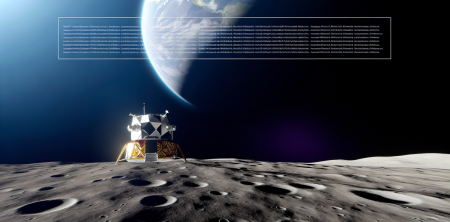
NASA is set to embark on a groundbreaking journey with its Artemis II mission, marking the first crewed lunar flight in over five decades. Slated for launch on April 3 from Florida, this mission will see a skilled team of astronauts venture into space aboard the Orion spacecraft, aiming to complete a 10-day expedition culminating in a splashdown off the coast of San Diego on April 10. The mission stands not only as a testament to human ingenuity and perseverance but also as a vital step in the broader quest for exploration beyond our planet.
Meet the Crew: A Diverse Team of Explorers
The Artemis II crew consists of four talented astronauts: Reid Wiseman, Victor Glover, Christina Koch, and Jeremy Hansen. Each member brings unique skills and experiences to the mission, promising to contribute significantly to its success:
- Reid Wiseman - A seasoned astronaut with a background in test piloting, Wiseman is set to command the mission.
- Victor Glover - As the pilot, Glover's experience aboard the International Space Station (ISS) will be invaluable during the flight.
- Christina Koch - Known for her record-setting spaceflight, Koch will serve as a mission specialist, bringing her extensive knowledge of science and technology.
- Jeremy Hansen - Representing the Canadian Space Agency, Hansen adds an international dimension to the crew as a mission specialist.
Mission Goals and Objectives
One of the primary objectives of the Artemis II mission is to perform a six-hour lunar flyby on April 6. This flyby will not only allow the crew to witness the far side of the Moon—an area that has remained largely unexplored—but will also provide an opportunity to experience a total solar eclipse that will be invisible from Earth. The mission aims to set a new distance record for human spaceflight, surpassing the Apollo 13 mission.
NASA's Deputy Program Manager, Debbie Korth, emphasized the importance of this mission in laying the groundwork for future lunar exploration. She noted that the data collected during the flyby will be crucial for mapping the Moon and identifying potential sites for future landings.
Real-Time Tracking and Public Engagement
For space enthusiasts and the general public alike, NASA is making it easier than ever to follow the Artemis II mission in real-time. Through various digital platforms, spectators can track the spacecraft’s journey, witnessing history unfold from their own homes. NASA officials have highlighted that public engagement is a significant component of the mission, as it aims to inspire the next generation of explorers and scientists.
Technological Advancements and Safety Measures
The Artemis II mission leverages cutting-edge technology that ensures the safety of the crew while pushing the boundaries of human exploration. The Orion spacecraft, designed for deep space travel, features advanced navigation systems and life support capabilities, allowing astronauts to operate efficiently in the harsh environment of space.
Flight Director Judd Frieling reiterated NASA's commitment to safety, stating that every measure has been taken to prepare for various scenarios that could arise during the mission. Extensive training has been conducted, with the crew participating in simulations to ensure they are ready for any situation in the unpredictable realm of space.
A Step Towards Sustainable Lunar Presence
The Artemis II mission is not just about reaching the Moon; it is about establishing a sustainable human presence there. NASA envisions a future where astronauts will live and work on the lunar surface, conducting research and preparing for eventual missions to Mars. Each mission, starting with Artemis II, builds on the knowledge gained from previous explorations, paving the way for long-term habitation.
The lessons learned from Artemis II will inform the subsequent Artemis missions, including Artemis III, which aims to land astronauts on the Moon's south pole and explore its resources. These efforts will be crucial in understanding how to utilize local materials for future missions.
Conclusion: A New Era of Space Exploration
As NASA prepares for the Artemis II mission, the anticipation is palpable. This mission represents not just a return to the Moon, but a leap into a future where humans will venture further than ever before. By embracing collaboration, innovation, and public engagement, NASA is not only reaching for the stars but also inspiring generations to come. With the countdown to April 3 already underway, the world awaits as humanity prepares to take another monumental step into the cosmos.

