Tesla's Resurgence in the EV Market
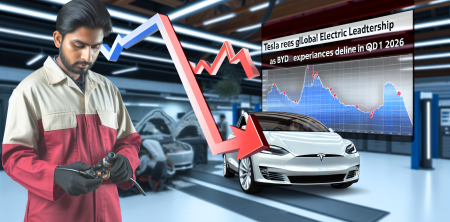
In a dramatic turnaround, Tesla has once again claimed the title of the world’s leading electric vehicle (EV) manufacturer in the first quarter of 2026. The company delivered a remarkable 358,023 vehicles, marking a 6.5% increase in year-on-year sales. This resurgence comes as rival BYD faced significant challenges, recording 310,389 fully electric sales—a substantial 25.5% decrease compared to the previous year.
Factors Behind BYD's Decline
BYD, which concluded 2025 as the top EV manufacturer, has seen its fortunes shift due to several critical factors, especially regulatory changes in its home market of China. Recent policy adjustments, including reduced tax exemptions and restrictions on aggressive pricing strategies, have adversely affected the company’s sales performance. These measures were implemented to stabilize the market and curb a fierce price war among domestic manufacturers.
The Impact of Policy Changes
- Reduced Tax Exemptions: The Chinese government has scaled back tax incentives for electric vehicles, which previously fueled consumer demand.
- Price War Curbs: Authorities have intervened to prevent price-cutting strategies that were unsustainably driving down profit margins across the industry.
As a result, BYD's sales have struggled, contributing to Tesla's resurgence in the global EV landscape.
Tesla's Production and Inventory Challenges
While Tesla has regained its leading position, the company is grappling with its own challenges. In Q1 2026, Tesla produced a staggering 408,386 units, yet the company faced an unprecedented inventory issue, with over 50,000 vehicles remaining unsold at the end of the quarter. This inventory gap represents a record high, raising questions about demand and production strategies moving forward.
Shanghai Plant's Contribution
A significant portion of Tesla's production stemmed from its Shanghai factory, which alone produced 213,398 vehicles, accounting for nearly 60% of Tesla's total output. This facility has become crucial for Tesla's strategy, allowing the company to capitalize on the growing demand for electric vehicles in Asia.
US Market Adjustments
The shift in leadership is not solely a reflection of product strength; it is also influenced by regulatory changes in the United States. The recent removal of the $7,500 tax credit for electric vehicle purchases has prompted a reassessment of pricing and sales strategies for many manufacturers, including Tesla. Analysts suggest that this adjustment period could lead to fluctuations in sales as consumers navigate the new financial landscape.
Future Outlook for Tesla and BYD
Looking ahead, the competitive landscape between Tesla and BYD remains dynamic. Tesla's upcoming models and enhancements to existing lines could bolster its sales further, while BYD will need to adapt quickly to the changing regulatory environment to regain its footing.
Conclusion
The first quarter of 2026 has underscored the volatility within the electric vehicle market, demonstrating how rapidly fortunes can change. Tesla’s return to the top is a testament to its manufacturing capabilities and market adaptability, while BYD’s decline highlights the impact of policy changes on sales performance. As both companies navigate these shifting tides, the future of the EV market remains an intriguing space to watch.

