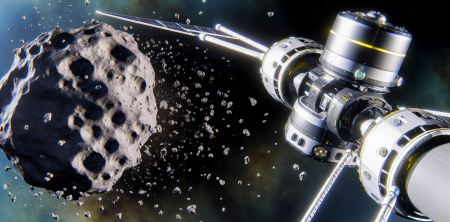
The quest for resources beyond Earth has taken a monumental leap forward, thanks to revolutionary new research that unveils a groundbreaking methodology for planning spacecraft trajectories to near-Earth objects (NEOs). This game-changing approach not only simplifies the path to accessing the vast riches of asteroids but also dramatically reduces the energy costs associated with these missions. As the race for space mining heats up, the implications of this discovery could alter the future of resource extraction in the cosmos.
Understanding the New Trajectory Planning Method
Researchers have developed a novel framework that allows spacecraft to reach tens of thousands of NEOs with unprecedented efficiency. The new methodology significantly lowers the launch escape energy required for missions, while maintaining comparable delta-v requirements. This means that spacecraft can expend less energy to break free from Earth’s gravitational pull, making it more viable to reach and explore asteroids.
What Are Near-Earth Objects?
Before diving into the specifics of this new trajectory planning method, it's essential to understand what NEOs are. Near-Earth objects are asteroids and comets that have orbits that bring them close to Earth. These celestial bodies are of immense interest to scientists and industrialists alike because they are thought to contain valuable minerals and resources, such as metals like platinum, gold, and even water, which could be used for life support and fuel in future space missions.
Key Innovations in Trajectory Planning
The new trajectory planning methodology introduces several innovative concepts that together create a more efficient pathway to asteroids. Below are the critical components of this approach:
- Reduced Launch Escape Energy: This is a major breakthrough that allows spacecraft to use less fuel to exit Earth’s atmosphere, significantly lowering costs.
- Optimized Delta-V Requirements: Delta-v refers to the change in velocity needed to perform maneuvers in space. This new method achieves similar delta-v requirements as previous methodologies but with far less energy expenditure.
- Targeting Easily Reachable NEOs: The methodology focuses on asteroids that are not only rich in resources but also easier and more cost-effective to reach.
The Impact on Space Mining
This newfound ability to plan spacecraft trajectories with such efficiency is set to address several barriers that have long hindered the progress of space mining. Here are some significant implications:
- Lower Costs: By slashing energy costs, missions to asteroids become economically feasible, drawing interest from private enterprises and government space agencies.
- Increased Accessibility: As the methodology allows for targeting more NEOs, the pool of potential resources expands, creating a wealth of opportunities for exploration and extraction.
- Enhanced Feasibility: The reduced energy requirements mean that smaller spacecraft can achieve ambitious missions previously thought impossible, democratizing access to space resources.
The Growing Interest in Asteroid Resources
The race for asteroid mining is intensifying, with several key players entering the arena. The motivations driving this competition include:
- Resource Scarcity: As Earth's natural resources continue to dwindle, the prospect of mining asteroids as an alternative source of essential materials is becoming increasingly appealing.
- Technological Advancements: Innovations in propulsion technology and robotics have made it feasible to consider missions to asteroids more seriously.
- Commercial Ventures: Private companies are investing heavily in space exploration, aiming to capitalize on potential profits from asteroid mining.
Challenges Ahead
While the new trajectory planning method is undoubtedly a significant advancement, challenges remain. These include:
- Technical Hurdles: Even with improved trajectory planning, the technological demands of asteroid mining, including extraction and processing of materials, are complex and require further innovation.
- Legal and Ethical Considerations: The question of ownership and rights to resources harvested from asteroids is still a contentious issue that needs to be addressed by international space law.
- Environmental Impact: The potential consequences of mining asteroids on the solar system's environment is an area that requires careful study to avoid unforeseen repercussions.
The Future of Space Mining
As we stand on the brink of a new era in space exploration, the implications of this trajectory planning innovation cannot be understated. The ability to efficiently reach and exploit asteroids could lead to a new age of resource abundance that alleviates some of the pressures facing our planet.
Moreover, this development ties into broader trends in commercial space exploration, where companies like SpaceX, Blue Origin, and Astrobotic are working to establish a foothold in the final frontier. The synergy between technological advancement and innovative methodologies like this one will be critical in shaping the future landscape of space mining.
Why This Matters Now
The urgency surrounding this research is amplified by the rapidly changing dynamics of our planet’s resource availability. As global economies shift and the demand for materials grows, the potential for asteroid mining becomes increasingly relevant. This new methodology not only opens doors for future missions but also sends a clear message: the final frontier is becoming an accessible destination for humanity’s next great adventure.
Conclusion
In summary, the recently unveiled trajectory planning methodology constitutes a revolutionary step forward in the field of space exploration and resource extraction. By making asteroid resources more accessible and economically viable, we stand at the cusp of a new frontier in humanity's quest for sustainability and innovation. As we continue to develop our capabilities and address the challenges ahead, the potential for asteroid mining to reshape our understanding of resources and their value is not just a possibility—it's an impending reality.
With the backdrop of growing commercial interest and advancements in technology, we must pay attention to how these developments unfold. The future of space mining has arrived, and it’s more tangible and exciting than ever before.

