```html
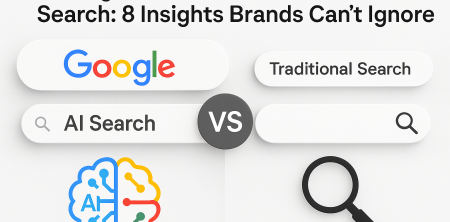
As technology advances, the way we search and consume information is evolving at a breakneck pace. One of the most significant shifts recently has been the emergence of Google AI Mode, which is reshaping the way users interact with search engines. If you’re a brand, gamer, creator, or publisher, understanding the implications of the Google AI search vs traditional search dynamic is crucial. Below, we explore eight key insights that highlight how this transformation is impacting discovery, traffic, and content strategy.
1. The Hybrid Search Journey
In an era where information is just a click away, users are adopting a hybrid approach to search. Recent data indicates that approximately 37% of users now begin their discovery process using an AI tool, such as Google’s AI Mode, before returning to traditional Google search to verify facts and prices. This shift signifies that the AI tool is often used for preliminary research, allowing users to gather insights quickly.
This hybrid journey means that brands must not only optimize their content for traditional SEO but also consider how their information might be presented in AI-generated overviews. Users rely on AI to present summaries, and if your content isn’t cited or referenced in these overviews, you risk losing visibility and relevance in the search landscape.
2. The Impact on Click-Through Rates
One of the most alarming statistics in the Google AI search vs traditional search debate is the drastic reduction in organic click-through rates (CTR) due to AI Overviews. Studies show that these overviews can lead to a staggering 61% reduction in organic CTR. Essentially, as AI tools provide synthesized information directly on the search page, users may be less inclined to click through to original sources.
This decline presents a significant challenge for brands and content creators who rely on organic traffic for monetization. If users are getting their answers directly from an AI tool, the path to engagement becomes more complex. Brands must rethink their strategies to maintain visibility, focusing on being a credible source that AI tools will reference.
3. Citation-Based Visibility: The New Frontier
As the relationship between AI and traditional search evolves, the emergence of the “citation economy” is noteworthy. This refers to how information is sourced and cited within AI-generated content. Brands that secure citations in AI Overviews stand to benefit significantly, with research revealing that citation-based visibility can produce a 35% higher CTR than standard links.
In this new ecosystem, visibility hinges on earning credible citations. This means brands must prioritize high-quality content that addresses users' queries comprehensively. Creating content that is not only informative but also authoritative will increase the likelihood of being cited, thus improving your overall search visibility across both AI and traditional platforms.
4. Understanding User Behavior
The transition from traditional search to AI-driven search showcases a fundamental shift in user behavior. Users are becoming more comfortable with AI tools, and this has implications for brands. With AI tools providing instant answers, users expect immediate gratification, which may lead to a decline in their willingness to sift through multiple links.
Brands need to understand that this shift isn’t merely technological; it’s behavioral. Users are looking for the quickest, most reliable answers. Therefore, creating concise content that directly addresses common queries and provides value can help retain user interest and encourage engagement, despite the challenges posed by AI Overviews.
5. Strategies for Brands to Adapt
Given the changing landscape, brands must adapt their strategies to remain relevant. One effective approach is to focus on optimizing content for both AI and traditional search. This means investing in high-quality, authoritative content that answers user questions effectively and succinctly. Utilize structured data to help search engines understand and categorize your content better, increasing the chances that it will be cited in AI Overviews.
Additionally, engaging directly with your audience through social media and community platforms can help build trust. When users see your brand as a reliable source of information, they’re more likely to return to your content, even in an AI-dominant search environment. Consider leveraging video content, podcasts, and interactive formats to diversify your engagement strategies. (See: Centers for Disease Control and Prevention.)
6. The Role of Content Quality
As the battle between Google AI search vs traditional search continues, the quality of content has never been more crucial. AI tools rely on well-structured, high-quality information to generate accurate overviews and summaries. This means that brands should prioritize creating comprehensive, well-researched content that can serve both human readers and AI algorithms.
Moreover, as AI continues to evolve, the algorithms that power these tools are becoming increasingly sophisticated. They can evaluate the credibility of sources and discern quality from noise. Therefore, if your content is not up to par, you risk being overlooked entirely in both AI and traditional search results.
7. The Risks of Ignoring AI Trends
Brands that choose to ignore the trends surrounding AI search may find themselves at a significant disadvantage. Not only does AI Mode change how users discover information, but it also affects traffic flows and monetization strategies. A failure to adapt could lead brands to miss out on potential customers who are primarily using AI tools to find information.
Moreover, not engaging with AI trends could also lead to a loss of market share to competitors who are leveraging these tools effectively. To stay competitive, brands must proactively incorporate AI into their marketing strategies, ensuring they are visible in both AI-generated content and traditional search results.
8. Looking Ahead: The Future of Search
The future of search is undoubtedly intertwined with AI, and the Google AI search vs traditional search debate will continue to evolve. Experts predict that as AI technology advances, we may see even more significant changes in how search engines operate and how users engage with content. Brands that stay ahead of the curve by adapting to these shifts will be well-positioned for success.
It's crucial to keep an eye on emerging trends and remain flexible in your approach. Whether it’s exploring new formats for content delivery, investing in AI tools that enhance your search visibility, or continuously educating yourself about the latest changes in search behavior, proactive engagement will be key.
In this rapidly changing environment, understanding and embracing the dynamics of Google AI search vs traditional search is essential. Brands that do so will not only survive but thrive in the new landscape of digital discovery.
9. Comparative Performance Metrics
To understand the differences between Google AI search and traditional search, it's important to look at various performance metrics. For instance, studies show that AI-driven tools often have higher engagement rates when it comes to quick queries, where users are looking for straightforward answers. This contrasts with traditional search, which can provide a broader range of perspectives but requires more time and effort from users to sift through multiple sources.
Another interesting metric is page load speed. AI search tools typically bring faster results because they summarize content and present it directly in the SERP (Search Engine Results Page), while traditional searches may lead to a delay as users navigate multiple pages.
10. The Importance of User Intent
User intent has always been a core consideration in search engine optimization, but the rise of AI has made it even more critical. AI tools like Google’s AI Mode are designed to interpret user intent more effectively, providing tailored responses based on the context of the query. For brands, this means focusing on understanding what users really want when they enter a search term.
For example, someone searching for "best running shoes" might have different intents — they could be looking for reviews, immediate purchase options, or even just general information. Understanding these nuances allows brands to create content that meets user needs more directly, whether through AI or traditional search.
11. The Role of Personalization
Another area where AI is making strides is personalization. AI-driven search engines can analyze user behavior over time, tailoring results based on past searches and preferences. This personalization can improve user satisfaction significantly, as users receive content that is more relevant to their interests.
In contrast, traditional search engines often rely on more generic algorithms, meaning that the same search term could yield vastly different results for different users based on location, search history, and other factors. Thus, brands need to consider how they’re reaching audiences in both AI and traditional contexts, possibly utilizing targeted advertising to ensure their content gets seen. (See: New York Times on AI and Search.)
12. Frequently Asked Questions (FAQs)
Q1: What are the main differences between Google AI search and traditional search?
A: The main differences include the way information is presented, the speed of results, and the level of personalization. AI search provides quick, summarized answers directly on the search page, while traditional search typically requires users to click through to various websites for information.
Q2: How can brands optimize for both AI and traditional search?
A: Brands can optimize by focusing on high-quality, authoritative content that answers common queries effectively. They should also use structured data to help search engines categorize their content better, increasing the likelihood of being cited in AI-generated overviews.
Q3: What strategies can I implement to improve my content's chances of being cited by AI tools?
A: To improve your content’s chances of being cited, focus on producing well-researched, informative pieces that address key questions in your niche. Ensure your content is easy to navigate and includes citations from reputable sources to enhance its credibility.
Q4: Is it still worth investing in traditional SEO?
A: Yes, investing in traditional SEO remains important as many users still rely on it for comprehensive information. Balancing both AI optimization and traditional SEO is key to maximizing visibility and engagement.
Q5: How can I measure the effectiveness of my strategies in this changing landscape?
A: Use analytics tools to track key performance indicators (KPIs) such as organic traffic, click-through rates, and engagement levels. This data can help you understand what’s working and where adjustments are needed.
Q6: Will AI completely replace traditional search engines?
A: While AI search tools are becoming increasingly prevalent, they are not likely to completely replace traditional search engines. Instead, both will coexist, serving different user needs and preferences.
Q7: How can I keep up with changes in AI search technology?
A: Stay informed by following industry blogs, attending webinars, and participating in relevant forums. Continuous learning about AI advancements will help you adapt your strategies effectively.
Q8: What role does voice search play in this landscape?
A: Voice search is becoming a significant factor in the evolving search landscape, particularly with AI capabilities. Users often prefer voice search for quick answers, so optimizing for conversational queries and long-tail keywords is essential.
13. Innovations on the Horizon
The advancements in AI technology don’t seem to be slowing down. We're already seeing the integration of more sophisticated AI systems that can analyze user interactions not just within search engines but across various platforms. Innovations such as machine learning algorithms that adapt to individual user habits, and predictive analytics that foresee user needs, are just the beginning.
As these technologies continue to develop, brands must stay ahead of the game. This could mean investing in AI-enhanced content management systems or employing data analytics to refine their understanding of audience behavior. By doing so, they can craft more engaging and relevant content that meets user needs in both AI and traditional search contexts. (See: Scientific Research on AI in Search.)
14. Exploring Case Studies of Success
To illustrate the practical implications of the Google AI search vs traditional search dynamics, let’s take a look at some successful case studies. Businesses that have embraced AI in their search strategies are often reaping the benefits of increased visibility and engagement.
For instance, a major e-commerce retailer optimized their product descriptions using structured data, ensuring that their content would be picked up by AI tools. This results in their products being frequently referenced in AI-generated summaries, leading to a 40% increase in conversions. The key was understanding that AI search tools favor well-organized, easily digestible information.
Another example is a health information website that revamped its articles for clarity and precision. By focusing on the specific intents of users searching for medical advice, they aligned their content with AI needs. The outcome? They saw a 50% increase in user engagement and a notable rise in citations across AI platforms.
15. Future-Proofing Your Content Strategy
As we navigate the evolution of search technology, it's essential for brands to adopt a forward-thinking approach to their content strategies. Future-proofing involves staying adaptable and leveraging insights from user behavior and emerging AI capabilities.
One way to future-proof your content is to continuously assess and update it based on changing user needs and preferences. Perform regular audits to ensure your information remains relevant and trustworthy. Integrating user feedback into your content strategy can also guide improvements and foster deeper connections with your audience.
Additionally, diversify your content formats to include videos, podcasts, and infographics. These can be more engaging for users and can also be optimized for both traditional and AI-driven searches. By catering to varied preferences, you position your brand as a comprehensive resource in the digital landscape.
16. Final Thoughts on Navigating the Search Landscape
In this rapidly changing environment, understanding and embracing the dynamics of Google AI search vs traditional search is essential. Brands that do so will not only survive but thrive in the new landscape of digital discovery. The future of search is one where user-centric strategies, high-quality content, and innovative technologies converge to create a seamless user experience.
By continuously refining your approach and staying attuned to advancements in AI and search behavior, you can position your brand for long-term success. Keep the conversation going with your audience, adapt to their needs, and leverage the full potential of both traditional and AI-driven search methodologies. The journey toward mastering this new digital frontier is just beginning.
```
Trending Now
- the complete explanation
- this guide on why children with adhd struggle with phonemic awareness: understanding the challenges and solutions
- our breakdown of the hidden struggles of adhd in girls: what every parent should know
- Empowering Students: How Conflict Resolution in Middle School Builds Resilience
- this guide on unlocking focus: how adhd mindfulness interventions are transforming school environments
Frequently Asked Questions
How does Google AI search differ from traditional search?
Google AI search uses advanced algorithms to provide synthesized information directly on the search page, while traditional search relies on presenting a list of links to web pages. This shift allows users to obtain quick answers but may reduce click-through rates to original content.
What is the hybrid search journey?
The hybrid search journey refers to users starting their searches with AI tools like Google AI Mode for quick insights, then switching to traditional search for verification. This behavior emphasizes the need for brands to optimize content for both AI-generated overviews and traditional SEO.
Why are click-through rates declining with AI search?
Click-through rates are declining due to AI overviews providing direct answers on search pages. Studies show a reduction of up to 61% in organic CTR as users find the information they need without clicking through to original sources, impacting traffic for brands.
What should brands consider for SEO with AI search?
Brands must optimize their content for both traditional SEO and AI-generated overviews. Ensuring that their information is cited in AI summaries is crucial for maintaining visibility and relevance in an evolving search landscape.
How is AI search impacting content strategy?
AI search is transforming content strategy by necessitating a dual approach. Brands must create content that is not only optimized for traditional search but also structured to be easily referenced in AI overviews, thereby enhancing their chances of visibility in both formats.
Agree or disagree? Drop a comment and tell us what you think.

