```html
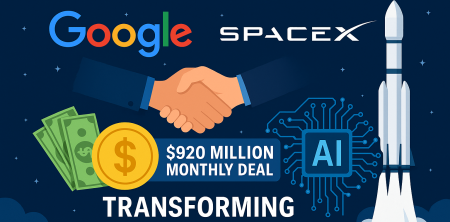
The tech landscape is buzzing with excitement and speculation as news breaks about a hyper-significant deal between two titans: Google and SpaceX. Reports indicate that Google is set to pay SpaceX a staggering $920 million per month for compute capacity linked to xAI. This arrangement is not just a financial transaction; it signifies a monumental shift in the AI compute landscape that could forever alter gaming, development, and various other sectors. But what does this really mean for the future of AI?
The Scale of the Deal
At first glance, $920 million a month is an astronomical figure that catches attention immediately. Over the course of a year, this amounts to nearly $11 billion. For context, the entire GPU rental market is projected to generate approximately $2.1 billion per month, underscoring the sheer scale of demand for AI compute resources. Such numbers cannot be dismissed lightly; they are indicative not only of Google's ambitions but also of an escalating arms race in the technology sector for GPU capabilities.
The Implications for AI and Gaming
Why does this massive investment matter? In the realm of artificial intelligence, compute capacity is the lifeblood of advancements. AI models require substantial resources to train and deploy, particularly when it comes to complex tasks like natural language processing and image recognition. For the gaming industry, this translates into more sophisticated AI for NPC behavior, improved graphics rendering, and an overall richer player experience. With Google’s financial commitment, we can expect to see enhanced AI capabilities integrated into gaming tools and development processes sooner rather than later.
The Arms Race for Compute Power
The Google SpaceX partnership highlights a crucial trend: an arms race for compute power among leading tech companies. Microsoft, Amazon, and NVIDIA are also vying for a stake in this burgeoning market. For instance, Microsoft has heavily invested in OpenAI and its own Azure cloud computing services, while Amazon continues to dominate with AWS. These companies are ramping up their investments in GPU technology, fostering a competitive environment that could eventually benefit consumers with better products and services.
AI Compute: A New Gold Rush
As AI continues to gain traction across various industries, the demand for compute power is skyrocketing. Companies are racing to build the infrastructure necessary to support the next generation of AI technologies. This partnership between Google and SpaceX signifies a new gold rush where compute capacity is treated as the most valuable resource. The implications are broad, affecting not just tech giants but also startups and smaller companies looking to leverage AI capabilities for their own products.
Financial Viability and Profitability Questions
While the financial numbers are impressive, questions about profitability remain. Many analysts are scrutinizing whether such large-scale investments can yield sustainable returns. Google's monthly commitment of $920 million might seem like a strategic move to secure compute capacity, but it also raises concerns about the long-term viability of such a business model. Will Google’s investment in SpaceX translate into significant advancements in AI that justify the expense? Only time will tell.
What This Means for SpaceX
For SpaceX, this partnership could serve as a major revenue stream beyond its traditional aerospace pursuits. While SpaceX has gained notoriety for revolutionizing space travel and building an ambitious satellite constellation with Starlink, the scope of its business has now expanded into the tech domain. This diversification into AI and cloud computing services illustrates SpaceX’s growing influence and its ability to adapt in an ever-evolving marketplace.
Consumer Impact
The implications of the Google SpaceX partnership extend beyond corporate boardrooms. For gamers and app developers, this deal could lead to groundbreaking advancements in technology. Expect faster, more efficient AI that enhances gameplay, enabling richer storytelling, and more complex game mechanics. For example, imagine NPCs that learn from player interactions or dynamically change their behavior based on real-time data. This could lead to experiences that feel more immersive and authentic than ever before.
Future Trends in AI and Gaming
This deal could usher in a new era in AI, particularly for gaming. As Google and SpaceX continue to collaborate on AI infrastructure, we may see trends like:
- Enhanced Personalization: AI-driven algorithms could tailor gaming experiences to individual players, adjusting difficulty and content based on player behavior.
- Realistic Environments: Improved AI could lead to more lifelike game worlds, with dynamic weather systems and realistic character behaviors.
- Streamlined Development: AI tools could simplify game development, allowing smaller studios to produce high-quality games without the need for extensive resources.
The Fear of Missing Out (FOMO)
The tech community is rife with FOMO regarding this partnership. As companies scramble to secure their own pieces of the AI compute pie, many are left wondering whether they’ll be able to keep up. The staggering figures involved in the Google SpaceX partnership might signal a new phase in the AI boom where only the best-resourced companies can compete effectively. This leaves smaller players in a precarious position, struggling to secure funding and resources to innovate. (See: Google's investment in AI infrastructure.)
Potential Applications of AI Advancements
The collaboration between Google and SpaceX isn't just about gaming. The advancements in AI compute power can have far-reaching implications across multiple sectors. Here are a few potential applications:
- Healthcare: With boosted AI capabilities, healthcare providers could utilize AI to enhance diagnostic accuracy, predicting health issues before they become critical. Machine learning algorithms could analyze patient data more efficiently, helping doctors make informed decisions faster.
- Autonomous Vehicles: Companies in the automotive industry could leverage enhanced AI to improve the safety and efficiency of self-driving cars. The Google SpaceX partnership may facilitate real-time processing of vast amounts of data from sensors, improving navigation and decision-making algorithms.
- Financial Sector: In finance, AI can enhance fraud detection systems or optimize investment strategies. With increased compute capacity, financial institutions could analyze market trends and customer data more effectively, leading to smarter investment decisions.
Expert Perspectives on the Partnership
The sentiment among industry experts regarding the Google SpaceX partnership is overwhelmingly positive. Many believe it could dramatically reshape the technology landscape. Dr. Amelia Chang, a leading AI researcher at Stanford University, states, “This partnership not only accelerates the pace of innovation but also democratizes access to high-end compute resources. Smaller firms may benefit indirectly as AI becomes more accessible.”
Moreover, tech analyst David Pritchard emphasizes the competitive edge this partnership offers: “By combining Google’s data processing capabilities with SpaceX’s innovative technology, they are setting a standard. Other companies will have to either innovate or collaborate to keep pace.”
Challenges Ahead
Despite the excitement surrounding this partnership, challenges remain. Achieving seamless integration between Google's cloud services and SpaceX's infrastructure will require significant technical expertise and collaboration. There’s also the issue of data privacy and security, crucial in today’s digital landscape. How will sensitive data be handled, especially with AI models that learn from user interactions?
Additionally, the energy consumption associated with such massive compute resources is a concern. As AI models grow more sophisticated, they require more energy, leading to questions about sustainability. Both companies may need to invest in renewable energy sources or energy-efficient technologies to mitigate their carbon footprint.
The Regulatory Landscape
As with any partnership involving cutting-edge technology, the Google SpaceX collaboration will likely face scrutiny from regulators. Governments around the world are becoming increasingly vigilant about the implications of AI technology, particularly regarding data privacy, competition, and ethical considerations. There’s a possibility of regulatory hurdles that could affect the pace of innovation.
The EU and other regions are already working on frameworks to govern AI technologies, focusing on transparency and accountability. Google and SpaceX will need to navigate this complex landscape carefully to avoid potential pitfalls while pushing forward with their ambitious goals.
FAQs about the Google SpaceX Partnership
What is the primary focus of the Google SpaceX partnership?
The partnership primarily aims to leverage SpaceX's advanced technology and infrastructure to enhance Google's AI processing capabilities, particularly for projects related to xAI.
How will this partnership impact the gaming industry?
It is expected to lead to more sophisticated AI capabilities in gaming, enhancing player experiences through improved graphics, dynamic NPC interactions, and personalized gaming environments.
What are the financial implications for Google?
Google's commitment of $920 million per month raises questions about the long-term profitability of this investment, especially in a rapidly changing tech landscape. (See: AI compute resources in technology.)
Will smaller companies benefit from this partnership?
Yes, as AI compute resources become more powerful and accessible, smaller companies could harness these advancements to innovate and enhance their own offerings.
What challenges might arise from this collaboration?
Challenges include technical integration, data privacy concerns, sustainability issues regarding energy consumption, and potential regulatory scrutiny.
How might regulatory bodies respond to this partnership?
Regulatory bodies may scrutinize the partnership for data privacy and competition concerns, which could impact how Google and SpaceX operate and innovate.
Deep Dive: The Future Ecosystem of AI Compute
As the Google SpaceX partnership evolves, we may see a new ecosystem emerging around AI compute power. This ecosystem will not solely benefit the two giants but will create ripple effects across the tech landscape. With Google’s vast data processing capabilities and SpaceX’s leading-edge infrastructure, we can anticipate collaborative projects that drive innovation.
Think about how cloud gaming could evolve. With enhanced AI capabilities, cloud gaming platforms could offer adaptive graphics and real-time rendering that adjusts based on user hardware. This means a player with a lower-end device could still enjoy experiences akin to those available on high-end gaming rigs, leveling the playing field.
The Role of Partnerships in Innovation
The Google SpaceX partnership is a prime example of how strategic alliances are crucial for driving technological advancement. Other companies may look to form similar partnerships, pooling resources and expertise to tackle challenges in AI and beyond. For example, collaborations between healthcare providers and tech firms could lead to groundbreaking new diagnostic tools or treatment personalization methods powered by sophisticated AI algorithms.
This trend of collaboration highlights a shift in the tech industry, where competition is no longer solely about who has the most powerful hardware or software but also involves creating synergies that enhance overall capability and foster innovation.
Investors' Reactions and Market Trends
The announcement of the Google SpaceX partnership sent ripples through stock markets and investment communities. Investors reacted positively, with shares of both companies seeing a boost. Analysts expect that as the partnership progresses, it will attract further investment into AI and space technology sectors. The synergy between AI and space technology could lead to developments like satellite-based AI applications in various fields, from agriculture to disaster management.
Furthermore, the investment climate around AI is heating up, with venture capital increasingly flowing toward startups focused on innovative AI solutions. This influx of capital could stimulate further advancements and push the boundaries of what’s possible in AI research and application. (See: Impact of AI on gaming development.)
Real-World Examples of AI Transformations
Numerous companies are already leveraging AI in ways that could be amplified by the Google SpaceX partnership. For instance, companies like OpenAI are developing powerful AI models that can generate text, create art, and even compose music. With enhanced compute capacity, these models could become even more sophisticated, leading to applications we can only begin to imagine.
Additionally, firms in the automotive space are harnessing AI for autonomous driving. Companies like Tesla and Waymo are using AI algorithms to process data from a plethora of sensors, making real-time decisions essential for safe driving. If Google and SpaceX can streamline and enhance the compute power available for these applications, it could accelerate the adoption and safety of autonomous vehicles.
What the Future Holds for Businesses
Businesses across multiple sectors will likely need to adapt to this rapidly evolving landscape driven by the Google SpaceX partnership. Companies that can embrace AI will likely gain a competitive edge, while those that lag may struggle to keep pace. This shift means that businesses will need to invest in AI literacy, training staff, and upgrading their technological infrastructure.
Additionally, the partnership could inspire companies to rethink their business models. For example, firms may begin offering AI-as-a-Service, providing businesses with access to powerful AI tools without the need for significant upfront investments. This could democratize access to advanced technologies, allowing smaller firms to compete alongside industry giants.
Looking Ahead: The Global Impact of AI Innovation
The implications of the Google SpaceX partnership extend beyond the tech world. As AI becomes more integrated into everyday life, we may see transformations in how we work, communicate, and even think. For example, AI algorithms could help improve decision-making in various sectors, from agriculture optimizing crop yields to finance executing trades with unprecedented speed and accuracy.
On a global scale, the partnership could also enhance international collaboration in AI research and development. Countries may begin to form alliances that mirror the Google SpaceX partnership, sharing resources and expertise to tackle pressing global issues like climate change or public health crises.
Conclusion: The Future of AI Infrastructure
As we look ahead, the Google SpaceX partnership stands as a beacon of what is possible when tech giants unite. The implications are profound, not just for the involved parties but for industries at large. Companies that can harness this unprecedented level of compute power are likely to redefine the boundaries of what AI can achieve, particularly in realms like gaming. As the competition heats up, we must remain vigilant, observing how these massive investments shape the future of technology, entertainment, and beyond.
```
Trending Now
- Unlock Your Potential: Become the Head…
- Why Children with ADHD Struggle with Phonemic Awareness: Understanding the Challenges and Solutions
- read the full story
- this guide on empowering students: how conflict resolution in middle school builds resilience
- this guide on unlocking focus: how adhd mindfulness interventions are transforming school environments
Frequently Asked Questions
What is the Google SpaceX partnership about?
The Google SpaceX partnership involves a monumental deal where Google pays SpaceX $920 million monthly for compute capacity linked to xAI. This collaboration signifies a major shift in the AI compute landscape, impacting various sectors including gaming and development.
How much is Google paying SpaceX for AI infrastructure?
Google is set to pay SpaceX a staggering $920 million per month, which totals nearly $11 billion annually. This investment reflects Google's ambition to secure substantial compute resources for advancing AI technologies.
What are the implications of the Google SpaceX deal for AI?
The partnership will enhance AI capabilities by providing significant compute power essential for training complex models. This will lead to advancements in areas like natural language processing and image recognition, benefiting industries such as gaming.
Why is compute power important for AI development?
Compute power is crucial for AI development as it allows for the training and deployment of complex models. The resources are essential for tasks like natural language processing and image recognition, which require substantial computational capabilities.
How does the Google SpaceX deal affect the tech industry?
The deal highlights an arms race for compute power among major tech companies like Microsoft and Amazon. As companies invest heavily in AI infrastructure, this competition is likely to drive innovation and advancements across multiple sectors.
What did we miss? Let us know in the comments and join the conversation.

