```html
When exploring the rich field of child development, one concept stands out as a crucial milestone in cognitive growth: conservation in child development. This principle, primarily rooted in the groundbreaking work of Swiss psychologist Jean Piaget, illustrates how children come to understand that certain properties of objects remain constant despite changes in their form or appearance. In this article, we'll delve into the nuances of conservation, its significance in child development, and its practical implications in educational settings.
The Foundations of Piaget’s Theory
Jean Piaget (1896-1980) revolutionized our understanding of cognitive development in children. His theory outlines how children construct knowledge through interactions with their environment, suggesting that intellectual growth occurs in stages. These stages include the sensorimotor, preoperational, concrete operational, and formal operational periods.
Focusing on the concrete operational stage—which typically spans ages 7 to 11—Piaget introduced key concepts such as conservation. This stage marks a shift where children begin to think logically about concrete events, and conservation becomes a pivotal skill they develop.
Defining Conservation in Child Development
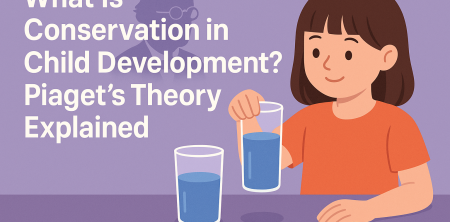
Conservation refers to a child's understanding that certain physical properties remain unchanged even when their appearance alters. For example, if you pour water from a short, wide glass into a tall, thin glass, a child who has achieved conservation will recognize that the amount of water remains the same, despite the differing shapes of the containers.
Piaget identified several types of conservation, including:
- Conservation of number: Recognizing that the number of items remains constant regardless of arrangement.
- Conservation of volume: Understanding that liquid quantities stay the same despite changes in container shape.
- Conservation of mass: Realizing that the mass of a substance remains unchanged even when its form alters.
- Conservation of length: Acknowledging that the length of an object does not change even when it is bent or stretched.
Each of these types highlights an important aspect of children's cognitive development and their ability to think abstractly about physical properties.
The Stages of Conservation Development
Understanding conservation involves recognizing the stages through which children progress. In Piaget's framework, children typically do not grasp the concept of conservation until they reach the concrete operational stage.
Before this, during the preoperational stage (ages 2-7), children are egocentric and view the world from their own perspective. They might insist that the taller glass has more water or that a row of five spread-out coins has more coins than a row of five closely spaced coins. This is because they focus primarily on visual appearances rather than underlying properties.
As children grow into the concrete operational stage, they begin to overcome these misconceptions. They start to understand that changes in appearance can be misleading and that logical reasoning can help them determine the underlying truth. This cognitive shift can be observed through various conservation tasks designed to test their understanding.
Key Experiments Demonstrating Conservation
Piaget's exploration of conservation involved several famous experiments that showcased children's thought processes. One notable experiment involved using beakers filled with equal amounts of liquid. When the liquid from one beaker was poured into a taller, thinner beaker, younger children (typically in the preoperational stage) would often claim that the taller beaker held more liquid. In contrast, older children (in the concrete operational stage) would recognize that the two beakers contained the same volume.
Another classic experiment involved clay balls. Piaget would roll a ball of clay into a long sausage shape and ask children whether the amount of clay changed. Younger children often believed that the sculpture's shape indicated a change in quantity, while older children understood that the amount of clay remained constant. (See: Jean Piaget's contributions to psychology.)
These experiments not only highlighted the cognitive differences between stages but also emphasized how children’s reasoning abilities evolve as they interact with their environment.
Practical Implications for Educators
Understanding conservation in child development is vital for educators aiming to support cognitive growth effectively. Since conservation represents a significant step in logical thinking, teachers can design activities that encourage this understanding. Here are some practical insights:
- Hands-On Activities: Engage students in hands-on experiments involving liquid measurement, mass comparison, or spatial arrangements. For instance, using different containers for pouring water can help visualize conservation concepts.
- Discussion and Reflection: Encourage children to explain their reasoning. Asking open-ended questions allows students to articulate their thought processes, reinforcing their understanding.
- Real-Life Applications: Incorporate real-life examples that require conservation understanding, like cooking measurements or gardening, to make the learning process more relatable.
- Group Work: Collaborative learning can help children challenge each other’s misconceptions and solidify their understanding of conservation principles.
By incorporating these methods, educators can scaffold children's learning experiences, facilitating their cognitive development during the critical concrete operational phase.
The Role of Cultural Context in Development
While Piaget's theory primarily focuses on cognitive stages, it’s essential to acknowledge the impact of cultural context on conservation in child development. Different cultures may foster varying approaches to learning and reasoning. For instance, children growing up in environments where spatial and numerical reasoning is emphasized may develop conservation skills at different rates compared to children in more verbally oriented cultures.
Research suggests that cultural practices shape children's cognitive development. In societies that utilize measurement and compare objects frequently, children might grasp conservation concepts earlier than those in cultures where such practices are less common. Understanding these cultural differences allows educators and psychologists to tailor their approaches to meet the needs of diverse learners.
Challenges and Critiques of Piaget’s Theory
While Piaget's work has profoundly influenced child development research, it has not been without its critiques. Some psychologists argue that his stages may be too rigid and that children can demonstrate understanding of conservation earlier than he proposed. Other studies have suggested that social interactions and guided learning can accelerate the development of cognitive skills, including conservation.
Moreover, Piaget's reliance on structured tasks may not account for variability in children's performance based on context or individual differences. Recent approaches to understanding child development emphasize the importance of collaboration, social influences, and cultural factors, which can offer additional insights that Piaget’s framework might overlook.
Modern Applications of Conservation Understanding
In contemporary educational settings, the principles of conservation continue to inform teaching practices and developmental assessments. Educators often design curricula that incorporate hands-on experiences, allowing children to explore conservation through various mediums, such as art, science, and mathematics.
Additionally, the recognition of conservation is crucial in early childhood assessments. Understanding where a child stands in their grasp of conservation concepts can provide insights into their overall cognitive development and inform future educational strategies.
Furthermore, parents and caregivers can play an essential role in reinforcing conservation concepts at home. Simple activities, such as cooking, sorting objects, or measuring ingredients, can encourage children to engage in logical thinking and enhance their understanding of conservation in practical, enjoyable ways.
The Importance of Conservation Across Multiple Domains
Conservation in child development doesn’t just apply to physical properties; it extends into various domains including mathematics, science, and even social understanding. For instance, the conservation of number gives children a foundation for grasping basic arithmetic — realizing that the total remains the same whether they arrange their toys in a line or a circle.
In science, understanding conservation principles can help children make sense of change in states of matter, such as ice melting into water, or even the cyclical nature of life, like growth and decay. This principle can foster scientific inquiry, as children learn to ask questions and seek evidence to support their hypotheses. (See: CDC on child development stages.)
Moreover, social understanding can also reflect conservation concepts. Children learn to recognize that friendships can endure despite disagreements or changes in their surroundings. They begin to grasp that the essence of a relationship remains despite shifts in context.
This broad application of conservation principles reinforces its significance in holistic child development, emphasizing that nurturing this understanding across domains can foster well-rounded cognitive growth.
Statistics and Research on Conservation Development
Recent studies have illuminated various aspects of conservation in child development, revealing patterns that support and expand upon Piaget's initial findings. A comprehensive review indicated that about 60-70% of children aged 6-7 in the concrete operational stage demonstrate an understanding of the conservation of number and mass, while about 80% display conservation of volume.
Interestingly, cross-cultural studies have shown that children in some non-Western cultures achieve these conservation skills at younger ages compared to those in Western contexts. This suggests that cultural experiences and educational opportunities significantly influence cognitive development. For example, in a study comparing children from rural and urban settings, rural children were found to perform better in conservation tasks due to practical experiences in their daily lives.
Moreover, interventions aimed at enhancing understanding of conservation have proven effective. Programs focusing on hands-on learning and guided discovery can improve children's performance in conservation tasks by as much as 30%. This emphasizes the potential for educators and parents to actively contribute to cognitive development through targeted activities.
Expert Perspectives on Conservation in Child Development
Insights from child development experts further elucidate the importance of conservation in educational settings. Dr. Laura Berk, a noted developmental psychologist, emphasizes that "teaching children about conservation is not just about helping them understand quantities; it's about nurturing their ability to reason logically." She advocates for integrating conservation concepts into everyday learning experiences, asserting that children benefit immensely from practical applications that make these ideas tangible.
Another expert, Dr. David Sousa, suggests that "understanding conservation principles equips children with critical thinking skills that are necessary for academic success in later years." He highlights the role of educators in facilitating environments that promote inquiry and exploration, thus enhancing children's ability to tackle complex problems.
These expert perspectives underscore the broader implications of conservation beyond mere academic achievement, emphasizing its role in fostering essential skills that prepare children for future challenges.
Frequently Asked Questions about Conservation in Child Development
What age do children typically understand conservation?
Most children begin to understand conservation concepts between the ages of 7 and 11, aligning with Piaget's concrete operational stage. However, some research suggests that aspects of conservation may manifest earlier, depending on individual experiences and cultural contexts.
How can I help my child develop conservation skills at home?
Parents can encourage the development of conservation skills through everyday activities. Simple experiments with pouring liquids, rearranging objects, or engaging in cooking can provide practical opportunities for children to explore and articulate their understanding of conservation concepts.
Are there cultural differences in learning conservation?
Yes, cultural contexts significantly influence how children develop conservation skills. In cultures that emphasize hands-on learning and practical experiences, children may grasp these concepts more readily than in environments focused primarily on abstract learning.
What are some common misconceptions about conservation?
One common misconception is that children can only understand conservation when they reach a specific age. However, research indicates that some children may demonstrate an early understanding of conservation through guided experiences. Another misconception is that conservation solely relates to physical properties, neglecting its applications in social and academic domains.
Practical Strategies for Parents to Reinforce Conservation
As parents, you can play a significant role in fostering your child's understanding of conservation through everyday life. Here are some practical strategies:
- Incorporate Conservation in Play: Use toys like building blocks or playdough to demonstrate concepts of volume and mass. Rolling the dough into different shapes can illustrate conservation of mass, while stacking blocks can help visualize conservation of number.
- Cooking Together: Involve your children in cooking activities where measuring ingredients is necessary. This experience can help them grasp concepts like volume and mass in a fun and engaging way.
- Gardening: Engage children in gardening tasks, explaining how plants grow and change but always remain the same plant. This can help children understand conservation principles in a biological context.
- Sorting Games: Use household items to create sorting activities that encourage children to recognize quantity regardless of the arrangement. For instance, sorting buttons or coins can help reinforce conservation of number.
The Lasting Impact of Conservation in Child Development
Understanding conservation is not only critical for cognitive development; it also lays the groundwork for future learning in various subjects. Mastery of conservation skills enables children to tackle more complex mathematical concepts, such as addition and subtraction, and serves as a foundational building block for subjects like chemistry and physics.
Moreover, the ability to grasp conservation extends beyond academic achievements; it enhances critical thinking and problem-solving skills. As children learn to navigate different scenarios where conservation principles apply, they develop the confidence to approach challenges with a logical mindset.
Through ongoing support from educators and parents alike, children can build a robust understanding of conservation, equipping them with essential tools for success in their educational journeys and beyond.
Conclusion: The Importance of Fostering Conservation Skills
Conservation in child development holds immense importance as it represents a critical shift in a child's cognitive abilities. By grasping these principles, children are not only prepared for more complex academic subjects but also for real-world challenges that require logical reasoning and critical thinking.
As we navigate the complexities of child development, the notion of conservation serves as a vital touchstone. It encourages holistic growth, extending beyond academics into various facets of life that shape a child's ability to understand and engage with the world around them. Therefore, nurturing this understanding in young learners can significantly influence their long-term cognitive and personal development.
```
Trending Now
Frequently Asked Questions
What is conservation in child development?
Conservation in child development refers to a child's ability to understand that certain properties of objects, such as volume, mass, or number, remain unchanged despite changes in their appearance. This concept is pivotal in cognitive development and typically emerges during Piaget's concrete operational stage, which occurs between ages 7 and 11.
How does Piaget's theory explain conservation?
Piaget's theory of cognitive development explains conservation as a key milestone that children achieve during the concrete operational stage. It illustrates how children begin to think logically about concrete events, allowing them to understand that certain properties, like volume or mass, remain constant despite changes in form or arrangement.
What are examples of conservation in children's understanding?
Examples of conservation include the conservation of number, where children recognize that the number of items remains the same despite rearrangement; conservation of volume, where they understand liquid quantities remain unchanged despite different container shapes; and conservation of mass, where they realize mass remains constant despite changes in shape.
At what age do children develop conservation skills?
Children typically begin to develop conservation skills during the concrete operational stage of Piaget's cognitive development theory, which spans from ages 7 to 11. During this period, children start to think logically about concrete events and grasp the concept of conservation.
Why is conservation important in child development?
Conservation is important in child development because it signifies a child's ability to think logically and understand the permanence of certain properties. This cognitive milestone is crucial for further intellectual growth and helps children navigate their environment more effectively, laying the foundation for more complex reasoning skills.
What did we miss? Let us know in the comments and join the conversation.

