```html
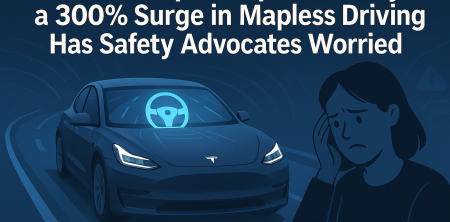
On July 19, 2026, Tesla released a momentous update to its Autopilot system that has set the automotive world ablaze. The update allows for full 'no-map' autonomous driving capabilities across 15 new countries, leading to an astonishing 300% surge in mapless deployments within just 24 hours. While the excitement surrounding this Tesla autopilot update is palpable, so too are the growing safety concerns from regulators and advocacy groups.
The Bold Step into No-Map Autonomous Driving
Tesla's decision to expand its no-map autonomous driving capabilities is a significant leap towards a future where roads may be shared by autonomous vehicles without the aid of pre-loaded mapping data. This innovative feature is designed to enhance the flexibility and adaptability of the Tesla driving experience, potentially catering to a more global audience. The company's ambition to have its vehicles navigate roads in real-time without relying on pre-existing map data demonstrates a commitment to pushing the envelope of what autonomous driving can achieve.
This update has not gone unnoticed. The immediate impact was felt as drivers across various regions began experimenting with the new system, leading to a massive uptick in mapless driving. In the hours following the release, social media platforms like Twitter and TikTok exploded with videos showcasing drivers testing the limits of their vehicles. This trending content has sparked considerable interest among tech enthusiasts, creating a viral 'fear of missing out' phenomenon.
Real-World Incidents Raise Red Flags
Despite the excitement, the rollout has not been smooth. Within the first week of the update, three incidents were reported where the no-map system failed to detect unexpected road obstacles. These failures are particularly concerning because they suggest a fundamental vulnerability in the system. Without pre-loaded maps, the vehicle relies on its sensors and algorithms to identify obstacles, a process that may not always be reliable.
The implications of these incidents are profound. When drivers are lulled into a sense of security by the promise of advanced technology, they may inadvertently place themselves and others in perilous situations. Anecdotal reports from drivers who have used the no-map system highlight instances where the vehicle struggled to navigate complex road scenarios, including construction zones and unexpected detours.
Regulatory Response: An Emergency Review
The National Highway Traffic Safety Administration (NHTSA) has taken notice of the troubling reports and announced an emergency review of the no-map system. This regulatory scrutiny is critical, especially given the potential risks associated with deploying untested technology. The NHTSA's examination will likely focus on the system's reliability, its ability to handle unforeseen circumstances, and Tesla's compliance with safety standards.
The timing of this review is crucial. With autonomous vehicles increasingly becoming a part of everyday life, regulators must ensure that the technology meets stringent safety criteria before widespread adoption. The challenge lies in balancing innovation with safety — a task that is easier said than done.
Consumer Sentiment: Cautious Optimism vs. Fear
As discussions surrounding the Tesla autopilot update unfold, consumer sentiment appears to be divided. On one hand, there are those who express cautious optimism about the potential of autonomous driving technology, recognizing its capacity to reduce traffic accidents, improve fuel efficiency, and enhance mobility for individuals who may not be able to drive.
Conversely, a significant portion of consumers is understandably apprehensive. Reports of failures can quickly shift public perception and fuel skepticism regarding the safety of such systems. For many, the idea of relinquishing control to a machine that may not accurately interpret real-world obstacles is disconcerting. The question arises: is Tesla prioritizing speed and innovation over safety?
Social Media Influence: A Double-Edged Sword
The role of social media in shaping public perception around Tesla's no-map update cannot be understated. Platforms like Twitter and TikTok serve as both a launchpad for excitement and a breeding ground for fear. Videos showcasing the new capabilities generate buzz and attract users eager to share their experiences, but these same platforms can amplify negative incidents and contribute to a growing fear among consumers. (See: Tesla Autopilot safety concerns.)
As more users take to social media to express their opinions, the conversation surrounding Tesla's no-map update shifts from excitement to caution. For every viral video celebrating a successful autonomous drive, there’s likely a counter-narrative focusing on the risks and potential dangers. This duality highlights the challenge faced by Tesla — managing perception while pushing technological boundaries.
Safety Advocates Weigh In: A Call for Caution
Safety advocates have been quick to voice their concerns regarding the new Autopilot update. Organizations committed to road safety emphasize the need for stringent testing and validation before rolling out such technology to the public. They argue that Tesla must prioritize comprehensive safety evaluations rather than rushing to meet market demands.
Experts have pointed out that while the advancement of self-driving technology is inevitable, it should not come at the expense of safety. Advocates are calling for transparency from Tesla regarding the incidents that have occurred since the update, demanding clearer insights into how the company plans to address these challenges moving forward.
Global Implications: Setting a Precedent for the Industry
The ramifications of Tesla's no-map update extend beyond the company itself. As one of the leading names in the electric vehicle market, Tesla's decisions often set industry standards. Other automakers may look to this update as a benchmark, potentially following suit with their own autonomous driving technologies.
This could lead to a cascade effect — if Tesla sees a significant adoption of its no-map feature, other manufacturers may feel pressured to expedite their own advancements, even if it means overlooking safety concerns in the process. Such a trend raises alarms among industry experts who fear that the push for innovation could overshadow the need for responsible deployment.
Looking Ahead: What’s Next for Tesla and Its Autopilot?
As Tesla navigates the aftermath of the Tesla autopilot update, the focus will likely shift towards refining the system based on user feedback and regulatory guidance. The company may need to invest in further research and development to address the identified shortcomings of the no-map system.
Additionally, public trust will be a pivotal factor in the success of this technology. Tesla may need to implement more robust educational initiatives to inform users about the limitations of the no-map system and foster a culture of responsible usage. As drivers become more educated on the capabilities and limitations of their vehicles, there’s potential for safer adoption of the technology.
Understanding the Technology Behind No-Map Driving
The no-map autonomous driving technology hinges on a combination of advanced sensors, machine learning algorithms, and real-time data processing. Tesla vehicles are equipped with an array of cameras, ultrasonic sensors, and radar that help create a 360-degree view of the surroundings. This hardware is essential for detecting and interpreting various driving conditions that might not be included in traditional maps.
Machine learning plays a significant role in the system's performance. Tesla's vehicles utilize vast amounts of data collected from the fleet to improve their algorithms continually. The vehicles learn from real-world driving scenarios, allowing them to adapt to new environments and driving conditions. This capability is what enables real-time navigation without relying on pre-stored maps.
However, this technology isn't without its challenges. For instance, the system's ability to accurately interpret sensor data can be hindered by factors such as adverse weather conditions, poor lighting, or unusual road layouts. Tesla's constant updates aim to refine these algorithms, ensuring that vehicles can respond effectively to a wide range of scenarios.
Comparative Analysis of Autonomous Driving Systems
While Tesla's no-map update is groundbreaking, it's essential to compare it with other autonomous driving systems currently on the market. Companies like Waymo, Cruise, and Aurora have developed their own approaches to autonomous driving, each with unique strengths and weaknesses. (See: NHTSA on Tesla Autopilot.)
Waymo, for example, uses a detailed mapping system combined with its vehicles' sensors to navigate urban environments. This approach has proven effective in controlled settings but may lack the flexibility offered by Tesla's no-map capabilities. On the other hand, companies like Cruise have focused on developing robust safety protocols, prioritizing the prevention of mishaps in complex urban settings.
The comparison illustrates a key divergence in philosophy: Tesla aims to create a system that can adapt and learn in real time, while competitors emphasize safety through extensive mapping and controlled environments. The success of either method will depend on consumer trust, regulatory approval, and the ability to deliver on promises of safety and reliability.
FAQ Section: Addressing Common Concerns About Tesla's No-Map System
What exactly is the no-map feature in Tesla's Autopilot?
The no-map feature allows Tesla vehicles to navigate without relying on pre-loaded maps. Instead, it uses real-time data from its sensors to identify obstacles and navigate roads dynamically.
Are there any specific safety measures Tesla has implemented with this update?
Tesla has stated that the no-map system incorporates several safety protocols, including fail-safes that require driver supervision and alerts for obstacles. However, the effectiveness of these measures has come under scrutiny following incidents reported after the update.
How does Tesla's no-map system compare to traditional mapping systems?
Traditional mapping systems rely on pre-loaded data, which can become outdated. Tesla's no-map technology provides a more flexible approach, potentially allowing vehicles to adapt to changes in the environment in real-time. However, it also raises concerns about the system's ability to handle unexpected situations.
Can the no-map feature handle complex driving environments like city streets?
While Tesla's no-map feature is designed to navigate various environments, reports suggest challenges in complex scenarios, such as construction zones and detours. The effectiveness may vary based on specific conditions and the system's ongoing improvements.
What should drivers do to ensure safety while using the no-map feature?
Drivers are encouraged to remain attentive and ready to take control of the vehicle. Understanding the system's limitations and being aware of surrounding conditions can help mitigate risks associated with the technology.
Enhancements in User Interface and Experience
With the introduction of the no-map feature, Tesla has also made significant strides in enhancing the user interface (UI) and overall driving experience. The dashboard has been revamped to present real-time data in a more intuitive manner, allowing drivers to monitor the system's performance seamlessly. New graphical representations of sensor data and road conditions have been integrated into the display, giving users a clearer understanding of their vehicle's surroundings.
The software update also introduces voice command features, enabling drivers to interact with the Autopilot system without taking their hands off the wheel. This functionality not only enhances convenience but also promotes safety by allowing users to maintain focus on the road. The voice recognition technology has seen improvements, making it more responsive and accurate, which can alleviate the frustration of miscommunication that can occur in noisy environments. (See: Research on autonomous driving safety.)
Integration with Smart City Infrastructure
Looking ahead, Tesla's approach to no-map driving could be further enhanced through collaboration with smart city infrastructure. As cities increasingly adopt connected technologies, the potential for vehicles to communicate with traffic signals, road sensors, and other infrastructure elements could significantly improve the performance of autonomous systems.
For example, vehicles equipped with Tesla's no-map technology could receive real-time traffic updates, detour alerts, and even information on road conditions directly from city servers. This symbiotic relationship between autonomous vehicles and urban infrastructure could lead to safer, more efficient driving experiences. Additionally, the integration of such technology could also influence how cities are planned and developed, emphasizing the need for smart infrastructure that accommodates the growing presence of autonomous vehicles.
The Role of Data Privacy and Cybersecurity
As Tesla continues to push the boundaries of autonomous driving with its no-map update, concerns about data privacy and cybersecurity become increasingly relevant. The integration of more advanced technology results in the collection of vast amounts of data, including driver behavior, location data, and sensor information.
Addressing these concerns is imperative for maintaining user trust. Tesla needs to ensure that data collected through its vehicles is protected against potential cyber threats. The company has stated its commitment to robust cybersecurity measures, but transparency in how this data is handled and used will be crucial in reassuring users. Establishing clear privacy policies and informing drivers about the data collection processes can help mitigate potential backlash and foster a sense of security around the technology.
Exploring Future Updates and Features
Looking to the future, the trajectory of Tesla's no-map autonomous driving capabilities is likely to include a range of additional features designed to enhance safety and performance. Some anticipated updates may involve improved obstacle detection algorithms, enhanced vehicle-to-vehicle communication, and expanded functionality to accommodate diverse driving environments.
Furthermore, Tesla's commitment to regular software updates means that users can expect the system to evolve continuously. This push for ongoing improvement is fundamental to the company's approach of learning from real-world experiences and feedback. As data is gathered from a wider range of driving scenarios, the algorithms can be refined, making Tesla's no-map system increasingly reliable and effective over time.
Conclusion: A Pivotal Moment for Autonomous Driving
The July 2026 Tesla autopilot update marks a pivotal moment in the evolution of autonomous driving technology. While the prospect of no-map driving is thrilling, it brings with it a host of challenges that must be addressed. The intersection of technological advancement and safety must be navigated carefully, as the stakes are incredibly high. As Tesla moves forward, the lessons learned from this rollout could shape not only its future but also the broader landscape of autonomous vehicles.
```
Trending Now
Frequently Asked Questions
What is the recent Tesla Autopilot update about?
The recent Tesla Autopilot update, released on July 19, 2026, introduces full 'no-map' autonomous driving capabilities across 15 new countries, resulting in a 300% surge in mapless driving within 24 hours. This update aims to enhance vehicle flexibility and adaptability, allowing real-time navigation without pre-loaded mapping data.
Why are safety advocates concerned about Tesla's no-map driving feature?
Safety advocates are worried about Tesla's no-map driving feature due to reported incidents where the system failed to detect unexpected road obstacles. These failures highlight potential vulnerabilities, raising concerns about the reliability of the vehicle's sensors and algorithms in real-time navigation without pre-existing maps.
How has social media reacted to the new Tesla Autopilot update?
Social media platforms like Twitter and TikTok have reacted enthusiastically to the new Tesla Autopilot update, with users sharing videos showcasing their experiences with mapless driving. This has created a viral 'fear of missing out' phenomenon among tech enthusiasts eager to test the limits of the new system.
What are the implications of mapless driving for autonomous vehicles?
Mapless driving has significant implications for autonomous vehicles, as it allows them to navigate in real-time without relying on pre-loaded maps. This innovation could lead to more adaptable and flexible driving experiences, but it also raises safety concerns regarding the vehicle's ability to identify and respond to road obstacles.
What incidents have been reported following the Tesla Autopilot update?
Following the Tesla Autopilot update, three incidents were reported within the first week, where the no-map system failed to detect unexpected road obstacles. These incidents have sparked concerns about the system's reliability and the potential risks associated with autonomous driving without pre-existing mapping data.
Have you experienced this yourself? We'd love to hear your story in the comments.

