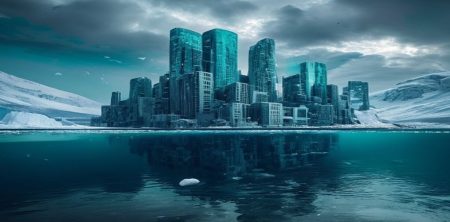
Imagine a bustling metropolis, teeming with life, stretching for miles — but instead of skyscrapers and busy streets, picture millions of carefully constructed nests, each guarding precious new life. Now, imagine this entire city hidden deep beneath a massive ice shelf, in one of the most extreme environments on Earth. That's precisely what an international team of scientists recently confirmed beneath Antarctica's Filchner Ice Shelf: an 'underwater city' of an estimated 60 million fish nests, an ecological marvel spanning an astonishing 240 square kilometers.
This isn't just a big fish find; it's an unprecedented discovery that's rewritten our understanding of life in the polar regions. For years, the deep, dark, and frigid waters beneath Antarctica's vast ice shelves were largely considered desolate, too harsh to support such concentrated, complex ecosystems. Yet, here we have it: a thriving breeding ground of Antarctic icefish, defying all expectations. The sheer scale and resilience of this hidden world are going viral, sparking conversations about the mysteries still lurking in our planet's unexplored corners, particularly concerning the potential for an 'underwater city Antarctica' could harbor.
1. The Initial Glimpse: Dr. Autun Purser's Breakthrough
The story of this incredible underwater city Antarctica began in 2021, with Dr. Autun Purser, a deep-sea biologist from the Alfred Wegener Institute. His team was on a research expedition, deploying a specialized camera system beneath the Filchner Ice Shelf. They weren't necessarily looking for a massive fish colony; their mission was broader, focused on understanding the general biodiversity and oceanographic conditions of this remote sub-ice environment. What they saw on their screens, however, was something no one could have predicted.
As the camera descended and began to transmit images, Purser and his colleagues noticed an unusual pattern on the seafloor. It wasn't just a few scattered nests; it was a seemingly endless expanse of them, each a small, circular depression in the sediment, meticulously guarded by a parent fish. The initial observations were so startling that they had to verify what they were seeing multiple times. This wasn't just a local aggregation; it was something truly monumental, suggesting a colossal 'underwater city Antarctica' had kept hidden for millennia.
2. LASSIE's Confirmation: Unveiling the Full Scale
While Dr. Purser's initial discovery in 2021 was groundbreaking, it was the subsequent deployment of an autonomous underwater vehicle (AUV) named LASSIE that truly unveiled the breathtaking scale of this underwater city Antarctica. LASSIE, short for Long-Autonomy Sub-ice Sensor Instrument for Exploration, is an incredibly advanced piece of technology designed to operate independently in harsh, inaccessible environments, perfect for mapping beneath an ice shelf.
This AUV spent an extended period meticulously surveying the seafloor, systematically mapping the distribution and density of the fish nests. The data it collected was astonishing. LASSIE's high-resolution sonar and camera systems provided irrefutable evidence that the nests weren't just numerous; they formed an organized, sprawling network covering an area equivalent to a major urban center. This detailed mapping allowed scientists to estimate the staggering number of 60 million nests, confirming the existence of a true 'underwater city' that dwarfs any previously known fish breeding ground.
3. The Architect of the City: The Antarctic Icefish
The inhabitants of this extraordinary underwater city Antarctica are a species of Antarctic icefish, specifically from the family Channichthyidae. These aren't your average fish; they are truly remarkable creatures, perfectly adapted to the brutally cold waters of the Southern Ocean. What makes them particularly fascinating, and a key to their survival in such an extreme environment, is their unique physiology.
Antarctic icefish are the only vertebrates known to lack red blood cells and hemoglobin, the protein responsible for oxygen transport in most other animals. Instead, they rely on dissolved oxygen in their blood plasma, which is highly efficient in cold water because cold water holds more oxygen. This adaptation, coupled with antifreeze proteins in their blood, allows them to thrive in temperatures that would be lethal to most other fish. Their nests, typically about 15 centimeters in diameter, are painstakingly constructed, often with a single egg mass at the center, guarded vigilantly by one parent.
4. The Filchner Ice Shelf: A Hidden World
The Filchner Ice Shelf is one of the largest ice shelves in Antarctica, a colossal floating extension of the continental ice sheet. It's a truly formidable and largely unexplored frontier. Beneath these massive ice shelves, the ocean is perpetually dark, cold, and subject to intense pressure from the overlying ice. Scientists have long speculated about what might exist in these hidden realms, but direct observation has always been incredibly challenging due to the thick ice barrier.
The discovery of such a vibrant, large-scale ecosystem, an 'underwater city Antarctica' has kept hidden, completely overturns previous assumptions about the biological productivity of these sub-ice environments. It suggests that these seemingly desolate areas might, in fact, harbor complex and significant ecological niches. Understanding these hidden ecosystems is crucial, especially as climate change begins to impact even the most remote corners of our planet, potentially altering these delicate environments. (See: Nature article on Antarctic ecosystems.)
5. A Warm Anomaly: The Secret to the City's Existence
So, how can an 'underwater city Antarctica' thrives in such an otherwise hostile environment? The answer lies in a surprising oceanographic phenomenon: a pocket of unusually warm water. Scientists have observed that the water within this breeding colony is up to 2°C warmer than the surrounding deep-sea waters beneath the ice shelf. This might not sound like much, but in the near-freezing Antarctic ocean, a two-degree difference is a huge deal, creating a veritable oasis.
This warmer water likely originates from deep ocean currents that bring relatively warmer, nutrient-rich water from further north, which then circulates beneath the ice shelf in this specific area. These slightly elevated temperatures create ideal conditions for the icefish to breed and for their eggs to develop successfully. It’s a perfect confluence of factors – a stable environment protected by the ice shelf, and a thermal anomaly providing just enough warmth – that has allowed this massive 'underwater city Antarctica' to flourish for perhaps thousands of years.
6. The Emotional Battleground: Weddell Seals and Survival
While the image of millions of fish nests might evoke a sense of peaceful, thriving life, this underwater city Antarctica is also a dramatic, high-stakes battleground for survival. The sheer concentration of fish, particularly the brooding adults, creates an irresistible buffet for predators. And at the top of that food chain in this particular environment are Weddell seals.
Weddell seals are incredibly well-adapted to life in and around Antarctic ice. They are known for their ability to dive deep and hold their breath for extended periods, making them perfectly suited to hunt in these frigid, sub-ice waters. Researchers have observed clear evidence of Weddell seals preying heavily on the icefish in the colony. This adds a powerful, emotionally charged element to the discovery: it's not just a static ecosystem, but a dynamic one where life and death play out constantly, a testament to the brutal beauty of nature. The seals are likely drawn to this particular 'underwater city Antarctica' because it offers such a reliable and abundant food source, making it a critical part of the local food web.
7. Implications for Polar Marine Ecosystems: A New Paradigm
The discovery of this 'underwater city Antarctica' has profound implications for our understanding of polar marine ecosystems. For decades, the conventional wisdom held that the deep waters beneath ice shelves were largely barren, characterized by low biodiversity and slow biological processes due to the extreme conditions. This finding shatters that paradigm, suggesting that these vast, unexplored regions might be far more ecologically complex and productive than previously thought.
It opens up entirely new avenues of research. Are there other similar breeding colonies hidden beneath other ice shelves? What are the long-term ecological dynamics of such a massive aggregation? How do these ecosystems contribute to the broader Antarctic food web? This discovery forces scientists to reconsider their models of carbon cycling, nutrient flow, and species distribution in the Southern Ocean. It's a powerful reminder of how much we still don't know about our own planet, and how many secrets the deep ocean, especially an 'underwater city Antarctica' has been guarding.
8. The Viral Sensation: Why This Story Resonates
This astonishing discovery has truly gone viral, captivating audiences worldwide. Why has an 'underwater city Antarctica' captured so much imagination? Part of it is the sheer scale – 60 million nests is a number that's hard to wrap your head around, evoking images of an alien civilization hidden beneath our feet. Then there's the location: Antarctica, a continent that remains one of the last true wildernesses, shrouded in mystery and extreme conditions. The idea of such vibrant life thriving in such an inhospitable place is inherently fascinating.
Moreover, the narrative of resilience in extreme conditions is a powerful one. It speaks to the incredible adaptability of life on Earth, reminding us that even where we expect nothing, nature finds a way. And finally, there's the element of discovery itself – the thrill of scientists pushing the boundaries of exploration, using cutting-edge technology to reveal hidden wonders. It taps into a fundamental human curiosity about the unknown, making the 'underwater city Antarctica' not just a scientific finding, but a global sensation.
9. The Delicate Balance: Nutrients and Oxygen Flow
The existence of such a massive underwater city Antarctica wouldn't be possible without a consistent supply of nutrients and oxygen. While the slightly warmer water is a critical factor, it's also about the plumbing of the ocean itself. The deep ocean currents that bring warmer water to this specific spot likely also carry dissolved organic matter and oxygen. Think of it like a natural delivery service for the fish city.
The constant flow of water beneath the ice shelf is key. This isn't stagnant water; it's a dynamic environment where water masses move, mix, and exchange properties. This movement ensures that the oxygen consumed by millions of fish and their developing eggs is replenished, and that any waste products are carried away. Without this delicate balance of inflow and outflow, the sheer density of life in the 'underwater city Antarctica' would quickly deplete resources, making such a massive breeding ground unsustainable. Scientists are now studying these current patterns with greater intensity to understand the full scope of nutrient and oxygen dynamics feeding this incredible ecosystem.
10. A Timeline of Life: How Long Has the City Existed?
One of the most intriguing questions about this underwater city Antarctica is how long it's actually been there. While direct dating of the nests or fish is challenging, scientists can infer its age based on geological and oceanographic evidence. The Filchner Ice Shelf itself has been a stable feature for thousands of years, providing the consistent, protected environment necessary for such a large colony to establish and persist. The specific warm water anomaly feeding the city also likely represents a long-term, stable oceanographic feature.
Estimates suggest this breeding ground could be thousands of years old. Imagine generations upon generations of icefish returning to the same spot, building their nests, and raising their young in this hidden sanctuary. This long history speaks to the incredible stability of this particular sub-ice environment and the enduring success of the icefish's adaptations. It's a testament to nature's ability to create long-lasting, complex communities in places we previously thought were too extreme for sustained life. The 'underwater city Antarctica' isn't a new phenomenon; it's an ancient marvel only recently revealed to human eyes. (See: New York Times coverage on fish nests.)
11. The Role of Sediments: Foundation for a City
You can't build a city without a foundation, and for the icefish of this underwater city Antarctica, that foundation is the seafloor sediment. The nests aren't just random depressions; they are carefully excavated structures in the soft, muddy bottom. The type and stability of the sediment play a crucial role in allowing the fish to construct and maintain their nests effectively. If the sediment were too loose, the nests might collapse; if it were too hard, they couldn't dig them.
The presence of fine-grained sediments indicates a relatively calm environment, protected from strong currents that might otherwise scour the seafloor or fill in the nests. This stability, combined with the availability of suitable material for nest construction, is another piece of the puzzle explaining why this particular spot became home to such a vast 'underwater city Antarctica.' The sediment itself likely holds a historical record, too, potentially containing clues about past environmental conditions and the long-term history of the colony.
12. Climate Change and the Future of the Underwater City
While the discovery of this underwater city Antarctica is a cause for wonder, it also comes with a significant caveat: climate change. The Antarctic region is experiencing some of the most rapid warming on Earth, leading to accelerating ice melt and changes in ocean currents. The Filchner Ice Shelf, while currently stable, is not immune to these shifts. Changes in ice shelf stability could expose the breeding ground to new predators or alter the crucial oceanographic conditions that sustain it.
Specifically, the warm water anomaly that provides the lifeblood for the icefish city could be disrupted by changes in deep ocean circulation. Increased freshwater input from melting ice could also alter salinity and temperature gradients, potentially impacting the delicate balance. Scientists are now racing to understand these sub-ice ecosystems better to predict how resilient they might be to a warming world. Protecting this 'underwater city Antarctica' and similar hidden refugia will require concerted efforts to mitigate climate change and understand its localized impacts on these unique environments.
13. Expert Perspectives: What Scientists are Saying
The scientific community has reacted to the discovery of the 'underwater city Antarctica' with a mixture of awe and renewed urgency. Dr. Autun Purser himself emphasized the importance of continued exploration: "We simply have to understand how these ecosystems work because we don't know how they'll react to future changes." Other experts, like Dr. Huw Griffiths of the British Antarctic Survey, highlighted the discovery's paradigm-shifting nature, stating it "rewrites the textbooks on what we thought was possible for life in the deep Antarctic."
Many scientists point to this finding as a stark reminder of how much of our planet, especially the deep ocean and polar regions, remains unexplored. It underscores the need for continued investment in advanced underwater technologies like AUVs, which can access these previously unreachable environments. The consensus is clear: this 'underwater city Antarctica' isn't just a fascinating anomaly; it's a critical new piece of the global ecological puzzle, demanding our attention and protection.
Frequently Asked Questions About the Underwater City Antarctica
Q1: What exactly is the "underwater city Antarctica"?
A1: It's an enormous breeding colony of Antarctic icefish, consisting of an estimated 60 million individual nests, discovered beneath the Filchner Ice Shelf in Antarctica. It spans an area of about 240 square kilometers, making it the largest known fish breeding ground in the world.
Q2: Where exactly is this city located?
A2: It's situated deep beneath the Filchner Ice Shelf, one of Antarctica's largest ice shelves, in the Weddell Sea. This location means it's under a massive layer of ice, in perpetual darkness and frigid temperatures.
Q3: What kind of fish live in this underwater city?
A3: The inhabitants are a species of Antarctic icefish (family Channichthyidae). These fish are unique because they lack red blood cells and hemoglobin, relying instead on dissolved oxygen in their blood plasma, an adaptation to the extreme cold.
Q4: How did scientists discover something so vast and hidden?
A4: The initial discovery was made in 2021 by Dr. Autun Purser's team using a specialized camera system. The full scale was then unveiled by an autonomous underwater vehicle (AUV) named LASSIE, which meticulously mapped the seafloor with high-resolution sonar and cameras. (See: CDC information on ice shelf ecosystems.)
Q5: How can fish survive in such extreme conditions?
A5: Several factors contribute to their survival. The icefish have unique physiological adaptations like antifreeze proteins in their blood. Crucially, the colony exists in a pocket of water that's about 2°C warmer than the surrounding deep-sea waters, likely due to specific ocean currents, creating a habitable oasis.
Q6: Are there any predators in this underwater city?
A6: Yes, Weddell seals have been observed preying heavily on the icefish in the colony. The seals are well-adapted to hunting in these deep, cold, sub-ice environments and are drawn to the abundant food source the colony provides.
Q7: How old is this underwater city estimated to be?
A7: While difficult to date precisely, the stability of the Filchner Ice Shelf and the consistent oceanographic conditions suggest the breeding ground has likely existed for thousands of years, with generations of icefish returning to the same site.
Q8: What are the implications of this discovery?
A8: It fundamentally changes our understanding of polar marine ecosystems, demonstrating that deep sub-ice environments can be highly productive and biodiverse, not barren as previously thought. It also highlights the vast unknowns still present on our planet and the urgent need to study and protect these unique habitats, especially in the face of climate change.
Q9: How might climate change affect this underwater city Antarctica?
A9: Climate change poses a significant threat. Changes in ice shelf stability, ocean currents, temperature, and salinity could disrupt the delicate balance that sustains the colony. Scientists are working to understand its resilience and the potential impacts of a warming planet on this unique ecosystem.
Q10: Is it really a "city" in the traditional sense?
A10: No, it's not a city with buildings or infrastructure built by fish. The term "underwater city Antarctica" is a metaphor used to describe the sheer scale and density of the organized fish nests, which collectively form a vast, bustling community akin to a human metropolis in its expanse and activity.
The discovery of this monumental 'underwater city Antarctica' has changed the game for marine biology. It's a vivid demonstration that even in the most thoroughly mapped and studied era, our planet still holds breathtaking secrets, waiting patiently beneath miles of ice and crushing ocean depths. This extraordinary breeding colony serves as a powerful testament to the enduring mystery and resilience of life, urging us to continue our exploration and protect these fragile, hidden wonders.
Trending Now
Frequently Asked Questions
What was discovered beneath Antarctica's ice shelf?
Scientists discovered a colossal underwater city beneath Antarctica's Filchner Ice Shelf, consisting of an estimated 60 million fish nests. This ecological marvel spans approximately 240 square kilometers, challenging previous beliefs about life in such extreme environments.
Who led the discovery of the underwater city in Antarctica?
The discovery was led by Dr. Autun Purser, a deep-sea biologist from the Alfred Wegener Institute. His team's research expedition in 2021 utilized specialized camera systems to uncover this unprecedented underwater ecosystem.
Why is the underwater city beneath Antarctica significant?
The discovery of the underwater city is significant as it rewrites our understanding of biodiversity in polar regions, revealing that the deep, cold waters beneath ice shelves can support complex ecosystems, contrary to previous assumptions.
What types of fish are found in Antarctica's underwater city?
The underwater city is primarily a breeding ground for Antarctic icefish, which have adapted to survive in the extreme conditions of the icy waters beneath the Filchner Ice Shelf.
How did scientists document the underwater city in Antarctica?
Scientists documented the underwater city by deploying specialized camera systems beneath the Filchner Ice Shelf. This technology allowed them to capture images and observe the unusual patterns of nests on the seafloor during their research expedition.
Have you experienced this yourself? We'd love to hear your story in the comments.

