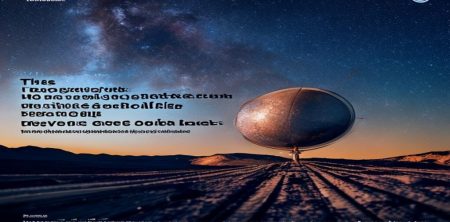
Imagine a future where the night sky isn't quite as dark as we know it. A future where constellations might struggle to shine through a faint, artificial glow. This isn't science fiction anymore; it's a very real possibility, pushed forward by a new wave of commercial space ventures. Reflect Orbital, an ambitious startup, has recently snagged a green light from the Federal Communications Commission (FCC) to launch a satellite specifically designed to reflect sunlight back to Earth. Yes, you read that right – a space mirror orbit. Their vision? To illuminate our planet's darker corners, offering everything from powering remote solar panels to aiding in critical rescue missions. It sounds almost utopian, doesn't it? A beacon in the night, engineered by humans. But like so many grand technological leaps, this one comes with a significant asterisk, and a very loud warning from the scientific community.
The concept itself is undeniably intriguing. On paper, beaming down extra sunlight could be a boon for various applications. Think about disaster zones where power grids are down, or remote construction sites operating around the clock. The potential benefits are easy to visualize, even romanticized. However, the controversy isn't about the intention; it's about the unforeseen and potentially irreversible consequences. While Reflect Orbital focuses on a single, albeit bright, satellite, their launch approval opens the door to a much larger, more troubling trend. This isn't just about one company's bright idea; it's about the collective impact of an increasingly crowded low Earth orbit, and what that means for our view of the cosmos, and indeed, for the very fabric of scientific discovery.
The Dazzling Promise of a Space Mirror Orbit
Let's first give credit where it's due: the idea of utilizing reflected sunlight from orbit is, in many ways, an innovative approach to some very real terrestrial challenges. Reflect Orbital's proposals aren't just pie-in-the-sky dreams; they address tangible needs. Consider the sheer energy potential. If you could direct concentrated sunlight to solar farms during twilight hours or even through cloudy conditions, you could significantly boost energy output and efficiency. This could be particularly impactful in regions with limited daylight hours or erratic weather patterns, making renewable energy sources more reliable and accessible.
Beyond energy, the practical applications extend to public safety and infrastructure. Imagine search and rescue operations conducted with the aid of a powerful, directed light source from above, cutting through the deepest night or illuminating treacherous terrain. It could mean the difference between life and death. For infrastructure projects, like bridge construction or pipeline maintenance in remote areas, extended daylight could enhance safety and accelerate completion times, potentially saving millions in operational costs. There's also the humanitarian angle: providing light to communities without reliable electricity, extending productive hours, and even improving security in dimly lit areas. From this perspective, a space mirror orbit seems like a technological marvel poised to solve a multitude of problems, painting a bright picture for our future.
The FCC's Green Light: A Regulatory Precedent?
The Federal Communications Commission's decision to grant Reflect Orbital permission to launch is a critical development, not just for the company, but for the entire commercial space industry. The FCC's primary mandate is to regulate interstate and international communications by radio, television, wire, satellite, and cable. While a space mirror isn't directly 'communicating' in the traditional sense, its operation clearly falls under the purview of satellite deployment and orbital mechanics, which the FCC oversees to prevent interference and ensure responsible use of space. This approval signifies a tacit acceptance of the technology's immediate viability and, perhaps more importantly, sets a precedent.
Whenever a regulatory body gives the nod to a novel technology, it inevitably opens the floodgates for similar proposals. Other companies, seeing Reflect Orbital's success, will undoubtedly begin to explore their own versions of orbital reflectors or other bright satellites. This isn't merely about one startup; it's about the initial crack in a regulatory dam, potentially unleashing a torrent of bright objects into our orbital environment. The FCC's decision, while likely made after careful consideration of the immediate technical merits and the company's specific plan, might not have fully accounted for the broader, cumulative impact on the night sky and scientific research, an oversight that has now become a central point of contention in this burgeoning debate.
Astronomers Sound the Alarm: A Devastating Consequence
While Reflect Orbital and the FCC see opportunity, the scientific community, particularly astronomers, sees a looming crisis. The European Southern Observatory (ESO), a preeminent intergovernmental research organization for ground-based astronomy, has issued a stark, almost desperate warning. Their recent study didn't mince words: current proposals for over 1.7 million satellites, including inherently bright ones like Reflect Orbital's space mirror, would have “devastating consequences for astronomy.” That's a chilling phrase for anyone who values scientific exploration and our connection to the cosmos. The core issue isn't just aesthetic; it's about the fundamental ability to conduct research.
Astronomical observations rely on the pristine darkness of the night sky. Telescopes, whether ground-based or orbital, are designed to detect incredibly faint light from distant galaxies, nebulae, and exoplanets. Even a slight increase in ambient sky brightness can effectively blind these instruments, washing out the subtle signals that scientists spend decades trying to detect. Imagine trying to see a candle flame from miles away, but now hundreds of floodlights have been turned on between you and the candle. That's the challenge astronomers face. It’s not just about professional observatories either; amateur astronomers, educators, and anyone who simply enjoys gazing at the Milky Way would feel the impact. The ESO's recommendation is clear and urgent: a limit of no more than 100,000 faint satellites to preserve the integrity of astronomical observations. That's a far cry from the 1.7 million bright satellites currently on the drawing board.
The Sky Glow Problem: Beyond Just One Space Mirror Orbit
The problem isn't solely about Reflect Orbital's single space mirror orbit, though that particular satellite, designed specifically to reflect light, will undoubtedly be a prominent offender. The true threat lies in the sheer volume of proposed satellites from various companies. We're talking about mega-constellations like Starlink, OneWeb, and countless others aiming to provide global internet access, Earth observation, and now, even reflected light. Each of these satellites, even those not designed to be bright, reflects some amount of sunlight, especially during twilight hours when they are illuminated by the sun but the ground below is dark. (See: NASA on space weather and sunlight.)
The cumulative effect of hundreds of thousands, potentially millions, of these objects is what creates the dreaded 'sky glow.' This isn't just light pollution from cities; it's a global, artificial illumination originating from above. This pervasive glow would raise the background brightness of the night sky, making it exceedingly difficult to observe faint objects. It's like trying to listen to a whisper in a crowded stadium – the signal is still there, but the noise floor has risen so dramatically that it becomes indecipherable. This isn't just an inconvenience for astronomers; it's a direct threat to our ability to understand the universe, to detect potentially hazardous asteroids, and to discover new phenomena that could reshape our scientific understanding.
The Economic Drive Versus Cosmic Preservation
This debate boils down to a classic conflict: economic opportunity and technological advancement versus environmental and scientific preservation. On one side, you have the entrepreneurial spirit, the promise of new services, new jobs, and potentially significant returns on investment. Reflect Orbital, like many other commercial space entities, sees an untapped market and a chance to innovate. They're driven by the desire to solve problems, create value, and push the boundaries of what's possible in space. And let's be honest, the allure of a new frontier, whether it's the Wild West or outer space, has always been a powerful motivator for humanity.
On the other side, you have scientists, environmentalists, and many members of the public who advocate for a more cautious approach. They argue that the night sky is a shared heritage, a natural resource that belongs to everyone and to future generations. They emphasize the irreplaceable value of astronomical research, not just for intellectual curiosity, but for practical applications like planetary defense and fundamental scientific breakthroughs. The cost of a permanently brighter night sky isn't easily quantifiable in dollars, but its impact on our understanding of the universe, our culture, and our very sense of place within the cosmos is profound. The challenge lies in finding a balance, a way to foster innovation without irrevocably damaging something so fundamental.
Ethical Considerations of Altering the Natural Night Sky
Beyond the scientific and economic arguments, there's a deep ethical dimension to consider when we talk about deliberately altering the natural environment, especially one as vast and seemingly immutable as the night sky. For millennia, humanity has looked up at the stars for inspiration, navigation, spiritual guidance, and scientific inquiry. It's an experience that transcends cultures and generations, a shared human connection to something much larger than ourselves. To intentionally modify this natural canvas, even with good intentions, raises profound questions.
Do we have the right to fundamentally change a global commons for commercial gain? What are the long-term psychological and cultural impacts of a sky that is no longer truly dark? Will future generations be denied the profound experience of seeing a truly pristine night sky, simply because we prioritized short-term commercial benefits? These aren't easy questions, and there are no simple answers. But they are questions we absolutely must grapple with as we move further into an era of pervasive space commercialization. The potential loss isn't just about photons; it's about our shared human experience and our connection to the universe.
Mitigation Strategies and a Call for International Cooperation
The good news is that the scientific community isn't just sounding an alarm; they're also actively working on solutions and advocating for mitigation strategies. One key approach involves satellite design. Companies can implement measures to reduce the reflectivity of their satellites, such as using darker materials, anti-reflective coatings, or orienting solar panels to minimize glint. SpaceX, for example, has experimented with 'DarkSat' and sunshades for its Starlink satellites in response to astronomical concerns, though the effectiveness of these measures is still under evaluation.
However, technological fixes alone won't be enough. What's urgently needed is a robust framework for international regulation and cooperation. Space is a global commons, and light pollution from orbit affects everyone. Individual national regulators like the FCC can approve specific launches, but they lack the authority to create comprehensive global standards. This necessitates international bodies, like the United Nations Committee on the Peaceful Uses of Outer Space (COPUOS), taking a more active role in developing guidelines and treaties that balance commercial interests with scientific preservation and the public good. We need a global conversation, not just national approvals, to decide the future of our night sky. The ESO's recommendation of a 100,000-faint-satellite limit could serve as a vital starting point for these discussions.
The Virality of the Debate: Public Awareness and Action
One encouraging aspect of this unfolding situation is the significant viral traction it has gained. Social media, news outlets, and scientific publications have all picked up on the controversial nature of potentially altering the night sky for commercial gain. This widespread attention is crucial. For too long, discussions about orbital debris or satellite constellations have been confined to niche scientific or policy circles. But the idea of a permanently brighter night sky, and the ethical implications of that, resonates with a much broader audience.
Public awareness is often the first step towards meaningful change. When people understand the stakes – the potential loss of a truly dark sky, the impact on scientific research, and the ethical questions involved – they are more likely to engage, voice their concerns, and put pressure on policymakers and corporations. This viral debate isn't just about sharing alarming headlines; it's about galvanizing public opinion, fostering informed discussion, and ultimately, shaping the future of how we use and protect Earth's orbital environment. It’s a call to action, reminding us that the decisions made today about a space mirror orbit, or any other mega-constellation, will have repercussions for generations to come.
Beyond Visible Light: Radio Astronomy's Plight
While much of the discussion about space mirror orbits and mega-constellations focuses on visible light pollution, it's vital to remember that astronomy encompasses more than just optical telescopes. Radio astronomy, which studies celestial objects by detecting the radio waves they emit, faces its own unique and equally devastating challenges from a crowded orbit. Satellites transmit and receive radio signals for communication, navigation, and Earth observation. These signals, even if they aren't "bright" to our eyes, constitute significant radio frequency interference (RFI) for sensitive radio telescopes. (See: CDC on environmental health impacts.)
Imagine trying to pick up a faint radio signal from the early universe, a whisper from billions of years ago, when thousands of satellites are constantly broadcasting much stronger signals overhead. It's like trying to listen to a tiny amplitude radio station when someone is blasting a powerful commercial station on the same frequency right next to you. The RFI can completely overwhelm the delicate instruments, making it impossible to gather meaningful data. Observatories like the Atacama Large Millimeter/submillimeter Array (ALMA) or the Square Kilometre Array (SKA) are built in remote locations precisely to escape terrestrial RFI. Orbital RFI, however, is a global problem that can't be escaped by simply moving to a desert. The growth of satellite constellations, particularly those offering global internet, directly threatens the future of radio astronomy, potentially blinding us to discoveries about black holes, distant galaxies, and the origins of life.
The Precedent of Earth-Based Light Pollution
To understand the potential severity of orbital light pollution, we can look to the terrestrial example. For decades, astronomers have battled light pollution from cities. Streetlights, advertising billboards, and poorly designed outdoor lighting have steadily eroded our ability to see the stars from most populated areas. Many observatories have been forced to relocate to increasingly remote, pristine dark-sky sites. Even then, the sky glow from distant cities can still be a problem.
The lessons learned from terrestrial light pollution are stark: once light pollution becomes widespread, it's incredibly difficult and expensive to reverse. It requires retrofitting infrastructure, changing cultural habits, and sustained public and political will. With orbital light pollution, the challenge is even greater. Satellites are difficult to modify once launched, and the sheer number of proposed objects means that the 'light' would be coming from every direction, everywhere on Earth. We have a chance to prevent a global light pollution catastrophe in space, learning from our mistakes on the ground, but it requires proactive regulation and a shift in priorities before it's too late.
Beyond Astronomy: Impacts on Wildlife and Human Culture
While astronomers are at the forefront of this debate, the implications of a perpetually brighter night sky extend beyond scientific research. Many nocturnal animals rely on the natural cycles of light and dark for navigation, hunting, and mating. Birds migrate using celestial cues, sea turtle hatchlings find their way to the ocean guided by the lighter horizon, and countless insect species are attracted to artificial light sources, disrupting ecosystems. A constant, artificial glow from orbit could severely disorient these creatures, leading to population declines and ecological imbalances that are hard to predict. We covered renewable energy progress in more detail.
Culturally, the loss of a truly dark night sky is also profound. For millennia, the stars have inspired art, poetry, religion, and philosophy. They have served as a universal clock, a compass, and a source of wonder. Indigenous cultures often have rich traditions and stories tied directly to specific constellations and celestial events. To obscure this natural spectacle, even inadvertently, could sever a deep, ancient connection humanity has with the cosmos. It risks creating a generation that has never truly experienced the awe-inspiring majesty of the Milky Way, reducing our universe to a dimmer, less mysterious place.
A Call for Space Traffic Management and Deorbiting Standards
Beyond reducing reflectivity, another critical aspect of responsible space utilization is effective space traffic management and clear deorbiting standards. The sheer number of satellites being launched, coupled with the increasing risk of collisions and the generation of space debris, presents a growing threat to all orbital activities, including the very space mirror orbit itself. Each new launch adds to the congestion, increasing the probability of a catastrophic cascade of collisions, known as the Kessler Syndrome, which could render certain orbits unusable for centuries.
Therefore, any approval for satellite launches, especially those in mega-constellations, should come with stringent requirements for reliable deorbiting mechanisms. Satellites must be designed to safely re-enter the atmosphere and burn up within a short period after their operational lifespan ends, typically within 25 years. This prevents them from becoming derelict space junk. Furthermore, robust space traffic management systems are needed to track objects, predict potential collisions, and coordinate maneuvers to avoid them. This requires international collaboration and data sharing, ensuring that the orbital environment remains safe and sustainable for all users, not just for the benefit of a few commercial ventures.
Looking Ahead: A Crossroads for Space Exploitation
The approval for Reflect Orbital to launch its space mirror orbit satellite marks a pivotal moment. It’s a stark reminder that we are at a crossroads in how humanity approaches space exploitation. Do we prioritize immediate commercial gains and technological prowess, potentially at the cost of our shared natural heritage and the future of astronomical discovery? Or do we collectively decide that the beauty and scientific value of a pristine night sky are too precious to sacrifice, demanding a more thoughtful, regulated, and cooperative approach to orbital development?
The answer isn't simple, and the path forward will require difficult conversations, compromise, and a genuine commitment to long-term sustainability. It means companies innovating responsibly, regulators imposing meaningful limits, and international bodies fostering global agreements. The stars have guided us for millennia; it’s up to us to ensure that future generations can still look up and see them shining, unmarred by our own creations. This isn't just about telescopes and data; it's about preserving a fundamental aspect of the human experience. (See: Scientific article on light pollution.)
Frequently Asked Questions About Space Mirrors and Orbital Light Pollution
Q1: What exactly is a "space mirror orbit"?
A space mirror orbit refers to a satellite specifically designed with highly reflective surfaces to bounce sunlight back down to Earth. Its primary purpose, as envisioned by companies like Reflect Orbital, is to provide targeted illumination for various applications, such as boosting solar energy production, assisting in nighttime search and rescue operations, or providing light to remote areas. Unlike typical communication satellites that might incidentally reflect sunlight, these mirrors are engineered to maximize and direct that reflection.
Q2: How bright would a space mirror satellite be in the night sky?
The brightness of a space mirror satellite would depend on its size, reflectivity, and orbital altitude. However, because their explicit purpose is to reflect light, they would be significantly brighter than most other satellites. Some estimates suggest they could be as bright as Venus, or even brighter, making them easily visible to the naked eye. This intense brightness is precisely what concerns astronomers, as it would overwhelm telescopes and detract from the natural night sky.
Q3: Is the FCC the only body that regulates satellite launches?
No, the FCC primarily regulates the communications aspects of satellites, including their radio frequencies and potential for interference. However, other national and international bodies also play roles. In the United States, the Federal Aviation Administration (FAA) regulates launch and reentry activities, while the National Oceanic and Atmospheric Administration (NOAA) licenses private remote sensing space systems. Internationally, organizations like the United Nations Committee on the Peaceful Uses of Outer Space (COPUOS) work to establish guidelines for the responsible use of space, though their recommendations are not always legally binding without specific treaties.
Q4: What is the difference between a space mirror and a Starlink satellite in terms of light pollution?
The key difference lies in their primary function and design. Starlink satellites, and similar mega-constellation internet providers, are designed for communication. While they do reflect sunlight and contribute to sky glow, this is largely an unintended side effect, and companies like SpaceX have explored mitigation strategies (like 'DarkSat' coatings). A space mirror, by contrast, is *designed* to be a light source. Its entire purpose is to reflect sunlight, making it inherently much brighter and more problematic for astronomical observations, especially when directed at specific ground targets.
Q5: Can existing light pollution mitigation strategies for ground-based observatories be adapted for orbital light pollution?
Unfortunately, many ground-based mitigation strategies are not easily adaptable to orbital light pollution. For example, observatories on Earth can use domes or specific site selections (like high mountains or remote deserts) to minimize light from cities. This isn't possible when the light source is in orbit, potentially coming from any direction above the horizon. While satellite design changes (darker materials, anti-reflective coatings) are a form of mitigation, they address the source rather than protecting the observer, and their effectiveness needs rigorous testing and enforcement across all satellite operators globally.
Q6: Are there any benefits to a space mirror orbit that outweigh the concerns?
Proponents argue that space mirrors offer significant benefits, particularly for humanitarian aid, disaster response, and energy production in remote or underserved areas. The ability to provide targeted illumination could save lives during night-time emergencies, extend work hours for critical infrastructure projects, and potentially boost the efficiency of solar farms. The debate centers on whether these benefits, while real, justify the irreversible harm to astronomical research, the natural night sky, and the potential ecological and cultural impacts.
Trending Now
Frequently Asked Questions
What is the purpose of the space mirror being launched by Reflect Orbital?
The space mirror launched by Reflect Orbital aims to reflect sunlight back to Earth, providing illumination for remote areas, powering solar panels, and assisting in rescue operations. This innovative approach seeks to address challenges in disaster zones and enhance nighttime visibility in various applications.
What are the potential risks of launching a space mirror?
While the concept of a space mirror offers potential benefits, it raises concerns about unforeseen consequences, such as light pollution and its impact on astronomical observations. The scientific community warns that an increasingly crowded low Earth orbit could alter our view of the cosmos and hinder scientific discovery.
How does the space mirror technology work?
The space mirror technology involves a satellite designed to reflect sunlight towards specific areas on Earth. By harnessing and directing sunlight from orbit, it can illuminate darker regions, providing practical benefits for tasks like construction and emergency response in locations with limited access to electricity.
What approval did Reflect Orbital receive for their space mirror project?
Reflect Orbital received approval from the Federal Communications Commission (FCC) to launch their satellite designed for reflecting sunlight. This approval allows them to proceed with their plans to deploy the space mirror into orbit, marking a significant step in commercial space ventures.
What are the broader implications of deploying space mirrors like Reflect Orbital's?
The deployment of space mirrors could set a precedent for more commercial ventures in low Earth orbit, raising questions about light pollution, environmental impact, and the future of astronomical research. The collective effects of multiple satellites could alter our night sky and influence global scientific efforts.
What did we miss? Let us know in the comments and join the conversation.

