```html
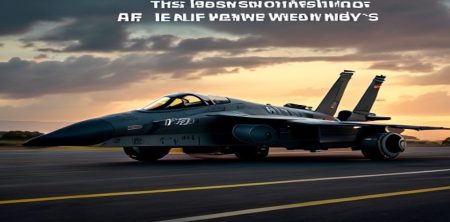
Imagine a fighter jet, screaming through the sky, executing maneuvers with precision that would challenge the most seasoned human pilot. Now, imagine that jet isn't being flown by a human. Not even by remote control. It's making its own decisions, reacting to a dynamic environment, and flying itself. This isn't science fiction anymore; it's the stark reality unveiled on July 16, 2026, when the U.S. Air Force and DARPA dropped a truly remarkable piece of news: an AI agent had successfully flown an F-16 fighter jet at Eglin Air Force Base in Florida. And perhaps the most compelling detail? A human pilot was onboard, yes, but solely in a monitoring capacity. They weren't touching the controls. The AI F-16 fighter jet was flying itself.
This wasn't some controlled simulation or a specially designed, experimental drone. What makes this announcement resonate so deeply, reaching far beyond the usual military aviation circles, is that it involved a standard, operational U.S. Air Force F-16. This wasn't a bespoke research aircraft built from the ground up for AI integration. Instead, it was an existing F-16, modified with what's called a 'bolt-on kit.' This seemingly small technical detail carries immense implications for how quickly and widely AI autonomy could be scaled across military fleets globally. It's a game-changer, plain and simple, and it forces us to confront a future where the skies might be ruled by algorithms as much as by human skill.
The VENOM Autonomy Kit: A Modular Revolution
At the heart of this groundbreaking achievement is the Viper Experimentation and Next-generation Operations Model (VENOM) program, and its technological cornerstone: the VENOM Autonomy Kit (VAK). Think of the VAK as a sophisticated plug-and-play system for advanced AI capabilities. It's designed to be integrated into existing aircraft, specifically the F-16 in this initial phase, without requiring a complete overhaul of the jet's fundamental software architecture. This modular approach is nothing short of revolutionary.
In traditional aircraft development, integrating new systems often means complex, time-consuming, and incredibly expensive modifications to the core flight control systems, avionics, and software. Every change requires rigorous testing, recertification, and often, a complete rewrite of significant portions of the aircraft's operational code. The VAK bypasses much of this by acting as an intelligent overlay. It automates flight controls and sensor interpretation through its own independent processing, essentially giving the AI direct command over the aircraft's physical actuators and access to its sensor data, all while leaving the underlying F-16 software intact.
This design choice is critical for rapid deployment and scalability. It means that an operational F-16, one that could be flying missions next week, can be equipped with advanced AI capabilities relatively quickly. Furthermore, the VAK allows for a seamless transition between human and AI control. The onboard pilot, even if just monitoring, retains the ability to take over at any moment, providing a crucial safety net and a phased approach to full autonomy. This 'human-on-the-loop' or 'human-in-the-loop' design is likely to be a standard feature in early autonomous military aircraft, balancing cutting-edge capability with the inherent need for human oversight, especially in complex and unpredictable combat scenarios.
From Concept to Concrete: The Viper Experimentation and Next-generation Operations Model (VENOM) Program
The successful flight of the AI F-16 fighter jet isn't a flash in the pan; it's the culmination of years of dedicated research and development under the VENOM program. DARPA, the Defense Advanced Research Projects Agency, has a long history of pushing the boundaries of what's technologically possible, and VENOM is a prime example of their forward-thinking approach. The program's objective is clear: to accelerate the development and testing of advanced AI systems for air combat, specifically focusing on how these systems can augment or even replace human pilots in certain roles.
VENOM isn't just about getting an AI to fly straight and level. It's about developing intelligent agents capable of complex tactical decision-making, adaptive flight maneuvers, and real-time threat assessment. This involves intricate algorithms, machine learning models trained on vast datasets, and sophisticated sensor fusion techniques. The F-16, with its robust design and extensive operational history, serves as an ideal testbed for these ambitious goals. It's a platform that's well-understood, allowing researchers to focus on the AI's performance rather than contending with an entirely novel airframe.
The program's progression from laboratory simulations to actual flight tests in a live F-16 represents a monumental leap. It signifies a transition from theoretical possibilities to demonstrated capabilities in a real-world, high-stakes environment. The data gathered from these flight tests will be invaluable, providing critical insights into the AI's performance under various conditions, its decision-making processes, and its interaction with the aircraft's physical systems. This iterative process of development, testing, and refinement is essential for building trust in autonomous systems and ensuring their reliability and safety in future operational contexts.
The Human Element: Pilot Tim Stevens' Perspective
While the AI was the star of the show, the presence and perspective of test pilot Tim Stevens are incredibly important. It's easy to get lost in the technical marvel of an AI flying an F-16, but Stevens's role as a human monitor provides a crucial bridge between the autonomous future and our current understanding of aviation. His comment, that "getting the aircraft airborne with these complex systems was a monumental milestone," might seem understated, but it speaks volumes.
Consider the immense complexity involved. An F-16 is not a drone. It's a high-performance, supersonic warplane designed to operate at the very edge of physics. Integrating an entirely new, AI-driven control system into such a platform, even as a bolt-on, introduces layers of engineering and safety challenges. Stevens's statement acknowledges the sheer difficulty of making these disparate systems—the F-16's existing flight controls, the VAK's AI algorithms, and the interface for human monitoring—work together harmoniously and reliably. It's not just about the AI being able to fly; it's about the entire integrated system functioning flawlessly in a real aircraft, with real forces, and real risks. (See: Artificial Intelligence on Wikipedia.)
His presence also highlights the ongoing debate about human-AI collaboration in critical domains. For the foreseeable future, it's highly probable that humans will remain in the loop, at least in a supervisory role, especially in combat scenarios where ethical considerations, unpredictable variables, and the need for nuanced judgment are paramount. Stevens's experience will be critical in shaping the human-machine interface, ensuring that pilots can effectively monitor, understand, and, if necessary, override AI systems. This isn't just about technical functionality; it's about building trust and confidence in systems that will increasingly share the cockpit with us.
Beyond the Hype: What Does This Really Mean for the Future of Warfare?
The successful flight of an AI F-16 fighter jet isn't just a technological curiosity; it's a profound signal about the future of warfare. The implications are far-reaching and touch upon strategy, ethics, economics, and the very nature of military power. First and foremost, it points to a future where autonomous systems will play an increasingly central role in combat operations. This isn't just about drones flying reconnaissance; it's about fully autonomous platforms making real-time tactical decisions in highly dynamic environments.
One immediate benefit could be increased pilot safety. In extremely high-risk missions, an AI-controlled F-16 could undertake tasks that would be too dangerous for a human pilot, effectively putting a machine in harm's way instead of a person. This could reduce casualties and allow for more aggressive tactics in certain situations. Furthermore, AI systems don't experience fatigue, stress, or emotional responses, which can be critical factors in prolonged or intense engagements. An AI F-16 fighter jet could sustain peak performance for extended periods, potentially outperforming human pilots in endurance and reaction times in certain specific, high-speed scenarios.
However, this also opens a Pandora's Box of questions. Who is accountable when an AI makes a lethal decision? How do we ensure these systems operate within ethical boundaries and rules of engagement? The speed and scale at which AI can operate could drastically accelerate conflict, potentially leaving less time for diplomatic resolution. This development isn't just about new hardware; it's about a fundamental shift in the operational paradigm, demanding careful consideration of its broader societal and geopolitical ramifications.
Scaling Autonomy: From Single Aircraft to Entire Fleets
The true significance of the VAK's bolt-on design isn't just about enabling an AI to fly one F-16; it's about the potential to rapidly scale autonomy across an entire fleet. Imagine the logistical and financial hurdles of redesigning every F-16, or indeed every aircraft type, from the ground up to incorporate AI. It would be a decades-long, multi-trillion-dollar endeavor. The VAK approach dramatically cuts down on this. It suggests a future where existing aircraft can be upgraded with advanced AI capabilities through relatively simple hardware and software additions, much like installing a new operating system or a powerful graphics card in a computer.
This scalability means that the U.S. Air Force, and potentially other allied forces, could quickly integrate AI into a substantial portion of their air assets. This could lead to a rapid increase in the operational capabilities of existing fleets, extending their relevance and effectiveness against newer, more advanced adversaries. Instead of waiting for a new generation of fully autonomous aircraft to be developed and manufactured, we could see a widespread integration of AI across current platforms much sooner than anticipated.
This also implies a more flexible approach to aircraft development. Future AI modules could be developed and iterated upon independently of the aircraft's core design, allowing for faster innovation cycles. As AI technology advances, new, more capable VAK-like kits could be swapped in, keeping the fleet at the cutting edge without requiring constant aircraft replacements. This modularity could prove to be a significant strategic advantage in the rapidly evolving landscape of military technology.
The Economic and Strategic Implications of AI-Enabled Air Power
The introduction of AI-enabled fighter jets like the AI F-16 fighter jet carries substantial economic and strategic implications. Economically, while the initial development of such AI systems is costly, the long-term operational benefits could be significant. AI systems don't require the extensive and expensive training of human pilots, nor do they have the same physiological limitations or retirement curves. Over time, this could lead to a reduction in personnel costs, although new costs associated with AI development, maintenance, and cybersecurity will undoubtedly emerge.
Strategically, a fleet of AI-enabled aircraft could dramatically enhance a nation's air power. Imagine a scenario where a single human pilot could command a 'swarm' of AI-controlled F-16s, each acting as an intelligent wingman, performing complex maneuvers, gathering intelligence, and even engaging targets under human supervision. This force multiplier effect could allow for more effective defense or projection of power with fewer human pilots directly at risk. It could also enable new doctrines and tactics that leverage the unique capabilities of autonomous systems, such as persistent surveillance, coordinated attack patterns beyond human capacity, or highly evasive maneuvers.
However, this also raises the stakes in the global AI arms race. Nations that lag in AI development could find themselves at a severe disadvantage in future conflicts. The proliferation of such technology also poses risks, as it lowers the barrier to entry for advanced air combat capabilities. The development of an AI F-16 fighter jet isn't just about the U.S. Air Force; it's about a fundamental shift in the global balance of military power, prompting other nations to accelerate their own AI research and development efforts. (See: New York Times article on AI in aviation.)
Challenges and Ethical Dilemmas on the Horizon
While the successful flight of the AI F-16 fighter jet is a triumph of engineering, it's also a stark reminder of the significant challenges and profound ethical dilemmas that lie ahead. The technical challenges are immense: ensuring the AI's robustness against cyberattacks, guaranteeing its reliability in unpredictable combat situations, and validating its decision-making processes to prevent unintended consequences. What happens when the AI encounters a scenario it wasn't trained for? How does it adapt to unforeseen variables or enemy countermeasures?
The ethical questions are even more complex. The concept of a machine making life-or-death decisions on the battlefield is deeply troubling for many. While current systems are likely to maintain a human in the loop for lethal engagements, the trend towards greater autonomy suggests a future where the line between human and machine decision-making blurs. Who bears moral responsibility when an AI-controlled F-16 makes an error that results in civilian casualties? How do we program nuanced concepts like proportionality, necessity, and distinction into algorithms?
Moreover, the potential for an AI arms race is a serious concern. If one nation develops highly advanced autonomous weapons, others will feel compelled to follow suit, potentially leading to an escalation in military capabilities and an increased risk of conflict. There's a desperate need for international dialogue and, eventually, regulatory frameworks to govern the development and deployment of autonomous weapons systems, ensuring they are used responsibly and within agreed-upon ethical boundaries. This isn't just about military advantage; it's about the future of humanity in an age of intelligent machines.
Training the AI: Learning from Millions of Simulated Dogfights
You might wonder how an AI learns to fly a fighter jet, let alone make split-second tactical decisions. It's not like you can just plug it in and expect it to master evasive maneuvers. The secret lies in extensive training, primarily within highly realistic simulation environments. The AI models powering the VENOM Autonomy Kit aren't just programmed with rules; they learn through reinforcement learning, a type of machine learning where an agent learns to make decisions by trying actions and receiving rewards or penalties.
Imagine millions upon millions of simulated dogfights. The AI is pitted against other AI opponents, virtual human pilots, or even replicas of itself. Through each engagement, it learns what works and what doesn't. Did a specific maneuver lead to a kill? Reward. Did it put the AI in a vulnerable position? Penalty. Over countless iterations, the AI refines its strategies, developing an intuitive understanding of aerial combat dynamics that would take a human pilot thousands of hours to even begin to grasp. This simulated experience allows the AI to explore tactics and scenarios that would be too dangerous or impossible to replicate in real-world training, accelerating its learning curve dramatically. The sheer volume of data and experience generated in these simulations is what allows the AI to perform with such precision and adaptiveness in a real F-16.
The Evolution of Human-Machine Teaming in the Cockpit
The concept of an AI F-16 fighter jet raises fascinating questions about the evolution of human-machine teaming. We're moving beyond simple automation, where machines execute predefined tasks, into a realm of genuine collaboration. In the immediate future, this might look like an AI acting as an "intelligent wingman" that takes on routine, high-G, or repetitive tasks, freeing the human pilot to focus on broader strategic objectives or complex decision-making. Think of the AI handling evasive maneuvers while the human pilot focuses on target acquisition or mission coordination.
Further down the line, the relationship could become even more symbiotic. Pilots might issue high-level commands, like "engage that bandit defensively," and the AI would autonomously execute the optimal sequence of actions, drawing upon its vast simulated experience. This isn't about replacing humans, but about augmenting their capabilities and extending their reach. The human's unique ability for moral reasoning, adaptability to truly novel situations, and understanding of geopolitical nuances will remain critical, while the AI contributes its speed, precision, and tireless execution. Designing intuitive interfaces that allow seamless communication and trust between human and AI will be a paramount challenge in this evolving partnership.
The Path Forward: Incremental Autonomy and Continued Research
The flight of the AI F-16 fighter jet is a monumental step, but it's crucial to understand that it's just one point on a much longer journey. The path forward will likely involve a strategy of incremental autonomy, where AI systems are gradually given more responsibility as their capabilities are proven and trust is built. We won't wake up tomorrow to fully autonomous battlefields. Instead, we'll see AI taking on more specific, well-defined tasks, freeing up human pilots to focus on higher-level strategic thinking and complex problem-solving.
Continued research will be absolutely vital. This includes not only advancing the AI algorithms themselves but also developing robust testing and validation methodologies, improving human-machine teaming interfaces, and addressing the cybersecurity vulnerabilities inherent in such complex systems. The data from programs like VENOM will feed into the next generation of AI, enabling more sophisticated and reliable autonomous capabilities. There will also be a strong emphasis on developing AI that is explainable, meaning we can understand why an AI made a particular decision, which is crucial for accountability and debugging. (See: CDC on technology and youth.)
The integration of AI into military aviation is not merely a technical challenge; it's a societal one. It demands ongoing public discourse, ethical reflection, and careful policy-making to ensure that these powerful technologies are harnessed for the benefit of humanity, rather than becoming a source of unprecedented risk. The skies of the future will undoubtedly be shared with intelligent machines, and how we choose to integrate them will define a new era of air power.
Frequently Asked Questions About the AI F-16 Fighter Jet
Q: Was the AI F-16 fighter jet armed during its flight?
A: No, the initial test flights of the AI F-16 fighter jet were conducted under strict safety protocols. The aircraft was not armed, and the human pilot onboard served as a critical safety override, ready to take control if necessary. These were experimental flights focused on validating the AI's flight control and tactical decision-making capabilities in a real-world environment, not live combat simulations.
Q: How is the AI protected from cyberattacks or jamming?
A: Cybersecurity is a paramount concern for any autonomous military system. While specific details are classified, DARPA and the U.S. Air Force employ advanced encryption, robust network isolation, and sophisticated intrusion detection systems to protect the AI's core programming and communication links. They also likely develop redundant systems and "graceful degradation" protocols, allowing the AI to continue functioning, albeit with reduced capability, even if parts of its system are compromised or jammed.
Q: Could this AI be installed in other types of aircraft?
A: Yes, the modular "bolt-on" nature of the VENOM Autonomy Kit (VAK) is specifically designed with scalability in mind. While the F-16 is the initial testbed, the underlying AI principles and the VAK's architectural design are intended to be adaptable to a range of other military aircraft. This could include other fighter jets, cargo planes, or even helicopters, significantly expanding the reach of AI autonomy across various mission sets.
Q: What's the biggest advantage of an AI pilot over a human pilot?
A: AI pilots offer several key advantages: they don't experience G-force limitations, fatigue, or emotional stress, allowing for sustained, high-performance maneuvers that would incapacitate a human. They can process vast amounts of sensor data almost instantaneously and react with superhuman speed, potentially offering a decisive edge in fast-paced aerial combat. Additionally, they can be deployed in extremely dangerous scenarios without risking human lives.
Q: What are the biggest risks or disadvantages?
A: The biggest risks revolve around ethical accountability for lethal decisions, the potential for an accelerated arms race, and the technical challenges of ensuring robustness and reliability in unpredictable environments. There's also the risk of AI making decisions based purely on its training data, potentially failing to adapt to truly novel threats or exhibiting unintended biases. The "black box" nature of some AI decisions also makes it hard to understand why a particular action was taken, complicating debugging and trust-building.
The successful flight of an AI-controlled F-16 fighter jet is more than just a headline; it's a profound inflection point. It signals a future where the very nature of air combat, national defense, and even international relations will be reshaped by the rapid advancements in artificial intelligence. We're standing at the precipice of an era defined by intelligent machines, and understanding what happened at Eglin Air Force Base is the first step in comprehending the monumental changes that are already well underway.
```
Trending Now
Frequently Asked Questions
How did the AI fly the F-16 fighter jet?
The AI flew the F-16 fighter jet through the VENOM Autonomy Kit (VAK), which allows for advanced AI capabilities to be integrated into existing aircraft. This modification enabled the jet to make its own decisions and execute maneuvers autonomously, with a human pilot onboard only for monitoring.
What is the VENOM Autonomy Kit?
The VENOM Autonomy Kit (VAK) is a modular system designed to enhance the capabilities of existing aircraft, specifically the F-16. It acts as a plug-and-play solution that allows for AI integration without the need for a complete overhaul of the aircraft's software architecture.
What implications does AI flying fighter jets have for the future?
The successful flight of an AI-controlled F-16 suggests a future where military aviation might heavily rely on AI for operational efficiency. This development challenges traditional pilot roles and raises questions about the ethical and strategic implications of autonomous warfare.
Was the AI flying the F-16 during a simulation?
No, the AI was not flying the F-16 during a simulation. The flight took place in a real-world environment at Eglin Air Force Base, showcasing the operational capabilities of the AI in a standard, modified F-16 aircraft.
How does this AI technology affect military operations?
This AI technology could revolutionize military operations by enhancing the autonomy of fighter jets, allowing for quicker response times and potentially reducing the risk to human pilots. It represents a significant shift towards integrating AI in military fleets globally.
What's your take on this? Share your thoughts in the comments below — we read every one.

