```html
In today's increasingly multicultural classrooms, teachers face the exciting challenge of engaging English Language Learners (ELLs). These students bring diverse linguistic backgrounds and rich cultural experiences that can enhance the learning environment for everyone. However, ELLs often encounter significant hurdles when it comes to mastering the English language, which is where scaffolding techniques for English language learners come into play. These strategies not only support language acquisition but also boost confidence and foster a more inclusive classroom. This article explores ten essential scaffolding techniques that educators can implement to facilitate the learning process for ELLs.
Understanding Scaffolding in Education
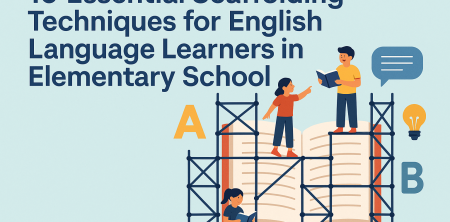
Scaffolding is a term derived from construction, referring to temporary structures that support a building until it can stand on its own. In education, scaffolding refers to various instructional techniques that provide support to students as they learn new concepts and skills. This approach allows educators to break down complex information into manageable parts, gradually removing support as students gain independence.
For ELLs, scaffolding is crucial because it helps bridge the gap between their existing knowledge and the new material they need to learn. Effective scaffolding not only improves comprehension but also promotes engagement and motivation. Research indicates that well-implemented scaffolding techniques can significantly improve the academic performance of ELLs, making it a vital strategy in elementary education.
1. Visual Aids: Making Language Meaningful
Visual aids are powerful tools that can enhance understanding for ELLs. Images, charts, graphs, and videos can help to illustrate concepts that might be difficult to grasp through text alone. For example, when teaching new vocabulary, incorporating pictures can create associations that make the words more memorable.
Moreover, graphic organizers, such as Venn diagrams or story maps, help students visualize relationships between ideas, making complex information more digestible. Teachers can also use realia—real-life objects related to the lesson—to provide context and engage students in hands-on learning.
According to a study published in the Journal of Educational Psychology, using visual aids can increase retention rates by up to 65%. This highlights the importance of integrating visual elements into lesson plans, especially for ELLs who may struggle with language comprehension.
2. Interactive Activities: Engaging Students Through Collaboration
Interactive activities, such as group work and peer collaboration, can significantly enhance the learning experience for ELLs. By working together, students can practice their language skills in a low-pressure environment. This collaborative learning encourages ELLs to communicate, share ideas, and learn from one another.
For instance, think-pair-share is a simple yet effective strategy where students think about a question, discuss their thoughts with a partner, and then share their ideas with the class. This technique not only promotes language use but also builds confidence in speaking and listening skills.
Additionally, incorporating cooperative learning strategies such as jigsaw or role-playing can help ELLs work in diverse groups, allowing them to engage with their peers while gaining new insights. A report from the Center for Research on Education Outcomes found that students engaged in collaborative learning outperform their peers by an average of 15% on assessments.
3. Modeling: Demonstrating Expectations
Modeling is a direct way to demonstrate what you want students to learn. By showing how to approach a task, teachers provide a clear example for ELLs to follow. This can include demonstrating how to solve a math problem, writing a sentence, or even conducting a science experiment.
It's essential to verbalize your thought process while modeling. For example, when reading a text, you can think aloud to demonstrate comprehension strategies like predicting, questioning, and summarizing. This not only provides a model for students but also illustrates how to think critically about the material.
Experts recommend using “think-aloud” strategies in conjunction with modeling. By verbalizing your thinking, you provide ELLs with a roadmap of how to approach similar tasks. A study conducted by the American Educational Research Association showed that students who receive modeling and explicit instruction were able to improve their performance by nearly 30% in comprehension tasks.
4. Modifying Language: Tailoring Communication
Sometimes, the language used in lessons can be too complex for ELLs to understand. Modifying language involves simplifying vocabulary and sentence structure without diluting the content. This means using clear, concise language and avoiding idioms or slang that may confuse students. (See: Scaffolding techniques for educators.)
For example, instead of saying, "The cat is under the table," you might say, "The cat is below the table." Furthermore, repeating key phrases and using synonyms can reinforce understanding. Pairing modified language with gestures or visual aids can also further clarify your message.
Research from the University of Southern California highlights that ELLs benefit significantly from modified language input, showing a 40% improvement in vocabulary retention compared to peers who received unmodified instruction. This underscores the importance of deliberate language use in the classroom.
5. Language Scaffolding: Supporting Language Development
Language scaffolding specifically focuses on developing students' linguistic abilities. This includes teaching sentence frames or starters to help ELLs formulate responses. For instance, if discussing a book, you might provide sentence starters like, "I think the main character is..." or "The setting of the story is..." This structure gives ELLs a framework to express their thoughts more clearly.
Encouraging students to use new vocabulary in context also supports language development. Incorporating vocabulary games, such as word walls or vocabulary journals, can make learning new words engaging and interactive. These methods foster a deeper understanding of language while allowing ELLs to build their confidence.
A longitudinal study from the International Society for Technology in Education found that classrooms that used structured language scaffolding techniques saw a 25% increase in students' overall language proficiency over two academic years. This highlights the significant impact that well-implemented language scaffolding can have on student outcomes.
6. Differentiated Instruction: Meeting Diverse Needs
Every ELL comes with unique strengths, challenges, and learning styles. Differentiated instruction involves tailoring teaching methods to suit individual students' needs. This might mean providing various levels of texts, offering choices in assignments, or using different teaching modalities.
For instance, some students might benefit from auditory instructions, while others may prefer visual or kinesthetic approaches. By varying your instructional techniques, you can create a more inclusive environment that recognizes and values student diversity. This personalized approach helps ELLs engage more deeply with the material and feel more connected to the learning process.
According to the National Education Association, differentiated instruction can enhance student engagement and achievement by as much as 50%. This emphasizes the importance of knowing your students’ backgrounds, interests, and learning preferences to tailor your teaching effectively.
7. Building Background Knowledge: Creating Contextual Understanding
For ELLs, building background knowledge is critical to comprehension. Many ELLs may not have the same cultural references or prior experiences as their native English-speaking peers, which can hinder understanding of certain concepts. To address this, teachers can provide context before introducing new material.
For example, if you're discussing a historical event, start with a brief overview that connects to students' lives. Use multimedia resources, such as documentaries or interactive timelines, to make the content relatable. By linking new information to what students already know, you create a foundation for deeper understanding and engagement.
Additionally, utilizing tools like the KWL chart (Know, Want to know, Learned) can help students articulate what they know and what they want to learn, which can enhance their engagement and ownership of the learning process. Studies indicate that students who activate prior knowledge before learning new information show a 35% improvement in comprehension.
8. Formative Assessment: Monitoring Progress
Formative assessment plays a crucial role in understanding how well ELLs are grasping concepts. This ongoing assessment process allows teachers to make informed instructional decisions based on student performance. Techniques like exit tickets, quick quizzes, or informal observations can provide valuable insights into students' comprehension.
Additionally, providing timely feedback is essential for ELLs to understand their strengths and areas for improvement. Encourage students to reflect on their learning and set goals based on this feedback. By fostering a growth mindset, you empower ELLs to take ownership of their learning journey.
According to the Assessment and Teaching of 21st Century Skills project, effective formative assessment practices can increase student achievement by 20%. This highlights the need for teachers to continually assess and adjust their teaching strategies in response to student feedback. (See: Teaching strategies for language learners.)
9. Cultural Responsiveness: Valuing Diversity
Cultural responsiveness involves recognizing and valuing the diverse backgrounds of ELLs. This can manifest in selecting texts and materials that reflect the cultures of your students. Incorporating multicultural literature or celebrating different cultural holidays fosters a sense of belonging and respect in the classroom.
Encouraging students to share their cultural experiences and languages can enrich discussions and create a more inclusive environment. This not only enhances social interactions but also allows all students to appreciate and learn from each other’s backgrounds, ultimately strengthening the classroom community.
Research from the National Center for Culturally Responsive Educational Systems shows that culturally responsive teaching strategies can lead to up to a 30% increase in student engagement and academic performance. By making connections to students' backgrounds, teachers can create a more meaningful learning experience.
10. Encouraging a Growth Mindset: Emphasizing Progress
Finally, instilling a growth mindset in ELLs is crucial for their long-term success. Encourage students to view challenges as opportunities for learning and growth rather than obstacles. Praise effort, persistence, and resilience, emphasizing that language acquisition is a journey that requires time and practice.
Providing specific examples of progress, whether through improved speaking skills or increased vocabulary, helps reinforce this mindset. Celebrate small victories along the way, fostering confidence and motivation in ELLs to continue striving for improvement.
A study published in the Journal of Educational Psychology found that students with a growth mindset are 40% more likely to achieve their academic goals. This reinforces the critical need for teachers to actively promote a growth mindset in their classrooms.
Additional Scaffolding Techniques
While the ten techniques discussed provide a solid foundation, there are other scaffolding methods that can further support ELLs in their language acquisition journey. Here are a few additional strategies:
Peer Tutoring
Peer tutoring is an excellent way for ELLs to receive additional support while fostering social connections. By pairing ELLs with more proficient English speakers, teachers can create opportunities for language practice in a relaxed setting. For example, older or more advanced students can assist ELLs in small reading groups, helping them with pronunciation and comprehension.
According to the Journal of Educational Psychology, peer tutoring can boost academic performance by up to 20%, making it a valuable technique for promoting collaborative learning.
Technology Integration
Incorporating technology into instruction can enhance engagement and provide additional support for ELLs. Educational apps and platforms designed for language learning can offer personalized experiences, allowing students to progress at their own pace. For example, platforms like Duolingo and Rosetta Stone provide interactive language practice that can complement classroom learning.
Research from the International Society for Technology in Education indicates that students who utilize educational technology improve their language skills by about 25% compared to those who do not. This emphasizes the potential of technology in supporting language development.
Scaffolded Questioning
Scaffolded questioning involves asking questions that gradually increase in complexity, allowing ELLs to build their confidence and language skills. Start with simple, closed questions that require short answers and gradually move to open-ended questions that encourage deeper thinking and elaboration. This technique not only facilitates language practice but also enhances critical thinking skills.
Studies suggest that scaffolded questioning can improve student engagement and comprehension by as much as 30%, providing a strong rationale for its inclusion in lesson plans. (See: Research on scaffolding in education.)
Frequently Asked Questions (FAQ)
What are scaffolding techniques?
Scaffolding techniques are instructional strategies that support students in learning new concepts and skills by breaking down complex information into manageable parts. These techniques help students gradually become independent learners.
Why are scaffolding techniques important for English Language Learners?
Scaffolding techniques are crucial for ELLs because they help bridge the gap between students' existing knowledge and the new material they need to learn. These strategies support language acquisition, promote comprehension, and boost confidence in using the English language.
Can scaffolding techniques be used in all subjects?
Absolutely! Scaffolding techniques can be applied across all subjects, including math, science, social studies, and language arts. The key is to adapt the strategies to fit the content and the needs of the students.
How can I assess the effectiveness of scaffolding techniques?
Assessing the effectiveness of scaffolding techniques can be done through formative assessments, student feedback, and tracking student progress over time. Observing student engagement and their ability to apply new skills independently can also provide valuable insights.
How can I create a culturally responsive classroom for ELLs?
Creating a culturally responsive classroom involves integrating diverse cultural perspectives into the curriculum, celebrating various cultural holidays, and encouraging students to share their backgrounds. This approach fosters a sense of belonging and respect among all students.
What role does feedback play in scaffolding techniques?
Feedback is essential in scaffolding as it helps students understand what they are doing well and where they need improvement. By providing specific, constructive feedback, educators can guide ELLs in their learning journey, reinforcing their progress and offering strategies for overcoming challenges.
What are some signs that scaffolding techniques are effective?
Effective scaffolding techniques often lead to increased student engagement, improved comprehension, and enhanced language skills. Signs include students asking more questions, participating actively in discussions, and showing a greater willingness to take risks in their language use.
How can I involve parents in the scaffolding process for ELLs?
Involving parents can enhance scaffolding by encouraging support at home. Providing resources in parents' native languages, inviting them to participate in classroom activities, and sharing strategies they can use at home can empower families to support their children's language development effectively.
Conclusion: The Path Forward
Implementing effective scaffolding techniques for English language learners in elementary schools is not just beneficial—it's essential. These strategies create a supportive learning environment where ELLs can thrive academically and socially. By utilizing visual aids, interactive activities, modeling, and more, educators can empower their students to overcome language barriers and achieve their full potential. As classrooms become increasingly diverse, the need for such dedicated approaches will only grow, ensuring that every student has the opportunity to succeed.
```
Trending Now
Frequently Asked Questions
What are scaffolding techniques for English language learners?
Scaffolding techniques for English language learners (ELLs) are instructional strategies that provide support to help students bridge the gap between their existing knowledge and new concepts. These techniques include visual aids, graphic organizers, and step-by-step instructions that enhance comprehension and promote independence in learning.
Why is scaffolding important for ELLs in elementary school?
Scaffolding is crucial for ELLs as it helps them navigate the complexities of learning English while accommodating their diverse linguistic backgrounds. By breaking down information into manageable parts and gradually removing support, scaffolding fosters comprehension, engagement, and confidence, ultimately improving academic performance.
How can visual aids help English language learners?
Visual aids such as images, charts, and videos enhance understanding for English language learners by making abstract concepts more concrete. They help create associations with new vocabulary and ideas, making them more memorable and easier to grasp, which is especially beneficial when learning through text alone.
What are some examples of scaffolding techniques?
Examples of scaffolding techniques include using visual aids, graphic organizers, modeling, think-aloud strategies, and providing sentence frames. These methods help break down complex information, support language acquisition, and allow ELLs to gradually gain independence in their learning process.
How does scaffolding improve academic performance in ELLs?
Research shows that well-implemented scaffolding techniques significantly enhance academic performance in ELLs by improving their comprehension and engagement. By providing structured support, educators can help students build confidence and the skills necessary for independent learning, leading to better educational outcomes.
What's your take on this? Share your thoughts in the comments below — we read every one.

