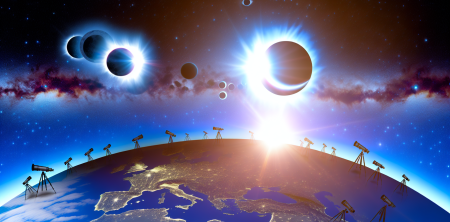
In an astonishing revelation for astronomy enthusiasts and casual skywatchers alike, experts have confirmed that the solar eclipse occurring on August 12, 2026, will be the longest total solar eclipse in a century. This rare celestial event promises to offer an extraordinary viewing experience, making it a must-see for those in the path of totality.
Duration and Visibility: A Rare Opportunity
The total solar eclipse of 2026 is expected to last for an impressive duration of up to 6 minutes and 6 seconds in some locations, according to recent studies. This length of totality is particularly significant, as it exceeds many recent eclipses, providing viewers with an extended opportunity to witness the breathtaking phenomena of a solar eclipse. The last time a total solar eclipse lasted this long was during the eclipse of 1933.
Path of Totality: Where to Watch
The path of totality for the 2026 solar eclipse will traverse several countries, providing ample opportunities for millions to experience this astronomical marvel firsthand. Key locations include:
- Spain: The eclipse will first make landfall in the northern regions of Spain, including cities such as A Coruña and Lugo.
- Portugal: Following its path, the eclipse will pass over mainland Portugal, offering stunning views across the Iberian Peninsula.
- North Africa: The eclipse will continue its journey across northern Africa, with prime viewing spots in Morocco and Algeria.
- The Mediterranean: Sailors and tourists alike will find excellent vantage points in the Mediterranean Sea, where the totality can be experienced away from light pollution.
- Middle East: Countries such as Egypt and Saudi Arabia will also be in the path of totality, allowing millions to witness this extraordinary event.
As the eclipse sweeps across these regions, it will create a breathtaking spectacle, as day turns to night for several minutes, allowing observers to see the solar corona, stars, and planets in broad daylight.
Timing: Mark Your Calendars
For those eager to witness the eclipse, timing will be crucial. The event is set to occur on August 12, 2026, with the total eclipse starting at approximately 11:30 AM UTC. The precise timing will vary based on geographical location, so it will be essential for viewers to check local forecasts to plan their viewing experience accordingly.
Scientific Significance: More Than Just a Show
Beyond the sheer beauty of the eclipse, scientists are eager to utilize this event for research purposes. Total solar eclipses provide a unique opportunity to study the sun's corona, the outermost layer of the solar atmosphere. The corona is typically obscured by the bright light of the sun, but during a total eclipse, it becomes visible, allowing researchers to gather valuable data on solar dynamics and magnetic fields.
Moreover, this eclipse will help in advancing our understanding of solar phenomena, such as solar flares and coronal mass ejections, which can have significant impacts on Earth's technology and climate.
Preparing for the Event: Tips for Safe Viewing
As excitement builds around the 2026 solar eclipse, it's vital for observers to prepare adequately to ensure a safe and enjoyable experience. Here are some essential tips for viewing the eclipse:
- Use Proper Solar Filters: Always wear eclipse glasses or use solar viewers that meet the ISO 12312-2 international safety standard. Regular sunglasses are not safe for viewing the sun.
- Plan Your Location: Choose a viewing spot that is within the path of totality to experience the full effect of the eclipse. Consider accessibility, weather conditions, and local events.
- Arrive Early: Crowds are expected in prime viewing areas, so arrive early to secure a good spot and avoid traffic.
- Photography Preparations: If you plan to photograph the eclipse, familiarize yourself with your camera settings and have the appropriate filters for your equipment.
Preparing ahead of time ensures that everyone can enjoy this once-in-a-lifetime astronomical event safely and effectively.
Conclusion: A Celestial Celebration Awaits
The upcoming solar eclipse in 2026 promises to be a spectacular event that captures the imagination of people around the world. With its unprecedented duration, expansive path of totality, and scientific importance, it is set to be one of the most memorable celestial occurrences in recent history. Mark your calendars, prepare your viewing gear, and get ready to witness the magic of the universe as the moon casts its shadow across the Earth.

