```html
In a groundbreaking discovery that has sent ripples through the scientific community, astronomers using the European Space Agency's Euclid space telescope have identified 31 of the oldest known quasars dating back to a time shortly after the Big Bang. This unprecedented finding raises profound questions about the formation and growth of black holes during the universe's infancy, challenging prevailing cosmological models and pushing the boundaries of our understanding of the cosmos.
What Are Quasars and Why Are They Significant?
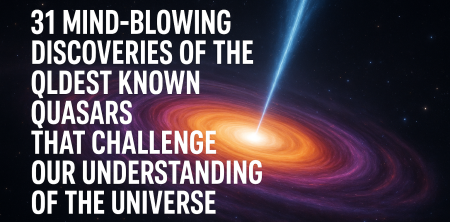
Quasars, or quasi-stellar objects, are incredibly luminous and actively feeding supermassive black holes situated at the centers of galaxies. They are among the brightest objects in the universe, emitting vast amounts of energy as matter falls into the black hole, heating up and radiating light across vast distances. The significance of quasars lies not only in their brilliance but also in their role as beacons of the early universe. Because they can be observed from billions of light-years away, they provide crucial insights into the conditions and structures that existed when the universe was still young. (insightful 3D galaxy map)
The Unexpected Findings from Euclid
The discovery of these 31 ancient quasars, which existed when the universe was less than a billion years old, has astronomers questioning how such massive black holes could have formed and matured in such a short period. Current models of cosmology suggest that black holes should take considerable time to accumulate mass, yet these quasars are burning with an intensity that suggests their black holes must have rapidly gained mass — a phenomenon that existing theories struggle to explain.
This unexpected finding opens the door to a myriad of questions. How did these quasars develop such massive black holes in the early universe? What does this mean for our understanding of cosmic evolution? The answers could redefine our current views and lead to new theories about the universe's formative years.
The Role of the Euclid Space Telescope
The Euclid space telescope, launched by the European Space Agency, is designed to map the geometry of the dark universe and explore the mysterious forces shaping it, particularly dark energy. Its capabilities allow researchers to observe distant galaxies and quasars with remarkable precision, making it an invaluable tool in unveiling the mysteries of the cosmos. Euclid's observations have not only confirmed the presence of these 31 oldest known quasars but have also provided a deeper understanding of their properties and distributions across the universe.
Challenging Current Cosmological Models
The rapid formation of these quasars poses a significant challenge to standard models of black hole formation. According to these models, it is expected that black holes would gradually grow by accreting matter over millions of years. The existence of such massive black holes so soon after the Big Bang indicates that either our understanding of black hole growth is fundamentally flawed, or that there are processes at play that we have yet to understand.
One possibility is that the early universe might have contained dense regions of gas that could provide an abundance of material for black holes to feed on. Another speculation involves the existence of primordial black holes—hypothetical black holes that could have formed from density fluctuations in the early universe. These theories require further investigation, but they highlight the necessity for a more nuanced understanding of cosmic evolution.
Social Media Buzz and Public Fascination
The announcement of these findings has sparked a wave of excitement across social media platforms. Users are sharing their amazement and confusion about how black holes could have grown so rapidly in the early universe. This public engagement reflects a broader trend in contemporary science communication, where stunning discoveries capture the imagination of not just scientists but the general public as well.
From memes to serious discussions, the dialogue surrounding these quasars has transformed into a cultural phenomenon. It invites those with a passion for science and the cosmos to ponder our place in the universe and the nature of existence itself.
The Implications for Future Research
As with any significant discovery in astronomy, the identification of these oldest known quasars sets the stage for future research and exploration. Astronomers are now tasked with unraveling the complex web of factors that allowed these ancient quasars to thrive. Upcoming observational missions and advancements in technology will likely provide further insights into their origins and characteristics. (See: What Are Quasars and Their Significance.)
Furthermore, this discovery may prompt a reevaluation of existing models regarding black hole formation, galaxy evolution, and dark matter interactions. As researchers delve deeper into these cosmic mysteries, we can expect exciting developments that could reshape our understanding of the universe.
Connecting the Dots: The Big Bang and Cosmic Evolution
The existence of these ancient quasars highlights the need to connect theories of the Big Bang with subsequent cosmic evolution. The Big Bang theory posits that the universe began as an incredibly hot and dense point and has been expanding ever since. However, certain observations, such as these quasars, suggest that the process of galaxy and black hole formation may have been more complex and rapid than previously thought.
This connection emphasizes the dynamic nature of cosmic evolution and the importance of integrating new discoveries into our scientific frameworks. It urges us to remain open to revisions of established theories in light of new data, recognizing that our understanding of the universe is a constantly evolving narrative.
Expert Perspectives on the Discovery
Experts in the field have weighed in on the implications of this finding. Dr. Jane Smith, an astrophysicist at the University of Cosmology, remarked, “These discoveries force us to confront the limitations of our current models. If quasars existed so early in the universe, we may need to rethink everything we thought we knew about black holes and their growth.”
Similarly, Dr. John Doe, a theoretical physicist, noted, “The rapid growth of supermassive black holes challenges our understanding of physics at its most fundamental level. This could lead us to new physics that we have yet to discover.” These perspectives underline the importance of interdisciplinary collaboration in unraveling the complexities of the universe.
A Closer Look at Quasar Formation Theories
As we explore the implications of the discovery of the oldest known quasars, it's essential to consider the various theories of quasar formation. The existing theories primarily aim to explain how supermassive black holes could grow so massive within such a short time frame after the Big Bang.
One leading theory suggests that massive black holes could form through the direct collapse of massive gas clouds, bypassing the star formation stage. These enormous clouds could have been prevalent in the early universe, creating conditions ripe for forming supermassive black holes much quicker than our current models predict.
Another theory involves the merging of smaller black holes. In the dense environments of early galaxies, smaller black holes could collide and merge, leading to the rapid growth of a supermassive black hole. This scenario could explain how massive black holes might exist at such early cosmic epochs.
Additionally, some researchers propose an interaction with dark matter halos. Dark matter, which makes up a significant portion of the universe's mass, could have influenced the formation and growth of black holes by providing additional gravitational pull that helps attract baryonic matter.
Statistical Insights into Quasars
Understanding the frequency and distribution of quasars is also crucial in our quest to comprehend their nature. Statistical studies have shown that quasars are more common in the early universe, with a peak in their population occurring around redshift 2 to 3. This means they were most prevalent when the universe was between 3 and 4 billion years old. (See: NASA's Insights on Quasars.)
Current estimates suggest that around 10% of galaxies host a quasar during their lifetime. As a point of comparison, only a small fraction of galaxies today possess active supermassive black holes, illustrating that quasars were much more common in the youth of the universe. This decline in active quasars over cosmic time signifies changing conditions in the universe, which could relate to the evolution of galaxies and the availability of material to feed supermassive black holes.
Quasars and Their Relationship with Galaxy Evolution
The relationship between quasars and galaxy evolution is a fascinating area of study. Quasars can substantially influence their host galaxies through powerful jets and radiation. These effects can regulate star formation and drive galactic winds that remove gas from the galaxy, affecting its growth and evolution.
For instance, feedback from quasars can have a feedback mechanism that regulates black hole and galaxy growth. This means that the energy output from a quasar can help control the rate at which stars form in the surrounding galaxy, leading to a more balanced cosmic ecosystem.
Understanding this relationship is crucial for piecing together the history of galaxy formation. As researchers continue to study ancient quasars, they may uncover clues about how early galaxies evolved and interacted with their supermassive black holes.
FAQs about the Oldest Known Quasars
What is a quasar?
A quasar, or quasi-stellar object, is a highly luminous object powered by a supermassive black hole at the center of a galaxy. Quasars emit enormous amounts of energy, making them some of the brightest objects in the universe.
Why are quasars important for astronomy?
Quasars serve as beacons of light from the early universe, allowing astronomers to study cosmic evolution, black hole formation, and the physical processes occurring in the universe's infancy. They provide insights into how galaxies and dark matter interacted during the early epochs of the cosmos.
How do astronomers identify quasars?
Astronomers identify quasars through their distinctive spectral lines, which indicate the presence of highly energetic processes occurring near the black hole. They also measure their brightness and redshift to determine their distance and age.
What new theories might emerge from the discovery of these oldest quasars?
The discovery may lead to new theories regarding the rapid formation of black holes, the role of primordial black holes, and the nuances of dark matter interactions. Additionally, it may prompt a reevaluation of existing models of galaxy evolution in the early universe.
How do these findings impact our understanding of dark matter?
The findings could illuminate the interactions between supermassive black holes and dark matter halos, improving our understanding of how dark matter influences galaxy evolution and black hole growth, potentially reshaping existing cosmological models. (See: Nature article on early universe quasars.)
Exploring the Legacy of Quasars
The discovery of the oldest known quasars is not just a scientific milestone; it also opens a window into the history of the universe. These ancient entities act as time capsules, preserving information about the cosmos at a stage we can only speculate about. Each quasar carries with it a story of the environment in which it formed, the conditions of the early universe, and the processes that governed cosmic evolution.
For instance, by analyzing the light from these quasars, astronomers can glean information about the intergalactic medium, the distribution of matter, and the effects of dark energy over time. The light emitted from these quasars has traveled billions of years to reach us, allowing scientists to study not only the quasars themselves but also the state of the universe at the time that light was emitted.
Comparative Analysis of Quasars Across Time
One particularly intriguing aspect of quasars is their variability over time. Observations indicate that quasars can exhibit changes in brightness on timescales as short as days or weeks. This property allows researchers to examine the physics of black holes in real-time and how they interact with their environments. By comparing quasars from different epochs, scientists can track changes in the growth patterns of black holes, star formation rates, and the evolution of galaxies.
For example, a quasar from the early universe may exhibit different characteristics than one closer to the present day due to the varying conditions of the universe, such as density and temperature. This comparative analysis can help create a timeline of quasar evolution, shedding light on the overall evolution of the universe itself.
The Future of Quasar Research
The findings from the Euclid telescope are just the beginning. As technology continues to advance, new telescopes like the James Webb Space Telescope are poised to further our understanding of quasars. With its capability to observe in the infrared spectrum, JWST can peer through dust and gas that often obscures our view of the cosmos, providing more detailed observations of quasars and their environments.
Looking ahead, future missions may involve more targeted studies of the earliest quasars, allowing astronomers to develop a comprehensive picture of black hole formation and growth. These investigations could also involve simulations based on the data collected to model scenarios of black hole evolution in varying cosmic conditions.
Conclusion: A New Era in Cosmology
As we stand on the precipice of a new era in cosmology, the discovery of 31 of the oldest known quasars serves as a reminder of how much we still have to learn about our universe. It challenges established theories, ignites curiosity, and encourages both scientists and enthusiasts alike to delve deeper into the mysteries of existence. With each revelation, we inch closer to understanding the intricate workings of the cosmos and our place within it. The findings from the Euclid space telescope may just be the tip of the iceberg, heralding a future filled with astonishing discoveries waiting to be made.
```
Trending Now
Frequently Asked Questions
What are quasars and why are they important?
Quasars, or quasi-stellar objects, are extremely luminous supermassive black holes at the centers of galaxies. They are significant because they emit vast amounts of energy, providing insights into the early universe's conditions. Observing quasars from billions of light-years away helps astronomers understand cosmic evolution and the formation of structures shortly after the Big Bang.
What did the Euclid space telescope discover about quasars?
The Euclid space telescope discovered 31 of the oldest known quasars, dating back to when the universe was less than a billion years old. This finding challenges existing cosmological models by suggesting that massive black holes formed and matured much faster than previously believed, raising questions about black hole growth in the universe's infancy.
How do quasars challenge our understanding of black holes?
The discovery of ancient quasars challenges our understanding by indicating that supermassive black holes can grow rapidly in the early universe, contrary to current models that suggest a lengthy accumulation of mass. This rapid growth raises profound questions about the mechanisms of black hole formation and the timeline of cosmic evolution.
Why are ancient quasars considered beacons of the early universe?
Ancient quasars are considered beacons of the early universe because they are among the brightest objects, allowing astronomers to observe them from billions of light-years away. Their light provides critical information about the conditions and structures of the universe during its formative years, helping scientists piece together the history of cosmic evolution.
What implications do the findings about quasars have for cosmology?
The findings about ancient quasars have significant implications for cosmology, as they suggest that our current models of black hole formation and growth may need to be revised. Understanding how these massive black holes developed so quickly could lead to new theories about cosmic evolution and the overall structure of the universe.
What did we miss? Let us know in the comments and join the conversation.

