```html
In the landscape of modern education, effective teaching strategies are paramount for fostering student success. Among these strategies, scaffolding in education has emerged as a critical approach, particularly within competency-based education (CBE). CBE's focus on ensuring that students master individual skills and knowledge at their own pace makes scaffolding an invaluable tool for educators. This article provides a comprehensive guide on how educators can implement scaffolding to enhance learning outcomes in a competency-based framework.
Understanding Scaffolding
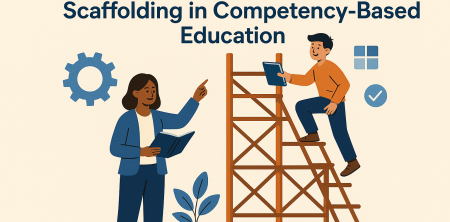
Scaffolding is a teaching method that involves providing temporary support to students as they develop new skills and understanding. The term is derived from construction, where scaffolds are used to support workers as they build or repair structures. Similarly, in education, scaffolding enables teachers to support students in their learning journey, gradually removing assistance as students become more competent.
The concept of scaffolding was popularized by educational theorists such as Jerome Bruner and Lev Vygotsky, who emphasized the importance of social interaction and collaboration in learning. According to Vygotsky's Zone of Proximal Development (ZPD), learners can achieve higher levels of understanding with the help of a more knowledgeable individual, be it a teacher or peer. This foundational theory underpins the effective use of scaffolding in education.
The Role of Scaffolding in Competency-Based Education
Competency-based education centers around the idea of students progressing through a curriculum based on their ability to demonstrate mastery of specific skills or competencies. Unlike traditional education models, which often measure progress through time spent in class, CBE allows students to advance as soon as they prove they understand a concept.
In this context, scaffolding becomes crucial. It allows educators to tailor their instruction to meet individual student needs, providing the right level of support at the right time. This is particularly important in CBE, where the emphasis is on personalized learning paths. With effective scaffolding, teachers can guide students through complex concepts, ensuring that they achieve mastery before moving on to more advanced topics.
Key Strategies for Effective Scaffolding
Implementing scaffolding in education requires a strategic approach. Here are seven essential strategies that educators can employ within a competency-based framework:
1. Assessing Prior Knowledge
Before introducing new content, it's vital to assess students' prior knowledge. Understanding what students already know helps educators determine the appropriate level of scaffolding needed. This can be done through pre-assessments, discussions, or interactive activities that gauge students' understanding and readiness to learn.
For instance, if students are expected to learn about fractions, a teacher might begin by asking students to share what they know about division and parts of a whole. This initial assessment allows the teacher to identify misconceptions and tailor subsequent instruction to address these gaps in understanding.
2. Breaking Down Tasks
Complex skills or concepts can be overwhelming for students. Breaking down tasks into smaller, manageable components makes learning more accessible. For instance, when teaching a research project, a teacher might guide students through each phase: selecting a topic, conducting research, organizing information, and writing the final report. Each phase can be scaffolded with specific instructions, templates, or graphic organizers to support students in their learning.
This stepwise approach not only reduces anxiety but also allows students to experience success at each stage, reinforcing their confidence and motivation.
3. Providing Models and Examples
Demonstrating how to complete a task or solve a problem is a powerful form of scaffolding. Teachers can provide models, examples, or demonstrations to show students what successful work looks like. For example, in a writing assignment, a teacher might provide an exemplar essay that highlights key elements of effective writing, such as structure, argumentation, and evidence.
By analyzing these models together, students can better understand the expectations and criteria for success, enabling them to apply similar strategies in their own work. (See: Scaffolding in education.)
4. Encouraging Collaboration
Collaboration among students enhances learning through peer interaction. In a CBE environment, allowing students to work together fosters a sense of community and shared responsibility. This can be facilitated through group projects, peer reviews, or study groups.
When students collaborate, they can scaffold each other’s learning by sharing ideas, questioning each other's thinking, and providing feedback. Teachers can structure these interactions by providing guidelines or roles within the group, ensuring that all students are engaged and contributing to the learning process.
5. Utilizing Technology
Incorporating technology can greatly enhance scaffolding efforts. Digital tools and platforms can provide personalized learning experiences that adapt to students' individual needs. For example, online learning management systems can offer resources, quizzes, and interactive activities tailored to students' proficiency levels.
Additionally, educational apps and software often include features that give immediate feedback, allowing students to correct mistakes and understand concepts in real-time. By leveraging technology, teachers can create a more dynamic and responsive learning environment.
6. Gradually Reducing Support
Scaffolding is meant to be temporary; once students demonstrate mastery, support should be gradually withdrawn. This process, known as fading, encourages students to become independent learners. For example, after providing a high level of support through guided practice, a teacher might shift to a more independent practice phase, where students complete similar tasks with less guidance.
Monitoring student progress during this phase is crucial. Teachers can use formative assessments to determine when a student is ready to take on more complex tasks without additional scaffolding.
7. Reflecting on the Learning Process
Encouraging students to reflect on their learning process is an essential aspect of scaffolding. Reflection helps students understand what strategies worked for them, what challenges they faced, and how they can improve in the future. Teachers can facilitate reflection through class discussions, journals, or feedback sessions.
This practice not only promotes metacognition but also empowers students to take ownership of their learning, a core tenet of competency-based education.
Practical Insights for Educators
Implementing scaffolding in a competency-based education setting can be challenging, but with thoughtful planning and execution, educators can make a significant impact on student learning. Here are some practical insights to keep in mind:
Tailor Scaffolding to Individual Needs
Every student is unique, and their learning needs will vary. When planning scaffolding strategies, consider each student’s strengths, weaknesses, and learning styles. Differentiating scaffolding approaches can help ensure that all students are adequately supported. For instance, visual learners may benefit from graphic organizers, while auditory learners might thrive with discussions or verbal instructions.
Foster a Growth Mindset
Encouraging a growth mindset in students is essential for a successful scaffolding approach. When students believe that their abilities can improve with effort and practice, they are more likely to embrace challenges and persist through difficulties. Celebrate successes, no matter how small, and reinforce the idea that mistakes are part of the learning process.
Engage in Continuous Professional Development
Educators should seek opportunities for professional development to enhance their understanding of scaffolding in education. Workshops, conferences, and online courses can provide valuable insights into effective scaffolding techniques and the latest research in competency-based education.
Current Relevance and Future Directions
The relevance of scaffolding in education has only grown in the wake of recent shifts towards competency-based frameworks and personalized learning. As educational institutions continue to adopt CBE, teachers must be equipped with the skills necessary to implement scaffolding effectively. By staying informed about best practices and emerging trends, educators can ensure that they are providing the best possible support for their students. (See: Competency-based education strategies.)
Moreover, as technology continues to evolve, the integration of digital resources into scaffolding strategies will likely become increasingly important. Educators who embrace innovative tools and approaches will be better positioned to meet the diverse needs of their students.
Challenges and Considerations When Implementing Scaffolding
Despite the numerous benefits of scaffolding, there are challenges that educators may encounter. Understanding these challenges can help in crafting effective solutions to ensure scaffolding is both purposeful and effective.
1. Time Constraints
One significant barrier to effective scaffolding is the limited time teachers have to implement these strategies. With packed curricula and high-stakes assessment pressures, educators often feel rushed. To tackle this, consider planning scaffolding strategies as part of lesson design from the outset, integrating them into existing frameworks rather than treating them as additional tasks. Prioritizing which concepts require scaffolding and which do not can also help manage time more efficiently.
2. Misunderstanding the Scaffolding Process
Sometimes, scaffolding can be misinterpreted as spoon-feeding or giving too much help, which can hinder student independence. It's crucial that educators understand the balance between providing support and fostering autonomy. Training sessions or workshops can provide teachers with insights on how to effectively implement scaffolding without extending support beyond what learners need.
3. Varying Student Responses
Students have different responses to scaffolding based on their individual learning preferences and backgrounds. Some may flourish under structured support, while others may find it stifling. It’s vital to continuously assess and adjust scaffolding strategies based on student feedback and performance. Additionally, fostering a classroom environment where students feel safe to express their needs is key to tailoring scaffolding effectively.
Real-World Examples of Scaffolding in Education
To illustrate the effectiveness of scaffolding, let’s explore a few real-world examples from various educational settings.
Example 1: Mathematics Classroom
A high school mathematics teacher employed scaffolding techniques while teaching algebra. The teacher first assessed her students' understanding of basic arithmetic operations. Based on the results, she crafted lessons that gradually introduced algebraic concepts, starting with simple equations. As students grew more comfortable, she introduced complex problems that required them to combine various algebraic operations. Students worked in small groups, allowing them to support one another and learn collaboratively. This approach not only helped students grasp algebraic concepts but also built their confidence in math.
Example 2: Language Arts
In a language arts classroom, a teacher used scaffolding to help students write persuasive essays. She began the unit by analyzing examples of persuasive writing, discussing the elements that make it effective. Next, she guided students through brainstorming topics and developing theses. The teacher provided outlines and templates to support the organization of their essays. As students drafted their essays, they participated in peer reviews, which helped them articulate their ideas and receive feedback. Over time, the teacher reduced her direct involvement, allowing students more freedom to express their thoughts independently.
Example 3: Science Education
In a middle school science class, the teacher focused on the scientific method. She broke the process into manageable steps, starting with a class experiment that the students could conduct together. Each phase of the experiment was scaffolded with guiding questions, prompts, and group discussions. As students became proficient in applying the scientific method, they were tasked with designing and executing their own experiments. This gradual release of responsibility empowered students to take ownership of their learning while still benefiting from the initial structured support.
Statistics and Research Supporting Scaffolding
Numerous studies have highlighted the effectiveness of scaffolding in enhancing student outcomes. Here are a few key statistics and findings:
- According to a 2022 study published in the Journal of Educational Psychology, students who received scaffolded instruction showed a 30% increase in performance on assessments compared to those who did not.
- A meta-analysis conducted by the International Society for Technology in Education found that the use of scaffolding in conjunction with technology can lead to higher engagement levels, with 72% of students expressing greater motivation to learn.
- Research from the Harvard Graduate School of Education indicated that students in competency-based classrooms with structured scaffolding reported a 40% increase in self-efficacy when approaching challenging material.
FAQ About Scaffolding in Education
What is scaffolding in education?
Scaffolding in education is a teaching approach that provides temporary support to students as they learn new concepts and skills. This support is gradually removed as students become more competent and confident in their abilities. (See: Harvard University educational resources.)
How can I implement scaffolding in my classroom?
To implement scaffolding, start by assessing your students' prior knowledge, breaking tasks into smaller components, providing models and examples, encouraging collaboration, utilizing technology, gradually reducing support, and fostering reflection on learning.
Is scaffolding effective for all students?
While scaffolding can be beneficial for most students, its effectiveness can vary based on individual learning styles and preferences. It's essential to tailor scaffolding strategies to meet the diverse needs of your students.
How does scaffolding relate to competency-based education?
Scaffolding complements competency-based education by allowing educators to provide personalized support as students work towards mastering specific competencies at their own pace.
Can scaffolding be used in online or hybrid learning environments?
Yes! Scaffolding can be effectively implemented in online and hybrid learning environments using digital tools, resources, and collaborative platforms that facilitate interaction and feedback among students.
What are some common misconceptions about scaffolding?
One common misconception is that scaffolding means giving too much help to students, which can hinder their independence. In reality, scaffolding is about providing the right amount of support and then gradually reducing it to promote autonomy.
How can parents support scaffolding at home?
Parents can support scaffolding at home by engaging in discussions about their child’s learning, providing resources that align with what is being taught in school, and encouraging their children to reflect on their learning experiences. They can ask questions that prompt deeper thinking and help their child articulate their understanding.
Are there specific subjects where scaffolding is particularly effective?
Scaffolding can be effective across all subjects, but it tends to be particularly beneficial in complex areas such as mathematics, science, and language arts, where skills build on each other and require a strong foundational understanding.
Conclusion
Incorporating scaffolding into competency-based education is a powerful way to enhance student learning and mastery. By understanding the principles of scaffolding and implementing effective strategies, educators can create supportive learning environments that empower students to take charge of their education. As we move forward in this ever-changing educational landscape, the commitment to effective scaffolding remains a cornerstone of successful teaching.
```
Trending Now
Frequently Asked Questions
What is scaffolding in education?
Scaffolding in education refers to a teaching method that provides temporary support to students as they develop new skills and understanding. This approach helps learners build their knowledge incrementally, similar to how construction scaffolds support workers, gradually removing assistance as students become more competent.
How does competency-based education work?
Competency-based education (CBE) allows students to progress through a curriculum at their own pace, advancing only when they can demonstrate mastery of specific skills or competencies. This model contrasts with traditional education, which often relies on time spent in class as the primary measure of progress.
Why is scaffolding important in competency-based education?
Scaffolding is crucial in competency-based education because it enables educators to tailor instruction to individual students' needs, providing the necessary support as they work toward mastering skills. This personalized approach enhances learning outcomes and fosters student success.
Who developed the concept of scaffolding in education?
The concept of scaffolding was popularized by educational theorists Jerome Bruner and Lev Vygotsky. They emphasized the importance of social interaction and collaboration in learning, with Vygotsky's Zone of Proximal Development highlighting how learners can achieve higher understanding with guidance from knowledgeable individuals.
What are effective strategies for scaffolding in education?
Effective strategies for scaffolding in education include breaking tasks into smaller, manageable parts, providing clear instructions, using visual aids, encouraging peer collaboration, and gradually reducing support as students gain competence. These strategies enhance student engagement and promote deeper learning.
Have you experienced this yourself? We'd love to hear your story in the comments.

