```html
Understanding Scaffolding in Mathematics Education
At its core, scaffolding is a teaching approach that involves providing temporary support to students as they learn new concepts. This strategy is particularly relevant in math education, where students often struggle with abstract concepts and problem-solving skills. Scaffolding strategies for math teachers are designed to help students build their understanding progressively, enabling them to become more independent learners.
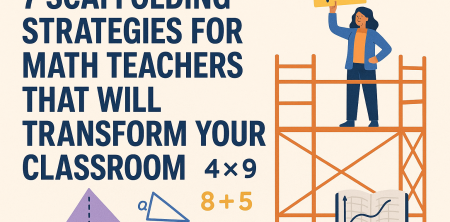
The term 'scaffolding' originates from architectural practices where temporary structures support a building during its construction. Similarly, in education, scaffolding provides essential support to students while they are developing their skills, encouraging them to tackle more complex problems as they gain confidence and competence.
The Importance of Scaffolding in Math
Mathematics is a cumulative subject where each concept builds on previous knowledge. For high school students, this means that failing to grasp foundational elements can lead to greater difficulties down the line. Scaffolding ensures that students are not left behind, providing them with the necessary tools and guidance to understand complex topics.
Research indicates that when students receive appropriate scaffolding, their engagement and retention rates increase. According to a study published in the Journal of Educational Psychology, students exposed to effective scaffolding techniques performed better on assessments and reported higher levels of self-efficacy. This is particularly crucial in high school settings, where students are preparing for standardized tests, college, and future careers.
Identifying Scaffolding Strategies for Math Teachers
There are numerous scaffolding strategies for math teachers that can be employed in the classroom. Each strategy caters to different learning styles and can be adapted to suit various mathematical topics.
- Chunking Information: Breaking down complex information into smaller, manageable parts allows students to process one segment at a time. For instance, when teaching quadratic equations, introduce the components separately—discuss the concept of variables, followed by coefficients, and then the structure of the equation itself.
- Modeling Problem-Solving: Demonstrating how to approach a problem step by step can provide students with a clear framework. Use think-aloud strategies to verbalize your thought process as you tackle a problem, guiding students on how to think critically about mathematical challenges.
- Using Visual Aids: Incorporate diagrams, charts, and graphical representations to help students visualize concepts. For example, when introducing functions, graphical representations can clarify how changes in variables affect the output.
- Peer Collaboration: Encourage students to work together on problems. Group work not only fosters communication skills but allows students to learn from each other, gaining different perspectives on math problems.
- Scaffolded Questions: Pose guiding questions that lead students through the problem-solving process. Instead of asking, "What is the answer?" you might ask, "What information do you need to find the answer?" This technique promotes critical thinking.
- Providing Exemplars: Show students sample problems and solutions to illustrate what is expected. Analyzing exemplary solutions can help students understand the criteria for effective problem-solving.
- Gradual Release of Responsibility: Start with full support and gradually reduce it as students become more comfortable. This could involve moving from direct instruction to guided practice, and eventually to independent work.
Implementing Scaffolding in the Math Curriculum
To effectively implement scaffolding strategies for math teachers, it's crucial to integrate them into the existing curriculum. This requires careful planning and consideration of the learning objectives for each unit.
Start by identifying key concepts that students struggle with and consider which scaffolding strategies would be most effective. For example, when teaching geometry, you might find that students struggle with proofs. By using modeling and peer collaboration, you can help them grasp the structure of mathematical arguments while providing the necessary support.
Additionally, integrating technology can enhance scaffolding efforts. Online resources, interactive simulations, and math software can provide students with immediate feedback, helping them to refine their understanding in real time. Platforms like Khan Academy or Desmos offer tailored practice opportunities that allow students to progress at their own pace. (See: Scaffolding strategies in education.)
Assessing the Effectiveness of Scaffolding Strategies
To ensure that scaffolding strategies are effective, educators should continuously assess student understanding and engagement. Formative assessments—such as quizzes, class discussions, and exit tickets—can provide insight into how well students are grasping concepts and where additional support may be needed.
When students demonstrate a solid understanding of a concept, it’s a good indicator that the scaffolding was effective. However, if significant numbers struggle, it’s essential to re-evaluate the strategies employed. Perhaps the material wasn't broken down sufficiently, or the collaborative opportunities were not meaningful. Adjusting your approach based on student performance can help refine your scaffolding techniques.
Creating a Supportive Learning Environment
Beyond specific scaffolding strategies, creating a supportive learning environment is crucial for student success in mathematics. Students need to feel comfortable making mistakes and asking for help. Establishing a classroom culture where effort is valued over perfection encourages risk-taking, which is essential for learning.
Encourage a growth mindset by celebrating perseverance and learning from errors. Present math as a subject that involves exploration and discovery, rather than just right or wrong answers. This can be accomplished through collaborative projects, real-world applications of math, and incorporating discussions about the relevance of math in everyday life.
Professional Development and Collaboration
No single educator possesses all the tools needed to address the diverse learning needs of students. Therefore, professional development focused on effective scaffolding strategies for math teachers is vital. Workshops, online courses, and peer observations can provide teachers with valuable insights and new techniques.
Collaboration among teachers can also enhance scaffolding practices. Sharing successful strategies and resources among colleagues can foster a supportive community of practice. Schools might consider creating professional learning communities where educators can meet regularly to discuss challenges, share insights, and brainstorm solutions.
Case Studies: Successful Implementation of Scaffolding Strategies
Examining real-life examples of successful scaffolding in math education can provide valuable insights. For instance, a high school in California implemented a peer tutoring program where students who excelled in math were paired with those struggling. This initiative not only improved the performance of the lower-achieving students but also deepened the understanding of the tutors themselves.
In another example, an urban high school integrated technology by using a math software program that allowed students to visualize complex algebraic concepts. The software provided immediate feedback, and the teachers reported enhanced student engagement and understanding.
The Future of Scaffolding in Math Education
As the landscape of education continues to evolve, so too must the strategies employed to teach mathematics. With the rise of online learning and technological resources, scaffolding strategies for math teachers will need to adapt accordingly. Embracing blended learning environments that incorporate both traditional and digital tools can provide students with a more comprehensive learning experience. (See: Understanding scaffolding for learning.)
In addition, the emphasis on personalized learning is growing. Teachers will need to consider the unique needs of each student and tailor their scaffolding efforts accordingly. This might involve using data analytics to track student progress in real-time, allowing for more immediate adjustments to teaching strategies.
FAQ: Scaffolding Strategies for Math Teachers
What is scaffolding in education?
Scaffolding in education refers to the support given to students during the learning process, which is gradually removed as students gain independence. This can include instructions, feedback, and various teaching methods that guide students toward understanding and mastery of concepts.
How can I assess if my scaffolding strategies are effective?
To assess the effectiveness of your scaffolding strategies, utilize formative assessments like quizzes, class discussions, and one-on-one check-ins. This feedback can help you identify areas where students struggle and adapt your teaching methods accordingly.
Can scaffolding be used in online learning environments?
Absolutely! Scaffolding can be effectively applied in online learning through interactive tools, structured online discussions, and step-by-step guidance in digital formats. Platforms that provide instant feedback and adaptive learning paths are excellent for this purpose.
What role does technology play in scaffolding?
Technology enhances scaffolding by offering dynamic resources like simulations, educational software, and online platforms where students can practice at their own pace. These tools can provide targeted support and immediate feedback, making learning more engaging.
How can I create a growth mindset in my classroom?
Encourage a growth mindset by praising effort over accuracy, sharing stories of perseverance in math, and framing challenges as opportunities for learning. Discuss famous mathematicians' failures and successes to inspire students to value the learning process.
What strategies can I use for students with different learning abilities?
Differentiation is key. Use varied scaffolding techniques tailored to different learning styles. For example, visual learners may benefit from more diagrams and visual aids, while auditory learners might thrive with collaborative discussions and verbal explanations.
How can peer collaboration enhance scaffolding?
Peer collaboration fosters a sense of community and allows students to learn from diverse perspectives. When students explain concepts to one another or work together on problems, they reinforce their understanding and develop critical communication skills.
Advanced Scaffolding Techniques for Math Teachers
Beyond basic scaffolding strategies, advanced techniques can further enhance students' mathematical understanding. These can include:
- Concept Mapping: Encourage students to create visual representations of their understanding of concepts, which can help them organize and integrate new information.
- Differentiated Scaffolding: Tailor support based on individual student readiness and skill levels. This might involve creating different paths or resources for various students based on their needs.
- Interactive Learning Stations: Set up stations where students can engage with different tasks or concepts at their own pace, allowing for personalized learning experiences.
- Metacognitive Strategies: Teach students to reflect on their learning process, helping them understand what strategies work best for them and how to approach problem-solving effectively.
- Feedback Loops: Establish regular feedback mechanisms where students can receive constructive input on their work, helping them identify areas for improvement while encouraging growth.
Common Challenges in Scaffolding Mathematics
Implementing scaffolding strategies in mathematics education is not without its challenges. Teachers often face obstacles that can impede the effectiveness of these strategies. Recognizing these challenges can help educators better prepare for them.
- Time Constraints: One major challenge is the limited time available in the school day. Scaffolding requires careful planning and often more time for instruction and practice. Teachers may need to prioritize which concepts to scaffold based on their students' needs.
- Diverse Learning Needs: Classrooms often have students with varying levels of understanding and different learning styles. It can be difficult to design scaffolding that meets all students' needs simultaneously. Differentiating instruction while scaffolding can be particularly complex.
- Resistance to New Strategies: Some students may resist new teaching methods or collaborative learning environments. They might feel uncomfortable working in groups or relying on peers for assistance. Building a supportive and trusting classroom culture is crucial for overcoming this reluctance.
- Assessment Limitations: Assessing the effectiveness of scaffolding strategies can be challenging. Traditional assessments may not accurately reflect a student's understanding or growth when scaffolding is involved. Teachers may need to develop new assessment strategies to evaluate the impact of their scaffolding.
Success Metrics for Scaffolding Strategies
To gauge the success of scaffolding strategies, it’s essential to establish clear metrics. Here are some indicators that can help teachers measure the impact of their efforts:
- Student Engagement: Monitor student participation in class discussions, group work, and other collaborative activities. Increased engagement often correlates with effective scaffolding.
- Performance on Assessments: Compare students' scores on formative and summative assessments before and after implementing scaffolding strategies. Improvement in scores can indicate successful scaffolding.
- Self-Reported Confidence: Regularly check in with students about their confidence levels in math. Surveys or informal discussions can provide valuable insights into whether scaffolding is helping students feel more capable.
- Retention of Knowledge: Long-term retention of concepts is a key metric. Conduct follow-up assessments weeks or months after instruction to see if students can recall and apply the concepts learned through scaffolding.
Conclusion: Empowering Students Through Scaffolding
Effective scaffolding strategies for math teachers can transform classrooms into dynamic learning environments where all students feel empowered to succeed. By understanding the principles of scaffolding, implementing tailored strategies, and fostering a supportive culture, educators can help students build a strong mathematical foundation. This not only enhances academic performance but also cultivates a lifelong appreciation for math.
Through continuous reflection and adaptation of their teaching practices, math teachers can ensure that their students not only grasp mathematical concepts but also develop the confidence and skills necessary for future success.
```
Trending Now
Frequently Asked Questions
What are scaffolding strategies in math education?
Scaffolding strategies in math education involve providing temporary support to students as they learn new concepts. These strategies help students build understanding progressively, enabling them to tackle complex problems with increased confidence and independence.
Why is scaffolding important in math teaching?
Scaffolding is crucial in math teaching because mathematics is cumulative; each concept builds on previous knowledge. Effective scaffolding helps prevent students from falling behind, ensuring they grasp foundational elements necessary for understanding more complex topics.
How can teachers implement scaffolding in the classroom?
Teachers can implement scaffolding in the classroom through various strategies, such as chunking information, using visual aids, and providing guided practice. These techniques cater to different learning styles and can be adapted to suit various mathematical topics.
What are the benefits of using scaffolding in math education?
The benefits of using scaffolding in math education include increased student engagement, better retention rates, and improved performance on assessments. Research shows that students exposed to effective scaffolding techniques also report higher levels of self-efficacy.
How does scaffolding support student learning in math?
Scaffolding supports student learning in math by offering essential tools and guidance as students develop their skills. This support allows learners to gradually take on more complex problems, fostering independence and deeper understanding of mathematical concepts.
Have you experienced this yourself? We'd love to hear your story in the comments.

