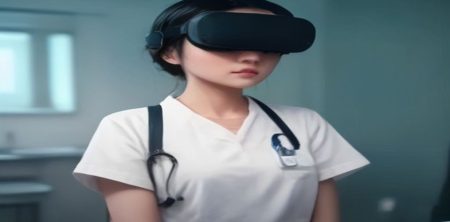
Alright, let's talk about something truly transformative in medical education: virtual reality. For years, we've relied on textbooks, cadaver labs, and eventually, expensive simulation centers. These methods have their place, no doubt, but they often struggle to bridge the gap between theoretical knowledge and the high-stakes, real-time decision-making required in clinical practice. That's where VR steps in, offering a genuinely immersive, low-risk environment for healthcare students to hone their skills. We're seeing a rapid adoption of these platforms, especially with advancements in AI integration, making them more realistic and adaptive than ever before. So, if you're a healthcare student, an educator, or just someone fascinated by the future of medicine, you'll want to know about the best VR medical training platforms for healthcare students hitting the market right now. These aren't just fancy gadgets; they're fundamentally changing how we prepare the next generation of doctors, nurses, and allied health professionals.
Now, I know what some of you are thinking: "VR? Isn't that just for gaming?" And sure, it started there. But the technology has matured dramatically, moving beyond simple entertainment to become a powerful educational tool. When you put on a VR headset, you're not just looking at a screen; you're *in* the environment. For medical training, this means being able to perform complex surgeries, diagnose rare conditions, or manage critical patient scenarios without any actual risk to a human life. This level of hands-on, experiential learning is incredibly valuable. While there are legitimate discussions emerging about the cost and accessibility of these advanced platforms – a very real concern for equitable access to education – the benefits in terms of learning outcomes and patient care simply can't be ignored. Let's dive into some of the top contenders that are making waves in this exciting space. UiPath insights and alternatives offers useful background here.
1. vDOC.AI: The AI-Powered Patient Encounter Simulator
First up, let's talk about vDOC.AI, a platform that's been generating quite a buzz, especially as of August 2026. This isn't just a VR experience; it's a full-blown immersive VR/AI platform designed to give students realistic virtual patient encounters. Think about it: instead of just reading about a diagnosis, you're interacting with an AI-driven patient avatar that responds to your questions, exhibits symptoms, and reacts to your treatment decisions in real-time. This level of dynamic interaction is a game-changer because it forces students to think on their feet, just as they would in a real clinical setting.
What makes vDOC.AI stand out is its seamless integration of artificial intelligence. It's not a pre-programmed script; the AI adapts to the student's actions, offering a truly personalized learning path. This means a student can make a mistake, learn from it, and see the consequences unfold, all within a safe, controlled environment. The platform aims to bridge that often-intimidating gap between theoretical knowledge acquired in lectures and the messy, unpredictable reality of patient care. It's about building confidence and competence before ever stepping into a live ward, making it one of the best VR medical training platforms for healthcare students focused on diagnostic and interpersonal skills.
2. Osso VR: Surgical Training with Haptic Feedback
When it comes to surgical training, precision is everything. Osso VR has emerged as a leader in this niche, providing an incredibly realistic platform for orthopedic and other surgical procedures. What sets Osso VR apart is its focus on haptic feedback – that's the tactile sensation that mimics real-world touch. Imagine performing a knee replacement and actually *feeling* the resistance of bone as you cut, or the tension of tissue as you manipulate it. This haptic integration makes the virtual experience feel incredibly tangible, allowing surgeons and residents to develop muscle memory and refine their techniques without any risk to patients.
The platform offers a library of modules covering various surgical specialties, from complex spinal fusions to intricate hand surgeries. It allows trainees to practice procedures repeatedly, learn from their errors through detailed performance analytics, and even collaborate with instructors in a virtual operating room. This repetitive, deliberate practice, combined with objective performance metrics, significantly accelerates the learning curve and builds proficiency. It's a compelling argument for why Osso VR is considered one of the best VR medical training platforms for healthcare students looking to master surgical skills.
3. FundamentalVR: Scalable Surgical Simulation
Similar to Osso VR in its surgical focus, FundamentalVR brings a slightly different approach to the table, emphasizing scalability and a broad range of applications. They offer a 'Haptic Intelligence Engine' that can be integrated with various VR headsets, making their sophisticated haptic feedback technology more accessible. This means institutions don't necessarily need proprietary hardware, potentially lowering the barrier to entry for some.
FundamentalVR's platform provides modules across multiple disciplines, including orthopedics, general surgery, and even interventional radiology. Their strength lies in creating highly realistic tactile sensations that allow students to differentiate between tissues, feel the impact of surgical tools, and practice delicate maneuvers. The goal is to develop both cognitive and psychomotor skills crucial for the operating room. Plus, their cloud-based platform allows for remote collaboration and performance tracking, making it a versatile tool for institutions with distributed learning environments. It's a strong contender among the best VR medical training platforms for healthcare students seeking comprehensive surgical practice.
4. Medicalholodeck: Anatomy and Imaging in 3D
Let's shift gears from surgery to foundational knowledge. Medicalholodeck offers an extraordinary way to study human anatomy and medical imaging. Forget flat textbook diagrams or even 3D models on a computer screen. With Medicalholodeck, you can step inside a human body, explore organs, vessels, and nerves in full 3D, and even manipulate anatomical structures. This is a level of spatial understanding that traditional methods simply can't replicate.
Beyond anatomy, the platform excels in medical imaging. Students can load real patient CT and MRI scans and view them as holographic 3D models. Imagine being able to walk around a patient's brain, examining a tumor from every angle, or virtually dissecting a heart to understand a congenital defect. This immersive approach to radiology and anatomical study deepens comprehension and helps students visualize complex relationships within the body, cementing its place among the best VR medical training platforms for healthcare students in foundational sciences. (See: Virtual Reality in Medical Education.)
5. Virtual Medical Coaching (VMC): Emergency and Critical Care Scenarios
When it comes to high-pressure situations like emergency medicine and critical care, every second counts. Virtual Medical Coaching (VMC) specializes in these time-sensitive scenarios, offering immersive simulations that put students under realistic stress without any real-world consequences. Their platform focuses on clinical decision-making, teamwork, and communication in acute settings. For more context, see healthcare education and mental health.
VMC's modules cover a wide range of emergency situations, from managing a cardiac arrest to dealing with trauma patients or responding to mass casualty incidents. Students learn to assess, prioritize, and intervene effectively, often working collaboratively in a multi-user VR environment. This focus on crisis resource management and interprofessional collaboration is crucial for healthcare teams. The ability to practice under pressure, make critical decisions, and receive immediate feedback makes VMC an invaluable tool and a strong candidate for the best VR medical training platforms for healthcare students preparing for emergency roles.
6. Precision OS: Orthopedic Specific VR Training
Precision OS dedicates its entire platform to orthopedic surgical education, making it an incredibly specialized and powerful tool for those entering this field. What's compelling about Precision OS is its direct collaboration with leading orthopedic surgeons and institutions to develop highly accurate and clinically relevant modules. This isn't just generic surgery; it's tailored, detailed orthopedic practice.
The platform allows residents and experienced surgeons to practice specific procedures like total hip arthroplasty, fracture fixation, or ACL reconstruction with remarkable fidelity. It includes features for pre-operative planning, intra-operative execution, and post-operative review, giving a full lifecycle training experience. The ability to repeat complex steps, experiment with different approaches, and receive objective performance analytics makes it a standout. For anyone focused on orthopedics, Precision OS is undoubtedly one of the best VR medical training platforms for healthcare students you could ask for.
7. Body Interact: Clinical Reasoning and Diagnosis
Moving away from purely physical skills, Body Interact focuses heavily on clinical reasoning and diagnostic pathways. This platform utilizes interactive virtual patients to simulate a wide array of medical conditions, challenging students to gather information, interpret data, and formulate diagnoses and treatment plans. It’s less about surgical dexterity and more about the cognitive process of being a clinician.
Body Interact presents patient cases where students must take a history, perform a virtual physical exam, order diagnostic tests, and make therapeutic decisions. The virtual patients react dynamically to the student's choices, providing feedback on the effectiveness of their interventions. This iterative process of problem-solving is crucial for developing sound clinical judgment. It’s an excellent complementary tool to the more procedural VR platforms, offering comprehensive training in patient assessment and management, solidifying its place among the best VR medical training platforms for healthcare students honing their diagnostic acumen.
8. ImmersiveTouch: Combining VR with Patient-Specific Data
ImmersiveTouch takes VR medical training a step further by integrating patient-specific data directly into the virtual environment. This means surgeons can practice complex procedures on a virtual model of *their actual patient* using their real CT or MRI scans. This level of personalization is truly groundbreaking for pre-surgical planning and complex case preparation.
Imagine a neurosurgeon preparing for a delicate brain tumor removal. With ImmersiveTouch, they can load the patient's exact MRI data, create a 3D holographic model, and practice the entire procedure, identifying potential challenges and refining their approach before ever making an incision. This significantly reduces risks and improves surgical outcomes. While perhaps more geared towards practicing surgeons than entry-level students, the underlying technology points to an incredibly powerful future for personalized medical training and advanced surgical rehearsal, making it a visionary inclusion among the best VR medical training platforms for healthcare students and professionals alike.
The Future is Immersive: Benefits and Challenges
The move towards immersive VR medical training platforms for healthcare students isn't just a fleeting trend; it's a fundamental shift in how we approach education in high-stakes professions. The benefits are clear and compelling. First, there's the unparalleled safety. Students can make mistakes, learn from them, and repeat procedures until mastery without any risk to real patients. This freedom to fail and learn is absolutely critical for deep learning and confidence building.
Then there's the sheer realism. Modern VR, especially when combined with haptics and AI, can create incredibly lifelike scenarios that are impossible to replicate with traditional methods outside of an actual operating room or emergency department. This isn't just about seeing; it's about feeling, interacting, and making real-time decisions. The ability to practice rare or complex cases that might not be encountered often in a standard clinical rotation is also a huge advantage. Plus, these platforms often provide objective performance data, allowing students and instructors to track progress and identify areas for improvement with precision. (See: VR Training in Healthcare.)
Bridging the Gap Between Theory and Practice
One of the persistent challenges in medical education has always been the leap from theoretical knowledge—all those hours spent in lectures and poring over textbooks—to the practical application of that knowledge in a fast-paced, often chaotic clinical environment. Traditional methods, while foundational, often fall short here. Simulation labs help, but they can be incredibly expensive to set up and maintain, and they still have limitations in terms of variety and dynamic patient response. This is where the best VR medical training platforms for healthcare students truly shine.
Platforms like vDOC.AI, with its AI-driven virtual patients, don't just present a scenario; they adapt to the student's choices, creating a branching narrative that mirrors the unpredictability of real patient care. This immediate feedback loop, where actions have visible consequences, is incredibly powerful for developing clinical judgment and critical thinking skills. It's not just memorizing facts; it's about applying them in a dynamic context, understanding the nuances, and learning to manage uncertainty. For more context, see transition from high school to medical studies.
Addressing the Cost and Accessibility Conundrum
Now, let's be frank: as amazing as these technologies are, they come with a price tag. The high cost of advanced VR/AI platforms is a significant point of discussion right now. We're celebrating these innovations for enhancing learning outcomes and patient care, and rightly so. But we also need to address the emerging debate on equitable access to advanced medical education. If only well-funded institutions can afford these cutting-edge tools, are we inadvertently creating a two-tiered system for medical training?
This is a crucial question that educators, policymakers, and platform developers need to grapple with. Solutions could involve subscription models that make access more affordable for smaller institutions, government subsidies for educational technology, or even open-source initiatives where possible. The goal should be to ensure that every healthcare student, regardless of their institution's budget, has the opportunity to train with the best VR medical training platforms for healthcare students available. Otherwise, the very advancements meant to improve patient care could inadvertently exacerbate educational disparities.
Expert Perspectives on VR in Medical Education
It's not just me championing these platforms; leading medical educators and practitioners are increasingly vocal about the transformative power of VR. Dr. Carla Pugh, a professor of surgery at Stanford University, has been a long-time advocate for advanced simulation, emphasizing how VR can provide objective metrics for surgical skill acquisition, something often lacking in traditional apprenticeship models. She highlights the ability to "deconstruct and reconstruct" complex procedures in a virtual space, allowing for deliberate practice that is simply impossible in a live operating room. This shift from subjective evaluation to data-driven performance analysis is a huge leap forward.
Similarly, Dr. Shafi Ahmed, a surgeon and futurist, often speaks about the democratization of surgical training through VR. He envisions a future where surgeons in remote areas can access the same high-quality training as those in major metropolitan hospitals, leveling the playing field and improving global healthcare outcomes. The ability to practice rare conditions or complex surgeries with virtual patients or anatomical models, as seen in platforms like ImmersiveTouch, means that exposure to diverse cases is no longer limited by geographic location or patient availability. This kind of shared, high-fidelity learning experience is what truly excites many in the field.
The Role of AI in Enhancing VR Medical Training
While VR provides the immersive environment, it's the integration of AI that truly supercharges these platforms, pushing them beyond mere simulations to dynamic learning experiences. Think about what AI brings to the table: adaptive learning paths, real-time feedback, and incredibly realistic patient responses.
For example, in platforms like vDOC.AI, the AI isn't just playing back a pre-recorded dialogue. It's processing a student's verbal and non-verbal cues, interpreting their diagnostic choices, and generating a patient response that evolves with the interaction. This means if a student misses a crucial diagnostic question, the virtual patient's condition might worsen, or they might present new symptoms, forcing the student to re-evaluate their approach. This dynamic interaction is far more effective than a static case study because it mirrors the unpredictable nature of real clinical practice. AI also allows for personalized learning. It can identify a student's weaknesses, perhaps in history-taking or medication management, and then tailor subsequent scenarios to specifically target those areas, ensuring a more efficient and effective learning journey. This intelligent adaptation is a key reason why these are some of the best VR medical training platforms for healthcare students.
Looking Ahead: The Evolution of VR in Medical Edtech
What’s next for VR in medical education? I'd wager we'll see even greater integration of AI, making virtual patients more sophisticated, capable of simulating an even wider range of diseases, and providing more nuanced feedback. Haptic technology will continue to improve, offering even more realistic tactile sensations for surgical procedures. We'll also likely see more multi-user environments, fostering collaborative learning and team-based training, which is essential in modern healthcare. (See: World Health Organization on Medical Education.)
Furthermore, expect these platforms to become more modular and adaptable, allowing institutions to pick and choose specific training modules that align with their curriculum needs. The commercial interest in 'best VR medical training platforms' and 'healthcare Edtech solutions' is only going to grow, which should drive innovation and, hopefully, lead to more cost-effective and accessible options in the long run. The journey is far from over, but the direction is clear: immersive technologies are here to stay and will play an increasingly central role in shaping the healthcare professionals of tomorrow.
Frequently Asked Questions About VR Medical Training
Q1: How effective is VR medical training compared to traditional methods?
Studies consistently show that VR medical training can be as effective, and often more effective, than traditional methods for developing certain skills. For instance, surgical residents trained with VR have shown shorter operating times and fewer errors in actual surgeries. The immersive nature, coupled with repetitive, risk-free practice and objective performance feedback, leads to higher retention and skill mastery. It's not about replacing traditional methods entirely, but augmenting them with powerful, experiential learning.
Q2: Is VR training suitable for all medical specialties?
While some specialties, like surgery and emergency medicine, are obvious beneficiaries due to the procedural and high-stakes nature of their work, VR is increasingly applicable across a wide range of medical fields. From anatomy and diagnostic reasoning (Body Interact, Medicalholodeck) to patient communication and mental health simulations, the versatility of VR is expanding rapidly. Any area requiring complex decision-making, spatial understanding, or delicate motor skills can benefit significantly.
Q3: What are the main challenges in implementing VR medical training programs?
The primary challenges often revolve around cost, accessibility, and the need for specialized IT support. High-fidelity VR headsets and advanced haptic feedback systems can be expensive, limiting adoption for some institutions. There's also the learning curve for both students and instructors to adapt to the new technology, along with the need for robust technical infrastructure. However, as the technology matures and becomes more widespread, these challenges are expected to diminish.
Q4: How does haptic feedback enhance VR surgical training?
Haptic feedback is a game-changer because it provides the sense of touch, resistance, and texture that is crucial for surgical precision. Without haptics, a virtual scalpel might cut through tissue with no resistance, which isn't realistic. With haptics, a trainee can *feel* the difference between bone, muscle, and fascia, learn how much pressure to apply, and develop the fine motor skills and muscle memory needed for real-world procedures. This tactile realism significantly improves the transfer of skills from the virtual to the actual operating room.
Q5: Can VR training help with soft skills like communication and empathy?
Absolutely. Platforms like vDOC.AI, with their AI-driven virtual patients, are specifically designed to help students practice communication, empathy, and interpersonal skills. Students can learn to deliver difficult news, manage patient expectations, or interact with challenging patient personalities in a safe environment. The AI can be programmed to react to a student's tone of voice, choice of words, and even body language, providing nuanced feedback on their communication effectiveness. This is a critical, often overlooked, aspect of medical training that VR can address effectively.
The landscape of medical education is undeniably changing. The traditional models, while valuable, are being augmented and, in some cases, transformed by these incredible virtual reality platforms. For healthcare students entering this field, the opportunities for advanced, risk-free, and highly effective training are unprecedented. While we must remain vigilant about ensuring equitable access, the potential for these tools to elevate the quality of medical education and, by extension, patient care, is truly exciting. It’s no longer a question of 'if' VR will be part of medical training, but 'how deeply' it will integrate into every facet of learning and practice.
Trending Now
Frequently Asked Questions
What are the benefits of VR in medical training?
VR in medical training offers immersive, hands-on experiences that bridge the gap between theoretical knowledge and practical skills. It allows students to perform complex procedures in a low-risk environment, enhancing their decision-making and clinical skills without endangering real patients.
How is virtual reality changing healthcare education?
Virtual reality is revolutionizing healthcare education by providing realistic simulations that allow students to practice in scenarios they may not encounter in traditional training. This technology enhances learning outcomes, making medical training more effective and engaging.
What are some examples of VR medical training platforms?
Some notable VR medical training platforms include vDOC.AI, which focuses on AI-powered patient encounters, and other platforms that offer immersive experiences for surgical training, diagnosis, and patient management, all aimed at improving healthcare education.
Is VR only for gaming or can it be used in education?
While VR originated in gaming, it has evolved significantly to become a powerful educational tool, particularly in fields like healthcare. It enables immersive learning experiences that facilitate skill development and knowledge retention in medical training.
What challenges do VR medical training platforms face?
VR medical training platforms face challenges such as high costs and accessibility issues, which may hinder widespread adoption. However, the benefits in learning outcomes and improved patient care are driving ongoing advancements and interest in these technologies.
What did we miss? Let us know in the comments and join the conversation.

