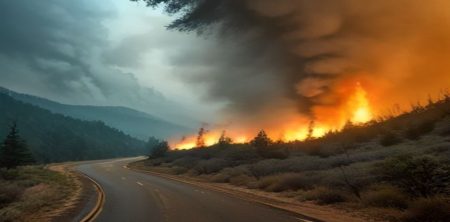
For years, when we talked about the terrifying specter of wildfires and their devastating impact on real estate, our minds immediately went to California. The Golden State has, unfortunately, become synonymous with vast, destructive blazes that gobble up homes, displace communities, and leave behind a trail of ashes and heartbreak. But here’s the harsh reality that many in the real estate world are only just beginning to grasp: the wildfire crisis, and the crippling financial exposure it represents, is no longer just a California problem. It’s a rapidly spreading inferno, both literally and figuratively, that’s torching the homeowners insurance market and fundamentally reshaping the landscape of homeownership across a much wider swath of the American West.
Imagine this: over 2.5 million properties in just ten western states are now staring down the barrel of nearly $1.4 trillion in potential wildfire reconstruction costs. That’s not a typo. $1.4 trillion. While California still holds the dubious distinction of leading the charge with a staggering $850 billion of that exposure, the numbers make it crystal clear that this isn't a localized issue anymore. This isn't just about beachfront mansions in Malibu or hillside homes in the Oakland Hills. This is about communities in Colorado, Arizona, Oregon, Washington, and beyond. This expansion of significant wildfire risk real estate is creating an unprecedented crisis, one that’s forcing homeowners, insurers, mortgage lenders, and even state legislatures to confront some incredibly uncomfortable truths about where and how we build, and how we protect those investments.
The implications are far-reaching and deeply personal. We’re seeing skyrocketing insurance premiums that make monthly mortgage payments feel like a bargain. We’re witnessing insurers pulling out of entire regions, leaving homeowners scrambling for any coverage they can find, often at exorbitant rates or through state-backed plans of last resort. And perhaps most critically, this escalating risk is now casting a long, dark shadow over the very process of buying and selling homes, impacting everything from preapproval for mortgages to the long-term viability of property values. It’s a complex, emotionally charged, and undeniably urgent situation that demands our immediate attention.
The Staggering Financial Footprint of Wildfire Exposure
Let's really drill down into those numbers, because they tell a story of immense vulnerability. A recent report from Cotality, a firm specializing in property intelligence, has laid bare the sheer scale of the financial exposure facing properties in the American West. When we talk about $1.4 trillion in potential reconstruction costs, we're not just throwing around big numbers; we're talking about the estimated expense to rebuild homes from the ground up if they were to be destroyed by wildfire. This figure encompasses the cost of labor, materials, permits, and all the myriad expenses that come with resurrecting a property from ashes. There's a fuller look at forces reshaping California real estate.
While California’s $850 billion share of this total is undeniably massive, representing well over half of the entire regional exposure, it’s crucial not to let that number overshadow the significant and growing risks elsewhere. States like Colorado, with its vast wildland-urban interface (WUI) areas nestled against the Rockies, or Oregon and Washington, with their extensive forests, are seeing their own wildfire risks escalate dramatically. This isn’t just about the immediate damage; it’s about the ripple effect on local economies, property tax bases, and the fundamental sense of security for millions of homeowners. The sheer volume of capital tied up in properties susceptible to these events means that when a wildfire strikes, the economic shockwaves are felt far beyond the fire line, potentially impacting regional financial stability and even national insurance markets.
Consider the average homeowner in these regions. Their largest single asset is often their home. To have that asset constantly under threat, and to see the costs of protecting it spiral out of control, creates an enormous amount of stress and uncertainty. This financial footprint isn't abstract; it's the equity people have built over decades, the nest eggs they're counting on for retirement, and the very stability of their families' futures. Understanding this immense financial exposure is the first step toward appreciating the gravity of the crisis at hand.
The Insurance Market on the Brink: Retreats and Skyrocketing Premiums
If you've been following the news, you've undoubtedly heard the increasingly dire reports from the homeowners insurance market, particularly in the western United States. It's not an exaggeration to say that the industry is in a full-blown crisis, driven largely by the escalating frequency and intensity of wildfires. Insurers, at their core, are in the business of calculating and managing risk. When that risk becomes too unpredictable, too frequent, and too costly, they have two primary responses: either drastically increase premiums to cover the anticipated losses, or simply stop offering coverage altogether.
We’re seeing both of these scenarios play out with alarming regularity. Premiums for homeowners insurance in high-risk wildfire zones have skyrocketed, often increasing by hundreds or even thousands of dollars annually. For many, this has pushed the cost of homeownership to unsustainable levels, forcing difficult choices between paying for essential coverage and other household expenses. But perhaps even more concerning is the phenomenon of insurers withdrawing from certain markets entirely. Companies like State Farm and Allstate, once mainstays in California, have announced significant pullbacks, citing unsustainable risk and regulatory environments.
When major insurers exit, it leaves a void that’s difficult to fill. Homeowners are often forced to seek coverage from smaller, often more expensive, surplus lines carriers, or they end up in state-mandated “insurers of last resort” programs, like California’s FAIR Plan. While these plans offer a crucial safety net, they typically provide more limited coverage and are often significantly pricier than standard policies. This retreat of the private insurance market is a clear signal that the financial models traditionally used to assess and price wildfire risk real estate are no longer adequate in the face of our changing climate and expanding WUI areas. It’s a systemic problem, not just an isolated market adjustment. (See: wildfire insurance costs in the US.) For more on this, see California's real estate trends.
Beyond California: The Spreading Wildfire Risk Real Estate Problem
While California has long been the poster child for wildfire devastation, it’s a critical mistake to view this as solely a Golden State issue. The data from Cotality, and the experiences of real estate professionals on the ground, confirm that the crisis is spreading its tendrils across a much broader geographic footprint. States like Oregon, Washington, Colorado, Idaho, Montana, Utah, Arizona, Nevada, and New Mexico are all facing their own unique and significant challenges related to wildfire risk.
Think about the explosive growth in places like the foothills of Colorado, where new subdivisions are literally being built into forests that have evolved with fire as a natural part of their ecosystem. Or the popular vacation home markets in the mountains of Arizona and Utah, where homes are nestled amongst Ponderosa pines and brush that can become tinderboxes in dry conditions. Even states not typically associated with massive fires, like Washington, have experienced devastating blazes in recent years, particularly on the eastern side of the Cascades. This isn’t a matter of if, but when and where, these fires will strike again.
For mortgage brokers and real estate agents operating in these states, understanding the nuances of local wildfire risk is no longer optional; it’s an absolute necessity. Clients need to be educated early in the process about potential insurance challenges, premium costs, and the importance of home hardening. A beautiful home in a seemingly idyllic setting might come with a hidden financial burden or even an inability to secure adequate insurance, profoundly impacting its marketability and long-term value. The spread of significant wildfire risk real estate means that a more proactive, region-specific approach to risk assessment is desperately needed.
Mortgage Originations Feeling the Heat: Preapproval and Beyond
The ripple effect of escalating wildfire risk doesn't stop at insurance premiums; it extends deep into the mortgage industry, fundamentally altering how homes are bought and sold. For most people, securing a mortgage is the single largest financial transaction of their lives. Lenders, naturally, want to protect their investment, and a key component of that protection is ensuring the property is adequately insured against potential catastrophic loss. This is where the wildfire crisis throws a major wrench into the works.
Mortgage brokers are increasingly finding themselves needing to account for wildfire risk during the preapproval process, long before a buyer even sets foot in a potential home. What used to be a straightforward calculation of income, debt, and credit score now often includes a crucial, and sometimes complex, assessment of a property’s insurability and the projected cost of that insurance. If a home is in a very high-risk zone, or if private insurance is unavailable, it can significantly impact a buyer’s debt-to-income ratio, potentially disqualifying them for the loan amount they need or even for any loan at all.
Imagine a scenario where a buyer gets preapproved for a certain amount, finds their dream home, only to discover during underwriting that the insurance premium is so high it busts their budget, or worse, that no insurer will cover the property. This isn't just a hypothetical; it's becoming a frustrating reality for many. The lack of affordable, comprehensive insurance can halt a sale in its tracks, leaving both buyers and sellers in limbo. This means lenders are becoming more cautious, sometimes requiring proof of insurance availability and cost early in the process, adding another layer of complexity to an already intricate transaction. The increasing wildfire risk real estate factor is undeniably slowing down and complicating mortgage originations in affected areas.
Home Hardening: A Crucial Shield Against the Flames
In the face of such overwhelming challenges, what can homeowners and communities actually do? One of the most effective and actionable strategies is a concept known as “home hardening.” This isn't about fireproofing a house entirely – that's often impossible – but rather about making a property significantly more resistant to embers and radiant heat, which are the primary ways homes ignite during a wildfire. Embers, tiny glowing fragments, can travel for miles ahead of the main fire front, landing on roofs, in gutters, or on combustible materials near a home, igniting it long before the flames even arrive.
Home hardening involves a series of specific, often relatively inexpensive, modifications that can dramatically increase a home's chances of survival. Simple steps like clearing combustible vegetation within a certain radius of the home (often called defensible space), regularly cleaning gutters of leaves and debris, and replacing old vents with fine mesh ones to prevent ember intrusion can make a huge difference. More significant investments might include replacing wood shake roofs with fire-resistant materials like tile or metal, upgrading windows to multi-pane tempered glass, and enclosing eaves and soffits. Even the type of siding matters, with stucco or fiber cement proving far more resistant than vinyl or wood.
California lawmakers, recognizing the urgency, are actively pushing initiatives like a proposed 'Home Hardening Week.' The idea is to incentivize and educate homeowners about these crucial practices, hoping that widespread adoption will not only save homes but also help stabilize the fractured insurance market. Insurers are also starting to offer discounts or make coverage contingent on certain home hardening measures. This proactive approach, while requiring effort and investment from individual homeowners, is perhaps the most tangible way to mitigate the devastating impact of wildfire risk real estate on a personal and community level. (See: National Interagency Fire Center information.)
Legislative Responses and the Path Forward
Given the scale of the problem, it’s clear that individual actions, while vital, aren't enough. Systemic issues require systemic solutions, and that's where state legislatures are stepping in, albeit with varying degrees of success and speed. California, being at the epicenter of this crisis, has been particularly active, proposing a range of measures to address the intertwined problems of wildfire risk and insurance availability.
Beyond the 'Home Hardening Week' initiative, lawmakers are grappling with how to balance consumer protection with the financial realities of the insurance industry. This often involves complex negotiations around rate approvals, the use of catastrophe models, and the creation of incentives for insurers to stay in the market. There's also a growing recognition that land use planning and building codes need to evolve to account for the new reality of wildfire. Should new construction be permitted in the most extreme WUI zones without stringent fire-resistant requirements? These are politically charged questions with no easy answers, often pitting development interests against environmental concerns and homeowner safety.
Other western states are watching California closely, learning from its struggles and successes. Many are exploring their own legislative solutions, focusing on everything from improved forest management practices (like controlled burns and fuel reduction) to updated building codes and educational campaigns for homeowners. The path forward is undoubtedly complex, requiring collaboration between state agencies, local governments, homeowners, and the private sector. It's not just about fighting fires; it's about fundamentally rethinking our relationship with fire-prone landscapes and building more resilient communities in the face of escalating wildfire risk real estate.
The Human Cost: Emotional and Social Impact
While the financial figures and policy discussions are critical, we must never lose sight of the profound human cost of this crisis. Wildfires are not just an economic event; they are deeply traumatic experiences that shatter lives and communities. The emotional toll on those who have lost homes, or who live in constant fear of losing them, is immense. Imagine waking up during fire season with the smell of smoke in the air, or seeing evacuation orders pop up on your phone, knowing that everything you’ve worked for could be gone in a matter of hours. This chronic stress and anxiety take a heavy toll on mental health.
Beyond the immediate trauma, there's the long, arduous process of recovery and rebuilding, which can take years. Displaced families struggle to find temporary housing, children are uprooted from schools, and the fabric of community life is often torn apart. The loss of cherished possessions, irreplaceable photographs, and the sense of security that a home provides leaves deep scars. Furthermore, the controversies surrounding insurance availability and premium hikes often lead to feelings of frustration, helplessness, and even anger among homeowners who feel abandoned by the system.
This crisis isn't just about property values or mortgage rates; it's about the fundamental well-being of millions of people. It’s about preserving communities, supporting families, and ensuring that the American dream of homeownership remains accessible and secure, even in the face of increasing environmental challenges. Addressing the wildfire risk real estate crisis demands not only financial and legislative solutions but also a deep empathy for the human stories at its core. We covered housing shift in America in more detail.
Future Outlook: Adaptation and Resilience in Wildfire Zones
Looking ahead, it's clear that the era of simply building wherever we please in fire-prone areas without serious consideration for risk is rapidly coming to an end. The future of wildfire risk real estate in the American West will be defined by adaptation and resilience. This isn't about abandoning these beautiful, desirable regions; it's about learning to live with fire in a more intelligent and sustainable way.
We can expect to see significant shifts in building codes, with stricter requirements for fire-resistant materials and design becoming the norm in high-risk zones. Community-level planning will likely emphasize the creation of firebreaks, strategically managed open spaces, and emergency access routes. Investment in advanced wildfire detection and suppression technologies will also continue to grow, leveraging AI, drones, and satellite imagery to provide earlier warnings and more effective responses. (See: scientific study on wildfire risks.)
For homeowners, the emphasis on personal responsibility will only increase. Home hardening will likely become a prerequisite for affordable insurance, if not for securing a mortgage at all. Education and outreach programs will be crucial in equipping residents with the knowledge and tools to protect their properties. Furthermore, the real estate market itself will likely adjust, with properties in hardened, defensible communities potentially commanding higher values and easier insurability compared to those in unmitigated high-risk areas.
The challenge is immense, but so is the human capacity for innovation and adaptation. By embracing a multi-faceted approach that combines individual action, legislative foresight, and technological advancements, we can begin to build a more resilient future for communities grappling with the escalating threat of wildfires. (next investment as a token)
Navigating the New Real Estate Landscape
So, what does all of this mean for you, whether you’re a current homeowner, a prospective buyer, or a real estate professional? It means that ignoring wildfire risk real estate is no longer an option. For homeowners in affected areas, it's imperative to proactively assess your property's vulnerability. Get an inspection, understand your defensible space requirements, and start implementing home hardening measures. Don't wait for your insurance premium to skyrocket or for an evacuation order to drop to take action. Even small steps can make a significant difference in protecting your home and, potentially, your insurability.
For those looking to buy property in the West, due diligence has taken on a whole new meaning. Before you fall in love with a charming cabin nestled in the woods, thoroughly investigate the wildfire risk for that specific location. Talk to local fire authorities, check online risk maps, and, most importantly, get multiple insurance quotes early in the process. Understanding the long-term cost of ownership, including potentially high insurance premiums, is critical before making an offer.
And for real estate agents and mortgage brokers, your role as trusted advisors has never been more vital. You are on the front lines, and your ability to educate clients about these risks, connect them with resources for home hardening, and help them navigate the complex insurance market will be invaluable. Transparency and proactive communication about these challenges will build trust and ultimately lead to smoother, more successful transactions in this evolving landscape.
The wildfire crisis is a stark reminder that our homes are intricately connected to the natural world around us. As these risks intensify and spread, the real estate market is undergoing a profound transformation. While the challenges are significant, by understanding the scope of the problem and embracing proactive, adaptive strategies, we can collectively work towards building safer, more resilient communities that can withstand the heat of the future.
Trending Now
Frequently Asked Questions
What is the current wildfire risk outside California?
Wildfire risk is rapidly expanding beyond California, affecting states like Colorado, Arizona, Oregon, and Washington. Over 2.5 million properties in ten western states face nearly $1.4 trillion in potential wildfire reconstruction costs, indicating that the crisis is no longer limited to California.
How are wildfires impacting homeowners insurance?
The increasing wildfire risk is leading to skyrocketing insurance premiums and insurers withdrawing from certain regions. Homeowners are struggling to find coverage, often at exorbitant rates or through state-backed plans, as the crisis reshapes the insurance landscape.
What are the financial implications of wildfire risks?
The financial exposure from wildfires is staggering, with potential reconstruction costs reaching $1.4 trillion across the western United States. This crisis is forcing homeowners, insurers, and legislators to rethink building practices and investment protections.
Which states are affected by the wildfire crisis?
While California is at the forefront, the wildfire crisis is affecting a broader range of states including Colorado, Arizona, Oregon, and Washington. The issue is reshaping real estate and insurance landscapes across the entire western U.S.
Why are insurance premiums rising in fire-prone areas?
Insurance premiums are rising in fire-prone areas due to the increasing risk of wildfires and the financial exposure associated with potential reconstruction costs. This has led to a challenging environment for homeowners seeking affordable coverage.
Have you experienced this yourself? We'd love to hear your story in the comments.

