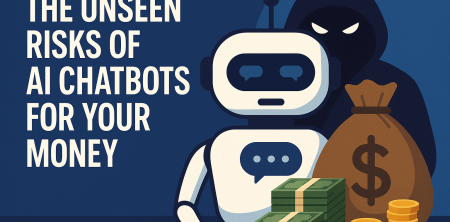
We're living in a fascinating era, aren't we? Every day, it seems, a new piece of technology emerges, promising to simplify our lives, improve our health, or even manage our money. Among these innovations, AI chatbots offering financial advice have quickly moved from sci-fi novelty to a mainstream discussion. You've probably seen them popping up on banking apps, investment platforms, or even general-purpose AI tools – ready to answer your questions about budgeting, investing, or planning for retirement. It's an attractive proposition: instant, always-on advice without the hefty fees of a human advisor.
But here's the burning question, and it's one many Americans are asking: should you actually trust these AI chatbots with your hard-earned money? The allure is undeniable, especially for those just starting out or feeling overwhelmed by complex financial decisions. Yet, a healthy dose of skepticism is absolutely warranted. While the technology is advancing at a breathtaking pace, the financial stakes are incredibly high. We're talking about your savings, your retirement, your children's college fund – not just a restaurant recommendation. Understanding the nuances of AI chatbots financial advice, and where its limitations lie, is crucial before you hand over control of your financial future.
1. The Appeal of Instant Gratification: AI's Always-On Allure
Let's be honest, in our fast-paced world, waiting isn't something we're particularly good at. When a financial question pops into your head at 11 PM on a Sunday, the idea of getting an immediate, articulate answer from an AI chatbot is incredibly appealing. No need to schedule an appointment, no office hours to contend with, and certainly no awkward small talk. This instant gratification is a major draw for many who are exploring AI chatbots financial advice. Related reading: legal issues with AI chatbots.
For simple tasks, this convenience can be genuinely useful. Need to quickly check your account balance? Want a breakdown of your spending categories for the month? Or perhaps you're just looking for a basic explanation of what a Roth IRA is? AI excels at retrieving and presenting information rapidly. It democratizes access to basic financial literacy, empowering individuals to get answers without feeling intimidated or judged. This accessibility is a powerful force, potentially reaching millions who might otherwise shy away from traditional financial services.
2. Budgeting and Tracking: Where AI Chatbots Shine
When it comes to the nitty-gritty of daily money management, AI chatbots can be surprisingly effective. Many personal finance apps now integrate AI features that automate budgeting, track expenses, and even identify subscription services you might have forgotten about. Think of tools that link directly to your bank accounts, categorize transactions, and then provide a clear visual of where your money is going each month. This level of detail and automation was once the domain of tedious manual spreadsheets or expensive software.
For individuals struggling to get a handle on their spending, these AI-powered tools can be a godsend. They remove much of the friction associated with budgeting, making it easier to stick to a plan. Some can even offer proactive suggestions, like 'You're projected to go over budget on dining out this month,' or 'Consider moving this surplus into your savings account.' This data-driven approach, free from human bias, can be a powerful motivator for positive financial habits.
3. Investment Education, Not Execution: AI's Role in Learning
When you start venturing into the world of investing, the terminology alone can be overwhelming. Stocks, bonds, ETFs, mutual funds, diversification, asset allocation – it's a lot to digest. This is another area where AI chatbots financial advice can play a valuable educational role. They can explain complex investment concepts in plain language, answer specific questions about different asset classes, or even provide historical data on market trends.
However, it's critical to understand the distinction here: AI is excellent at *explaining* and *informing*, but less so at *advising* on specific investment choices tailored to your unique, nuanced situation. While an AI might tell you what an ETF is, it can't truly grasp your risk tolerance, your long-term goals, or the emotional impact of market fluctuations in the same way a human can. Think of it as a highly knowledgeable, always-available textbook, rather than a personal fund manager.
4. The Liability Question: Who's Responsible When AI Gets It Wrong?
This is perhaps one of the most significant hurdles for widespread trust in AI chatbots financial advice. If a human financial advisor gives you bad advice that leads to a substantial loss, there's a clear chain of accountability. Advisors are licensed, regulated, and have professional indemnity insurance. There are avenues for recourse, and the advisor's reputation, if not their livelihood, is at stake. (See: CDC on health behaviors and technology.)
With an AI chatbot, the line of responsibility becomes incredibly blurry. Is it the developer who coded the algorithm? The company that deployed the chatbot? Or are you, the user, ultimately responsible for trusting an automated system? Regulatory frameworks are still playing catch-up, and the legal landscape around AI liability is largely uncharted territory. This lack of clear accountability is a major reason why many still prefer human advisors for critical financial decisions.
5. Lack of Empathy and Context: The Human Element is Missing
Financial decisions are rarely purely logical. They're often intertwined with emotions, life events, personal values, and unforeseen circumstances. A human advisor doesn't just look at your numbers; they listen to your story. They understand if you're saving for a child with special needs, if you've just inherited a large sum but are grieving a loss, or if you're navigating a job change with uncertainty. These qualitative factors are incredibly difficult, if not impossible, for an AI to fully grasp.
An AI chatbot financial advice might recommend aggressive investments based purely on your age and stated risk tolerance, but it can't empathize with the sleepless nights you might endure during a market downturn. It can't offer reassurance or help you stay calm when your portfolio drops 20%. This emotional and contextual intelligence is a cornerstone of effective human financial planning, and it's something AI, for all its prowess, simply cannot replicate.
6. Data Privacy and Security Concerns: Guarding Your Financial Life
To provide any meaningful financial advice, an AI chatbot needs access to a significant amount of your personal and financial data. We're talking about bank account details, investment holdings, income, expenses, credit scores, and more. This raises legitimate concerns about data privacy and security. How is this data stored? Who has access to it? How vulnerable is it to cyberattacks? (risks of chatbots in mental health)
While reputable financial institutions employ robust security measures, the sheer volume of data processed by AI systems presents a tempting target for malicious actors. A data breach involving your financial information could be devastating, leading to identity theft, fraudulent transactions, and long-term financial headaches. Before engaging with any AI chatbot financial advice, it's paramount to scrutinize the platform's privacy policy and security protocols, and only use tools from well-established, trustworthy providers.
7. Complex Scenarios and Edge Cases: Where AI Falters
For straightforward financial questions, AI can often provide a satisfactory answer. But what happens when your situation is complex? What if you own a small business, have international assets, are navigating a divorce, or have specific tax optimization needs related to unique income streams? These 'edge cases' or highly individualized scenarios often require nuanced understanding, creative problem-solving, and cross-disciplinary knowledge that goes beyond what a typical AI model is currently capable of.
A human financial planner can connect you with tax specialists, estate attorneys, or other professionals as needed, orchestrating a comprehensive plan. An AI, while it might provide generic information on these topics, can't truly integrate all the moving parts of a highly complex financial life into a cohesive, personalized strategy. Its advice is often based on probabilities and averages, which might not apply to your unique circumstances.
8. The Hybrid Approach: AI as a Tool, Not a Replacement
So, does this mean AI chatbots financial advice is entirely useless? Absolutely not. The most pragmatic approach is to view AI as a powerful tool that can augment, rather than replace, human expertise. Think of it this way: AI can handle the data crunching, the repetitive tasks, and the initial information gathering. It can help you track your budget, explain basic investment terms, and even identify potential areas for savings.
But for the big, life-altering decisions – retirement planning, major investments, estate planning, or navigating significant life changes – a human financial advisor brings an invaluable layer of experience, empathy, and holistic understanding. The ideal scenario might involve a hybrid model where you use AI for daily financial hygiene and basic education, while consulting with a human expert for strategic planning, complex problem-solving, and emotional guidance. This allows you to leverage the efficiency of AI while retaining the critical human touch for decisions that genuinely matter.
9. Choosing Wisely: Vetting AI Financial Tools
If you're considering incorporating AI chatbots financial advice into your money management strategy, vigilance is key. Not all AI tools are created equal, and the market is rapidly expanding. Here's what you should look for: For more on this, see future of financial advice.
- Reputation and Provider: Stick with well-established financial institutions or fintech companies that have a proven track record. Avoid obscure apps or platforms with little transparency about their developers.
- Transparency: Does the AI tool explain its limitations clearly? Does it disclose how it uses your data? Be wary of any platform that makes overly ambitious claims or lacks clear terms of service.
- Security Measures: Look for strong encryption, multi-factor authentication, and clear statements about data protection. Your financial data is extremely sensitive.
- Regulatory Compliance: While AI regulation is evolving, check if the platform adheres to existing financial regulations (e.g., FINRA, SEC guidelines, where applicable).
- Human Oversight: Does the AI tool offer a pathway to speak with a human advisor if needed? This is often a sign of a more responsible and comprehensive service.
- Reviews and Feedback: What are other users saying? Look for independent reviews and testimonials, but also be aware that reviews can be manipulated.
Ultimately, the rise of AI chatbots financial advice is an exciting development, but it demands a cautious and informed approach. Treat these tools as powerful calculators and information repositories, but always remember that your financial well-being is too important to outsource entirely to an algorithm. Your money, your future – it deserves a human touch when it truly counts. (See: New York Times on AI chatbots in finance.)
10. The Regulatory Landscape: A Moving Target
The speed at which AI technology is evolving far outpaces the traditional pace of regulatory bodies. This creates a significant challenge when it comes to AI chatbots financial advice. While traditional financial advisors operate under strict rules, including fiduciary duties, suitability requirements, and disclosure obligations, the same clear-cut regulations don't fully apply to AI. This isn't because regulators don't care; it's because the technology introduces entirely new paradigms. For example, how do you regulate an algorithm that "learns" and adapts, potentially changing its advice over time without direct human intervention? How do you audit its decision-making process for bias or error?
Currently, many AI financial tools operate in a grey area. Some fall under existing "robo-advisor" regulations, especially those that manage investments. But general-purpose AI chatbots, or those primarily offering educational content, might not be subject to the same scrutiny. This lack of a standardized, comprehensive regulatory framework means users bear a greater responsibility to exercise caution. There's an ongoing debate among policymakers and financial experts about how to best protect consumers without stifling innovation. Expect to see more developments in this area as governments grapple with the implications of AI in sensitive sectors like finance.
11. Bias in Algorithms: Unseen Influences
It's easy to think of AI as purely objective, crunching numbers without emotion or prejudice. However, AI models are only as good as the data they're trained on. If that data contains historical biases, those biases can be inadvertently replicated and even amplified by the AI. In finance, this could manifest in subtle but impactful ways. For instance, if an AI is trained predominantly on data from a specific demographic or economic group, its recommendations might not be optimal or even appropriate for individuals outside that group.
Consider credit scoring models or loan approval processes. If the historical data shows disparities in lending to certain communities, an AI trained on that data might perpetuate those same patterns, even if unintentionally. While developers are increasingly aware of algorithmic bias and working to mitigate it, it remains a serious concern for AI chatbots financial advice. It highlights the need for diverse training datasets, rigorous testing, and continuous auditing of AI models to ensure fairness and equity in financial recommendations. Without careful attention, AI could inadvertently exacerbate existing financial inequalities.
12. The Illusion of Personalization: Averages vs. Individuals
AI chatbots often give the impression of highly personalized advice. They might ask you a few questions about your age, income, and goals, then generate recommendations. This feels personal, right? But much of this "personalization" is often based on statistical averages and predefined rules. An AI might categorize you into a demographic bucket and then provide advice that statistically works for most people in that bucket. While this can be a good starting point, it's not the same as advice truly tailored to your unique circumstances.
For example, an AI might recommend a certain asset allocation based on your age, but it won't know about your specific family health history, your job security within a volatile industry, your plans to start a business in five years, or your deep-seated philosophical objections to investing in certain sectors. These are the kinds of individual nuances that a human advisor can uncover through a conversation and integrate into a truly bespoke financial plan. The AI's personalization is often skin-deep, reflecting broad trends rather than the intricate tapestry of your individual financial life.
13. Behavioral Finance and AI: A Mismatch?
A huge part of human financial planning involves behavioral finance – understanding how emotions, cognitive biases, and psychological factors influence our money decisions. People often make irrational choices, panic during market downturns, or get overly optimistic during booms. A skilled human advisor acts as a coach, helping clients navigate these emotional pitfalls, stick to their long-term plans, and avoid impulsive decisions that could derail their financial goals.
AI, by its very nature, is devoid of emotion. It operates on logic and data. While this can be an advantage in some respects, it means AI chatbots financial advice can't account for the human element of financial decision-making. It won't recognize when you're about to make a fear-driven mistake or when you need encouragement to stay disciplined. It can't offer the calming presence or the empathetic ear that often prevents clients from selling low in a panic. This gap in understanding human behavior is a fundamental limitation for AI in providing truly holistic financial guidance.
Frequently Asked Questions About AI Chatbots and Financial Advice
Q1: Can AI chatbots replace human financial advisors entirely?
Not at this stage, and likely not for the foreseeable future, especially for complex financial planning. AI chatbots excel at automation, information retrieval, and basic budgeting. Human advisors bring empathy, contextual understanding, the ability to navigate complex life events, and accountability that AI cannot replicate. The most effective approach is often a hybrid one, using AI for efficiency and humans for strategic, personalized guidance. (See: ScienceDirect on AI in financial decision-making.)
Q2: How accurate is the financial advice given by AI chatbots?
The accuracy varies significantly depending on the AI model, its training data, and the complexity of the query. For factual information or basic calculations, AI can be very accurate. However, when it comes to personalized advice that requires understanding your unique circumstances, risk tolerance, and emotional state, AI's accuracy diminishes compared to a human expert. Always treat AI advice as a starting point for research, not a definitive directive. We covered social media financial advice pitfalls in more detail.
Q3: Are AI financial chatbots regulated?
The regulatory landscape is still developing. Some AI tools, particularly those that function as robo-advisors managing investments, may fall under existing financial regulations (like those from the SEC or FINRA in the US). However, general-purpose AI chatbots or those providing only educational content may not be subject to the same strict rules. This lack of consistent regulation means users need to be extra cautious and verify the credibility of any AI financial tool.
Q4: What are the main risks of using AI chatbots for financial advice?
Key risks include: receiving inaccurate or biased information due to flawed algorithms or training data; privacy and security breaches of your sensitive financial data; lack of accountability if bad advice leads to losses; the inability of AI to understand your emotional or complex life circumstances; and the potential for over-reliance on a system that lacks human intuition and empathy.
Q5: How can I ensure my data is safe when using an AI financial chatbot?
Always choose reputable providers, preferably well-known financial institutions or established fintech companies. Look for strong encryption, multi-factor authentication, and clear, transparent privacy policies that detail how your data is used, stored, and protected. Be wary of platforms with vague security statements or those that ask for unnecessary personal information. Reading independent reviews can also offer insights into a platform's security practices.
Q6: Can AI chatbots help with tax planning or estate planning?
AI chatbots can provide general information about tax laws, deductions, or estate planning concepts. They might explain what a will is or the basics of capital gains tax. However, for personalized tax optimization strategies, complex estate planning, or advice tailored to your specific financial and legal situation, you absolutely need a human tax professional or estate attorney. These areas involve highly individualized laws and circumstances that AI is not equipped to handle comprehensively.
Q7: What’s the difference between an AI chatbot and a robo-advisor?
A robo-advisor is a type of AI-powered platform specifically designed to provide automated, algorithm-driven financial planning services, often with minimal human supervision. They typically manage investment portfolios based on your risk tolerance and goals. An AI chatbot is a broader term for conversational AI that can answer questions, provide information, and perform tasks. While some robo-advisors might incorporate chatbot features, not all AI chatbots are robo-advisors, and a general-purpose AI chatbot might not be regulated to give specific investment advice.
Trending Now
- The Brutal Truth About AI in…
- this guide on the crucial hr software you need to master paid family leave in 2026
- This Game-Changing Act Could Finally Revolutionize Support for New Parents
- our breakdown of shocking truth: why america’s paid leave system is failing parents
- our breakdown of why your child’s ai tutor choice in 2026 could be a game-changer
What did we miss? Let us know in the comments and join the conversation.

