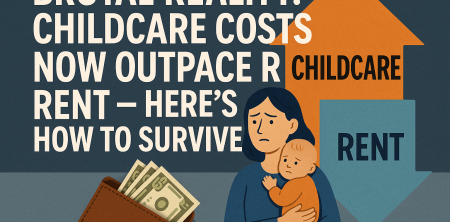
Listen, if you’re a parent in the U.S. right now, you’re probably feeling the squeeze from all sides. It’s not just your grocery bill or the gas pump anymore. There's a silent, yet absolutely brutal, financial pressure building up, and it’s hitting families where it hurts most: childcare. We’ve all been conditioned to think of rent or mortgage payments as our biggest monthly outflow, but new data is painting a starkly different picture. The Bank of America Institute, in research highlighted by CBS News, dropped a bombshell: childcare costs are now rising faster than rent and even medical care. This isn't just a trend; it's a full-blown crisis, redefining the childcare costs vs rent financial impact on American households.
For years, housing has been the undisputed champion of household expenses. You know the drill: find a place, sign a lease, and dedicate a significant chunk of your paycheck to keeping a roof over your head. But for families with young children, that narrative is shifting dramatically. We’re talking about an expense that, for many, is now consuming a larger slice of the pie than housing. Think about that for a moment. The place where your child sleeps might be cheaper than the place where they spend their day while you’re at work. It’s a reality that’s forcing tough choices, impacting career trajectories, and frankly, making many parents question how they’re going to make ends meet. It's time to dig into why this is happening and what families can do to navigate this increasingly difficult economic landscape.
1. The Alarming Surge in Childcare Expenses: A New Financial Benchmark
Let's get straight to the numbers, because they tell a story that’s hard to ignore. The Bank of America Institute's research, published in October 2026, laid it all out: childcare costs are not just increasing; they're skyrocketing. What's truly alarming is the pace. We're seeing these costs grow at a rate that outstrips other major household expenditures like rent and even healthcare. This isn't a minor uptick; it's a significant, sustained rise that’s putting immense pressure on family budgets nationwide.
Consider this: three years ago, a certain percentage of families were spending over $2,000 per month on childcare. Today, that share has more than doubled, now encompassing nearly 8% of U.S. families. That's a huge jump in a relatively short period. For context, $2,000 a month is a substantial sum for many households, often comparable to or even exceeding a mortgage payment or rent in many areas. When you factor in the average allocation of 8% of monthly income to these services across the country, it becomes clear that we've surpassed the federal affordability guideline of 7%. This isn't just about budgeting; it's about a fundamental shift in what constitutes a primary financial burden for families, making the childcare costs vs rent financial impact a critical point of analysis.
2. Rent Takes a Back Seat: The Shifting Landscape of Household Budgets
For decades, the conventional wisdom has been that housing is the top household expense. Whether you're paying rent or a mortgage, it’s typically the largest line item in anyone's budget. But the latest data is forcing us to re-evaluate that long-held belief, particularly for families with young children. The fact that childcare costs are now growing faster than rent isn't just a statistical anomaly; it represents a profound reallocation of financial resources within the family unit. We’re seeing a new hierarchy of expenses emerge, with childcare increasingly vying for – and often winning – the top spot.
This shift isn't just about the raw numbers; it's about the psychological and practical impact on parents. Imagine having to choose between affording a slightly larger apartment or ensuring your child has quality care. Or, perhaps more commonly, imagine making sacrifices in other areas of your life – leisure, savings, even retirement planning – just to cover both. This isn't an abstract problem; it's the daily reality for millions. The traditional benchmark for financial stability, owning a home or affording decent rent, is now overshadowed by the immediate, non-negotiable need for childcare, illustrating the severe childcare costs vs rent financial impact.
3. The Federal Affordability Guideline: A Benchmark That’s Broken
When policymakers talk about affordable childcare, they often refer to a federal guideline: families shouldn't spend more than 7% of their monthly income on these services. It's a benchmark designed to ensure that childcare doesn't become an insurmountable barrier to economic stability. However, the current reality in the U.S. has blown past this guideline, turning it from a helpful marker into a stark reminder of how far we’ve fallen behind.
The data shows that, on average, families nationwide are now allocating 8% of their monthly income to childcare. That's a full percentage point above what's considered affordable. While one percentage point might not sound like a lot on its own, when you apply it to millions of families and consider the sheer amount of money involved, it represents billions of dollars annually. This isn't just an abstract economic figure; it's money that could be going into savings, paying down debt, investing in education, or simply improving a family's quality of life. The fact that we've collectively exceeded this guideline underscores the systemic nature of the childcare crisis and highlights the urgent need for intervention regarding the childcare costs vs rent financial impact.
4. Women's Employment Opportunities: An Unseen Casualty
The financial burden of childcare isn't just about numbers; it has profound societal implications, particularly for women's employment opportunities. When childcare costs become exorbitant, many families, often mothers, are forced to make an agonizing choice: continue working and essentially work to pay for childcare, or leave the workforce altogether to provide care themselves. This isn't just a personal decision; it has massive ripple effects on the economy and on gender equality. (See: CDC on childcare costs impact.)
Think about it: if a significant portion of a parent's salary (and let's be honest, it's often the mother's salary that's first considered for this calculus) is eaten up by childcare, the financial incentive to work diminishes. This pushes skilled, experienced women out of the workforce, leading to a loss of income, professional development, and long-term financial security. It exacerbates the gender pay gap and limits career progression. This isn't just about 'opting out'; it's often a forced exit due to economic necessity. The lack of affordable childcare acts as a direct barrier to women's economic participation and advancement, making the childcare costs vs rent financial impact a critical issue for gender equity.
5. The Demand-Supply Imbalance: Fueling the Price Hike
So, why are these costs soaring? Like many economic phenomena, it boils down to a classic case of supply and demand. The Bank of America Institute's research points to increased demand in areas experiencing domestic migration. More families moving into certain regions means more children needing care. Simple enough, right? But here's where it gets complicated: the supply of childcare workers simply isn't keeping pace. For more context, see homeschool curriculums for busy parents.
There's a significant shortage of qualified childcare workers across the country. This isn't surprising when you consider the historically low wages and often demanding nature of the job. Many childcare providers struggle to attract and retain staff, which means fewer available spots in daycare centers and higher operational costs for those that do exist. When demand is high and supply is low, prices inevitably go up. It's basic economics, but the consequences for families are anything but basic. This imbalance is a primary driver behind the escalating childcare costs vs rent financial impact.
6. The Emotional and Mental Toll: Beyond the Budget Sheet
While we often focus on the raw financial figures, it's crucial not to overlook the immense emotional and mental toll this crisis takes on parents. Constantly worrying about how to pay for childcare, debating whether to take on more debt, or feeling guilty about the quality of care you can afford, are all incredibly stressful experiences. This isn't just about balancing a budget; it's about managing anxiety, making sacrifices, and often feeling like you're failing, even when you're doing everything you can.
The pressure can strain relationships, impact mental health, and even affect job performance. Parents are often working while simultaneously trying to solve the puzzle of childcare logistics and financing. This constant background hum of financial stress is exhausting. It detracts from the joy of parenting and adds an unnecessary layer of difficulty to an already challenging phase of life. The childcare costs vs rent financial impact isn't just monetary; it's deeply personal and psychological.
7. Budgeting Strategies for Survival: Making Every Dollar Count
Okay, so the situation is tough. We get it. But what can families actually do to budget effectively in this challenging climate? It's not about magic solutions, but about smart, strategic planning and being proactive. First, you need a crystal-clear picture of your current income and expenses. Use budgeting apps, spreadsheets, or even just a notebook to track every single dollar coming in and going out. Be brutally honest with yourself about discretionary spending.
Next, prioritize. Childcare is often a non-negotiable expense, so it needs to be at the top of your list, alongside housing, food, and utilities. Look for areas where you can cut back. Can you reduce dining out? Scale back on subscriptions? Explore cheaper transportation options? Every little bit helps. Also, consider setting up a dedicated 'childcare fund' if possible, even if it's just a small amount each month, to cushion against unexpected costs. Remember, the goal here is survival and stability in the face of the overwhelming childcare costs vs rent financial impact.
8. Exploring Affordable Childcare Options: Thinking Outside the Box
Beyond strict budgeting, families need to actively explore all available childcare options, even those they might not have initially considered. Daycare centers are often the first thought, but they're also frequently the most expensive. Could a family childcare home, run by an individual out of their residence, be a more affordable alternative? These often offer a more intimate setting and can be less costly.
What about nanny shares, where two or more families split the cost of a nanny? This can significantly reduce individual expenses while still providing personalized care. For school-aged children, after-school programs or even relying on trusted family members (grandparents, aunts, uncles) can offer substantial relief. Don't forget to look into government assistance programs; many states and localities offer subsidies for low-income families, and it's always worth checking eligibility. The key is to research thoroughly and be open to unconventional solutions to mitigate the childcare costs vs rent financial impact.
9. Advocacy and Policy Change: A Long-Term Solution
While individual budgeting and creative solutions are crucial for immediate survival, it’s vital to acknowledge that this crisis requires systemic change. The current situation, where childcare costs regularly exceed federal affordability guidelines and even rent, is unsustainable. This isn't just a personal finance problem; it's a societal one that demands policy-level solutions. We need to advocate for increased government investment in early childhood education and care programs. (See: AP News on rising childcare costs.)
This could mean expanded subsidies for families, increased funding for childcare providers to pay their workers living wages (which would help address the worker shortage), or tax credits designed to offset these crippling costs. We also need to push for policies that support universal pre-kindergarten, which could significantly reduce the burden on families with young children. Engaging with local and national politicians, joining advocacy groups, and simply speaking up about your experiences can make a difference. Until systemic changes are made, the cycle of rising childcare costs vs rent financial impact will continue to strain families and the economy as a whole.
10. The Economic Ripple Effect: More Than Just Family Budgets
Let's broaden our perspective a bit. This isn't just about individual families struggling; the escalating childcare costs vs rent financial impact has a significant ripple effect across the entire economy. When parents, particularly mothers, are forced to reduce their work hours or leave the workforce entirely, it means a loss of productivity and innovation for businesses. Companies lose valuable talent, and the overall labor supply shrinks, potentially hindering economic growth. For more context, see essential curriculums for homeschool parents.
Consider the impact on consumer spending. If a substantial portion of a household's disposable income is consumed by childcare, there's less money available for other goods and services. This can dampen demand in various sectors, from retail to entertainment, affecting local businesses and broader economic activity. It also impacts tax revenues. Fewer people working or earning less means less income tax collected, which in turn reduces the funds available for public services, including, ironically, potential childcare subsidies. This creates a vicious cycle where the problem perpetuates itself, making the overall economic health of communities vulnerable.
11. Regional Disparities: Where the Squeeze is Tightest
It’s important to remember that the childcare costs vs rent financial impact isn't uniform across the United States. While it's a national crisis, certain regions and cities feel the pinch far more acutely than others. Urban centers with high costs of living, like New York City, San Francisco, or Washington D.C., often see childcare expenses reaching astronomical levels, easily surpassing monthly rent for even modest apartments. However, even in seemingly more affordable rural areas, the scarcity of childcare providers can drive up prices due to limited options.
Factors like local wage rates for childcare workers, state-specific licensing requirements, and the availability of public funding all contribute to these regional disparities. A family in one state might pay 15-20% of their income for childcare, while a similar family in another state could be spending 30% or more. This means that strategies for coping and the severity of the crisis are highly localized. It underscores the need for both federal-level initiatives and tailored regional solutions that address the unique challenges of different communities.
12. The Quality vs. Affordability Dilemma
Here's a tough truth: affordability often comes at the cost of quality, and that’s a compromise many parents are forced to make. The childcare costs vs rent financial impact isn't just about finding *any* care; it's about finding *good* care. High-quality early childhood education has been proven to have long-term positive effects on a child's development, academic success, and even future earnings. It’s an investment, not just a babysitting service.
However, quality care—which includes well-trained, adequately paid staff, low child-to-staff ratios, and enriching educational curricula—is inherently expensive to provide. When parents are already stretched thin, they might have to settle for less ideal options: centers with higher child-to-staff ratios, less experienced caregivers, or fewer educational resources. This can create a two-tiered system where children from wealthier families have access to superior early education, potentially widening achievement gaps before kindergarten even begins. The dilemma forces parents into an unenviable position: sacrifice their finances for quality, or compromise on quality for financial survival.
Frequently Asked Questions About Childcare Costs vs. Rent
Let's tackle some common questions parents often have about this challenging financial landscape.
Q1: Why are childcare costs rising so much faster than other expenses?
Several factors are at play. First, there's a significant demand-supply imbalance, especially in growing areas. More families need care, but there aren't enough qualified providers. Second, the cost of operating a quality childcare facility is high, including rent for the facility itself, insurance, educational materials, and increasingly, the need to pay staff more competitive wages to attract and retain them. Unlike many other sectors, it's difficult to scale childcare services efficiently without compromising quality, meaning rising operational costs often get passed directly to parents. (See: NY Times article on childcare expenses.)
Q2: What is the average cost of childcare in the U.S.?
The average cost varies wildly by state, type of care, and child's age. For an infant in a center, it can range from around $9,000 to over $24,000 per year, with some states like Massachusetts and Washington D.C. seeing costs even higher. For context, in many states, infant care costs more than in-state college tuition. These averages, however, mask the extreme highs in major metropolitan areas.
Q3: Are there any tax breaks or credits for childcare expenses?
Yes, there are. The federal Child and Dependent Care Credit allows you to claim a percentage of your childcare expenses, depending on your income. Some states also offer their own childcare tax credits or deductions, which can provide additional relief. It's crucial to keep meticulous records of your childcare payments and consult with a tax professional to ensure you're taking advantage of all eligible deductions and credits.
Q4: How can I find government assistance programs for childcare?
Start by checking with your state's Department of Health and Human Services or your local social services agency. Many states offer Child Care Assistance Programs (CCAP) that provide subsidies to low-income families to help cover childcare costs. Eligibility requirements vary by state, often based on income, family size, and whether parents are working or attending school. There are also Head Start and Early Head Start programs for eligible low-income children from birth to age five.
Q5: Is it ever cheaper for one parent to stay home than to pay for childcare?
Absolutely, and this is a calculation many families perform. When childcare costs consume a large percentage of one parent's take-home pay (after taxes, commuting costs, and other work-related expenses), the net financial benefit of working can become negligible or even negative. Beyond the direct financial comparison, families also weigh the long-term career implications, retirement savings, and the personal value of remaining in the workforce. It’s a highly individual decision based on specific family income, childcare costs, and career goals.
Q6: What's the impact of universal pre-kindergarten initiatives on childcare costs?
Universal pre-kindergarten (UPK) programs, where they exist, can significantly alleviate the financial burden on families with 3- and 4-year-olds. By providing free or low-cost preschool, UPK reduces the number of years families need to pay for private childcare. This can free up substantial funds and allow parents to re-enter or remain in the workforce without the crushing cost of preschool. It also benefits children by providing early educational opportunities, regardless of their family's income.
The stark reality facing American families is clear: the cost of childcare has become an undeniable financial Goliath, often dwarfing even rent payments. This isn't just about tightening belts; it's about a fundamental re-evaluation of how we support families and children in this country. From individual budgeting strategies to collective advocacy for policy change, navigating this brutal economic landscape demands creativity, resilience, and a unified voice. It's time we acknowledge that investing in affordable, quality childcare isn't just a family issue, it's an economic imperative that affects us all.
Trending Now
Frequently Asked Questions
Why are childcare costs rising faster than rent?
Childcare costs are rising due to a combination of increased demand, limited supply of affordable services, and higher operational costs for providers. This trend has been exacerbated by economic factors such as inflation and wage growth in the childcare sector, making it a more significant financial burden for families than housing expenses.
How do childcare costs compare to housing expenses?
Recent data indicates that childcare costs have begun to outpace rent and mortgage payments for many families. In some cases, the expense of childcare can consume a larger portion of a family's budget than their monthly housing costs, forcing parents to reevaluate their financial priorities.
What can families do to manage rising childcare costs?
Families can explore various strategies to manage childcare costs, such as seeking subsidies, sharing childcare responsibilities with other parents, or considering flexible work arrangements. Additionally, researching local childcare options and negotiating fees can help alleviate some financial pressure.
What impact do high childcare costs have on parents?
High childcare costs can lead to significant financial strain on parents, impacting their career choices, work-life balance, and overall well-being. Many parents may feel forced to make difficult decisions regarding employment, leading to stress and potential long-term career setbacks.
Is childcare becoming more expensive than healthcare?
Yes, recent studies have shown that childcare expenses are rising at a pace that outstrips not only housing costs but also healthcare expenses. This trend highlights the growing financial burden families face in securing quality care for their children.
Have you experienced this yourself? We'd love to hear your story in the comments.

