```html
Understanding Phonemic Awareness: The First Step in Literacy
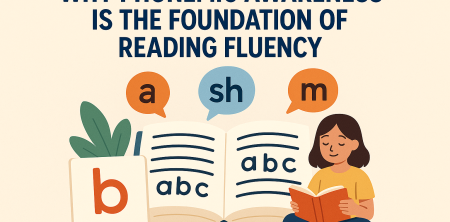
Phonemic awareness is a critical skill in children's literacy development, serving as the foundation upon which reading fluency is built. But what exactly does it entail? In simple terms, phonemic awareness refers to the ability to recognize, manipulate, and work with the individual sounds (or phonemes) in spoken words. This skill is not about understanding the written form of words but rather about the sounds that compose them. Experts agree that strong phonemic awareness sets the stage for successful reading and writing experiences.
The Connection Between Phonemic Awareness and Reading Fluency
Reading fluency is typically defined as the ability to read a text smoothly and accurately, with appropriate expression. However, the journey to achieving this fluency begins long before a child picks up a book. Research has shown that students who possess strong phonemic awareness skills are more likely to become proficient readers. For instance, a 2004 study published in the Journal of Educational Psychology found that children with higher levels of phonemic awareness were significantly better at decoding new words and understanding texts.
Phonemic awareness helps learners grasp the relationship between sounds and letters, which is essential for developing decoding skills. This connection allows students to sound out unfamiliar words, a process that is crucial for building reading fluency. Without these foundational skills, reading can become a laborious task instead of an engaging and empowering activity.
Why Phonemic Awareness Matters in Early Education
Many educators emphasize the importance of phonemic awareness during the early stages of reading instruction. By focusing on phonemic skills, teachers can equip children with the tools they need for successful literacy development. During preschool and kindergarten, children typically engage in activities that promote phonemic awareness, such as rhyming games, sound matching, and syllable segmentation. These activities are not just fun; they are crucial for laying the groundwork for future reading success.
Furthermore, the National Reading Panel (2000) highlighted phonemic awareness as one of the five key components of effective reading instruction. This revelation marked a paradigm shift in how reading is taught in classrooms across the United States. It underscored the idea that phonemic awareness is not merely an optional skill but a fundamental prerequisite for reading proficiency.
Key Components of Phonemic Awareness
Phonemic awareness comprises several important components, each contributing to a child's ability to understand linguistic sounds better. These components include:
- Phoneme Isolation: Recognizing individual sounds in words.
- Phoneme Identity: Identifying the same sounds in different words.
- Phoneme Categorization: Recognizing different sounds in a set of words.
- Phoneme Blending: Combining individual sounds to form words.
- Phoneme Segmentation: Breaking words down into their individual sounds.
- Phoneme Deletion: Removing a phoneme from a word to create a new word.
Each of these components plays a vital role in helping children gain a deeper understanding of language, making it easier for them to decode and eventually comprehend written texts.
Practical Strategies to Enhance Phonemic Awareness
Now that we understand the significance of phonemic awareness, the next question is: how can we effectively teach it? Here are several practical strategies that educators and parents can employ:
- Use Rhyming Activities: Engage children in rhyming games and songs. This activity helps them identify and produce similar sounds.
- Sound Matching Games: Create fun games where children match pictures of objects that start with the same sound.
- Segmenting and Blending Exercises: Use clapping or tapping to help children break down words into individual sounds, then blend them back together.
- Interactive Read-Alouds: During storytime, pause and ask children to listen for specific sounds in words, encouraging them to think critically about phonemic structures.
- Incorporate Technology: Utilize educational apps and online resources designed to strengthen phonemic awareness through engaging multimedia activities.
Implementing these strategies consistently can make a significant difference in children's literacy development, enhancing their ability to recognize and manipulate sounds.
Current Trends in Phonemic Awareness Instruction
As educators continually refine their approaches to teaching phonemic awareness, several current trends have emerged. One significant trend is the integration of phonemic awareness instruction into a comprehensive literacy framework. Instead of treating phonemic awareness as a standalone skill, it is now often taught alongside phonics, vocabulary development, and comprehension strategies. (See: Phonemic Awareness in Early Learning.)
Additionally, there's a growing emphasis on differentiated instruction. Educators recognize that children have varying levels of phonemic awareness, and tailoring instruction to meet individual needs can enhance learning outcomes. For instance, some children may benefit from additional practice with phoneme segmentation, while others might need more exposure to phoneme blending.
Challenges in Teaching Phonemic Awareness
Despite the recognized importance of phonemic awareness, teachers often face challenges in effectively teaching this skill. One significant hurdle is time constraints within the curriculum. With so much to cover, phonemic awareness instruction can sometimes take a backseat. Moreover, some educators may lack adequate training in phonemic awareness strategies, making it difficult for them to implement effective teaching methods.
Another challenge is engaging students who may already find reading daunting. For these learners, phonemic awareness activities can feel tedious or frustrating. To combat this, it’s crucial to create a supportive, fun, and encouraging learning environment. Incorporating games, songs, and hands-on activities can help make the learning process enjoyable.
The Role of Parents in Supporting Phonemic Awareness
While educators play a vital role in teaching phonemic awareness, parents can also contribute significantly to their children's literacy development. Engaging children in phonemic awareness activities at home reinforces what they learn in school. Here are a few ways parents can support their child's phonemic awareness:
- Read Together: Spend time reading aloud with your child, emphasizing sounds and encouraging them to participate by identifying words that rhyme.
- Play Sound Games: Incorporate fun games that focus on sounds, such as “I Spy” with initial sounds or creating silly rhymes together.
- Encourage Word Play: Use playful language, such as tongue twisters or silly songs, to make sound manipulation a fun activity.
- Utilize Everyday Moments: Turn everyday conversations into opportunities for phonemic awareness by pointing out sounds in words.
By actively involving themselves in their children's literacy journey, parents can cultivate a love of reading and strengthen phonemic awareness skills.
Research Supporting Phonemic Awareness Instruction
A wealth of research supports the necessity of phonemic awareness in the realm of literacy. Studies consistently show that children with solid phonemic awareness skills perform better in reading assessments and demonstrate increased confidence in their reading abilities. For instance, a landmark study led by the National Institute for Literacy in 2008 found that children who received explicit phonemic awareness instruction showed remarkable progress in reading fluency compared to those who did not.
Moreover, a meta-analysis published in the Review of Educational Research in 2011 confirmed that phonemic awareness instruction significantly influences children's reading outcomes. The researchers concluded that early and systematic phonemic awareness interventions lead to higher literacy rates in the long term. These findings highlight the need for educators to prioritize phonemic awareness in their teaching practices.
The Future of Phonemic Awareness in Literacy Education
As educational practices evolve, the importance of phonemic awareness will likely remain steadfast in literacy education. With the rise of digital learning tools and resources, educators have more opportunities than ever to incorporate engaging phonemic awareness activities into their curriculum. Furthermore, collaboration between educators, parents, and the community can enhance the effectiveness of phonemic awareness instruction.
As we look ahead, it’s essential to remain committed to refining teaching methods and embracing innovative strategies that support phonemic awareness development. By doing so, we can ensure that every child has the opportunity to become a confident and fluent reader, paving the way for a lifetime of learning and literacy.
Deep Dive: The Science Behind Phonemic Awareness
Understanding how phonemic awareness works at a cognitive level can be fascinating. Research in psycholinguistics shows that children who can manipulate sounds in their language are primed for literacy success. The brain pathways involved in phonemic awareness are linked to processing visual information and oral language, which creates a robust foundation for reading skills. When kids practice phonemic tasks, they strengthen the neural connections that facilitate literacy development.
For example, when children engage in phoneme blending, they actively use the left hemisphere of their brain, which is responsible for language processing. This engagement not only enhances their understanding of phonemic structures but also connects those sounds to letters, further solidifying their reading skills. Cognitive studies show that kids who excel in phonemic awareness tasks often outperform their peers in reading fluency tests, illustrating the strong correlation between sound manipulation and literacy mastery.
Statistics on Phonemic Awareness
Data from various educational studies underscore how pivotal phonemic awareness is in literacy learning. According to the National Reading Panel, children who receive systematic phonemic awareness instruction demonstrate an average increase of 30% in reading performance compared to peers who do not receive such instruction. This statistic is particularly striking when you consider that early intervention can lead to long-term academic success.
Furthermore, a longitudinal study tracking students from kindergarten through third grade found that those with strong phonemic awareness skills were three times more likely to read at grade level by the end of third grade than those without these skills. These figures highlight the crucial nature of phonemic awareness in shaping not just immediate reading skills but also overall academic trajectories. (See: Research on Phonemic Awareness and Reading.)
Expert Perspectives on Phonemic Awareness
Experts in child development and education underscore the significance of phonemic awareness. Dr. Timothy Shanahan, a leading literacy scholar, emphasizes that "phonemic awareness is the single best predictor of future reading success." His research suggests that the earlier children acquire phonemic awareness skills, the more proficient they become in reading later on. Dr. Shanahan’s work supports the idea that investing time and resources into phonemic awareness instruction yields significant gains in literacy outcomes.
Additionally, Dr. Marcia Invernizzi, a professor at the University of Virginia, advocates for phonemic awareness as a critical area of focus in early literacy programs. She believes that a solid foundation in phonemic awareness not only improves reading skills but also enhances students' confidence and motivation to read. Her insights reflect a growing consensus among educators that phonemic awareness should be prioritized in early literacy curricula.
Comparing Phonemic Awareness and Phonics
While phonemic awareness and phonics are often discussed together, they represent different components of literacy. Phonemic awareness is the ability to hear and manipulate sounds in words, whereas phonics connects those sounds to their written representations. Both are essential for reading but serve distinct purposes in literacy development.
To illustrate, a child might excel in phonemic awareness by successfully blending sounds to form words but may struggle with phonics if they have difficulty linking sounds to letters. This distinction means that both areas need equal emphasis in literacy instruction. A balanced approach that incorporates phonemic awareness and phonics can yield the best results for developing readers, ensuring they not only understand sounds but also how those sounds translate into written language.
FAQ About Phonemic Awareness
What age should phonemic awareness instruction begin?
Phonemic awareness instruction can begin as early as preschool, typically around ages 3 to 5, when children are often most receptive to learning about sounds in an engaging way through songs, rhymes, and playful activities.
Can phonemic awareness be taught at home?
Absolutely! Parents can use everyday activities to promote phonemic awareness. Simple games that involve rhymes, sound identification, and playful language can be very effective in developing these skills.
How can I tell if my child has strong phonemic awareness?
Observing your child’s ability to identify, segment, and manipulate sounds in words can indicate their phonemic awareness level. If they can recognize rhyming words, blend sounds into words, and break words down into sounds easily, they likely have strong phonemic awareness skills.
Is phonemic awareness the same as phonological awareness?
No, phonemic awareness is a subset of phonological awareness. Phonological awareness encompasses a broader range of skills related to sounds in language, including the ability to recognize larger units of sound, such as syllables and onsets. Phonemic awareness specifically focuses on the individual sounds, or phonemes, in words.
What should I do if my child struggles with phonemic awareness?
If your child is having difficulty with phonemic awareness, consider providing more targeted practice through fun and engaging activities. You might also reach out to their teacher for guidance or even seek resources or tutoring that focuses on phonemic skills. Early intervention can make a substantial difference in their literacy journey.
Are there specific programs for phonemic awareness training?
Yes, many educational programs focus on phonemic awareness. Look for programs that emphasize structured phonemic awareness instruction, which may include scripted lessons, interactive activities, and assessments to track progress. Programs like "Heggerty Phonemic Awareness" and "Phonemic Awareness in Young Children" are well-regarded in the field.
Understanding the Impact of Phonemic Awareness on Long-Term Literacy
Research continues to indicate that phonemic awareness has long-term benefits for literacy. According to a study by the Institute of Education Sciences, children who receive consistent phonemic awareness training not only improve their immediate reading skills but also demonstrate enhanced performance in writing skills over time. The ability to manipulate sounds translates to better spelling, vocabulary acquisition, and overall language proficiency. (See: Phonemic Awareness and Reading Fluency Study.)
Furthermore, students with strong phonemic awareness are likely to show better comprehension skills as they progress through their education. These students are better equipped to tackle complex texts and understand nuanced language, which is crucial for academic success across subjects. This interconnectedness highlights the importance of emphasizing phonemic awareness in early childhood education.
Phonemic Awareness in Diverse Learning Environments
Phonemic awareness is equally essential in diverse learning environments, including bilingual and multilingual settings. Research indicates that phonemic awareness can be transferred between languages, meaning that skills learned in one language can support reading development in another. For instance, children who develop phonemic skills in their first language often find it easier to pick up similar skills in their second language.
Teachers in multilingual classrooms can leverage this by focusing on phonemic awareness activities that accommodate different languages. For example, teachers might introduce rhyming games in both languages to help students draw connections between sounds and letters across languages. This inclusive approach not only supports literacy development but also fosters a deeper appreciation for linguistic diversity.
How Educators Can Measure Phonemic Awareness
Assessing phonemic awareness is an essential step in ensuring that instructional strategies are effective. Educators can use various assessment tools to gauge a child's phonemic skills, including informal assessments like running records, phoneme segmentation tests, and the use of phonemic awareness screening assessments. These assessments can provide insights into a child's strengths and areas that may require additional focus.
For example, educators might conduct a phoneme segmentation test where a child is asked to break down words into individual sounds. Observations and data from these assessments can inform instruction, helping teachers tailor their approaches to meet the unique needs of each student. This ongoing assessment process ensures that all students receive the support they need to develop strong phonemic awareness skills.
Community Involvement in Promoting Phonemic Awareness
Community involvement can play a significant role in promoting phonemic awareness beyond the classroom. Local libraries, community centers, and early childhood organizations can offer programs and workshops focused on phonemic awareness and literacy. These initiatives can provide families with resources and tools to support their children's learning at home.
Additionally, community events, such as book fairs or literacy nights, can focus on phonemic awareness and encourage families to engage in literacy activities together. By fostering a community-wide emphasis on phonemic awareness, educators and families can work together to create a supportive environment conducive to literacy development.
Final Thoughts on Phonemic Awareness
Phonemic awareness is undeniably a cornerstone of literacy development. As research continues to affirm its critical role, educators, parents, and communities must work collaboratively to ensure that children are equipped with the phonemic skills necessary for lifelong reading success. By understanding and implementing effective phonemic awareness strategies, we can help all children become confident and proficient readers, paving the way for a brighter educational future.
```
Trending Now
- our breakdown of unlocking social skills: how social pragmatics role play transforms middle school learning
- this guide on why students with adhd struggle with pragmatic language skills: 7 key insights
- 7 Pragmatics Challenges English Language Learners Face That Every Teacher Must Understand
- the complete explanation
- Unlocking Language: The Essential Differences Between…
Frequently Asked Questions
What is phonemic awareness in reading?
Phonemic awareness is the ability to recognize, manipulate, and work with individual sounds (phonemes) in spoken words. It is a crucial skill in literacy development and serves as the foundation for reading fluency, enabling children to decode words and understand texts effectively.
How does phonemic awareness relate to reading fluency?
Phonemic awareness is directly linked to reading fluency as it helps learners connect sounds with letters. This understanding enables students to sound out unfamiliar words, making reading smoother and more accurate, which is essential for developing fluent reading skills.
Why is phonemic awareness important in early education?
Phonemic awareness is vital in early education because it equips children with the foundational skills necessary for literacy development. By focusing on phonemic skills in preschool and kindergarten, educators help children become proficient readers, setting the stage for successful reading and writing experiences.
What activities promote phonemic awareness in children?
Activities that promote phonemic awareness include rhyming games, sound matching exercises, and segmenting sounds in words. These engaging activities help children practice recognizing and manipulating sounds, which is essential for building their reading skills and fluency.
How can phonemic awareness impact a child's reading ability?
Strong phonemic awareness significantly enhances a child's reading ability by improving their decoding skills. Children with higher levels of phonemic awareness are more likely to decode new words successfully and understand texts, making reading a more engaging and empowering activity.
What's your take on this? Share your thoughts in the comments below — we read every one.

