```html
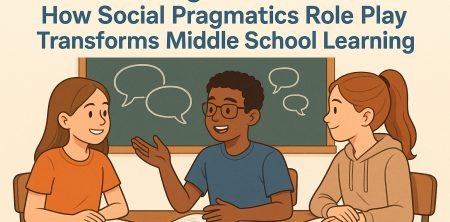
Middle school can be a challenging time for many students, particularly when it comes to navigating social situations. The transition from childhood to adolescence is a period rife with emotional and social complexities. One effective approach to helping students develop essential interpersonal skills is through social pragmatics role play. This educational strategy allows students to practice real-life social interactions in a safe and structured environment, enhancing their communication and social skills.
Understanding Social Pragmatics
Social pragmatics refers to the social language skills we use in our everyday interactions. It encompasses a variety of skills, including understanding social cues, interpreting nonverbal signals, and engaging in conversations appropriately based on context and relationships. These skills are crucial for forming and maintaining relationships, succeeding in school, and functioning effectively in various social contexts.
For many middle school students, particularly those with autism spectrum disorder or social communication difficulties, grasping the nuances of social pragmatics can be particularly daunting. According to the American Speech-Language-Hearing Association, the ability to use language in social contexts is fundamental for successful peer interactions. As students transition into adolescence, peer relationships become increasingly significant, making social pragmatics even more critical.
The Role of Role Play in Learning
Role play is an active learning strategy that engages students by allowing them to embody different characters or situations. It creates a low-stakes environment where students can experiment with their responses to various social scenarios. This method is not only beneficial for enhancing engagement but also for reinforcing learning through practice and repetition.
In the context of social pragmatics role play, students can practice specific social skills such as initiating conversations, maintaining eye contact, or responding to peer comments. Role play allows students to visualize and enact appropriate behaviors, which can be particularly helpful for those who struggle with social cues or anxiety. Through this interactive approach, students can receive immediate feedback from peers and educators, fostering a deeper understanding of social norms and expectations.
Implementing Social Pragmatics Role Play in Middle Schools
To successfully implement social pragmatics role play in middle schools, educators must design experiences that are both relevant and relatable to students. Here are some practical insights for integrating role play into the classroom:
- Identify Scenarios: Begin by identifying common social scenarios that middle school students encounter, such as group projects, lunchroom dynamics, or after-school activities. Tailoring scenarios to the specific context of students’ lives makes the practice more applicable.
- Set Clear Objectives: Clearly outline the desired social skills students should practice during each role-playing session. Whether it's improving conversational turn-taking or understanding personal space, having clear objectives helps focus the role play.
- Encourage Collaboration: Role play works best in pairs or small groups, fostering a collaborative environment where students can learn from each other. This peer interaction not only enhances the learning experience but also encourages empathy and understanding.
- Debrief and Reflect: After each role play, allocate time for debriefing. Discuss what went well, what was challenging, and how students felt during the activity. This reflection solidifies the learning experience and allows for deeper insight into social behavior.
Benefits of Social Pragmatics Role Play
The advantages of incorporating social pragmatics role play into middle school curricula are numerous: (See: CDC on children's mental health and learning.)
- Enhanced Communication Skills: Students develop better spoken language skills and learn to articulate thoughts clearly in social situations.
- Improved Empathy: By taking on different perspectives, students cultivate empathy and a better understanding of diverse viewpoints and experiences.
- Increased Confidence: Regular practice in a supportive environment boosts students’ self-esteem and reduces anxiety around social interactions.
- Preparation for Real-Life Situations: Role playing provides a safe space for students to experiment with various responses, preparing them for actual social situations.
- Integration of Feedback: Receiving constructive criticism fosters a growth mindset, helping students to refine their social skills over time.
Current Relevance in Education
In today’s educational landscape, where emotional intelligence is increasingly recognized as vital for success, the relevance of social pragmatics role play cannot be overstated. With many students facing heightened social anxiety, particularly in the wake of the COVID-19 pandemic, role play serves as a vital tool for rebuilding confidence and facilitating social connections.
According to a study published in the Journal of Educational Psychology, students who participated in structured social skills training—including role play—demonstrated significant improvements in social competence and peer relationships. This is particularly relevant in middle school, where social dynamics can profoundly impact academic performance and overall well-being.
Examples of Effective Role-Playing Scenarios
When implementing social pragmatics role play, educators can draw from a variety of scenarios that resonate with students. Here are some effective examples:
- Starting and Ending Conversations: Students practice how to initiate conversations with peers and appropriately exit them, which is crucial for effective social interaction.
- Handling Conflict: Present students with a conflict scenario, such as a disagreement over group project contributions, and allow them to practice resolving it constructively.
- Responding to Criticism: Role play situations where a peer gives feedback or criticism, helping students learn how to respond gracefully and thoughtfully.
- Making Friends: Create scenarios that involve introducing oneself to a new student or inviting someone to join a group, which can help students learn to build relationships.
- Understanding Personal Space: Students can role play different situations that illustrate appropriate levels of personal space in various contexts, helping them gauge when it’s appropriate to be closer or maintain distance.
- Group Dynamics: Set up a scenario where students must work as a team on a project, navigating different roles and responsibilities, which mirrors real-world group work.
Challenges to Consider
While social pragmatics role play is a powerful educational tool, there are challenges that educators may encounter:
- Classroom Dynamics: Not all students may feel comfortable participating in role plays, particularly those with social anxiety. It’s crucial to create an inclusive environment where all students feel safe to engage.
- Time Constraints: Role play can require significant class time, and educators must balance this with the overall curriculum while ensuring students gain these essential skills.
- Resistance to Participation: Some students may resist role play, seeing it as childish or embarrassing. Educators need to frame these activities positively, emphasizing their importance for future social success.
- Varying Skill Levels: Students come with different backgrounds and skill levels; ensuring all students benefit from the same activity can be challenging. Differentiating scenarios can help adjust to those varying needs.
Expert Perspectives on Role Play in Education
Educational psychologists and social skills specialists emphasize the importance of role play in teaching social pragmatics. Dr. Jane O’Connor, a clinical psychologist specializing in adolescent development, asserts, “Role play provides a unique opportunity for students to rehearse social situations that they might otherwise avoid due to anxiety or uncertainty. It’s about creating comfort in discomfort.”
Similarly, Dr. Mike Solis, an expert in special education, highlights the adaptability of role play. “By tailoring scenarios to the interests and experiences of students, educators can make social skills training engaging and relevant, paving the way for meaningful learning.” Additionally, Dr. Sarah Thompson, an educational researcher, points out, “Role play also serves as a bridge between theoretical knowledge and practical application, allowing students to see the relevance of their social skills in real-world contexts.”
Statistics on Social Skills Development
Understanding the impact of social skills on students is bolstered by substantial data. A survey conducted by the Collaborative for Academic, Social, and Emotional Learning (CASEL) revealed that students who received social-emotional learning (SEL) instruction—of which role play is a component—showed a 23% increase in academic performance. Furthermore, a meta-analysis published in the Review of Educational Research found that SEL programs significantly decrease negative behaviors and improve positive behaviors, highlighting the effectiveness of role play as part of a broader SEL strategy.
Integrating Technology into Role Play
As technology continues to evolve, educators have more resources than ever to enhance social pragmatics role play. Virtual reality (VR) and online role-playing platforms can create immersive experiences that allow students to practice social situations in a controlled yet dynamic environment. For instance, programs like “vTime XR” enable students to interact in a virtual space, providing a unique twist on traditional role play. This can be particularly beneficial for students who may feel overwhelmed in real-life settings. (See: NIH on social skills development in children.)
Moreover, educators can supplement in-person role play with digital storytelling tools that allow students to create scenarios and scripts, further encouraging creativity and engagement. Utilizing apps like “Storybird” or “Book Creator” can help students craft narratives around their role play scenarios, deepening their understanding of character perspectives and social dynamics.
FAQ: Social Pragmatics Role Play
What age group benefits most from social pragmatics role play?
While students of all ages can benefit from social pragmatics role play, middle schoolers often experience significant social challenges, making this age group particularly receptive to the practice. The skills developed during this time can have lasting impacts on their social competence.
How can I assess students’ progress in social skills?
Educators can utilize rubrics that outline specific skills and behaviors to observe during role play sessions. Peer feedback, self-reflection, and teacher observations can all provide valuable insights into a student's growth over time.
Can social pragmatics role play be adapted for remote learning?
Absolutely! Social pragmatics role play can be adapted for virtual classrooms by utilizing breakout rooms for small group activities, employing role play through video conferencing platforms, or creating digital role play scenarios that students can act out at home.
What if students feel uncomfortable participating?
It's vital to build a culture of trust and support within the classroom. Providing options for students to observe rather than participate initially can help ease anxiety. Gradually, they may feel more comfortable joining in as they see their peers engage positively.
How often should role play be implemented in the curriculum?
The frequency can vary based on the curriculum and student needs, but incorporating role play into regular lesson plans—perhaps once a week or bi-weekly—can help reinforce social skills consistently without overwhelming students.
Building a Supportive Environment for Role Play
Creating a supportive environment is crucial for the success of social pragmatics role play. Educators should establish ground rules that promote respect and inclusivity, ensuring students feel safe to express themselves without fear of judgment. A classroom charter that emphasizes positive engagement can set the tone for role-playing activities. This charter can include guidelines on listening, providing constructive feedback, and valuing diverse perspectives, which are all foundational to effective role play.
Connecting Role Play with Other Learning Areas
Educators can enrich the role play experience by integrating it with other subjects. For example, when studying a literature unit, students can enact scenes from a book, exploring characters’ motivations and emotions. This not only reinforces comprehension but also deepens the understanding of character development and dialogue. Similarly, in history lessons, students can role play historical figures or events, allowing them to engage critically with the material while practicing social skills. This cross-curricular approach can make learning more compelling and relevant, fostering a holistic educational experience.
Real-World Applications of Social Pragmatics Skills
As students transition to high school and beyond, the social skills honed through role play become increasingly vital. For instance, in job interviews, the ability to engage confidently and make a good impression can significantly impact a candidate’s success. Similarly, students entering collaborative work environments must navigate complex interpersonal dynamics. Research from the National Center for Education Statistics (NCES) indicates that strong social skills are often linked to better job performance and career advancement. By investing in social pragmatics role play, educators equip students not only for academic success but also for future professional environments.
Recognizing Diversity in Social Pragmatics
Not all students come to role play with the same experiences, which is why recognizing diversity in social pragmatics is essential. Students from different cultural backgrounds may have distinct ways of interpreting social cues or engaging in conversations. Educators should incorporate diverse perspectives into role-playing scenarios to ensure inclusivity. This could include exploring how different cultures approach greetings, respect, or conflict resolution. By embracing this diversity, role play can foster greater cultural competence and prepare students for a globalized world.
The Future of Social Pragmatics Role Play in Education
As education continues to evolve, the methods for teaching social skills will also change. There is a growing emphasis on integrating social-emotional learning throughout the curriculum, making social pragmatics role play an essential component. The use of technology, including AI and virtual simulations, is likely to enhance role play experiences. These advancements can provide students with tailored feedback and endless scenarios, making practice more engaging and effective. Educators will need to stay informed about these trends, continuously adapting their strategies to meet the needs of future learners.
Conclusion: Empowering Students Through Social Pragmatics Role Play
Teaching social pragmatics through role play in middle school is not just an innovative educational strategy; it's a vital component of social-emotional learning. By actively engaging students in scenarios that mirror their real-life experiences, educators can foster essential communication skills, empathy, and self-confidence. The benefits of this approach extend far beyond the classroom, equipping students with the tools they need to navigate the complex social landscape of adolescence. As schools continue to recognize the importance of social skills, social pragmatics role play will undoubtedly remain a cornerstone of effective teaching for future generations.
```
Trending Now
Frequently Asked Questions
What is social pragmatics in middle school?
Social pragmatics refers to the social language skills used in everyday interactions, including understanding social cues, interpreting nonverbal signals, and engaging in context-appropriate conversations. These skills are crucial for middle school students to build relationships and succeed academically.
How does role play improve social skills in students?
Role play enhances social skills by allowing students to practice real-life social interactions in a safe environment. This active learning strategy helps them experiment with responses to various scenarios, reinforcing their communication abilities through practice and repetition.
Why are social skills important for middle schoolers?
Social skills are vital for middle schoolers as they navigate complex peer relationships and emotional changes. Mastering these skills helps them communicate effectively, build friendships, and succeed in both academic and social settings.
What challenges do students face with social pragmatics?
Many middle school students, especially those with autism spectrum disorder or social communication difficulties, struggle with understanding social nuances. Grasping these complexities is essential for effective peer interactions during this crucial developmental stage.
What are effective strategies for teaching social pragmatics?
Effective strategies for teaching social pragmatics include role play, which allows students to practice social interactions, and structured activities that focus on understanding social cues and context. These methods provide a supportive environment for skill development.
Agree or disagree? Drop a comment and tell us what you think.

