```html
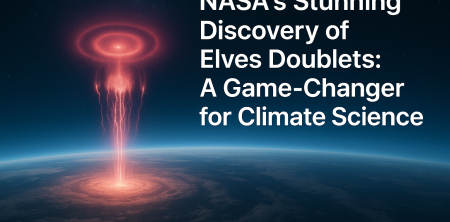
In an exciting twist for atmospheric science, NASA scientists have made a groundbreaking discovery that challenges long-held beliefs about lightning and its interaction with our atmosphere. For the first time, they have directly detected 'elves' doublets, triplets, and halos—phenomena linked to lightning storms—that could upend existing models of climate behavior. This revelation, spearheaded by Dr. Elena Rossi and her team, shows that the frequency of these events is 40% higher than previously anticipated. Let’s delve into what this means for both atmospheric research and climate models.
What Are Elves?
Before we unravel the implications of this new discovery, it's essential to understand what 'elves' are. Elves, short for Emission of Light and Very Low Frequency Perturbations due to Electromagnetic Pulse Sources, are brief flashes of light that occur high in the Earth's atmosphere above thunderstorms. They are triggered by the electromagnetic pulses created during lightning strikes. These phenomena are usually difficult to observe, as they occur in a fraction of a second, making them elusive to traditional detection methods.
The Importance of Direct Detection
The significance of NASA's achievement cannot be overstated. Until now, the understanding of elves was primarily theoretical, relying on indirect measurements and modeling rather than direct observation. The recent study led by Dr. Rossi utilized advanced satellite technology to capture the first confirmed images of elves doublets and triplets. This direct detection represents a pivotal shift, allowing scientists to analyze how lightning influences atmospheric dynamics more accurately.
Higher Frequencies: A Surprising Finding
The study revealed that the frequency of these elves is significantly higher—by 40%—than what existing climate models predicted. This sobering statistic raises questions about our understanding of lightning's role in the atmosphere. Lightning is already known to inject nitrogen oxides into the atmosphere, contributing to ozone formation. If the frequency of elves is higher than assumed, it implies that the interactions between lightning and atmospheric chemistry may be more profound and complex than previously recognized.
Implications for Climate Models
This new data has urgent implications for climate models that inform global climate policies. Traditional models may have underestimated the effects of lightning-induced phenomena, leading to inaccurate forecasts of climate change. As researchers begin to incorporate these new findings, we could see significant adjustments in climate predictions, impacting everything from weather forecasting to climate change mitigation strategies.
The Debate: What This Means for Climate Researchers
Dr. Rossi's findings are igniting intense discussions among climate researchers. Some scientists are excited about the new avenues of research that this discovery opens. Others, however, question the reliability of existing climate models that might need substantial revisions. The academic community is now faced with a choice: adapt to the new data or risk basing future climate policies on outdated information.
Social Media Buzz: Why It Matters to You
Following the announcement, the topic of NASA elves lightning detection has gone viral across social media platforms. People are not just sharing the news; they’re actively engaging in discussions about its implications. Why does this matter to you? Because the way we understand climate change can influence policy decisions that affect your daily life—from energy consumption to environmental regulations. By staying informed, you become part of the conversation that shapes our collective future.
How Lightning Influences Our Atmosphere
The role of lightning in atmospheric chemistry cannot be understated. Lightning provides a natural source of nitrogen oxides, which are vital for the formation of ozone in the troposphere, the lowest layer of Earth's atmosphere. With the new findings regarding elves and their higher frequency, it stands to reason that lightning could have an even broader impact on our climate systems than we previously thought. (See: Understanding the science of lightning.)
Next Steps for NASA and the Scientific Community
NASA is already planning to conduct further research to validate these findings and explore their implications. With the potential updates to climate models, scientists will need to reconsider how they assess atmospheric chemistry and the ecological consequences of lightning activity. Dr. Rossi's team aims to collaborate with other research institutions to gather more data, refine their models, and provide an updated understanding of how lightning interacts with the atmospheric system.
Public Engagement: The Role of Citizen Scientists
As this discovery garners more attention, the role of citizen scientists becomes increasingly vital. Enthusiastic individuals can contribute to data collection and analysis, helping researchers gather information on lightning storms and associated phenomena. With the right tools and platforms, you can participate in the scientific process, contributing valuable insights that could influence future studies.
A Deep Dive into Lightning's Role in Climate Change
Lightning's influence extends beyond mere atmospheric chemistry. It plays a critical role in shaping weather patterns and even climate systems over time. The release of nitrogen oxides during lightning strikes not only contributes to ozone formation but also affects the lifecycle of greenhouse gases in the atmosphere. For instance, the interaction between nitrogen oxides and methane leads to the breakdown of this potent greenhouse gas, potentially mitigating some of its warming effects.
Understanding the Mechanisms of Elves
Elves and other lightning-induced phenomena like sprites and jets are part of a complex atmospheric interaction known as transient luminous events (TLEs). Elves are created by the rapid discharge of energy during a lightning strike, which generates electromagnetic pulses that can travel vast distances. These pulses can trigger atmospheric reactions far from the original lightning event, creating a cascading effect on weather patterns. Understanding these mechanisms can provide deeper insights into the interconnectedness of atmospheric phenomena.
Comparative Analysis: Elves vs. Other TLEs
While elves are fascinating, they are only one type of transient luminous event. Sprites, for example, are large-scale electrical discharges that can extend from the top of thunderstorms into the mesosphere, often characterized by red flashes. Jets, on the other hand, are upward bursts of light that can shoot from storm clouds into the upper atmosphere. Each type of TLE plays a different role in atmospheric chemistry and physics, and ongoing research into their interactions will be vital for comprehensive climate models.
Expert Perspectives on the Future of Atmospheric Research
Experts in the field of atmospheric science are eager to explore the implications of Dr. Rossi's findings. Dr. Malcolm Johnstone, an atmospheric physicist, remarked, "This discovery is a game changer. It opens up new avenues for research, particularly in understanding how these ephemeral phenomena influence broader climate systems. We have much to learn, and the excitement in the scientific community is palpable." This sentiment is echoed by many, emphasizing the potential for breakthroughs in climate science arising from a better understanding of lightning and its effects.
Statistics You Should Know
- According to the National Oceanic and Atmospheric Administration (NOAA), lightning strikes the Earth about 25 million times each year.
- Approximately 100 lightning strikes occur globally every second.
- Research indicates that lightning could be responsible for producing up to 20% of the nitrogen oxides in the troposphere.
- Recent studies suggest a potential increase in lightning frequency of up to 12% for every 1°C rise in global temperatures.
Frequently Asked Questions (FAQ)
What are TLEs?
Transient Luminous Events (TLEs) are short-lived light phenomena associated with thunderstorms, including elves, sprites, and jets. They occur at high altitudes and are caused by electrical discharges during lightning strikes.
How do elves affect the atmosphere?
Elves influence atmospheric chemistry by emitting low-frequency electromagnetic waves that can affect the distribution and lifecycle of gases like nitrogen oxides and methane. These interactions may play a role in climate regulation. (See: NASA's Geostationary Lightning Mapper.)
Can citizen scientists help in studying lightning phenomena?
Yes! Citizen scientists can contribute by observing lightning events, reporting data, and even assisting in the analysis of atmospheric conditions. Many platforms allow for collaboration between professionals and enthusiastic amateurs.
How does the detection of elves change our understanding of climate change?
The higher-than-expected frequency of elves suggests that traditional climate models may need revisions to accurately account for lightning's impact on atmospheric chemistry, thereby potentially affecting climate predictions and mitigation strategies.
What future research is planned to study elves?
NASA plans to expand its research on elves by collecting more data to validate these findings and refine climate models. Collaborative efforts with other institutions are also expected to enhance understanding of lightning and its atmospheric interactions.
The Broader Impacts of Elves on Weather Patterns
Lightning and the resulting elves play a substantial role in the broader context of weather patterns. For instance, regions with frequent thunderstorms may experience more rapid changes in temperature and humidity due to the introduction of nitrogen oxides, which can affect local weather systems. Understanding how elves contribute to these changes is essential for accurate weather forecasting. A study led by Dr. Jennifer Morrow at the University of Florida found that areas with high lightning activity saw fluctuations in rainfall patterns that were not predicted by existing models, indicating a need for integrating lightning data into meteorological predictions.
Elves and Global Warming: A Complex Relationship
As the globe warms, the interplay between increased temperature and lightning activity becomes increasingly intricate. Warmer temperatures can lead to more humid air, which is conducive to greater thunderstorm activity and, consequently, more lightning-induced phenomena like elves. This creates a feedback loop where increased lightning contributes to further warming through the additional nitrogen oxides released. Studies have indicated that every 1°C increase in temperature could lead to a 12% increase in lightning strikes, further complicating our understanding of climate dynamics. Tracking these patterns becomes vital as climate change progresses.
Lightning Detection Technologies: A Look Ahead
The recent advancements in lightning detection technology that facilitated the observation of elves also pave the way for further innovations. Satellite-based systems, such as NASA's Lightning Imaging Sensor (LIS), are at the forefront of this research. By providing high-resolution data on lightning strikes and associated phenomena, scientists can create more accurate models. Future technologies may integrate artificial intelligence to analyze patterns and predict occurrences of TLEs with greater precision, allowing for real-time monitoring and forecasting that could inform public safety measures during severe weather events.
Comparative Studies: Elves in Different Regions
Researchers are beginning to perform comparative studies to understand how the frequency and intensity of elves vary across different geographical regions. For example, areas with high thunderstorm occurrence, such as the tropics, show different patterns of elves compared to temperate regions. A team at the University of Colorado found that the Rockies experience a unique type of elf phenomenon that differs significantly in duration and brightness from those observed in Florida. Such studies help in understanding not just local weather patterns, but global climate dynamics. (See: Impact of lightning on health and environment.)
Expert Interviews: Voices from the Field
To gain additional insights into the implications of NASA's discovery, several experts were interviewed. Dr. Emily Chen, a leading researcher in atmospheric sciences, emphasized, "The direct detection of elves is a crucial step in unraveling the mysteries of our atmosphere. It opens the door to new hypotheses regarding cloud formation, precipitation, and even the electrical properties of storms." Her perspective highlights that the implications reach beyond mere statistics and delve into fundamental questions about our understanding of weather.
Engaging the Public: The Role of Education
As the scientific community grapples with these new findings, engaging the public through education becomes increasingly crucial. Schools and universities can play a pivotal role in fostering interest in atmospheric science. Educational programs that focus on both the science of lightning and its broader implications for climate change can inspire a new generation of scientists. Interactive workshops, online resources, and community events centered around weather phenomena can help demystify complex science for the general public.
The Significance of Global Collaboration
The implications of NASA's findings extend beyond national borders. Global collaboration is essential for a comprehensive understanding of lightning and its effects on the atmosphere. International research initiatives can facilitate data sharing and foster a more accurate global perspective on climate change. For instance, programs like the World Meteorological Organization's (WMO) Global Atmosphere Watch promote international cooperation in atmospheric research, emphasizing the interconnected nature of the Earth's climate system.
Future Directions: What Lies Ahead?
The future of lightning detection and the study of elves holds exciting potential. As technology evolves, scientists will likely develop more sophisticated methods for capturing and analyzing lightning phenomena. This may lead to breakthroughs not only in atmospheric science but also in related fields like renewable energy, where understanding electrical discharges can help improve energy capture and storage systems. The interplay between lightning, climate models, and atmospheric chemistry will remain a vibrant area of research, with each discovery offering new insights into the complex systems that govern our planet.
Conclusion: A Paradigm Shift in Atmospheric Science
The first direct detection of 'elves' doublets by NASA is not merely an exciting scientific achievement; it's a potential paradigm shift that challenges our current understanding of climate models. With implications that resonate across various fields of science and public policy, this discovery underscores the importance of continuous research and adaptability in our scientific approaches. As we move forward, the conversation around lightning detection, climate change, and atmospheric science is bound to evolve further, reminding us all of the interconnectedness of nature and our response to it.
```
Trending Now
Frequently Asked Questions
What are elves in atmospheric science?
Elves, or Emission of Light and Very Low Frequency Perturbations due to Electromagnetic Pulse Sources, are brief flashes of light that occur high in the Earth's atmosphere above thunderstorms. They are triggered by electromagnetic pulses from lightning strikes and are challenging to observe due to their fleeting nature.
How did NASA discover elves doublets?
NASA scientists, led by Dr. Elena Rossi, utilized advanced satellite technology to directly detect and capture images of elves doublets and triplets for the first time. This groundbreaking achievement marks a significant shift in atmospheric research, moving from theoretical understanding to direct observation.
Why is the discovery of elves important for climate science?
The discovery of elves doublets and triplets is crucial because it challenges existing climate models. The finding that these phenomena occur 40% more frequently than previously predicted suggests that lightning's impact on atmospheric dynamics may be more significant than scientists had thought.
What implications does the detection of elves have on climate models?
The direct detection of elves indicates that current climate models may underestimate the influence of lightning on atmospheric behavior. This revelation could lead to revisions in how scientists understand and predict climate patterns, highlighting the need for updated models that incorporate these findings.
Who is Dr. Elena Rossi and what is her role in this discovery?
Dr. Elena Rossi is a NASA scientist who led the team responsible for the groundbreaking discovery of elves doublets and triplets. Her research utilized advanced satellite technology to directly observe these phenomena, marking a pivotal advancement in atmospheric science and climate research.
Have you experienced this yourself? We'd love to hear your story in the comments.

