```html
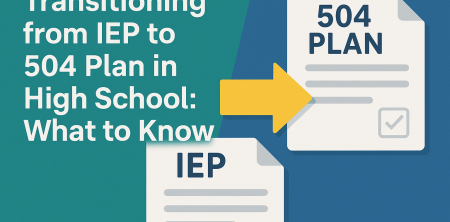
Transitioning from an Individualized Education Program (IEP) to a 504 Plan in high school can be a significant step for students with disabilities. This process involves understanding the differences between the two plans, ensuring that students receive the necessary accommodations, and preparing for the unique challenges that high school presents. This article will provide insight into the IEP to 504 Plan transition, offering practical advice and a comprehensive overview of what students and parents need to consider.
The Basics: What is an IEP?
An Individualized Education Program (IEP) is designed for children with disabilities who require special education services. Under the Individuals with Disabilities Education Act (IDEA), an IEP is a legally binding document that outlines specific educational goals and the services required to meet those goals. Every IEP is tailored to the individual needs of the student and includes:
- Current performance levels
- Annual education goals
- Specific services and accommodations
- Methods for measuring progress
- Transition planning for post-secondary education or employment
IEPs are primarily focused on ensuring students access a Free Appropriate Public Education (FAPE) that meets their unique needs, allowing them to make progress in the general education curriculum.
Understanding a 504 Plan
A 504 Plan, named after Section 504 of the Rehabilitation Act of 1973, provides accommodations for students with disabilities that do not require specialized instruction but still need support to thrive in a general education environment. Unlike IEPs, 504 Plans are less formal and do not require the same level of documentation. Key components of a 504 Plan include:
- Identification of the student’s disability
- Specific accommodations needed for success in school
- No requirement for specialized instruction
Examples of accommodations in a 504 Plan can include extended time on tests, preferential seating, or access to assistive technology. This plan aims to ensure that students have equal access to education and can participate fully in school activities.
Key Differences Between IEPs and 504 Plans
Understanding the differences between IEPs and 504 Plans is crucial for parents and students as they navigate the transition process. The most significant distinctions include:
- Eligibility: IEPs are available to students who meet specific criteria under IDEA, while 504 Plans are broader, covering students with various disabilities that may not qualify for an IEP.
- Services Provided: IEPs include specialized services and accommodations, whereas 504 Plans focus on accommodations only.
- Legal Protections: IEPs come with more rigorous legal protections and procedural safeguards than 504 Plans.
- Documentation Requirements: IEPs require more detailed documentation and an annual review, while 504 Plans can be less formal and may not need to be reviewed as frequently.
These distinctions are essential when considering the IEP to 504 Plan transition, particularly for high school students who may find themselves in a different educational landscape.
The IEP to 504 Plan Transition Process
Transitioning from an IEP to a 504 Plan usually occurs when a student no longer requires specialized instruction but still needs accommodations to succeed. The transition process typically includes several steps:
- Evaluation: A review of the student’s current performance and needs should be conducted, often during the student’s annual IEP meeting. This evaluation helps determine if the student no longer qualifies for an IEP.
- Eligibility Determination: If the decision is made that the student does not meet the criteria for an IEP but requires accommodations, the team can initiate the development of a 504 Plan.
- Developing the 504 Plan: A team, including educators, parents, and the student (when appropriate), collaborates to create the 504 Plan, specifying the accommodations needed.
- Implementation: Once the 504 Plan is developed, it should be communicated to all relevant staff, including teachers and administrators, to ensure appropriate accommodations are in place.
- Monitoring Progress: While the 504 Plan doesn’t require as formal a review process as an IEP, it’s crucial to monitor the student’s progress and make necessary adjustments as needed.
Understanding this process can help families navigate the shift smoothly, ensuring that students continue to receive the support they need. (See: Individualized Education Program (IEP).)
Challenges of Transitioning from IEP to 504 Plan
The IEP to 504 Plan transition can be fraught with challenges. One key issue is that some students may feel a loss of support when moving from an IEP, which often provides more robust resources. The change can lead to anxiety, especially if students are unsure about the accommodations they will receive under a 504 Plan.
Another challenge is the potential for misunderstanding among educators. Some teachers may not fully grasp the requirements of a 504 Plan, leading to inadequate implementation of accommodations. This lack of understanding can hinder a student’s ability to succeed in high school, where academic demands are typically more rigorous.
Parents should be proactive in communicating with school staff and ensuring that everyone involved in the student’s education understands the accommodations outlined in the 504 Plan. Open dialogue helps to minimize misunderstandings and ensures that students receive the support they need.
Current Relevance: The Impact of COVID-19
The COVID-19 pandemic has brought unique challenges to the education system, particularly for students with disabilities. The shift to remote learning raised concerns about how students with IEPs and 504 Plans would receive necessary support. Many students found it difficult to adapt to virtual environments, and some accommodations were not as effectively implemented.
As schools have transitioned back to in-person learning, the conversation around IEP to 504 Plan transitions has become even more relevant. With many students returning with varying levels of support, it’s essential for parents and educators to reassess the individual needs of students and determine the most appropriate educational plans.
For families navigating the IEP to 504 Plan transition, it’s crucial to advocate for a clear understanding of how students can continue to thrive in their educational journeys, especially in light of the challenges posed by the pandemic.
Practical Insights for Parents and Students
Transitioning from an IEP to a 504 Plan involves more than just paperwork; it’s about ensuring that students are equipped for success. Here are some practical insights for parents and students:
- Stay Informed: Educate yourself about the differences between IEPs and 504 Plans, and understand the specific accommodations your child may need.
- Communicate with Educators: Maintain an ongoing dialogue with teachers and school staff to ensure they understand the accommodations outlined in the 504 Plan.
- Involve the Student: If appropriate, include the student in discussions about their needs and preferences. Encouraging self-advocacy can empower them as they transition.
- Monitor Progress: Keep track of how well the accommodations are being implemented and whether they are effective in supporting your student’s learning.
- Advocate: Don’t hesitate to speak up if accommodations are not being provided or if your child is struggling. Being proactive can make a significant difference in their educational experience.
These insights can help families navigate the complexities of the IEP to 504 Plan transition, ensuring that students continue to receive the support they need to succeed.
Key Considerations for High School Students
As students transition into high school, they face new academic and social challenges that can be daunting, especially for those moving from an IEP to a 504 Plan. Here are a few key considerations to keep in mind:
- Academic Rigor: High school often requires students to handle a more demanding curriculum. It’s vital to understand how accommodations under a 504 Plan can be tailored to meet these new challenges.
- Social Dynamics: High school is also a time for increased social interactions. Students might experience anxiety or issues with peer relationships that weren't as prominent in earlier grades. Understanding how accommodations can support social engagement is crucial.
- Extracurricular Activities: Encourage students to engage in extracurricular activities, as these can provide additional support and a sense of belonging. It’s essential to ensure that accommodations extend to these activities.
- Self-Advocacy Skills: Developing self-advocacy skills is critical at this stage. Students should learn to articulate their needs and understand their rights under the 504 Plan.
These considerations will help students adjust to the high school environment while ensuring they continue to receive the necessary support. (See: Individuals with Disabilities Education Act (IDEA).)
Statistics on Disability and Education
Understanding the broader landscape of disability in education can provide important context for the IEP to 504 Plan transition. Here are some relevant statistics:
- A report by the National Center for Education Statistics (NCES) indicates that approximately 14% of all public school students receive special education services under IDEA.
- According to the U.S. Department of Education, nearly 1 in 5 students with disabilities transition from an IEP to a 504 Plan during their educational journey.
- Research shows that students with a 504 Plan are more likely to graduate high school than students without any accommodations, highlighting the importance of proper support.
- Statistics from the National Center for Learning Disabilities suggest that students with specific learning disabilities represent about 33% of all students with IEPs.
These statistics underscore the importance of effective transitions and support systems for students with disabilities as they move through the education system.
Expert Perspectives on IEP to 504 Plan Transitions
To gain more insight into the IEP to 504 Plan transition, we reached out to several education professionals. Here’s what they had to say:
- Dr. Emily Carter, Special Education Advocate: "Transitioning from an IEP to a 504 Plan can be beneficial but requires careful planning. It's essential for parents and students to understand what supports will remain in place and how they can advocate for their needs."
- Ms. Laura Johnson, School Psychologist: "Communication between educators, parents, and students is pivotal. A successful transition depends on everyone being on the same page regarding expectations and accommodations."
- Mr. James Williams, High School Principal: "We strive to ensure that all students, regardless of their plan, receive the support they need to thrive. Educators must be trained on the nuances of 504 Plans to implement them effectively."
These expert insights emphasize the importance of advocacy and communication during transitions.
Frequently Asked Questions (FAQ)
1. What should I do if my child’s accommodations are not being met under a 504 Plan?
If you notice that accommodations are not being implemented, it’s critical to document your observations and communicate directly with the school. Schedule a meeting with the 504 coordinator or relevant educators to discuss your concerns and seek solutions.
2. Can a student have both an IEP and a 504 Plan?
In general, a student should not have both an IEP and a 504 Plan at the same time. However, if a student's needs change, they may transition from one plan to the other as appropriate.
3. How often should a 504 Plan be reviewed?
While 504 Plans do not have a mandated review schedule like IEPs, it’s advisable to review the plan annually or whenever there are significant changes in the student’s needs or circumstances.
4. What happens if a student outgrows their 504 Plan?
If a student outgrows the accommodations in their 504 Plan, a reevaluation should take place. The team can determine if the student still needs accommodations or if they can successfully navigate without them. (See: Disability and Health.)
5. What resources are available for parents navigating the IEP to 504 Plan transition?
There are various resources available, including advocacy groups, local education agencies, and online platforms dedicated to special education. Connecting with local parent support groups can also provide valuable insights and support.
Additional Considerations for the Transition
As students prepare for the transition from an IEP to a 504 Plan, several factors should be taken into account to ensure a smoother process. Here are some additional considerations:
- Understanding of Rights: It's important for students and parents to have a clear understanding of the rights afforded under both the IEP and the 504 Plan. This includes knowing how to request changes and what to do if accommodations are not being met.
- Emotional Support: Transitioning can be emotionally challenging for students. Providing emotional support and counseling can help them navigate feelings of anxiety or uncertainty. Parents should be attentive to their child's emotional well-being during this time.
- Peer Support Programs: Many schools have peer mentoring or support programs that can help students make the transition smoother. These programs can provide a sense of community and help students feel less isolated.
- Individual Learning Strategies: Encourage students to develop personal learning strategies that work best for them. This could include time management techniques, study skills, or stress-relief practices. Tailoring these strategies to fit within their 504 Plan can enhance their educational experience.
The Role of Technology in Accommodations
In today’s educational landscape, technology plays a vital role in facilitating accommodations for students on 504 Plans. Here’s how technology can enhance learning:
- Assistive Technology: Tools like speech-to-text software, audiobooks, and organizational apps can help students with disabilities access the curriculum in ways that align with their learning needs.
- Online Learning Platforms: Many schools are utilizing online platforms that allow for flexible learning. These can be particularly beneficial for students who need to learn at their own pace or require additional time to complete assignments.
- Communication Tools: Platforms that enable communication between teachers, students, and parents can ensure that everyone is informed about accommodations and progress. This transparency is key to successful implementation of the 504 Plan.
Insights from Transitioning Students
Hearing directly from students who have navigated the IEP to 504 Plan transition can provide valuable insights. Here are some shared experiences:
- Improved Independence: Many students report feeling a greater sense of independence after transitioning to a 504 Plan. They appreciate having more responsibility for their learning and being able to advocate for their needs.
- Varied Experiences with Accommodations: While some students feel their accommodations under a 504 Plan are sufficient, others note that they miss the additional support offered through an IEP. This highlights the importance of tailoring plans to individual needs.
- Empowerment Through Advocacy: Students who actively participated in their transition process often feel more empowered. Engaging them in discussions about their needs can foster a sense of ownership over their education.
Final Thoughts on Navigating the Transition
Transitioning from an IEP to a 504 Plan is a significant step in a student’s educational journey. By understanding the differences between these plans, actively participating in the transition process, and advocating for necessary accommodations, students and families can navigate this change successfully. It’s about ensuring that students continue to have access to an education that meets their needs, allowing them to thrive academically and personally.
Conclusion: The Path Forward
The transition from an IEP to a 504 Plan can be a pivotal moment in a student’s educational journey. Although challenges may arise, understanding the differences between the two plans, the transition process, and effective advocacy can empower families to navigate this critical change successfully. By emphasizing communication, collaboration, and student involvement, parents and educators can help ensure that students are equipped to face the demands of high school and beyond.
```
Trending Now
Frequently Asked Questions
What is the difference between an IEP and a 504 Plan?
An IEP is a legally binding document tailored for students who need specialized education services under IDEA, while a 504 Plan provides accommodations for students with disabilities who do not require specialized instruction. IEPs include specific educational goals and services, whereas 504 Plans focus on ensuring access to general education.
How do I transition from an IEP to a 504 Plan?
Transitioning from an IEP to a 504 Plan involves evaluating the student's current needs and determining if they still require specialized education services. If not, a 504 Plan can be created to outline necessary accommodations, ensuring the student continues to receive support in a general education environment.
What accommodations can be included in a 504 Plan?
Accommodations in a 504 Plan can vary but typically include measures such as extended time on tests, preferential seating, modified assignments, and access to assistive technology. These adjustments help students with disabilities succeed without requiring specialized instruction.
Who qualifies for a 504 Plan?
Students who have a disability that substantially limits one or more major life activities may qualify for a 504 Plan. This includes various conditions such as ADHD, learning disabilities, or chronic health issues that impact their ability to perform in a general education setting.
What are the steps to create a 504 Plan?
To create a 504 Plan, parents or guardians should first request a meeting with the school to discuss their child's needs. The school will then evaluate the student’s disability and determine necessary accommodations. Once agreed upon, the plan is documented and implemented to support the student's educational success.
Agree or disagree? Drop a comment and tell us what you think.

