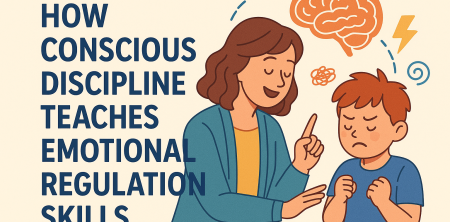
```html
Understanding Conscious Discipline
Conscious Discipline is more than just a set of strategies; it’s a comprehensive, trauma-informed approach to social-emotional learning, discipline, and self-regulation. Developed by Dr. Becky Bailey, this innovative program is designed for educators and parents alike, aiming to foster an environment that nurtures emotional intelligence and resilience in children. At its core, Conscious Discipline emphasizes the idea that children can only learn self-regulation when they feel safe, connected, and are given the tools to manage their emotions.
The Importance of Emotional Regulation
Emotional regulation is a critical skill for both children and adults. It involves the ability to recognize, understand, and manage emotions in a healthy and productive way. According to research published in Developmental Psychology, children who develop strong emotional regulation skills are better equipped to handle challenges, build positive relationships, and excel academically.
In the absence of effective emotional regulation, children may struggle with anxiety, aggression, and difficulty focusing in school. The repercussions can follow them into adulthood, impacting their mental health, relationships, and professional success. Therefore, instilling these vital skills from a young age is imperative for long-term well-being.
Key Principles of Conscious Discipline
At the heart of Conscious Discipline are several foundational principles that guide its implementation. Understanding these principles is crucial for effectively teaching emotional regulation:
- Safety: The first step in any emotional regulation strategy is ensuring a safe environment. Children must feel secure to express themselves freely and learn.
- Connection: Building strong relationships is essential. When children feel connected to adults and peers, they are more likely to engage in the learning process.
- Problem-Solving: Rather than issuing punishments, Conscious Discipline promotes teaching children how to solve problems and make choices.
- Self-Regulation: The ultimate goal is to help children learn to manage their emotions independently, rather than relying on external control.
Practical Insights into Implementing Conscious Discipline
Implementing Conscious Discipline involves a mix of strategies and activities that educators and parents can use to create a supportive atmosphere. Here are some practical insights:
1. Creating a Safe Environment
Establishing safety goes beyond physical safety; it includes emotional and psychological aspects as well. You can create a safe environment by:
- Setting clear expectations and routines that children can rely on.
- Listening actively and validating children’s feelings.
- Modeling emotional openness and vulnerability to demonstrate that expressing emotions is acceptable.
2. Building Connections
Connections can be fostered through regular one-on-one time, collaborative activities, and group discussions. For instance:
- Hold morning meetings or circle time to promote sharing and bonding.
- Encourage cooperative learning and peer mentoring.
- Use storytelling to connect emotionally and culturally with students.
3. Teaching Problem-Solving Skills
When conflicts arise, instead of jumping to conclusions or punishment, guide children through problem-solving steps. This can include:
- Encouraging children to express their feelings and identify the problem.
- Brainstorming possible solutions together.
- Role-playing scenarios to practice resolution strategies.
4. Fostering Self-Regulation
To help children develop self-regulation, teach them specific techniques, such as:
- Deep breathing exercises to calm down during stressful moments.
- Mindfulness practices that encourage present-moment awareness.
- Journaling or drawing as a means of processing emotions.
Real-World Applications of Conscious Discipline
Real-world applications of Conscious Discipline can be seen in various educational settings across the globe. Schools that have adopted this method report significant improvements in student behavior, academic performance, and overall classroom climate.
For example, a study conducted in a large urban school district indicated that schools implementing Conscious Discipline experienced a 20% reduction in suspensions and expulsions. Teachers noted increased student engagement and cooperation, as well as a noticeable decrease in bullying incidents. This data underscores the effectiveness of teaching emotional regulation through Conscious Discipline.
The Role of Educators and Parents
Educators and parents play a pivotal role in the successful application of Conscious Discipline. Their attitudes, behaviors, and emotional states directly influence children’s ability to learn emotional regulation skills. (See: CDC on children's emotional regulation.)
Educators must first model emotional regulation themselves. When teachers remain calm in the face of chaos, express their feelings appropriately, and demonstrate healthy coping strategies, they provide a living example for students. Parents can support this by reinforcing the same principles at home, creating a consistent message that emphasizes the importance of emotional intelligence. We covered fine motor skills and handwriting in more detail.
Challenges and Considerations
While the benefits of Conscious Discipline are clear, implementing it may present some challenges. For one, it requires a shift in mindset for both educators and parents. The transition from traditional discipline methods to a more empathetic and understanding approach can be daunting.
Furthermore, not all educators may feel equipped with the necessary training to execute these methods effectively. Ongoing professional development and support are crucial to overcoming these barriers. School districts should prioritize training sessions and workshops to ensure all staff members are on board and confident in using the Conscious Discipline framework.
Current Relevance and Future Directions
In a world increasingly characterized by stress and anxiety, the relevance of Conscious Discipline cannot be overstated. With ongoing discussions about mental health, schools are recognizing the importance of integrating emotional regulation into their curricula. Programs like Conscious Discipline equip students with the tools they need to navigate an often overwhelming world.
Looking ahead, the future of Conscious Discipline may involve greater integration with technology. Online platforms and apps could enhance its accessibility, providing resources and tools for both educators and parents. Additionally, as awareness grows, more research into its long-term impact on emotional and academic outcomes may emerge.
Conclusion: The Lasting Impact of Conscious Discipline
The essence of Conscious Discipline is rooted in the belief that emotional regulation is a learnable skill, not an inherent trait. By emphasizing safety, connection, problem-solving, and self-regulation, this approach transforms the way children interact with their emotions. As schools and parents adopt these principles, we can hope to see a new generation of children who are not only academically proficient but also emotionally intelligent.
Ultimately, cultivating a culture of emotional awareness can lead to more harmonious classrooms, stronger relationships, and a brighter future for children and their communities. So why not take the first step toward fostering emotional regulation skills and explore how Conscious Discipline can create lasting change in your environment?
Expanding on Emotional Regulation
Emotional regulation goes hand-in-hand with various developmental milestones in childhood. It’s crucial not only for individual mental health but also for fostering a collaborative and understanding community among peers. The American Psychological Association highlights that children who excel in emotional regulation are often more adaptable and can better navigate social complexities.
To paint a clearer picture, think about emotional regulation as a toolkit. Just like a carpenter has different tools to work with wood, children can use techniques like deep breathing or positive self-talk to manage their emotions. Research shows that teaching these tools can effectively reduce emotional outbursts and improve interactions with peers. A study found that children who practiced emotional regulation strategies had 35% fewer behavioral issues compared to their peers who did not practice such strategies.
Examples of Emotional Regulation Techniques
Here are some examples of effective emotional regulation techniques that can be taught to children:
- Visual Imagery: Encourage children to imagine a peaceful scene when feeling overwhelmed. Visualization can help shift their focus away from stressors.
- Emotion Charades: A fun game where children act out different emotions. This not only helps them identify their feelings but also fosters empathy as they recognize emotions in others.
- Emotion Thermometer: Create a visual thermometer where children can rate their emotional state from calm to very upset. This helps them become more aware of their feelings and recognize when they need to use regulation strategies.
- Gratitude Journaling: Encourage children to write down things they are thankful for. This simple practice can shift their focus from negative emotions to positive ones, promoting overall emotional well-being.
Expert Perspectives on Conscious Discipline
Experts in child psychology advocate for the benefits of Conscious Discipline. Dr. Daniel Siegel, a renowned psychiatrist, emphasizes that emotional regulation is a key factor in brain development. He states that teaching children to regulate their emotions can physically alter brain pathways, allowing for better decision-making and emotional responses in the future.
Furthermore, Dr. Bailey herself highlights that Conscious Discipline is not just about managing behavior but is deeply rooted in nurturing emotional health. She often cites the importance of teaching children how to express their emotions appropriately, which can lead to better interpersonal relationships as they grow older.
Statistics on Emotional Regulation in Education
The impact of emotional regulation on academic success is backed by numerous studies. According to a report from the Collaborative for Academic, Social, and Emotional Learning (CASEL), schools that implement social-emotional learning programs, including Conscious Discipline, see an average of 11% improvement in academic performance. This indicates a strong correlation between emotional well-being and academic success. (See: NIH on behavior and emotional health.)
Moreover, data from the National Institute for Mental Health shows that children with effective emotional regulation skills are less likely to experience anxiety disorders, which affect nearly 1 in 8 children. By fostering emotional regulation through Conscious Discipline, educators can help mitigate these risks.
Frequently Asked Questions About Conscious Discipline and Emotional Regulation
What age groups can benefit from Conscious Discipline?
Conscious Discipline can be adapted for children of all ages, from preschoolers to teenagers. The techniques may vary, but the core principles remain beneficial across developmental stages.
How can parents reinforce Conscious Discipline at home?
Parents can reinforce the principles of Conscious Discipline by modeling emotional regulation, establishing routines, and creating an open dialogue about feelings. Simple practices like family meetings to discuss emotions can be highly effective.
Are there any specific resources or training available for educators?
Yes, Dr. Becky Bailey offers workshops, training sessions, and a wealth of resources through her website. Schools can also access online courses and materials to implement Conscious Discipline effectively.
How does Conscious Discipline compare to traditional discipline methods?
Unlike traditional discipline, which often relies on punishment, Conscious Discipline focuses on teaching children how to understand and manage their emotions. This proactive approach fosters long-term emotional intelligence rather than short-term compliance.
What are the long-term effects of teaching emotional regulation?
Children who learn emotional regulation skills tend to have better mental health, improved academic performance, and healthier relationships throughout their lives. The skills they gain can lead to better coping mechanisms in adulthood, reducing the likelihood of anxiety and depression.
Creating a Conscious Discipline Community
Building a community around Conscious Discipline can amplify its effects. Schools can organize workshops for parents and community members, helping everyone understand the importance of emotional regulation. When families and schools work together, children receive a consistent message about managing emotions, creating a supportive network that enhances their ability to thrive.
Additionally, social media and online forums can be leveraged to share success stories, resources, and strategies among educators and parents. This sense of community fosters collaboration and allows individuals to learn from one another's experiences in implementing Conscious Discipline.
Final Thoughts
Embracing Conscious Discipline is not just about teaching children how to manage their emotions. It’s about cultivating a culture of compassion, understanding, and resilience. As we continue to address the growing need for emotional intelligence in our society, the principles of Conscious Discipline provide a powerful framework for fostering a generation of emotionally adept individuals. By investing in emotional regulation today, we are ensuring a brighter, more empathetic tomorrow.
The Impact of Cultural Context on Emotional Regulation
It's essential to understand that cultural context plays a significant role in how emotional regulation is taught and perceived. Different cultures have varying beliefs about emotions and their expression. For instance, in some cultures, expressing emotions openly is encouraged, while in others, maintaining composure is viewed as a sign of strength. Educators implementing Conscious Discipline must be aware of these cultural nuances to tailor their approaches appropriately.
Research indicates that culturally responsive teaching can enhance emotional regulation by making children feel seen and understood. When children see their cultural backgrounds reflected in the lessons, they are more likely to engage and participate actively. This engagement deepens their understanding of emotional regulation within their cultural framework, fostering a more inclusive learning environment.
Integrating Mindfulness with Conscious Discipline
A valuable addition to Conscious Discipline is mindfulness. Mindfulness practices help children become more aware of their thoughts and feelings without judgment, which is vital for emotional regulation. Techniques such as mindful breathing, body scans, and sensory awareness activities can be seamlessly integrated into Conscious Discipline strategies.
For instance, starting a class with a short mindfulness exercise can set a positive tone, helping children to become present and focused. Studies have shown that mindfulness not only improves attention but also enhances emotional regulation skills. One study found that students who practiced mindfulness exhibited a 27% increase in emotional regulation capabilities compared to those who did not participate in mindfulness activities.
Evaluating the Effectiveness of Conscious Discipline
To ensure the success of Conscious Discipline in educational settings, it's vital to evaluate its effectiveness regularly. Schools can establish metrics to assess improvements in student behavior, academic performance, and emotional well-being. Surveys and feedback from students, parents, and teachers can provide valuable insights into what’s working and what could be refined.
Additionally, implementing a continuous improvement model allows schools to adapt their practices as they learn from these evaluations. By regularly assessing the impact of Conscious Discipline, educators can make data-driven decisions that enhance the learning experience for all students.
Future Trends in Emotional Regulation Education
As educational paradigms shift, the emphasis on emotional regulation will continue to grow. Future trends may include the incorporation of technology to facilitate learning in this area. For example, apps that teach emotional regulation strategies or virtual reality experiences that allow students to practice these skills in simulated environments can become integral to education.
Moreover, the collaboration between mental health professionals and educators is likely to strengthen, providing a more holistic approach to emotional well-being. By working together, these professionals can create comprehensive programs that address emotional regulation and mental health, ensuring that students receive the support they need both inside and outside the classroom.
Incorporating Family Engagement in Emotional Regulation
Family engagement is crucial in reinforcing the principles of Conscious Discipline at home. Schools can host workshops that educate parents about emotional regulation techniques and the Conscious Discipline framework. This empowers families to support their children’s emotional development effectively.
Creating family-centered activities that involve practicing emotional regulation strategies can also be beneficial. For example, family game nights focused on emotion recognition and expression can strengthen family bonds and improve emotional literacy at home. Such initiatives are essential in creating a consistent and supportive environment for children, allowing them to thrive emotionally and academically.
```
Trending Now
- our breakdown of unlocking opportunities: why the senior ai engineer education role at a.team matters
- Official vs. Unofficial Transcript: What’s the…
- read the full story
- What Is Developmentally Appropriate Practice? NAEYC…
- our breakdown of how to improve your high school transcript before college applications
Frequently Asked Questions
What is Conscious Discipline?
Conscious Discipline is a comprehensive, trauma-informed approach developed by Dr. Becky Bailey, aimed at fostering emotional intelligence and resilience in children. It integrates social-emotional learning with discipline and self-regulation strategies to help children learn effectively in a safe and connected environment.
Why is emotional regulation important for children?
Emotional regulation is crucial as it helps children recognize, understand, and manage their emotions. Strong emotional regulation skills enable children to handle challenges, build positive relationships, and perform better academically, ultimately contributing to their long-term mental health and success.
What are the key principles of Conscious Discipline?
The key principles of Conscious Discipline include Safety, Connection, and Problem-Solving. Ensuring a safe environment allows children to express themselves freely, building strong relationships enhances engagement, and focusing on problem-solving rather than punishment helps develop emotional regulation skills.
How does Conscious Discipline help with emotional intelligence?
Conscious Discipline promotes emotional intelligence by creating a supportive environment where children feel safe and connected. This approach teaches them to understand and manage their emotions, leading to improved interpersonal skills, resilience, and overall emotional well-being.
Can emotional regulation skills impact adult life?
Yes, the absence of effective emotional regulation in childhood can lead to struggles with anxiety, aggression, and focus, which may carry into adulthood. Developing these skills early is vital for enhancing mental health, relationships, and professional success later in life.
There's a fuller look at AI in education.
Have you experienced this yourself? We'd love to hear your story in the comments.


0 Responses