```html
In the world of education, especially at the high school level, educators are constantly seeking effective strategies to enhance learning outcomes. One such approach is the combination of Bloom's Taxonomy in education with the technique of scaffolding. Used in tandem, these frameworks can significantly improve how students engage with material, fostering deeper understanding and critical thinking skills. But what exactly do these methods entail, and how can teachers implement them effectively? Let's explore this powerful duo.
Understanding Bloom's Taxonomy
Developed by Benjamin Bloom in 1956, Bloom's Taxonomy is a hierarchical framework that categorizes educational goals into levels of complexity. Originally, the taxonomy featured six levels: Knowledge, Comprehension, Application, Analysis, Synthesis, and Evaluation. However, in 2001, a revised version was introduced, which included Remembering, Understanding, Applying, Analyzing, Evaluating, and Creating. This revision reflects a shift toward a more active form of learning.
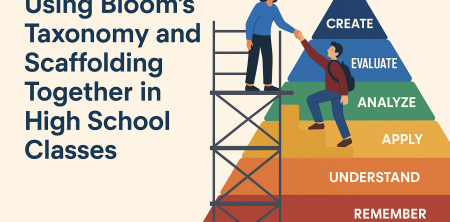
Each level in Bloom's Taxonomy builds on the previous one, making it easier for educators to design lessons that promote higher-order thinking. For instance, while remembering facts is a crucial skill, understanding those facts and applying them in new contexts is where deeper learning occurs. The taxonomy not only aids in lesson planning but also provides a clear framework for assessing students' understanding.
The Concept of Scaffolding
Scaffolding is a teaching technique that involves providing temporary support to students as they develop new skills or concepts. Just like physical scaffolding provides support for a building under construction, educational scaffolding helps learners construct their knowledge base. Initially introduced by psychologist Jerome Bruner, scaffolding aims to bridge the gap between what a student can do independently and what they can achieve with guidance.
This method involves breaking down complex tasks into manageable components, allowing students to build confidence as they master each step. For example, when introducing a challenging text, a teacher might first provide vocabulary support, followed by guided reading sessions, and subsequently allowing students to interpret the text independently. This gradual release of responsibility encourages students to take ownership of their learning.
Synergy Between Bloom's Taxonomy and Scaffolding
Using Bloom's Taxonomy in education alongside scaffolding creates a powerful synergy. Educators can structure lessons that not only push students to engage with higher levels of thinking but also provide the necessary support to help them succeed. For instance, if a teacher is focusing on the "Evaluating" level of Bloom's Taxonomy, they might scaffold the lesson by first guiding students through examples of evaluation criteria, then asking them to evaluate a piece of work collectively before moving on to independent evaluation.
Such an approach does more than just provide a structured pathway for learning; it also nurtures a culture of inquiry where students feel safe to explore and express their thoughts. By scaffolding the learning process, teachers enable students to tackle complex tasks with confidence, ensuring that they are not overwhelmed.
Practical Strategies for Implementation
Incorporating both Bloom's Taxonomy and scaffolding into high school classes requires thoughtful planning. Here are several practical strategies for teachers:
- Define Learning Objectives: Start by establishing clear learning objectives that align with different levels of Bloom's Taxonomy. For example, if the goal is for students to analyze a historical event, specify what analysis includes, such as identifying causes and effects.
- Gradual Release of Responsibility: Use a gradual release model where you first demonstrate a skill, then guide students through practice, and finally allow them to apply the skill independently.
- Utilize Questioning Techniques: Employ open-ended questions that target various levels of Bloom's Taxonomy. For example, ask students to evaluate alternative viewpoints on an issue or create a project that demonstrates their understanding of a concept.
- Feedback Loops: Provide timely and constructive feedback that helps students refine their thinking. Feedback not only reinforces learning but also encourages self-assessment, a key component of scaffolding.
- Collaborative Learning: Encourage group work where students can support each other. Scaffolding can occur naturally in group settings as peers share insights and approaches to problem-solving.
Case Studies: Success Stories from the Classroom
To illustrate the effectiveness of using Bloom's Taxonomy and scaffolding together, let’s look at some real-world examples from high school classrooms. These case studies highlight how educators have successfully implemented these strategies.
Case Study 1: Science Inquiry Projects
In a high school biology class, a teacher designed an inquiry project where students investigated local ecosystems. By beginning with a focus on the "Remembering" and "Understanding" levels of Bloom's Taxonomy, students first learned key concepts about ecosystems through direct instruction and readings. The scaffolding came through structured group discussions where students could ask questions and clarify their understanding of the material. (See: Bloom's Taxonomy overview.)
As the project progressed, the teacher gradually shifted the focus to higher levels of Bloom's Taxonomy like "Analyzing" and "Evaluating". Students were scaffolded through data collection and analysis by using templates and guided questions that helped them compare and contrast their findings with previous studies. Finally, they were tasked with creating a presentation about their project, synthesizing all the knowledge they had gained.
Case Study 2: Literature Analysis
In a high school English classroom, a teacher used Bloom's Taxonomy to guide students through the analysis of a challenging novel. Initially, students were asked to recall key details from the text (Remembering) and discuss their understanding of the characters’ motivations (Understanding). They progressed to tasks where they analyzed themes and made connections to contemporary issues (Analyzing).
To scaffold this process, the teacher provided graphic organizers to help students outline their thoughts and identify key quotes to support their analyses. As students became more confident, they were given prompts that required higher-order thinking, such as evaluating the author’s choices or creating alternative endings to the story (Creating).
Addressing Challenges and Misconceptions
While the integration of Bloom's Taxonomy and scaffolding can be transformative, it is not without its challenges. Educators may face misconceptions regarding the use of these strategies. For instance, some might believe that scaffolding limits students’ independence or that higher-order thinking cannot be taught directly.
In reality, scaffolding is about empowering students, equipping them with the tools they need to tackle tasks independently over time. Moreover, teaching higher-order thinking skills can be direct and intentional. Educators should focus on modeling critical thinking strategies and encouraging students to articulate their thought processes as they engage in learning activities.
Current Relevance in Education
The relevance of combining Bloom's Taxonomy and scaffolding is particularly pronounced in today’s educational landscape. As technology continues to evolve and educational paradigms shift, the need for critical thinking, creativity, and collaboration becomes increasingly essential. High school educators are tasked with preparing students for a complex world where merely recalling information is often insufficient.
Incorporating these frameworks not only aligns with modern pedagogical practices but also supports the development of 21st-century skills. By fostering an environment where students can analyze, evaluate, and create, teachers are equipping them for success beyond the classroom.
The Importance of Assessing Learning Outcomes
Assessment is a vital component of education, especially when implementing Bloom's Taxonomy in education and scaffolding. Effective assessment allows teachers to gauge the understanding of their students at various levels of the taxonomy, ensuring that all students progress in their learning journey. Through formative and summative assessments, educators can identify student strengths and areas for improvement, tailoring their teaching methods accordingly.
For instance, formative assessments like quizzes, reflective journals, and peer assessments can provide insights into how well students are grasping concepts. These assessments can be designed to target specific levels of Bloom's Taxonomy, encouraging students to engage in deeper thinking. By analyzing assessment results, teachers can adjust their scaffolding strategies to better support student learning.
Examples of Assessment Techniques
Here are some effective assessment techniques that align with Bloom's Taxonomy:
- Quizzes and Tests: Create quizzes that assess knowledge recall and comprehension. Use a mix of multiple-choice, short answer, and essay questions to cover different levels of Bloom's Taxonomy.
- Portfolios: Ask students to compile a portfolio of their work throughout the semester. This can include reflections, projects, and assessments that demonstrate their learning journey across all levels of the taxonomy.
- Peer Assessment: Have students assess each other’s work based on criteria that reflect higher-order thinking skills. This encourages students to engage critically with their peers' ideas and learn from each other.
- Self-Assessment: Encourage students to self-evaluate their understanding and skills. Use rubrics that encompass the different levels of Bloom's Taxonomy to guide their reflections.
Professional Development for Educators
For effective implementation of Bloom's Taxonomy in education and scaffolding, ongoing professional development is critical for teachers. Workshops, online courses, and collaborative learning communities can provide educators with the necessary tools and strategies to enhance their teaching practices.
Professional development programs can focus on various aspects, including: (See: Learning and education resources.)
- Understanding Bloom's Taxonomy: Training sessions can deepen educators' understanding of the taxonomy and how to apply it in lesson planning and assessments.
- Scaffolding Techniques: Educators can learn innovative scaffolding techniques that cater to diverse learners, ensuring that all students receive the support they need.
- Technology Integration: With the rise of digital learning tools, professional development should also cover how to integrate technology into teaching effectively, utilizing apps and platforms that facilitate scaffolded learning.
- Data Analysis: Training on how to analyze assessment data allows teachers to make informed decisions about their instruction and improve student outcomes.
Frequently Asked Questions (FAQ)
What is Bloom's Taxonomy?
Bloom's Taxonomy is a framework that categorizes educational goals into six levels of cognitive skills: Remembering, Understanding, Applying, Analyzing, Evaluating, and Creating. This hierarchy helps educators design lessons and assessments that promote higher-order thinking.
How can scaffolding be applied in the classroom?
Scaffolding can be applied in various ways, such as breaking down tasks into smaller, manageable steps, providing guided practice, offering tools and resources, and gradually releasing responsibility to students as they become more proficient.
Can Bloom's Taxonomy be used in all subjects?
Yes, Bloom's Taxonomy can be applied across all subjects and grade levels. Its flexible framework allows educators to create objectives and assessments that promote critical thinking in any discipline.
What are some examples of higher-order thinking questions?
Higher-order thinking questions might include: "How would you design an experiment to test this hypothesis?" (Applying), "What are the implications of this theory on modern society?" (Analyzing), or "Can you propose an alternative solution to this problem?" (Creating).
How can I measure student progress with Bloom's Taxonomy?
Student progress can be measured through various assessments designed to target different levels of Bloom's Taxonomy. Formative assessments, summative assessments, and student portfolios can provide valuable insights into student understanding and growth.
What role does technology play in scaffolding and Bloom's Taxonomy?
Technology can support scaffolding and Bloom's Taxonomy by providing interactive platforms for collaboration, access to resources, and tools for assessment. Apps and online tools can facilitate personalized learning experiences and enable students to engage in higher-order thinking.
Final Thoughts
The integration of Bloom's Taxonomy in education and scaffolding is not just a trend; it's an essential approach to cultivating critical thinkers and independent learners. As educators strive to meet the evolving needs of students, these frameworks provide a solid foundation for effective teaching and meaningful learning experiences. By continually refining these practices and embracing professional development, teachers can inspire their students to not only excel academically but also develop the skills necessary for success in life beyond school.
Exploring Different Learning Styles
When integrating Bloom's Taxonomy in education with scaffolding, it’s crucial to acknowledge the diverse learning styles present in any classroom. Each student has a unique way of processing information, and understanding these differences can enhance the effectiveness of teaching strategies. The VARK model (Visual, Auditory, Reading/Writing, Kinesthetic) categorizes learners into four primary styles.
For example, visual learners may benefit from diagrams and graphic organizers that align with the "Understanding" and "Analyzing" levels of Bloom's Taxonomy. In contrast, kinesthetic learners might thrive with hands-on activities that allow them to apply and create, fulfilling the "Applying" and "Creating" levels. Acknowledging these styles can help educators design lessons that are not only inclusive but also engaging. This tailored approach ensures that all students, regardless of their learning preferences, can progress through Bloom's Taxonomy's levels effectively.
Integrating Multicultural Perspectives
In today’s diverse classrooms, incorporating multicultural perspectives into Bloom's Taxonomy and scaffolding practices enriches the learning experience for all students. By integrating content that reflects various cultures, educators can foster an inclusive environment where students feel valued and connected to the material.
For instance, when analyzing historical events (Analyzing level), teachers can include multiple viewpoints from different cultures. This not only encourages critical thinking but also helps students understand the complexities of global issues. Scaffolding can be used here by providing background knowledge and context before diving into discussions, enabling students to engage meaningfully with the material. By valuing diverse perspectives, educators help develop empathy and a broader worldview among students, essential skills for navigating today's interconnected society.
Creating a Culture of Reflection
Encouraging a culture of reflection in the classroom is another way to enhance the implementation of Bloom's Taxonomy in education and scaffolding. Reflection allows students to think critically about their learning processes, which reinforces their understanding and promotes growth.
Teachers can facilitate reflection by incorporating regular reflective practices, such as exit tickets, journals, or group discussions. For instance, after completing a project, students can be asked to reflect on what they learned about the subject matter (Understanding), how they collaborated with peers (Applying), and what they would do differently next time (Evaluating). This practice not only solidifies their learning but also builds metacognitive skills, enabling them to become more self-directed learners.
Adapting to Remote Learning
With the rise of remote learning due to global events, adapting Bloom's Taxonomy in education and scaffolding to virtual platforms has become essential. Educators have had to rethink how they deliver content and engage students in meaningful ways online.
In a remote setting, scaffolding can be achieved through digital tools like video conferencing for real-time discussions and collaborative platforms for group projects. For example, using breakout rooms in virtual meetings allows students to discuss and analyze content in smaller groups, fostering deeper engagement. Moreover, educators can use online quizzes and platforms that provide immediate feedback, helping students reflect on their understanding and progress. This adaptability not only maintains the effectiveness of Bloom's Taxonomy but also ensures that learning continues, regardless of the environment.
Conclusion: A Holistic Approach to Education
The journey of integrating Bloom's Taxonomy in education with scaffolding is multifaceted and ongoing. By incorporating various strategies that address learning styles, multicultural perspectives, reflection, and adaptability, educators can create a more dynamic and inclusive learning environment. Such an approach not only aids in academic achievement but also prepares students for real-world challenges, ensuring they become critical thinkers and engaged citizens.
As we move forward in education, the combination of these frameworks will be crucial in cultivating an effective learning environment. Educators must continue to refine their practices, embrace innovation, and focus on the holistic development of their students. Ultimately, by fostering a culture of inquiry and supporting diverse learning needs, teachers can inspire the next generation to excel academically and develop the skills necessary for success in life beyond the classroom.
```
Trending Now
Frequently Asked Questions
What is Bloom's Taxonomy in education?
Bloom's Taxonomy is a hierarchical framework developed by Benjamin Bloom that categorizes educational goals into levels of complexity. The revised version includes six levels: Remembering, Understanding, Applying, Analyzing, Evaluating, and Creating, promoting a shift towards active learning and higher-order thinking.
How does scaffolding work in the classroom?
Scaffolding is a teaching technique that provides temporary support to students as they learn new skills or concepts. It helps bridge the gap between what a student can do independently and what they can achieve with guidance, allowing for gradual skill development.
What are the benefits of using Bloom's Taxonomy and scaffolding together?
Combining Bloom's Taxonomy with scaffolding enhances student engagement and fosters deeper understanding. This approach allows educators to design lessons that promote critical thinking and assess students' comprehension at various levels, ultimately improving learning outcomes.
How can teachers implement Bloom's Taxonomy in lesson planning?
Teachers can implement Bloom's Taxonomy by designing lessons that build on each level of the taxonomy. This involves creating activities that encourage students to progress from basic knowledge recall to higher-order thinking skills like analysis and creation.
What is the relationship between Bloom's Taxonomy and critical thinking?
Bloom's Taxonomy promotes critical thinking by encouraging students to move beyond mere memorization to higher levels of thinking such as analyzing, evaluating, and creating. This progression fosters deeper understanding and the ability to apply knowledge in various contexts.
Have you experienced this yourself? We'd love to hear your story in the comments.

