```html
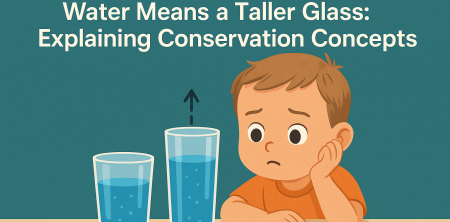
When young children look at a glass filled with water and see a taller glass, they often equate that with more water inside. This common misconception points to critical developmental stages in their understanding of conservation concepts in early childhood education. Understanding these concepts is crucial as it shapes how children perceive volume, quantity, and ultimately, the world around them.
What Are Conservation Concepts?
Conservation concepts refer to the understanding that certain properties of objects remain the same even when their form or arrangement changes. For instance, a child who grasps conservation recognizes that a ball of clay maintains its mass whether it’s shaped like a ball or flattened into a pancake. In early childhood education, these concepts are pivotal as they lay the groundwork for mathematical and scientific thinking in later years.
The Developmental Stages of Conservation Understanding
Jean Piaget, a renowned developmental psychologist, outlined several stages of cognitive development in children, emphasizing how they gradually come to understand conservation concepts. During the preoperational stage (approximately ages 2 to 7), children are characterized by egocentrism and a lack of understanding about the permanency of certain properties.
In this stage, children may believe that changing the shape or appearance of an object alters its quantity. For example, when water is poured from a short, wide glass into a tall, narrow one, a child may insist that the taller glass has more water simply because it appears taller, despite the fact that both glasses contain the same amount of liquid.
Why Children Struggle with Conservation Concepts
Several factors contribute to children’s difficulties with conservation concepts. One primary reason is their reliance on perceptual cues rather than logical reasoning. Children tend to focus on the immediate appearance of objects instead of understanding abstract concepts like volume or mass.
Additionally, young children are often still developing their verbal skills, which can hinder their ability to articulate or understand explanations about conservation. They may also have limited experience with measurements and comparisons, making it challenging to grasp how different shapes can hold equivalent amounts.
Practical Examples of Conservation Concepts
To illustrate how young children typically misconstrue conservation concepts, consider the following scenario involving water and two glasses. If a child sees water in a short, wide glass and then observes it poured into a tall, narrow glass, they might exclaim, "Look! It's taller, so there's more water!" This reaction highlights their focus on visual perception over logical reasoning.
Another example can be seen with solid objects, like playdough. If a child rolls a ball of playdough into a flat shape, they might believe they’ve created more playdough because it takes up more space. Their understanding of conservation becomes clearer when they learn that the amount of playdough remains constant, regardless of its shape.
How to Teach Conservation Concepts in Early Childhood Education
Educators can play a vital role in helping children develop a proper understanding of conservation concepts. Activities that encourage exploration and hands-on learning can significantly enhance children's comprehension. Here are a few strategies:
- Use Concrete Materials: Engage children with tangible objects like blocks, water, or clay. Allow them to manipulate these items, giving them the opportunity to see firsthand how quantities remain the same despite changes in shape.
- Encourage Questioning: Create an environment where children feel comfortable asking questions. When they express misconceptions, guide them through reasoning processes that lead to the correct understanding.
- Incorporate Play: Use games and playful activities to reinforce conservation concepts. For example, pouring different liquids into various containers can help children visually see that the amount remains unchanged.
- Storytelling: Use stories and characters to illustrate conservation concepts. Narratives can help children connect emotionally and cognitively to the ideas being taught.
The Role of Educators and Parents in Understanding Conservation
Parents and educators must understand that children’s misconceptions about conservation concepts are natural and part of their developmental journey. Patience and encouragement are essential as they navigate through these concepts. Educators can collaborate with parents to create a consistent learning experience at home and in the classroom.
Parent-child activities that focus on measuring, sorting, or comparing can further reinforce these lessons. For instance, cooking together can expose children to measurements and quantities in a fun and interactive way. (See: Conservation in psychology.)
Current Relevance and Application of Conservation Concepts
Understanding conservation concepts in early childhood education is not just a matter of cognitive development; it has implications in various areas of learning and societal understanding. In an era where environmental education is gaining prominence, teaching children about conservation also includes understanding resources and sustainability.
For example, explaining why it's important not to waste water aligns with conservation concepts, teaching children the importance of resource management. They can begin to understand that conserving water is not just about its physical amount but about its significance as a resource.
Integrating Technology into Teaching Conservation Concepts
In today's digital age, technology can enhance the learning experience surrounding conservation concepts. Interactive apps and educational games can provide visual and tactile experiences that make abstract concepts more concrete.
For example, simulations that show how pouring water from one container to another maintains the same volume can help reinforce these ideas. Virtual tools can also track children’s progress and help educators identify areas where individual children might struggle.
Challenges in Teaching Conservation Concepts
While teaching conservation concepts is essential, it’s not without its challenges. One major obstacle is the varying developmental stages among children. Not all children reach the understanding of conservation at the same time, which can complicate classroom dynamics. Educators must be prepared to tailor their approaches based on individual needs.
Moreover, misconceptions may persist if not addressed adequately. Children might fixate on their initial beliefs, making it crucial for educators to foster an environment of exploration and reassessment. Continuous reinforcement of these concepts through varied teaching methods is key.
The Future of Conservation Concepts in Education
The integration of conservation concepts in early childhood education is poised to evolve further as educational methodologies advance. As educators continue to explore innovative strategies, the focus on hands-on learning and exploratory play will likely gain even more traction.
Moreover, with the increasing understanding of the importance of environmental sustainability and conservation, these concepts may expand beyond the classroom. They can be woven into community programs that promote responsible resource use and environmental stewardship.
Why Conservation Concepts Matter Beyond the Classroom
Understanding conservation concepts is not just an academic exercise. It plays a crucial role in shaping the values and behaviors of future generations. As children learn about conservation, they also learn about responsibility and respect for their environment.
Research has shown that children who are educated about conservation at an early age are more likely to develop sustainable habits as adults. For instance, they may grow to be more mindful of recycling, conserving energy, and respecting natural resources. This foundational knowledge can lead to a stronger commitment to environmental stewardship as they age.
Statistics on Conservation Education
Numerous studies highlight the importance of integrating conservation education into early childhood curriculums. According to a report by the National Association for the Education of Young Children (NAEYC), more than 80% of early childhood educators believe that teaching children about the environment is essential for their development.
Furthermore, a study published in the journal "Environmental Education Research" found that children who participated in hands-on conservation activities showed a 40% increase in their understanding of basic ecological concepts. This type of experiential learning is key in helping them grasp the significance of conservation concepts.
Expert Perspectives on Conservation Concepts
Experts in child development emphasize the importance of teaching conservation concepts through a lens of wonder and inquiry. Dr. Susan H. Tickle, an early childhood education researcher, asserts that "children are naturally curious about the world around them. By engaging them in conservation concepts, we not only teach them valuable knowledge but also nurture their innate curiosity." (See: Understanding child development.)
Moreover, educators are encouraged to build on children's interests. For instance, if a child shows fascination with nature, educators can incorporate lessons on ecosystems, plant life, and the importance of biodiversity into their learning activities.
Practical Activities to Reinforce Conservation Concepts
Implementing engaging activities can significantly enhance children's understanding of conservation concepts. Here are some practical suggestions:
- Water Play Stations: Set up a water play area where children can pour, measure, and compare water in different containers. This tactile experience helps solidify their understanding of volume and quantity while also providing a fun, sensory-rich activity.
- Nature Walks: Organize walks in nearby parks or natural areas. Encourage children to observe different plants, animals, and their habitats. Discuss how every living thing plays a role in the ecosystem and the importance of preserving these environments.
- Art Projects: Use recycled materials for art projects. This not only promotes creativity but also teaches children about recycling and the significance of reducing waste.
- Gardening: Involve children in planting and caring for a garden. This hands-on experience can teach them about growth, the importance of plants, and sustainability.
FAQs about Conservation Concepts in Early Childhood Education
What age should children start learning about conservation concepts?
Children can start learning about conservation concepts as early as two years old. At this age, simple activities like sorting objects or engaging in water play can introduce them to basic ideas about volume and quantity.
How can I assess a child's understanding of conservation concepts?
Assessing understanding can be done through observation and informal assessments. For instance, you can ask children to compare two containers of liquid or different shapes of playdough and explain their reasoning. Their ability to articulate their thought process can give insights into their understanding.
How does understanding conservation concepts benefit children in the long term?
Understanding conservation concepts helps children develop critical thinking and problem-solving skills. It lays a foundation for later mathematical and scientific reasoning. Additionally, it fosters a sense of responsibility towards the environment and community.
Are there any apps that can help teach conservation concepts?
Yes, many educational apps are designed to teach children about conservation and environmental science. Look for apps that incorporate interactive elements, such as simulations and games that explore environmental themes and conservation principles.
What if a child doesn’t grasp conservation concepts right away?
It's important to remember that every child develops at their own pace. If a child struggles with conservation concepts, continue to provide opportunities for hands-on activities and discussions. Revisit concepts frequently and use diverse methods of reinforcement to ensure understanding.
Common Misconceptions About Conservation Concepts
Even among educators and parents, there are several misconceptions regarding conservation concepts. One common misunderstanding is that all children will grasp these ideas at the same age. In reality, children may take different amounts of time to understand these concepts based on their unique developmental trajectories. This variability means that educators should avoid a one-size-fits-all approach to teaching conservation.
Another misconception is that environmental education is solely about conservation of nature and biodiversity. While those are critical components, conservation concepts also relate to resources like water, energy, and materials. Teaching children about recycling and responsible consumption is equally vital to their overall understanding of conservation.
Integrating Conservation Concepts Across the Curriculum
Conservation concepts can be integrated into various areas of education, not just science. For instance, in math, children can explore measurements related to volume and area while discussing how different shapes can hold the same amount. In art, projects can focus on using recycled materials, reinforcing the importance of reusing resources.
Language arts can also incorporate conservation concepts by including stories and texts that feature themes of environmental stewardship. Through discussions and creative writing, children can express their understanding and feelings about conservation, making the concept more relatable and impactful.
The Impact of Peer Interaction on Learning Conservation Concepts
Peer interaction plays an essential role in learning conservation concepts. When children work together on tasks, they have opportunities to discuss their ideas and challenge each other’s thinking. Cooperative play can also lead to the discovery of new perspectives, as children share different ways of understanding the same concepts.
For example, if one child believes that a tall bottle must hold more juice than a short one, another child may point out that both bottles were filled from the same jug. These dialogues can promote critical thinking and deeper understanding as they collaboratively explore conservation concepts.
Case Studies in Early Childhood Education
Case studies provide valuable insights into effective methods for teaching conservation concepts in early childhood education. For instance, a preschool in Boston implemented a hands-on environmental curriculum where children engaged in gardening and composting activities. Feedback showed a significant increase in children's awareness about waste and resource management, highlighting the effectiveness of experiential learning.
Another study in a rural school demonstrated how integrating conservation concepts into everyday lessons led to improved critical thinking skills in students. By relating these concepts to their own lives and community, children were better able to connect the dots and understand the relevance of conservation in a broader context.
Future Trends in Conservation Concepts in Education
As the world becomes more aware of climate change and its impacts, early childhood education is likely to evolve to incorporate even more comprehensive approaches to conservation concepts. This could include greater emphasis on emotional intelligence and empathy towards nature, encouraging children to develop personal connections with their environment.
Additionally, educators may start to incorporate more interdisciplinary approaches that blend science with the arts, technology, and social studies, offering children a well-rounded perspective on conservation. Training for educators may also evolve to equip them with the skills needed to teach these increasingly complex concepts effectively.
Conclusion
Understanding conservation concepts in early childhood education is vital for cognitive development, shaping the way children perceive the world. As they navigate their developmental journey, early educators and parents play crucial roles in guiding them through their misconceptions. Through exploration, questioning, and interactive learning, children can develop a strong foundation in understanding volume, quantity, and resource management. As we invest in these educational strategies, we prepare children for a future where they not only understand conservation concepts but also carry them into adulthood, impacting their interactions with the world.
```
Trending Now
Frequently Asked Questions
What are conservation concepts in early childhood education?
Conservation concepts refer to the understanding that certain properties of objects remain constant even when their form or arrangement changes. For example, a child recognizes that a ball of clay maintains its mass regardless of its shape, which is crucial for developing mathematical and scientific thinking.
Why do young children think a taller glass has more water?
Young children often equate a taller glass with more water due to their reliance on perceptual cues rather than logical reasoning. They focus on the immediate appearance of the glass rather than understanding that the volume of liquid remains the same regardless of the glass's shape.
What are the stages of conservation understanding in children?
Jean Piaget outlined several stages of cognitive development, with the preoperational stage (ages 2 to 7) being crucial for understanding conservation concepts. During this stage, children struggle with the idea that changing an object's appearance does not alter its quantity.
How can parents help children understand conservation concepts?
Parents can help children understand conservation concepts by engaging them in hands-on activities that involve measuring and comparing different containers. Discussing and demonstrating how volume remains constant despite changes in shape can reinforce these critical concepts.
What role does egocentrism play in children's understanding of conservation?
Egocentrism, a characteristic of the preoperational stage, affects children's understanding of conservation by making them focus on their own perspective. This limits their ability to grasp that others may perceive the same object differently, contributing to misconceptions about quantity and volume.
Agree or disagree? Drop a comment and tell us what you think.

