```html
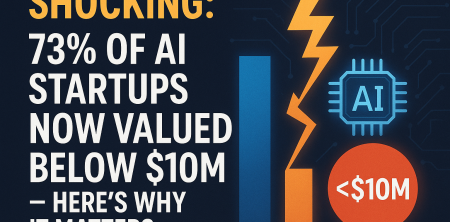
The landscape of AI startup valuation has taken a dramatic turn as a recent report reveals that a staggering 73% of AI companies founded before 2024 are now trading below $10 million. This significant decline from an average valuation of $150 million just two years ago has sparked widespread investor panic and outrage. The reasons behind this valuation crash are multifaceted, ranging from overhyped promises to a sudden market correction as major tech firms pivot to developing in-house AI solutions instead of pursuing acquisitions. Let’s explore what led to this crisis and the implications for the future of AI startups.
1. The Rise and Fall of AI Startup Valuation
AI startups experienced a meteoric rise in valuations during the early 2020s, driven by the excitement surrounding transformative technologies like machine learning and natural language processing. Investors flooded the market, lured by the potential for enormous returns. However, as the bubble began to deflate, the harsh reality of the market set in. Many startups, previously valued in the hundreds of millions, are now struggling to maintain even a $10 million valuation.
This drastic shift underscores the volatility of the tech sector, especially for startups in a rapidly evolving field like AI. While the promise of automated solutions and improved efficiencies was compelling, the disconnect between expectations and real-world results has become glaringly evident. This collapse has left many investors questioning their strategies and the future viability of AI technologies.
2. Key Factors Driving the Valuation Crash
Several key factors have contributed to the downfall of AI startup valuations. First and foremost, the overhyped promises often made by these companies have led to unrealistic expectations. Many ventures launched with grand claims about their capabilities but failed to deliver viable products. As a result, investors who once viewed these startups as sure bets are now hesitant and skeptical.
Additionally, the sudden shift in major tech firms' strategies has played a critical role. Companies like Google and Microsoft have increasingly opted for internal development of AI technologies, rather than acquiring startups. This pivot has diminished the potential for lucrative exits for early-stage investors, further exacerbating the panic in the market. As venture capitalist Mark Stevens aptly put it, we are witnessing 'the biggest startup disaster since 2000.'
3. Investor Panic and Social Media Outrage
The revelation of these plummeting valuations has ignited a wave of investor panic, particularly among those who still hold shares in these beleaguered startups. The emotional toll of seeing once-promising investments lose value has led to a flurry of discussions on social media platforms. Topics like 'AI startup crash' and 'AI bubble 2026' have seen a 400% spike in search queries, highlighting the intense curiosity and concern surrounding this phenomenon. See also Asian AI startup innovations.
Investors are venting their frustrations and fears online, creating a digital echo chamber that amplifies anxiety. Social media has become a battleground for opinions, with users debating the future of AI and its role in the investment landscape. This collective anxiety is palpable and serves to illustrate how interconnected the tech community has become, especially during times of crisis.
4. Lessons from the AI Startup Valuation Crash
The current crisis offers several crucial lessons for investors and startup founders alike. One of the primary takeaways is the importance of due diligence. Many investors rushed to fund AI startups without fully understanding their business models or technological capabilities. As the saying goes, if it sounds too good to be true, it probably is. This cautionary tale emphasizes the need for thorough assessment before making investment decisions.
Moreover, the crash highlights the risks of relying heavily on hype and promises rather than tangible results. Startups must focus on building solid, scalable products while managing investor expectations. Transparency in operations and realistic goal setting will be vital for regaining investor confidence moving forward.
5. Reactions from Industry Leaders
The AI startup valuation crash has elicited strong reactions from industry leaders. Sarah Chen, the former CEO of NeuralFlow, has been vocal about the impact of what she calls 'reckless VC funding.' Chen argues that the inflating of valuations without supporting evidence led to a bubble that has now burst, leaving many startups unable to meet their promises.
Some VC firms have begun reassessing their strategies in light of the recent downturn. A more cautious approach appears to be on the horizon, with investors focusing on established players or companies with proven products rather than speculative ventures. This shift may lead to a more sustainable investment climate in the long run, as the focus returns to fundamentals rather than hype.
6. The Future of AI Startups: Opportunities Amidst Challenges
Despite the current turmoil, opportunities still exist for AI startups willing to adapt and innovate. While many companies are facing valuation challenges, those that can pivot to meet genuine market needs may find success. Startups focusing on practical applications of AI, such as healthcare solutions or supply chain optimization, may provide investors with more confidence. (See: AI startup valuation crash.)
Additionally, the lessons learned from this crash could lead to a more mature and responsible startup ecosystem. Founders who prioritize sustainable growth and transparency in their operations may emerge as the new leaders in the space. As the dust settles, a new wave of innovative companies could reshape the AI landscape, focusing on real-world applications rather than speculative hype.
7. Regulatory Considerations and Market Dynamics
The AI sector is also facing increased scrutiny from regulators and policymakers. As valuations plummet, regulators are paying closer attention to the practices of startups and the venture capitalists backing them. This heightened scrutiny could lead to new regulations aimed at protecting investors and promoting ethical practices within the industry.
Furthermore, the dynamics of the labor market are shifting as companies reassess their need for AI solutions in light of the economic climate. While the initial excitement around AI technologies remains, organizations are now more discerning about their investments in these solutions. Startups must be prepared to demonstrate clear value propositions to secure funding and partnerships.
8. Insights from Venture Capitalists
Venture capitalists are taking a hard look at the AI landscape in light of these valuation drops. Many are stressing the importance of demonstrating tangible traction and clear revenue models. Investors are no longer willing to throw money at companies based solely on hype or potential; they want to see validated business models and evidence of market demand.
This shift signals a more cautious approach to venture capital, with investors looking for startups that can not only survive but thrive in a competitive environment. Companies that can clearly articulate their value proposition and demonstrate a path to profitability will be better positioned to attract investment in the future.
9. Strategies for Surviving the Valuation Crisis
For startups grappling with low valuations, developing a robust strategy is essential for survival. One effective approach is to pivot towards niche markets where competition may be less fierce, allowing for greater visibility and growth potential. By narrowing their focus, startups can differentiate themselves and build a stronger brand identity.
Additionally, fostering a culture of innovation within the organization can help teams stay ahead of trends and adapt their offerings to meet evolving customer needs. Engaging with customers for feedback and maintaining open lines of communication can also provide invaluable insights that drive product development and marketing strategies.
10. The Long-Term Implications of the AI Valuation Crash
The long-term implications of the AI startup valuation crash will likely reverberate throughout the tech industry for years to come. As investors become more risk-averse, the landscape for funding and growth will shift, favoring those companies that can demonstrate sustainability and real impact.
The shakeout may also lead to a consolidation of the AI market, with stronger companies acquiring weaker ones, ultimately streamlining the sector. While the current situation is challenging, it has the potential to reshape the AI startup ecosystem for the better, leading to more responsible investments, realistic valuations, and practical applications of technology.
11. Comparative Analysis: AI Startups vs. Traditional Tech Startups
The valuation dynamics for AI startups can be starkly contrasted with those of traditional tech startups. Traditional tech companies often have a more established path to revenue generation and market penetration. For instance, software companies with clear subscription models or SaaS offerings tend to have predictable revenue streams.
In contrast, many AI startups lack a clear monetization strategy and often rely on pilot projects or partnerships that take time to yield results. A study by PitchBook indicates that AI startups have faced more significant valuation fluctuations compared to their traditional tech counterparts, who generally enjoy steadier growth trajectories.
This difference highlights the importance of having a strong business model in place and outlines why AI startups must focus on not just technological innovation, but also on sustainable revenue generation methods. Examples from the traditional sector, like Adobe, which transitioned to a subscription model, can serve as a roadmap for AI startups looking to stabilize their valuations.
12. Statistics on AI Startup Failures
A recent report from CB Insights revealed that around 70% of startups, including AI-focused ventures, fail within the first 10 years. The reasons range from lack of market need to running out of cash. Within the AI sector, specific statistics show that approximately 40% of AI startups fail due to issues related to scaling their technology and securing funding for further development.
This underscores the pressing need for effective business strategies and robust funding models. Investors are increasingly favoring companies that have demonstrated traction and can show a clear path to profitability, highlighting a shift in how AI startups must position themselves. (See: impact of AI on startups.)
13. FAQ: Understanding AI Startup Valuation
What factors contribute to the valuation of an AI startup?
Several factors contribute to the valuation of an AI startup, including the uniqueness of the technology, the market potential, the team's experience, revenue models, and existing partnerships or clients. Investors look for tangible evidence of traction and scalability.
How can an AI startup improve its valuation?
Improving valuation involves focusing on building a solid product that addresses real market needs, demonstrating revenue generation capability, and establishing partnerships that enhance credibility. Clear communication of the business model and regular engagement with investors can also play a crucial role.
Are there specific valuation metrics for AI startups?
Yes, common valuation metrics for AI startups include revenue multiples, discounted cash flow (DCF), and market comparables. Given the speculative nature of AI technologies, many investors also consider user growth and customer acquisition costs as part of their evaluation.
What are the risks associated with investing in AI startups?
The risks include market volatility, the potential for overhyped expectations, the uncertainty of technological advancements, and competition from larger tech companies. Investors should conduct thorough due diligence and assess both the potential and the challenges of the startups they are considering.
Can AI startups recover from low valuations?
Yes, AI startups can recover from low valuations by pivoting to meet market needs, focusing on product development, and improving their business models. Engaging transparently with investors and demonstrating consistent growth can help regain confidence and rebuild valuations over time.
14. The Role of Ecosystems in AI Startup Success
The ecosystem surrounding AI startups—comprising investors, accelerators, research institutions, and industry partnerships—plays a critical role in their success. A robust ecosystem can provide essential resources, mentorship, and networking opportunities, which are vital for startups navigating challenging market conditions.
For instance, regions like Silicon Valley have demonstrated the power of a supportive network, where startups benefit from proximity to experienced investors and successful tech giants. Collaborations between academia and startups can also foster innovation and attract funding, creating a fertile environment for growth.
15. Final Thoughts on AI Startup Valuation
The landscape of AI startup valuation is indeed turbulent, but it also offers valuable lessons for investors and entrepreneurs alike. By focusing on sustainable growth, building credible business models, and leveraging ecosystem support, AI startups can navigate the ongoing challenges and emerge stronger. Investors, on the other hand, must approach this sector with caution, emphasizing thorough due diligence and realistic expectations.
As the industry matures, there’s potential for a more stable and sustainable environment where AI innovations can flourish, creating a positive ripple effect across various sectors. The journey ahead may be fraught with challenges, but with strategic adaptations and a commitment to delivering real value, AI startups may very well rewrite their narratives and secure their place in the tech landscape.
16. Emerging Trends in AI Startup Valuation
As AI technology continues to evolve, so too do the trends influencing startup valuations. One emerging trend is the growing focus on ethical AI, which emphasizes the importance of fairness, accountability, and transparency in AI development. Startups that prioritize these principles are likely to attract investment and enhance their valuations, as investors increasingly seek socially responsible opportunities.
Another trend is the integration of AI with other technological advancements, such as blockchain and IoT. This convergence opens new avenues for innovation and can create unique value propositions that boost valuations. For instance, startups working on AI-driven predictive analytics for supply chain management not only showcase AI capability but also leverage big data to enhance decision-making processes.
Additionally, environmental, social, and governance (ESG) criteria are becoming significant factors in valuation assessments. Investors are keen to support companies that contribute positively to society and the environment, which could lead to higher valuations for startups aligned with these values. (See: rise and fall of tech valuations.)
17. The Global Landscape of AI Startup Valuation
The valuation landscape for AI startups varies significantly across different regions. In the United States, the competition is fierce, with numerous players vying for attention and funding. However, this saturation can also lead to inflated valuations driven by hype. In contrast, emerging markets, such as Southeast Asia and parts of Africa, present unique opportunities for AI startups focused on solving local challenges, potentially leading to more sustainable growth and valuations that reflect their true market potential.
In Europe, regulatory frameworks around AI are becoming more stringent, which can impact valuations both positively and negatively. Startups that can navigate these regulations effectively may find themselves better positioned to attract funding and partnerships, whereas those that struggle might face challenges in maintaining their valuations.
18. The Role of Customer Validation in AI Startup Valuation
Customer validation plays a crucial role in determining the valuation of an AI startup. Startups that engage in active market research to understand customer needs and pain points can develop solutions that resonate more effectively, leading to higher demand. For example, startups that pilot their technologies with potential customers gain invaluable feedback—this not only helps refine their offerings but also demonstrates market interest to investors.
Case studies of successful AI startups often highlight how early customer engagement contributed to their growth trajectories. By showcasing real-world applications and measurable outcomes, these startups can build a compelling narrative that enhances their valuation.
19. Future Investment Strategies for AI Startups
Looking ahead, AI startups may need to adopt innovative investment strategies to attract funding in a cautious market. One approach is to form strategic partnerships with established companies, which can provide not only financial backing but also valuable market insights and resources. These collaborations can help startups test their products in real-world scenarios, enhancing credibility.
Another strategy involves leveraging government grants and funding programs designed to promote technological innovation. Many governments are increasingly supportive of AI initiatives, and startups that align their goals with these programs can access additional financial support.
Finally, engaging in community-building efforts can bolster a startup's presence in the ecosystem. By participating in forums, conferences, and industry events, startups can network with potential investors, collaborators, and customers, elevating their visibility and improving their chances of securing investments.
20. Conclusion: Adapting to a New Valuation Reality
The landscape of AI startup valuation is shifting, and adapting to this new reality will be essential for ongoing success. As the excitement around AI technologies continues amidst the valuation challenges, startups must focus on delivering real value and demonstrating sustainability. Investors, on their part, will need to refine their strategies, emphasizing careful evaluation and responsible investment practices. (unprecedented funding surge)
By fostering a culture of innovation, collaboration, and transparency, AI startups can navigate these turbulent waters and position themselves for future success. The journey ahead may hold obstacles, but with a strategic focus and a commitment to meaningful solutions, the potential for growth remains strong.
```
Trending Now
Frequently Asked Questions
Why are AI startups valued below $10 million now?
AI startups are currently valued below $10 million due to a significant market correction after a period of overhyped expectations. Many companies failed to deliver on their promises, leading to a drastic decline in investor confidence and valuations, which previously averaged $150 million.
What caused the decline in AI startup valuations?
The decline in AI startup valuations can be attributed to several factors, including overhyped promises, a shift in investor sentiment, and major tech firms opting to develop in-house AI solutions instead of acquiring startups. This has resulted in many startups struggling to maintain viability.
How did AI startup valuations change over the years?
AI startup valuations saw a meteoric rise in the early 2020s, often reaching hundreds of millions. However, a recent report indicates that 73% of these companies are now valued below $10 million, reflecting a significant correction in the market as expectations have become misaligned with reality.
What are the implications of falling AI startup valuations?
Falling AI startup valuations raise concerns about the future viability of many companies in the sector. This situation may lead to fewer investment opportunities, a slowdown in innovation, and potential job losses as startups struggle to attract funding and stay afloat.
Is the AI startup market still worth investing in?
While the AI startup market has faced challenges, it may still hold potential for investors willing to navigate the risks. However, the recent decline in valuations highlights the importance of thorough due diligence and realistic assessments of a startup's capabilities and market fit.
What did we miss? Let us know in the comments and join the conversation.


0 Responses