```html
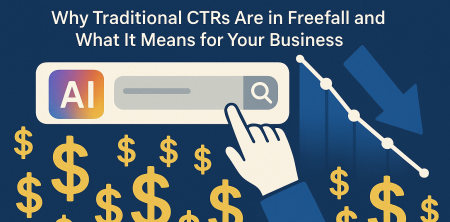
Google's recent announcement regarding its AI search clicks is nothing short of a digital upheaval. The tech giant revealed that it now generates billions of weekly clicks through its AI Search feature. However, this seemingly positive development is accompanied by a staggering 58% drop in traditional click-through rates (CTR) for standard search results. This paradox raises critical questions about how users interact with online content and what it means for businesses that depend on organic traffic.
The Rise of AI Search Clicks
AI search clicks have quickly become a significant aspect of online behavior, reflecting a transformative shift in how users seek information. Google's ability to generate billions of these clicks indicates an increasing reliance on AI to provide quick and relevant responses to queries. The implications of this are profound, especially for digital marketers and SEO professionals.
The AI Search feature offers users a streamlined experience, often summarizing information directly within the search results. This efficiency can lead to several benefits: users find answers faster, and their queries are often resolved without needing to visit multiple websites. While this is a win for the consumer, it presents a complicated challenge for businesses that rely on traditional click-based revenue models.
Understanding the Drop in CTR
Despite the booming AI search clicks, the accompanying 58% decline in traditional CTR is alarming. This reduction means that while more searches are occurring, many less result in actual site visits. So, why is this happening?
- The AI Search feature often provides comprehensive responses within the search results, reducing the need for users to click through to external sites.
- With the growing presence of AI-generated snippets and summaries, users might find the information they need without further exploration.
- Increased competition from other platforms offering similar AI functionalities is leading to fragmented traffic across the web.
As users gravitate towards these AI-driven experiences, traditional CTR metrics are rendered less relevant. Marketers must now grapple with a reality where more searches don’t equate to more web traffic.
The Economic Impact on Digital Advertising
The implications of falling CTR are profound for digital advertisers. For many, a significant portion of their revenue is derived from traffic generated through organic search. With Google's AI capabilities pulling potential clicks away, businesses find themselves in a precarious position. Here are a few potential impacts:
- Revenue Disruption: Advertisers may experience a direct decrease in ad revenue as users interact with AI tools rather than click on ads or organic results.
- Budget Reallocation: Companies may need to reassess their advertising budgets and strategies, potentially moving funds from traditional search ads to more innovative digital marketing strategies.
- Increased Competition: As companies scramble to adapt, the competition for digital ad space could intensify, driving up costs.
With such drastic changes occurring, being reactive might not be enough. Businesses need to proactively rethink their advertising and marketing strategies to keep pace with the shifting landscape.
Adapting to the New Reality of AI Search
So, what can businesses do to adapt to this new model of AI search clicks? Here are a few strategies worth considering:
- Optimize for AI: Companies should enhance their content to be more compatible with AI search algorithms. This includes focusing on keyword optimization for AI-driven queries and ensuring that content is easily digestible and relevant.
- Focus on User Experience: Improving site speed, mobile responsiveness, and overall user experience can entice users to click through, even with direct answers available from AI.
- Engage with Emerging Platforms: As users explore various platforms, consider advertising on social media or video platforms that may deliver traffic indirectly influenced by AI search.
By adopting these strategies, businesses can better position themselves to capture traffic, even in a landscape dominated by AI.
Google's Response to the Changing Landscape
Google has recognized the shifting paradigm and is actively working to address these disruptions. Recent updates include enhancements to subscription connectivity and preferred source selection. These features aim to give users more control over their search experience and might create new opportunities for businesses. For more on this, see SEO strategies for LMS.
For instance, subscription connectivity allows users access to premium content seamlessly, which may encourage them to engage with specific brands or services. Meanwhile, preferred source selection can help businesses gain visibility in an AI-driven environment. However, these updates are still works in progress, and how effectively they will mitigate the drop in CTR remains to be seen. (See: Google's AI search transformation.)
SEO Strategies for the AI Era
As the efficacy of traditional SEO metrics comes into question, businesses must rethink their SEO strategies for the AI era. Here are several key considerations:
- Embrace Structured Data: Implementing structured data can help search engines understand content better, making it more likely to be featured in AI-generated results.
- Content Diversification: Focusing on diverse content formats, such as video and interactive content, can improve engagement and encourage clicks.
- Local SEO Focus: As AI becomes more localized, businesses should optimize their local SEO to attract nearby customers searching for relevant services.
These strategies can help businesses navigate an AI-centric landscape and maintain visibility in a world where traditional CTRs are declining.
The Future of Digital Marketing
The drop in CTR while AI search clicks skyrocket signals a seismic shift in digital marketing. It calls into question the effectiveness of long-standing SEO practices and encourages a reevaluation of how companies engage with their audiences.
As AI continues to grow and evolve, businesses must remain agile and open to change. Embracing innovative strategies and adapting to new consumer behaviors will be essential for survival in this rapidly transforming space.
Case Studies: Brands Adapting to Change
Examining how brands are successfully navigating this shift can provide valuable insights. Companies like Spotify, for example, have leveraged AI to personalize user experiences, increasing engagement. Similarly, businesses in the e-commerce space have begun to invest in AI tools that enhance their product recommendations, driving user interactions even amid the declining CTR.
These case studies illustrate that while the challenge posed by AI search clicks is significant, it can be met with innovation and creativity. Brands willing to evolve their strategies can find new pathways to success.
Frequently Asked Questions (FAQ)
What are AI search clicks?
AI search clicks refer to the user interactions resulting from AI-generated responses in search engines, such as Google's AI Search. These clicks often occur without the need for users to visit additional websites because the AI summarizes relevant content directly in the search results.
Why is there a decline in CTR with the rise of AI search clicks?
The decline in CTR (click-through rates) can be attributed to AI's ability to provide users with comprehensive answers directly within search results. As users find the information they need without leaving the search page, traditional CTR metrics decrease significantly.
How can businesses adapt to the changes brought by AI search clicks?
Businesses can adapt by optimizing content for AI algorithms, improving user experience on their websites, and diversifying their marketing strategies. Engaging with social media and video platforms can also help capture traffic influenced by AI search results.
What impact does AI search have on digital advertising?
AI search can disrupt digital advertising revenue as users are less likely to click on traditional ads or organic results. This necessitates a reevaluation of advertising budgets, potentially leading to increased costs in digital ad spaces due to heightened competition.
Are there new SEO strategies for the AI era?
Yes, businesses should focus on structured data implementation, diversify content formats, and enhance local SEO efforts. These strategies will better position businesses in an evolving digital landscape where traditional metrics may not apply.
What is the future of digital marketing with AI?
The future of digital marketing is likely to be increasingly integrated with AI technologies. Businesses must adapt quickly, embracing new tools and strategies to engage with consumers effectively in a landscape where AI search plays a significant role. (See: importance of online information accuracy.)
Expert Perspectives on AI Search Clicks
Industry experts have shared their insights on the rising trend of AI search clicks and its implications. According to Dr. Emily Tran, a digital marketing strategist, "The shift towards AI-driven search experiences is not just a trend but a fundamental change in how consumers interact with information. Brands must rethink their engagement strategies to meet users where they are." This perspective emphasizes the urgency for businesses to adapt rather than resist change.
Similarly, SEO specialist Mark Johnson notes, "As traditional metrics fade, we’ll see an increased focus on user intent and engagement metrics. Understanding the journey of users and how they consume information will be key in developing effective marketing strategies." His comments highlight the need for marketers to adopt a more comprehensive view of audience interactions, moving beyond simple click metrics.
Comparative Analysis: AI Search vs. Traditional Search
To understand the transformative nature of AI search clicks, it’s useful to compare them with traditional search methodologies. Traditional search relies heavily on users navigating through multiple links to find their desired information. This often leads to a prolonged decision-making process where users click on several links before arriving at a solution.
In contrast, AI search provides immediate answers, often combining data from multiple sources into a single, digestible format. For example, when searching for a recipe, traditional search would return a list of websites where the user would have to sift through options. AI search, however, can summarize the recipe directly in the search results, even offering cooking time and ingredient lists upfront. This efficiency can significantly enhance user satisfaction but also disrupt traditional traffic patterns.
Moreover, a study conducted by the Search Engine Journal indicated that users are now 40% more likely to find satisfaction with AI-generated answers than with traditional search results. This statistic underscores the importance for businesses to consider how they can adapt to meet these new consumer expectations.
The Broader Implications of AI Search Clicks
The rise of AI search clicks isn't just a technical shift but a broader cultural one. As society becomes more accustomed to instant information, our expectations for content delivery will evolve. Users will likely begin to expect not just speed but also accuracy and personalization in their search experiences.
As a result, brands will need to invest in AI-driven technologies that enhance personalization, ensuring that content is tailored to individual user preferences and behaviors. The ability to deliver personalized content not only encourages engagement but also fosters customer loyalty.
Additionally, the implications extend to ethical considerations. With AI increasingly shaping the information landscape, questions about data privacy, misinformation, and algorithmic bias come to the forefront. Businesses will need to navigate these complexities carefully, ensuring transparency and ethical practices in their use of AI technologies.
Looking Ahead: Opportunities in the AI Search Era
While the challenges posed by the rise of AI search clicks are notable, they also create new opportunities for innovation and growth. Businesses that embrace AI can develop more sophisticated tools that enhance user engagement and satisfaction. By leveraging data analytics, companies can gain deeper insights into user behavior, enabling them to create more targeted and effective marketing campaigns.
Moreover, as AI technology continues to advance, there will be new avenues for collaboration between businesses and tech firms. Partnerships can lead to the development of cutting-edge tools that enhance the customer experience and drive growth in an increasingly competitive digital landscape. (See: impact of AI on digital marketing.)
How AI Search Affects Content Creation
With the rise of AI search clicks, content creation strategies must evolve to ensure they remain relevant. As AI algorithms refine their ability to index and summarize content, the way brands approach writing and producing material will need to change. Here are a few key shifts to consider:
- Prioritize Quality Over Quantity: Content must be of high quality and provide genuine value to the reader. AI systems are increasingly adept at identifying superficial or low-quality material, which may negatively impact search rankings.
- Utilize Multimedia Elements: Incorporating videos, infographics, and interactive content can improve user engagement. AI tools often favor content that keeps users on the page longer, so diverse formats can help in achieving that goal.
- Focus on Storytelling: Crafting narratives that resonate with audiences can foster emotional connections, making users more likely to engage with the content and share it across platforms.
As AI continues to shape the way users consume information, brands must adapt their content strategies to keep pace with changing preferences and behaviors.
The Role of Social Media in the AI Search Landscape
Social media platforms are increasingly intersecting with AI search, creating a new dynamic in how content is discovered and shared. With the majority of users relying on social networks for information, understanding this intersection is crucial. Here are some insights:
- Increased Content Distribution: Social media can amplify content reach, allowing users to discover articles, videos, and other materials that might not appear in traditional search results.
- Engagement Metrics Matter: Social shares and interactions are becoming essential indicators of content value. Brands should track these metrics to understand what resonates with their audience.
- Influencer Collaborations: Partnering with influencers can drive traffic and enhance brand credibility. AI searches may favor content that has already been validated through social engagement.
By leveraging social media strategies alongside AI search optimization, brands can enhance their visibility and foster a deeper connection with their audience.
The Importance of Data Privacy in AI Search
As AI becomes more integrated into search functionalities, concerns about data privacy and security are paramount. Companies must ensure that they are compliant with regulations like GDPR and CCPA while utilizing AI technologies. Here are some key considerations:
- Transparency: Users should be informed about how their data is collected and used. Clear privacy policies can help build trust and credibility.
- Data Security Measures: Implementing robust security protocols to protect user data is critical. Businesses must prioritize safeguarding information to avoid breaches.
- User Control: Providing users with control over their data, such as the ability to opt-out of data collection, can enhance user trust and satisfaction.
As consumers become more aware of privacy issues, brands that prioritize ethical practices in data management will stand out in the crowded marketplace.
As we navigate this new landscape characterized by AI search clicks, businesses that stay informed and agile will be best positioned to capitalize on the opportunities that arise. Embracing change, fostering innovation, and focusing on user-centric strategies will be essential for success in the AI-driven market of the future.
```
Trending Now
Frequently Asked Questions
What is causing the decline in traditional CTR rates?
The decline in traditional click-through rates (CTR) is primarily due to the rise of AI search features that provide comprehensive answers directly within search results. As users receive the information they need without clicking through to external sites, traditional CTR rates drop significantly.
How are AI search clicks impacting businesses?
AI search clicks are transforming user behavior by offering quick responses, which can lead to fewer site visits for businesses relying on organic traffic. This shift poses challenges for digital marketers as they must adapt strategies to maintain visibility and engagement.
What are the benefits of AI search for users?
AI search offers users a streamlined experience, allowing them to find answers faster without navigating multiple websites. This efficiency enhances user satisfaction but complicates the landscape for businesses dependent on traditional web traffic.
Why is Google focusing on AI search features?
Google is focusing on AI search features to enhance user experience by providing quick, relevant answers directly within search results. This approach reflects a significant shift in how users seek information, emphasizing efficiency and immediacy.
What should businesses do in response to declining CTR?
In response to declining CTR, businesses should reevaluate their digital marketing strategies. This includes optimizing for AI-driven search features, creating high-quality content that addresses user needs, and exploring alternative engagement methods beyond traditional click-based models.
Have you experienced this yourself? We'd love to hear your story in the comments.

