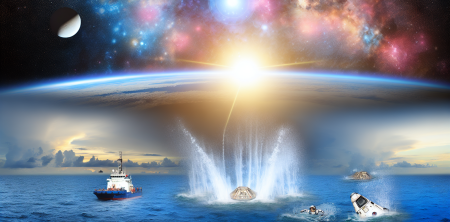
On April 11, 2026, NASA celebrated a significant milestone in space exploration as the Artemis II crew successfully splashed down in the Pacific Ocean, concluding a mission that pushed the boundaries of human spaceflight. This mission marked not only the first crewed flight of the Space Launch System (SLS) rocket and the Orion spacecraft but also represented a leap into the future of lunar exploration.
Mission Highlights
The Artemis II mission commenced on April 1, 2026, launching from Kennedy Space Center in Florida. The crew of four astronauts embarked on a journey that took them farther from Earth than any previous human mission, a testament to NASA's ambitious goals under the Artemis program.
The astronauts—Reid Wiseman, Victor Glover, Christina Koch, and Jeremy Hansen—had a dual purpose during their mission: to perform critical tests for future lunar landings and to gather invaluable data that will inform upcoming endeavors to return humans to the Moon, particularly the upcoming Artemis III mission.
A Dramatic Reentry
As the mission came to a close, the crew experienced a dramatic reentry into Earth’s atmosphere. The Orion spacecraft entered at speeds exceeding 25,000 miles per hour, generating intense heat and a fiery glow that could be seen from the ground. This reentry phase tested the spacecraft's heat shield and systems under extreme conditions, critical for ensuring astronaut safety in future missions.
NASA mission control held their breath as the spacecraft descended, but the Orion’s systems performed flawlessly. The spacecraft's parachutes deployed successfully, allowing for a controlled descent into the ocean. The astronauts emerged unscathed, greeted by a team of recovery boats waiting to assist in the retrieval of the crew.
Meet the Crew
The Artemis II crew brought together a diverse array of expertise and experience:
- Reid Wiseman: A veteran astronaut with previous experience on the International Space Station (ISS), Wiseman served as the commander for this mission.
- Victor Glover: Glover, a naval aviator and former ISS crew member, played a crucial role as the pilot, bringing his extensive experience to the mission.
- Christina Koch: Known for her record-setting 328 days aboard the ISS, Koch served as a mission specialist, contributing her knowledge of long-duration spaceflight.
- Jeremy Hansen: Representing the Canadian Space Agency, Hansen brought a unique perspective as the first Canadian astronaut to participate in a crewed lunar mission.
A Leap Forward for Lunar Exploration
The success of Artemis II is a vital step in NASA's broader Artemis program, which aims to establish a sustainable human presence on the Moon by the end of the decade. Each mission builds upon the successes and lessons learned from the previous ones, paving the way for the eventual goal of sending astronauts to Mars.
NASA's Artemis program promises to not only return humans to the Moon but also to enhance international collaborations in space exploration. The involvement of international partners, including the Canadian Space Agency represented by Hansen, highlights the global commitment to exploring the lunar surface.
Looking Ahead: Artemis III and Beyond
With Artemis II successfully completed, attention now turns to Artemis III, which is slated to land astronauts on the lunar South Pole. This historic mission is expected to take place in the coming years, and preparations are already underway to ensure its success.
NASA is also focusing on the development of the Lunar Gateway, a space station that will orbit the Moon and serve as a staging point for missions to the lunar surface and beyond. This infrastructure will support sustainable exploration and enable longer stays on the Moon.
Conclusion
The successful splashdown of the Artemis II crew not only marks a triumphant return to Earth but also signifies a new era in human space exploration. As NASA continues to push forward with its Artemis program, the world watches with anticipation for the next stages of lunar exploration. With the groundbreaking achievements of the Artemis II mission, humanity stands on the brink of returning to the Moon, paving the way for future generations to explore the cosmos.

