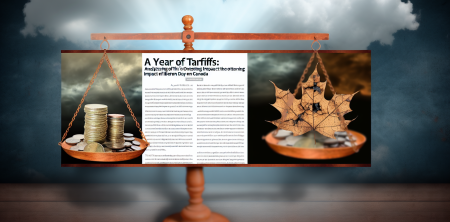
On April 2, 2025, President Donald Trump implemented a series of tariffs dubbed 'Liberation Day,' aimed primarily at protecting American industries. As the one-year anniversary of these tariffs approaches, the repercussions on the Canadian economy are becoming increasingly evident. While certain sectors are struggling under the weight of these tariffs, the overall labor market in Canada has displayed surprising resilience.
Tariffs and Their Effects on Canadian Industry
The 'Liberation Day' tariffs imposed by the U.S. have targeted various Canadian exports, causing significant ripples across multiple critical sectors. Industries such as manufacturing, agriculture, and timber have felt the brunt of increased costs and reduced market access. In particular, the agricultural sector has been hit hard, with a notable decline in exports of products like canola oil and lumber.
Despite these challenges, Canada's economy has shown a degree of stability. As of March 2026, the nation’s unemployment rate remains steady at 6.7%. This stability is in part due to the strength of the service sector, which has continued to thrive even in the face of international trade tensions.
Healthcare Sector Growth Amid Turbulent Times
One of the standout stories in Canada's labor market over the past year has been the significant growth in the healthcare sector. With an aging population creating increased demand for healthcare services, this sector added 92,000 jobs in the past year alone. This growth not only offsets the 84,000 job losses experienced in February 2026 but also highlights the urgent need for skilled workers in healthcare roles.
Job Market Dynamics
While the healthcare sector flourishes, other industries are grappling with job losses and stagnation. The construction and defense sectors are anticipated to see increased hiring, driven by heightened demand for infrastructure and military readiness due to ongoing international conflicts, particularly the escalating situation related to Iran.
- Construction Sector: Anticipated growth due to government investments in infrastructure projects.
- Defense Sector: Increased hiring is expected in response to national security concerns related to the Iran conflict.
Population Shifts and Their Economic Implications
The impact of the tariffs and the broader economic landscape has also prompted shifts in Canada’s population dynamics. Many Canadians are relocating in search of better job opportunities, particularly in provinces less affected by U.S. tariffs. This migration trend could have long-term implications for regional economies, as areas that attract talent may see accelerated growth compared to regions that struggle with job losses.
Future Outlook
Looking ahead, Canadian economists anticipate a mixed bag regarding the future economic landscape influenced by these tariffs. On one hand, the resilience of the service sector and the robust growth in healthcare jobs paint a positive picture. On the other hand, continued U.S. tariffs could lead to prolonged challenges for key industries.
Analysts predict that if the tariffs remain in place, Canada might need to explore new trade agreements and partnerships to mitigate the impact on its economy. The government is under pressure to respond effectively to the changing dynamics, particularly as negotiations with the U.S. remain fraught.
Conclusion
The one-year mark since the implementation of Trump’s 'Liberation Day' tariffs serves as a reminder of the interconnectedness of global economies. While Canada has shown resilience, the challenges posed by ongoing tariffs highlight the need for strategic economic planning and adaptation. As the nation navigates this complex landscape, it will be crucial to support the sectors that are thriving while also addressing the needs of those that are struggling under the weight of external economic pressures.
In summary, while the Canadian labor market has proven to be stable despite the turbulence caused by U.S. tariffs, the journey ahead will require careful navigation and proactive policy measures to ensure sustainable growth and prosperity in the face of ongoing challenges.

