```html
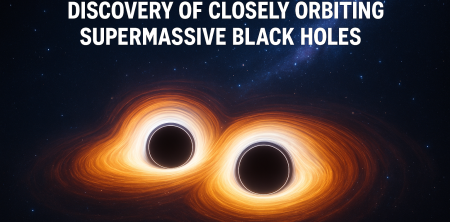
In a significant advancement in the field of astrophysics, astronomers have made a pioneering discovery by detecting a closely orbiting pair of supermassive black holes. This remarkable finding represents a new chapter in our understanding of cosmic evolution and the complex dynamics of galaxies. The detection marks the first time that astronomers have observed two supermassive black holes in such close proximity, challenging previous assumptions about their formation and growth.
1. The Historic Discovery: An Overview
The breakthrough was announced by a team of astronomers who utilized advanced observational techniques to spot these supermassive black holes. The two black holes were found to be orbiting each other at a distance that is remarkably close on a cosmic scale. This detection is crucial as it not only confirms the theoretical predictions made about the existence of such systems but also provides direct evidence of the outcomes of galactic mergers.
Previously, supermassive black holes were primarily identified through indirect means, such as observing the gravitational effects they have on surrounding stars and gas. However, this newfound pair provides a unique opportunity to study their interactions and dynamics directly. The implications of this discovery could reshape our understanding of galaxy formation and the evolution of massive black holes in the universe.
2. Supermassive Black Holes Explained: What They Are
Supermassive black holes are colossal regions of space where gravity is so strong that nothing—not even light—can escape their grasp. Typically, they reside at the centers of galaxies and can have masses millions to billions of times greater than that of our Sun. They play a vital role in galaxy formation and evolution, influencing the motion of stars and the dynamics of gas clouds.
These astronomical giants are thought to have formed through various mechanisms, including the merging of smaller black holes and the accretion of surrounding gas and stars. Understanding their formation and growth is essential for deciphering the history of the universe, as they are intimately linked to the galaxies that host them.
3. The Significance of Binary Black Holes
The detection of this closely orbiting pair of supermassive black holes is significant for several reasons. Firstly, it supports the theory that black holes are often found in binary systems, especially after galactic mergers. This observation provides a direct link to the processes that govern galaxy evolution, as merging galaxies can lead to the formation of black hole pairs.
Secondly, studying binary supermassive black holes can reveal insights into gravitational waves—ripples in spacetime caused by the acceleration of massive objects. As these black holes orbit one another, they will generate gravitational waves that can be detected by future observatories, providing a new method to study the cosmos.
4. The Role of Observational Technology: How It Was Done
The discovery was made possible through the use of cutting-edge observational technology, including powerful telescopes equipped with advanced imaging capabilities. Astronomers employed both optical and radio observations to detect the light and radio waves emitted by the surrounding material being pulled into the black holes.
Techniques such as very long baseline interferometry (VLBI) played a crucial role, allowing researchers to combine data from multiple telescopes across vast distances to achieve high-resolution images. This precision in observation is vital when studying cosmic phenomena that occur over incredible distances and timescales.
5. The Cosmic Dance: Understanding Black Hole Orbits
The dynamic interaction between the two supermassive black holes involves a fascinating cosmic dance, where their gravitational forces pull them closer together over time. As they orbit each other, they lose energy through gravitational radiation, which causes them to spiral inward until they eventually merge.
This process of merging is not just a spectacular event; it has profound implications for the growth of supermassive black holes. The merger of two supermassive black holes could lead to the formation of an even larger black hole, thus contributing to the ongoing evolution of galaxies and their central engines.
6. Implications for Galactic Evolution: What It Means for Our Understanding
The detection of a close pair of supermassive black holes sheds light on the complex relationship between black holes and their host galaxies. Previous models suggested that such systems were rare, but this discovery indicates that they may be more common than initially thought. This will prompt astronomers to revisit existing theories regarding the growth mechanisms of supermassive black holes. (See: Supermassive black holes explained.)
Moreover, these findings could lead to new insights into how galaxies evolve over billions of years. By understanding the relationship between black holes and their galactic environments, scientists can better grasp how galaxies form, collide, and merge, ultimately shaping the structure of the universe.
7. The Public Fascination with Black Holes: Why It Matters
Black holes have captivated the public's imagination for decades, fueled by their mysterious nature and the dramatic consequences they hold for physics and cosmology. This recent discovery of supermassive black holes in close proximity taps into that fascination, igniting interest and curiosity in a wider audience.
As new findings about supermassive black holes come to light, they not only enhance our scientific understanding but also inspire a sense of wonder about the universe. The more we learn about these enigmatic entities, the more we come to appreciate the vastness and complexity of the cosmos.
8. Future Research Directions: What’s Next for Astronomers?
The detection of these closely orbiting supermassive black holes opens a new frontier for astronomical research. Future studies will likely focus on observing the dynamics of the pair in greater detail, using advanced technology to monitor their orbits and interactions over time.
Additionally, understanding the gravitational waves generated by such systems will become a key area of focus. As gravitational wave observatories enhance their capabilities, they will provide a wealth of data that can deepen our understanding of the universe's most massive objects and the events that shape them.
9. The Broader Impact on Astronomy: Shaping Our Cosmic Perspective
The discovery of a bound pair of supermassive black holes represents more than just a technical achievement in observational astronomy. It challenges existing paradigms and encourages scientists to rethink models of galaxy and black hole evolution.
As we continue to uncover the mysteries of these cosmic giants, each discovery adds another layer to our understanding of the universe. The ongoing research into supermassive black holes not only enriches the field of astronomy but also has profound implications for our understanding of physics, cosmology, and our place in the universe.
10. Understanding the Formation of Supermassive Black Holes
Research suggests that supermassive black holes may form from several different processes. One prevailing theory is that they originate from the collapse of massive gas clouds in the early universe. As matter condenses under gravity, it heats up and forms stars. If some of these stars are sufficiently massive, they may collapse into black holes after exhausting their nuclear fuel. Over time, these seed black holes can grow by accreting gas and merging with other black holes, eventually becoming supermassive.
Another intriguing possibility is that supermassive black holes could form directly from the rapid collapse of massive clouds of gas without first forming stars. This scenario could explain the existence of supermassive black holes in galaxies that appear fully formed. Recent simulations indicate that these processes contributed to the mass distribution of black holes we observe today.
11. The Role of Supermassive Black Holes in Galaxy Formation
Supermassive black holes are more than just cosmic vacuums; they play a crucial role in the formation and evolution of galaxies. The presence of a supermassive black hole at the center of a galaxy can influence star formation rates and the movement of gas within the galaxy. The energy and jets emitted from the accretion of material into black holes can heat up the surrounding gas, potentially shutting down star formation in their host galaxies.
Observational evidence suggests a correlation between the mass of a supermassive black hole and the properties of its host galaxy. This relationship could imply that the growth of supermassive black holes and their host galaxies are intertwined, mutually influencing each other's evolution. Understanding this relationship could provide insights into the lifecycle of galaxies throughout cosmic history.
12. Gravitational Waves and Black Hole Mergers
Gravitational waves are ripples in spacetime caused by the acceleration of massive objects, such as the merging of black holes. The detection of gravitational waves has opened a new window for observing the universe and has provided an opportunity to study black hole mergers in unprecedented detail. In 2015, the Laser Interferometer Gravitational-Wave Observatory (LIGO) made the first direct detection of gravitational waves from the merger of two stellar-mass black holes. This technology is now being adapted to study supermassive black hole mergers.
The merger of supermassive black holes is expected to create stronger gravitational waves than those detected from stellar-mass black holes, making them a prime target for future observatories. The upcoming space-based observatory, LISA (Laser Interferometer Space Antenna), is designed to detect these waves and could provide valuable insights into the physics of black holes and their mergers. (See: NASA's insights on black holes.)
13. Black Holes in the Context of Dark Matter
The relationship between supermassive black holes and dark matter is an ongoing area of research. Dark matter, which makes up approximately 27% of the universe, does not emit light and is detectable only through its gravitational effects. Some theories propose that supermassive black holes could be a result of dark matter's influence in the early universe.
In some models, dark matter may help facilitate the formation of supermassive black holes by providing additional mass for gas clouds to collapse into black holes. Alternatively, the presence of supermassive black holes could affect the distribution and dynamics of dark matter within galaxies. Understanding this interaction may be key to unraveling the mystery of dark matter and its role in cosmic evolution.
14. Comparative Analysis of Different Types of Black Holes
Black holes can be classified into several categories based on their mass: stellar black holes, intermediate black holes, and supermassive black holes. Stellar black holes are formed from the remnants of massive stars and generally range from a few to several tens of solar masses. In contrast, supermassive black holes can reach millions to billions of solar masses and are typically found at the centers of galaxies.
Intermediate black holes, which range from hundreds to thousands of solar masses, are less understood and are thought to be the missing link in black hole evolution. The detection of intermediate black holes could provide insights into how supermassive black holes form and grow over cosmic time. Ongoing surveys and observational campaigns aim to identify these elusive objects, bridging the gap between stellar and supermassive black holes.
15. Frequently Asked Questions (FAQ)
What are supermassive black holes?
Supermassive black holes are massive regions in space with gravitational pulls so strong that not even light can escape. They typically reside at the centers of galaxies and can have masses ranging from millions to billions of solar masses.
How do supermassive black holes form?
Supermassive black holes may form through the merging of smaller black holes, the direct collapse of massive gas clouds, or the accretion of surrounding matter over time. Their exact origins are subjects of ongoing research.
What is the role of supermassive black holes in galaxies?
Supermassive black holes influence galaxy formation and evolution. They can affect star formation rates and the movement of gas, playing a critical role in shaping the structure and dynamics of galaxies.
How are gravitational waves related to black holes?
Gravitational waves are generated by the acceleration of massive objects, including black hole mergers. These waves carry information about their sources, allowing astronomers to study black holes and their interactions through gravitational wave astronomy.
What is the significance of detecting binary supermassive black holes?
Detecting binary supermassive black holes provides insights into the dynamics of galaxy mergers and the potential for studying gravitational waves. It also challenges existing theories about the rarity and formation of such systems.
What is the future of research on supermassive black holes?
Future research will focus on observing supermassive black holes and their interactions in greater detail, utilizing advanced technologies to monitor their orbits and the gravitational waves produced. This research is expected to deepen our understanding of black holes and their role in the universe.
16. The Challenges in Observing Supermassive Black Holes
Despite significant advancements in technology, observing supermassive black holes presents numerous challenges. Their enormous masses create intense gravitational fields, making them difficult to study directly. Most observations rely on detecting the effects of these gravitational fields on nearby stars and gas rather than the black holes themselves. This indirect method can sometimes lead to uncertainties regarding the black holes’ exact mass and influence.
Additionally, supermassive black holes are often surrounded by thick disks of gas and dust that can obscure our view. Scientists are developing new techniques to observe at different wavelengths, such as infrared and X-ray, to penetrate these clouds of material. The upcoming James Webb Space Telescope (JWST) is expected to enhance our ability to study the environments around supermassive black holes significantly. (See: Recent discoveries about black holes.)
17. Case Studies: Notable Supermassive Black Holes
Several well-known supermassive black holes have been extensively studied, providing valuable data for understanding these cosmic entities. For example, Sagittarius A*, the supermassive black hole at the center of our Milky Way galaxy, has garnered significant attention. Recent research has shown that it has a mass around 4.1 million solar masses. Detailed studies of the stars orbiting Sagittarius A* have allowed astronomers to accurately estimate its mass through precise measurements of their orbits.
Another notable example is the supermassive black hole in the galaxy M87, famously imaged by the Event Horizon Telescope in 2019. This black hole, containing about 6.5 billion solar masses, provided unprecedented visual confirmation of the existence of black holes and has fueled ongoing research into their properties and behaviors.
18. The Intersection of Supermassive Black Holes and Time Dilation
Supermassive black holes also present fascinating opportunities for studying the effects of time dilation, a phenomenon predicted by Einstein's theory of relativity. As objects approach the event horizon of a black hole, time appears to slow down relative to an observer far away. This raises intriguing implications for our understanding of space and time itself.
Experiments with light emitted from regions near supermassive black holes, such as those in active galactic nuclei (AGN), provide insights into this time dilation effect. Such phenomena challenge our perceptions of time and space, prompting deeper philosophical inquiries into the nature of the universe.
19. Global Collaboration in Black Hole Research
The study of supermassive black holes is not just confined to individual institutions; it is a collaborative effort that spans the globe. Various observatories, research institutions, and international collaborations work together to gather and analyze data on black holes. Projects like the Event Horizon Telescope involve the coordinated efforts of teams from numerous countries to create a network of telescopes capable of capturing high-resolution images of black holes.
This collaborative approach enhances the breadth of data available to researchers, fostering a more comprehensive understanding of supermassive black holes and their role in the cosmos. Such teamwork exemplifies the spirit of modern science, where shared knowledge and resources can lead to groundbreaking discoveries.
20. The Future of Supermassive Black Hole Research
As technology progresses, the future of supermassive black hole research looks promising. Upcoming missions, such as the European Space Agency’s Athena and NASA's LUVOIR, aim to enhance our observational capabilities, allowing scientists to explore black holes in unprecedented detail. These missions will potentially uncover new aspects of black hole formation, growth, and their interactions with surrounding matter.
Moreover, the integration of artificial intelligence and machine learning into astronomical research is expected to revolutionize how data is processed and analyzed. These technologies can help identify patterns and correlations within vast datasets, accelerating the discovery process and deepening our understanding of the universe's most enigmatic objects.
```
Trending Now
Frequently Asked Questions
What are supermassive black holes?
Supermassive black holes are enormous regions of space with gravitational forces so strong that not even light can escape. They typically exist at the centers of galaxies and can have masses ranging from millions to billions of times that of our Sun, playing a crucial role in galaxy formation and evolution.
How were the closely orbiting supermassive black holes discovered?
Astronomers discovered the closely orbiting supermassive black holes using advanced observational techniques that allowed them to detect these black holes in close proximity. This marks a significant advancement in understanding the dynamics of galaxy mergers and the existence of such systems.
Why is the discovery of closely orbiting black holes important?
The discovery of closely orbiting supermassive black holes is important because it provides direct evidence of galactic mergers and challenges previous assumptions about the formation and growth of black holes, potentially reshaping our understanding of cosmic evolution.
What implications does this discovery have for astrophysics?
This groundbreaking discovery has significant implications for astrophysics as it confirms theoretical predictions about supermassive black holes and offers unique insights into their interactions and dynamics, which can enhance our understanding of galaxy formation and evolution.
What methods are used to study black holes?
Astronomers typically study black holes through indirect means, such as observing their gravitational effects on surrounding stars and gas. However, the recent discovery of closely orbiting supermassive black holes allows for more direct study of their interactions and dynamics.
Have you experienced this yourself? We'd love to hear your story in the comments.

