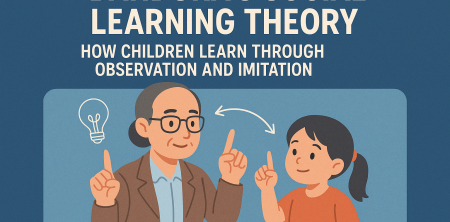
When we think about how children learn, we often envision classrooms filled with textbooks and teachers lecturing at the front. However, Albert Bandura, a Canadian-American psychologist, radically altered that perception with his groundbreaking work on social learning theory. His research revealed that children absorb their environment not only through direct instruction but also through observation and imitation. This article delves into the core of Bandura's findings, their implications for education, parenting, and social behavior, and how they remain relevant in today's world.
Understanding Social Learning Theory
At its essence, social learning theory posits that people learn from one another, via observation, imitation, and modeling. Bandura introduced this theory in the 1960s through a series of well-known experiments, often referred to as the Bobo Doll experiments. In these studies, children watched adults behaving aggressively towards an inflatable doll. Remarkably, when given the opportunity, the children not only imitated the aggressive behavior but also invented new ways to attack the doll. This highlighted a significant point: learning is not merely about reinforcement but also about observing others.
The Bobo Doll Experiment: A Closer Look
Conducted in 1961, the Bobo Doll experiment involved children observing adult models behaving in either aggressive or non-aggressive manners toward a Bobo doll. The aggressive model would hit, kick, and verbally abuse the doll, while the non-aggressive model interacted gently with it. After viewing these behaviors, children were allowed to play with the same doll.
The results were striking. Children who had observed the aggressive behavior were significantly more likely to mimic it than those who had seen the non-aggressive behavior. This experiment not only validated Bandura's hypothesis but also raised concerns about the impact of media violence on children. If children can learn aggressive behavior simply by watching, what does this mean in the age of television and video games?
Key Components of Social Learning Theory
Bandura identified four essential components that underlie the process of social learning:
- Attention: For learning to occur, the observer must pay attention to the model. Factors influencing attention include the model's characteristics (e.g., age, attractiveness, status) and the observer’s interests.
- Retention: After observing a behavior, the learner must be able to remember it. This involves encoding the behavior in memory, allowing for later recall.
- Reproduction: To imitate the behavior, the learner must be capable of reproducing it. This may require physical skill and cognitive ability to translate observation into action.
- Motivation: Even if a person has retained a behavior and can reproduce it, motivation plays a crucial role in determining whether they will actually perform it. Positive reinforcement or the expectation of rewards can enhance motivation.
Understanding these components is crucial for educators and parents alike, as it helps in designing effective teaching strategies that leverage observation and imitation.
The Role of Reinforcement in Social Learning
While Bandura emphasized observational learning, he did not dismiss the significance of reinforcement. Traditional learning theories, like behaviorism, focus heavily on reinforcement as a means to shape behavior. Bandura integrated this concept into his theory by introducing what he termed vicarious reinforcement and vicarious punishment.
In essence, children learn not only from their own direct experiences but also by witnessing the consequences that others face for their actions. For example, if a child sees a peer receiving praise for sharing, they are more likely to imitate that behavior, hoping for similar rewards. Conversely, if they observe a model being scolded for aggressive behavior, they may choose to avoid such actions. This dual approach underscores the complex interplay of direct and indirect learning processes.
Current Relevance of Bandura's Theory
Fast forward to the present, and the implications of Bandura's social learning theory are as pertinent as ever. In our digital age, children are exposed to countless models through social media, video games, and television. Research continues to indicate a connection between exposure to violent media and aggressive behavior in children. The challenge lies in ensuring that the models children observe are positive and constructive.
Furthermore, educational institutions are increasingly adopting social learning principles in their curricula. Collaborative learning environments, where students work in groups and learn from one another, are becoming more prevalent. By leveraging observation and peer interaction, educators can foster a more engaging and effective learning atmosphere.
Implications for Parenting
Parents play a critical role in shaping their children's behavior and attitudes through modeling. If parents demonstrate positive behaviors—such as kindness, empathy, and problem-solving—children are likely to adopt these traits. Bandura’s findings stress that parents should be mindful of their own actions, as children are constantly observing and imitating their behavior. (See: Social Learning Theory on Wikipedia.)
Moreover, parents can enhance their children's learning by creating opportunities for observation. For instance, children can benefit immensely from watching their parents engage in social activities, study, or tackle challenges. These experiences not only provide valuable lessons but also demonstrate resilience and persistence.
Social Learning Theory in Education
In educational settings, Bandura's theory offers actionable strategies for teaching and engagement. For example, educators can use role-playing scenarios to model desired behaviors in social situations. This allows students to observe and practice appropriate responses in a safe environment.
Furthermore, technology has become an invaluable tool in applying social learning theory in the classroom. Online platforms and learning management systems that promote collaboration and interaction enable students to learn from their peers more effectively than ever. By integrating videos, discussions, and peer feedback, teachers can create a rich learning experience that emphasizes observation and imitation.
Potential Challenges and Critiques
While Bandura’s theory has significantly influenced psychology and education, it’s essential to acknowledge its limitations. Critics argue that social learning theory may downplay the role of biological and cognitive factors in behavior. For instance, genetic predispositions or individual personality traits can also significantly influence learning and behavior.
Moreover, the theory largely focuses on observable behaviors, potentially neglecting the internal cognitive processes that also play a role in how individuals learn. Critics suggest that a more integrative approach, combining cognitive and social learning theories, could provide a fuller picture of human learning and behavior.
Future Directions of Social Learning Theory
The landscape of learning continues to evolve, particularly with the rise of digital technology and social media. As children increasingly interact with digital models, researchers are exploring how these new forms of social learning differ from traditional methods. The question remains: how does the vast array of online content affect children's behavior and learning?
Additionally, the global nature of the internet allows children to be exposed to diverse cultures and ideas. Understanding how multicultural models influence learning and behavior will be a crucial area of research moving forward. It will be essential to examine both the positive and negative effects of this exposure to ensure that children are engaging with constructive models.
Case Studies and Real-World Applications
To see the principles of social learning theory in action, it's helpful to look at various case studies and real-world applications. One such example is the use of peer mentoring programs in schools. In these programs, older students are paired with younger ones, creating a dynamic where the younger students can observe and learn from their mentors. Research has shown that peer mentoring can lead to improved academic performance and social skills among younger students, reinforcing Bandura’s ideas about the power of modeling.
Another example can be found in corporate training environments. Many companies have adopted social learning strategies in onboarding processes. New employees often shadow experienced colleagues to learn the ropes, observing their interactions, decision-making processes, and workplace behavior. This method not only accelerates learning but also promotes a culture of collaboration and support.
Statistics Supporting Social Learning Theory
The impact of social learning theory on education and behavior can be quantified through various statistics. For instance, a study published in the Journal of Educational Psychology found that students who engaged in collaborative learning environments scored, on average, 20% higher on assessments compared to those who learned individually. This supports the notion that learning from peers can significantly enhance understanding and retention.
Additionally, research from the American Psychological Association highlights that children who model positive behaviors, such as sharing or cooperating, tend to have better social outcomes. For instance, those who observe prosocial behavior in their parents or peers are 30% more likely to engage in similar behavior themselves. These statistics underscore the importance of modeling in creating a positive social learning environment.
Expert Perspectives on Social Learning Theory
To gain deeper insight into social learning theory, it's beneficial to consider perspectives from psychologists and educators. Dr. Carol Dweck, a noted psychologist, emphasizes that the belief in the ability to learn from others plays a crucial role in motivation. She suggests that fostering a growth mindset—where students see abilities as improvable—can enhance the effectiveness of social learning practices. (See: CDC on Social Learning and Youth.)
Furthermore, educators like Dr. John Hattie advocate for the integration of social learning principles in teaching. Hattie’s research shows that feedback and peer collaboration are among the most impactful strategies for enhancing student achievement. His findings align with Bandura’s theory, reinforcing the idea that students benefit significantly from observing and interacting with one another.
Frequently Asked Questions (FAQ)
What is social learning theory?
Social learning theory, developed by Albert Bandura, posits that individuals learn behaviors, attitudes, and emotional reactions through observing others. It emphasizes the importance of modeling, imitation, and observation in the learning process.
How does social learning theory apply to parenting?
Parents can apply social learning theory by modeling positive behaviors, such as empathy and problem-solving. Children often imitate their parents' actions, so demonstrating constructive behaviors can encourage children to adopt similar traits.
Can social learning theory be applied in the classroom?
Absolutely! Educators can use social learning theory by implementing collaborative learning environments, role-playing scenarios, and peer mentoring. These strategies allow students to observe and learn from one another, enhancing their educational experience.
What are the limitations of social learning theory?
While social learning theory is influential, it may overlook the role of biological and cognitive factors in behavior. Critics argue that it focuses too much on observable behaviors and does not fully account for internal cognitive processes influencing learning.
How has social learning theory evolved with technology?
With the rise of digital technology and social media, social learning theory has adapted to include online learning environments. Students now interact with various models through video content, social platforms, and collaborative tools, which enhance the learning experience.
Applications in Modern Education
In the digital age, the principles of social learning theory have found their way into various educational technologies. For instance, platforms like Google Classroom and Edmodo promote collaborative learning by allowing students to work together on projects and share resources. This real-time interaction exemplifies Bandura's theories in practice, showcasing how observation and peer feedback can significantly enhance understanding and retention of knowledge.
Another notable application is the use of social media for educational purposes. Educators are now leveraging platforms like Twitter and Instagram to create online communities where students can share their learning experiences, seek help, and provide support to one another. This modern approach not only makes learning more engaging but also fosters a sense of belonging among students, reinforcing the social aspects of learning.
The Influence of Culture on Social Learning
Culture plays a pivotal role in shaping the models that individuals observe and imitate. Bandura acknowledged that the context in which learning occurs influences the types of behaviors that are modeled. For instance, children raised in collectivist cultures may observe and emulate behaviors that emphasize family and community, while those in individualistic cultures may focus more on personal achievement.
Research shows that cultural differences can lead to variations in learning styles and peer interactions. For example, studies have indicated that students from collectivist backgrounds may be more inclined to engage in cooperative learning activities, as they place higher value on group harmony. This highlights the importance of considering cultural context when applying social learning theory, as what is deemed a positive model in one culture may not hold the same significance in another.
Longitudinal Studies on Social Learning
Longitudinal studies examining social learning theory provide valuable insights into its long-term effects on behavior and development. One such study followed a group of children from early childhood into adolescence, investigating how observational learning influenced their social skills and aggression levels over time. The findings indicated that children who were frequently exposed to positive role models exhibited significantly better social outcomes as they matured, including higher levels of empathy and cooperation.
Conversely, those who primarily observed negative behaviors, such as aggression and hostility, were more likely to engage in similar actions during their teenage years. This underscores the long-lasting impact of observational learning, emphasizing the need for positive role models in a child's environment.
Social Learning in the Workplace
The principles of social learning theory extend beyond childhood education and parenting; they also play a crucial role in adult learning, particularly in workplace settings. Many organizations implement training programs that leverage social learning to improve employee skills and foster a collaborative culture.
Mentorship programs are one effective approach that allows experienced employees to model desired behaviors for new hires. This not only accelerates the onboarding process but also cultivates a culture of continuous improvement and knowledge sharing. By observing seasoned professionals, new employees can gain insights into effective practices, communication styles, and workplace dynamics, which ultimately enhances their performance.
Impacts of Social Learning on Mental Health
Social learning theory also has implications for mental health, particularly in understanding how behaviors and attitudes toward mental health are shaped. For instance, individuals who observe others engaging in open discussions about mental health challenges are more likely to adopt similar behaviors, leading to increased awareness and destigmatization of mental health issues.
Research indicates that supportive environments where vulnerability is normalized can foster healthier coping mechanisms and resilience. This is especially important in educational settings, where students who observe their peers discussing mental health are more likely to seek help and support when needed, ultimately contributing to a healthier school climate.
Conclusion: Embracing the Lessons of Social Learning Theory
Albert Bandura's social learning theory revolutionized our understanding of how children learn through observation and imitation. By recognizing the importance of social context and the role of models in learning, we can create environments—both at home and in schools—that foster positive development. As we continue to navigate the complexities of learning in a rapidly changing world, Bandura’s insights remain a guiding light, encouraging us to promote positive behaviors and cultivate nurturing, observational learning experiences for future generations.
Trending Now
Frequently Asked Questions
What is Bandura's social learning theory?
Bandura's social learning theory suggests that people learn from one another through observation, imitation, and modeling. This theory emphasizes that learning occurs not just through direct instruction, but also by watching others and replicating their behaviors.
What are the main findings of the Bobo Doll experiment?
The Bobo Doll experiment found that children who observed adults behaving aggressively towards a doll were more likely to imitate that aggressive behavior. This highlighted the power of observational learning and raised concerns about the influence of media violence on children's behavior.
How does social learning theory apply to education?
Social learning theory has significant implications for education, suggesting that teachers can enhance learning by modeling positive behaviors and encouraging collaboration among students. By observing and imitating peers, students can develop social skills and academic capabilities more effectively.
What is the impact of media on children's behavior according to Bandura?
According to Bandura, exposure to violent media can lead children to imitate aggressive behaviors. His research, particularly the Bobo Doll experiment, indicates that children may learn and replicate aggressive actions observed in media, raising concerns about the effects of violence on their development.
How can parents use Bandura's theory in parenting?
Parents can apply Bandura's social learning theory by modeling positive behaviors, such as kindness and problem-solving, for their children. By demonstrating desired behaviors, parents can influence their children's learning and social development through observation and imitation.
What's your take on this? Share your thoughts in the comments below — we read every one.

