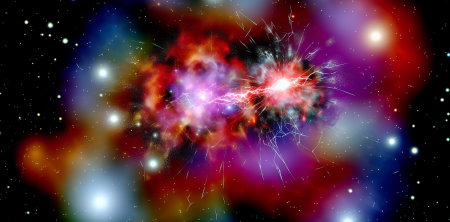
Astronomers from the University of Arizona have made a groundbreaking discovery concerning the Small Magellanic Cloud (SMC), a nearby dwarf galaxy that has experienced chaotic star movements due to a catastrophic collision with its larger neighbor millions of years ago. This revelation not only reshapes our understanding of the SMC but also challenges its status as a standard benchmark for star formation studies.
The Discovery and Its Implications
Lead author Himansh Rathore and his team examined the SMC using advanced astronomical techniques, uncovering evidence of tumultuous star dynamics resulting from the galaxy's violent past. This collision, which occurred eons ago, has had lasting effects on the SMC's structure and behavior. Rathore emphasized the significance of this finding, stating it provides a "front-row view of galaxy transformation."
Understanding the Small Magellanic Cloud
The SMC is one of the closest galaxies to our own, the Milky Way, and has traditionally been considered a prime example for studying star formation. Its proximity allows astronomers to observe its stellar processes in detail. However, the new findings suggest that the SMC’s chaotic star movements may not represent typical behaviors seen in more stable galaxies.
A Closer Look at the Collision
According to researcher Gurtina Besla, the SMC's transformation due to the energetic collision has resulted in a galaxy that no longer fits the mold of a "normal" galaxy. The violent event injected vast amounts of energy into the SMC, disrupting its structural integrity and leading to the observed irregular star movements.
This disruption creates an illusion of gas rotation within the galaxy, which can mislead astronomers who are attempting to use the SMC as a reference point in their studies. The chaotic nature of star movements within the SMC means that it cannot be relied upon as a standard model for understanding the processes of star formation.
What This Means for Astronomy
The implications of this discovery extend far beyond just the SMC. It raises important questions about how galaxies evolve and interact over time. Understanding the effects of collisions on galaxy structure and star formation gives astronomers valuable insights into the broader processes that govern the universe.
The Role of Dwarf Galaxies
Dwarf galaxies like the SMC play a crucial role in our understanding of cosmic evolution. They often serve as building blocks for larger galaxies, and their interactions can shed light on the mechanisms of galaxy formation and the dynamics of dark matter. The SMC's unique situation offers an unprecedented opportunity to study these processes.
- Energy Injection: The collision has led to significant changes in the SMC’s dynamics.
- Star Formation: The chaotic environment challenges existing models of star formation.
- Cosmic Interactions: Provides a case study for the effects of galactic collisions.
Future Research Directions
As astronomers continue to explore the SMC, future research will likely focus on several key areas:
- Mapping Star Movements: Detailed observations will help map the velocities and trajectories of stars within the SMC.
- Comparative Studies: Comparing the SMC with other galaxies that have experienced collisions will enhance our understanding of galactic evolution.
- Impacts of Dark Matter: Investigating the role of dark matter in the collision dynamics of the SMC.
Conclusion
The discovery about the Small Magellanic Cloud is a testament to the dynamic and often violent nature of the universe. As astronomers peel back the layers of this intriguing galaxy, they not only uncover the secrets of its past but also challenge existing paradigms in the field of astrophysics. The SMC, once seen as a benchmark for studying star formation, now serves as a reminder of the complexity and unpredictability inherent in cosmic interactions.
Such findings underscore the importance of continual observation and research in understanding the vast universe we inhabit. Each discovery, like that of the SMC, adds a new piece to the cosmic puzzle, helping to illuminate the processes that govern the formation and evolution of galaxies throughout the cosmos.

