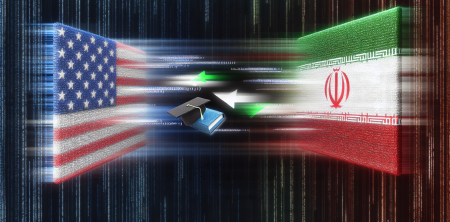
Iran's Warning: A New Front in the Middle East Conflict
In a dramatic escalation of tensions in the Middle East, the Islamic Revolutionary Guard Corps (IRGC) has issued a chilling warning to U.S. universities, threatening to target institutions in retaliation for recent military strikes that resulted in significant damage to two Iranian universities. This move highlights the ongoing volatility in the region and raises concerns over the safety of academic institutions far beyond the immediate conflict zones.
The Catalyst for Retaliation
On March 29, 2026, the IRGC responded to airstrikes conducted by U.S. and Israeli forces, which reportedly targeted the University of Science and Technology in Tehran, among other locations. Although the strikes did not result in any casualties, the damage to this prominent educational facility has sparked outrage among Iranian officials. The IRGC's threats underline the broader implications of military actions on educational and civilian infrastructure, often seen as sacred and off-limits in conflicts.
A Demanding Ultimatum
The IRGC set a deadline for the U.S. government, demanding a formal condemnation of the strikes by noon on March 30, Tehran time. Failure to comply would provoke a response that could include targeting U.S. universities operating in the Middle East. Institutions such as Texas A&M University in Qatar and New York University (NYU) in the United Arab Emirates have been specifically identified in the IRGC's warning, prompting immediate concern for the safety of their students and faculty.
Impact on Academic Freedom and Safety
The IRGC's threats raise significant questions about the safety of academic environments in volatile regions. Faculty, students, and administrative personnel have been advised to maintain a distance of at least one kilometer from their respective campuses, emphasizing the potential for violence that could disrupt educational activities. This precautionary measure reflects a broader trend where academic institutions become collateral damage in geopolitical conflicts.
Historical Context of Targeting Educational Institutions
- Precedents of Violence: Targeting educational institutions is not a new phenomenon in conflict zones. Historically, schools and universities have been caught in the crossfire, often used as a means of retaliatory violence.
- International Response: The international community typically condemns attacks on educational facilities, recognizing the imperative of protecting students and educators from the repercussions of conflict.
- Impacts on Students: The threats not only endanger lives but also disrupt academic pursuits, impacting students' mental health, educational outcomes, and future opportunities.
Geopolitical Implications of the Conflict
This latest episode of conflict is emblematic of the broader geopolitical struggles in the Middle East, where various factions, including Iranian forces and U.S. military deployments, continue to engage in a complex web of hostilities. The involvement of U.S. Marines in the region further complicates the situation, as various groups, including the Houthis, continue to challenge American and allied interests.
The tension between Iran and the U.S. has a long and tumultuous history, marked by periods of hostility and diplomatic engagement. The current threat against academic institutions serves as a stark reminder of how quickly tensions can escalate and how the consequences can ripple through various sectors, including education.
The Role of Universities in Diplomacy
Universities often serve as cultural bridges, fostering dialogue and understanding among diverse populations. However, in times of conflict, they can also become targets, exposing them to the harsh realities of geopolitical rivalries. The potential targeting of U.S. universities by Iran calls into question the role these institutions play in diplomacy and peace-building.
What Lies Ahead?
As the deadline set by the IRGC approaches, the international community watches closely to see how the U.S. government will respond. Should the United States choose not to issue a condemnation, the ramifications could be severe, extending beyond the immediate threat to universities and affecting broader U.S.-Iran relations.
In the meantime, safety protocols at affected universities are likely to be reinforced, with officials closely monitoring the situation and keeping students informed. The potential for escalation poses a serious risk not only to academic freedom but also to the lives of those involved in education across the region.
Conclusion
The IRGC's threats against U.S. universities following military strikes in Iran illustrate the precarious state of international relations and the profound impact of military actions on civilian life. As tensions continue to rise, the imperative to protect educational institutions and their communities becomes increasingly urgent. The unfolding events serve as a stark reminder of the importance of dialogue and diplomacy in mitigating conflict and ensuring the safety of students and educators worldwide.

