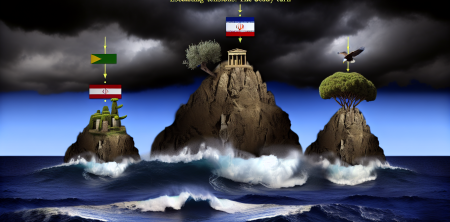
The ongoing conflict involving the United States, Israel, and Iran has seen a significant escalation, marked by fresh military strikes and deadly explosions reported near a pro-government rally in Tehran. The situation, which has rapidly deteriorated over the past few weeks, has resulted in civilian casualties in Iran exceeding 1,348, raising alarm over the humanitarian impact of the conflict.
Background of the Conflict
The roots of the current confrontation can be traced back to a series of aggressive actions initiated by the United States and Israel. Following the joint strikes that led to the assassination of Iran's previous Supreme Leader, Ayatollah Khamenei, tensions in the region have skyrocketed. The stakes were raised further when former President Donald Trump announced a military operation targeting Kharg Island, a critical hub for Iran's energy exports.
Recent Developments in Tehran
In a show of defiance amidst the ongoing strikes, Iran's new Supreme Leader has vowed to avenge the 'blood of martyrs,' signaling a commitment to retaliate against perceived aggressors. This statement reflects the fervent nationalistic sentiment that has been stoked by the recent violence, further entwining the leadership's narrative with that of the populace. The Supreme Leader's remarks were delivered against the backdrop of a pro-government rally, where the atmosphere was charged with calls for revenge against the US and its allies.
Strategic Importance of the Strait of Hormuz
One of the pivotal elements of this conflict is the Strait of Hormuz, a vital maritime passage through which a significant portion of the world's oil supply is transported. The new Supreme Leader has explicitly stated that the Strait will remain closed, a declaration that holds serious implications for global oil markets and international trade. The closure of this strategic waterway could exacerbate existing tensions, leading to further military confrontations and economic instability.
Humanitarian Impact
The civilian toll of the conflict is becoming increasingly dire, with over 1,348 reported deaths and countless others injured. The ongoing violence has not only destabilized the region but has also led to a humanitarian crisis, with many citizens of Iran now facing dire shortages of basic necessities, including food and medical supplies. International observers have expressed grave concern over the situation, urging for immediate cessation of hostilities and the protection of innocent lives.
Responses from the International Community
The international community has been closely monitoring the developments in the US-Israel-Iran conflict, with various nations calling for restraint and dialogue. However, the aggressive posture exhibited by both the US and Israel has left many observers questioning the effectiveness of diplomatic efforts. The potential for a wider regional conflict looms large, as countries in the Middle East grapple with the implications of the ongoing hostilities.
Market Reactions
The escalation of the conflict has already begun to disrupt oil markets, with prices fluctuating in response to the latest developments. Analysts are warning that continued instability in the region could lead to significant spikes in oil prices, further impacting global economies already reeling from the effects of the COVID-19 pandemic. The prospect of a prolonged conflict poses a serious threat not only to regional stability but also to the global economic landscape.
The Road Ahead
As the situation continues to unfold, experts and analysts are urging for a renewed focus on diplomatic solutions to avert further violence. The potential for retaliation and counter-retaliation between the involved parties is high, and the risk of miscalculation or accidental escalation remains a significant concern. The international community must come together to facilitate dialogue and address the underlying issues that have led to this conflict.
Conclusion
The US-Israel-Iran war has intensified dramatically in recent weeks, with deadly strikes and rising civilian casualties underscoring the urgent need for a resolution. As leaders on all sides make their moves, the stakes are higher than ever, with the potential for significant repercussions not only in the Middle East but across the globe. In this volatile environment, the path to peace seems fraught with challenges, but it is one that must be pursued with determination and urgency.

