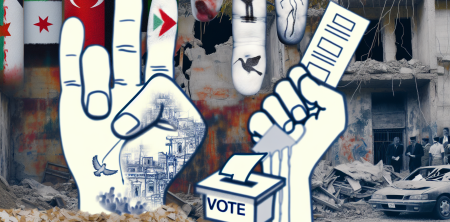
On April 25, 2026, a significant political event is set to unfold in the Palestinian territories as local elections take place in Deir al-Balah, a city in the beleaguered Gaza Strip, and throughout the Israeli-occupied West Bank. For the first time in two decades, these elections represent a critical juncture for Palestinian governance, public participation, and the fragile trust between citizens and their leaders amidst a backdrop of enduring conflict.
The Context of the Elections
The local elections are being described by officials as a largely symbolic 'pilot' initiative, a necessary step to gauge public sentiment and political engagement in a time of uncertainty. With nearly 70,000 eligible voters in Deir al-Balah and about 1 million in the West Bank, these elections are not just about the immediate outcomes but also about the long-term implications for governance and civil society in the region.
Significance of Local Governance
The local councils elected in these regions will have significant responsibilities, overseeing essential services such as water supply, road maintenance, and electricity distribution. This is particularly crucial in areas that have faced substantial infrastructural damage due to ongoing conflict and military operations.
Local governance structures are often seen as the frontline of public service delivery, directly impacting the daily lives of residents. As such, the ability of these councils to address local needs effectively can influence public perception of the broader Palestinian leadership.
Voter Engagement and the Campaign
The Ramallah-based Central Election Commission has launched a campaign under the slogan 'We Stay', aiming to encourage voter turnout and participation. This slogan resonates deeply with a population that has faced numerous challenges and upheavals, encapsulating a sense of resilience and determination to engage in the democratic process.
In a region where political disenfranchisement has been a prevailing theme, the emphasis on participation is both a call to action and a reflection of the broader desire for change among the Palestinian populace.
Challenges to Participation
Despite the enthusiasm surrounding the elections, various challenges may hinder voter participation. These include:
- Security Concerns: Ongoing tensions and violence in the region can deter people from heading to the polls.
- Political Disillusionment: Years of conflict and political stagnation have led to widespread skepticism regarding the effectiveness of elected officials.
- Logistical Issues: Infrastructural challenges, particularly in Gaza, may complicate the electoral process.
The Broader Political Landscape
The elections come at a critical time in Palestinian politics, particularly in light of the recent Israel-Hamas war that has exacerbated divisions and heightened tensions within the territories. The political landscape is characterized by fragmentation, with various factions vying for influence and leadership.
Palestinian Authority President Mahmoud Abbas has faced increasing criticism for his governance style and the perceived lack of democratic processes within Palestinian institutions. The elections, therefore, represent not only a test of local governance but also a referendum on Abbas's leadership and the legitimacy of the Palestinian Authority.
The Role of Hamas
In Gaza, the ruling party, Hamas, faces its own set of challenges. Historically, Hamas has positioned itself as a resistance movement against Israeli occupation, but its governance has been scrutinized for its handling of local administration and its approach to civil liberties. The outcome of the local elections could signal a shift in public support, potentially affecting Hamas's standing in both Gaza and the broader Palestinian political arena.
International Reactions and Observations
The elections have drawn attention from international observers and local NGOs, who emphasize the importance of free and fair elections in promoting democracy and stability in the region. The international community has often called for reforms and democratic processes in Palestinian governance, viewing these elections as an opportunity to support grassroots political engagement.
The presence of observers during the elections is critical, as it can help ensure transparency and bolster public confidence in the electoral process. The eyes of the world will be on Gaza and the West Bank, with many hoping that these elections can pave the way for renewed political legitimacy.
The Potential for Change
As Palestinians prepare to cast their votes, there is a palpable sense of hope and anxiety. The elections are not merely about choosing local leaders; they represent a chance for the Palestinian people to express their aspirations for self-governance and accountability.
For many voters, participating in the electoral process is an act of defiance against the circumstances that have long constrained their political agency. It is a moment to assert their rights and demand better governance.
Looking Ahead
The outcomes of the April 25 elections will be a pivotal moment in Palestinian politics. Regardless of the results, the very act of voting will serve as a crucial indicator of public sentiment and trust in local governance structures.
As the world watches, the elections could provide a renewed sense of hope for the Palestinian people, illustrating their resilience and their ongoing quest for self-determination in a region fraught with challenges.
In summary, the local elections in Deir al-Balah and the West Bank are more than just a political exercise; they are a reflection of the Palestinian people's desire for change, stability, and a more representative governance structure. The coming weeks will reveal not only the results of these elections but also the potential pathways for the future of Palestinian democracy and civil society.

