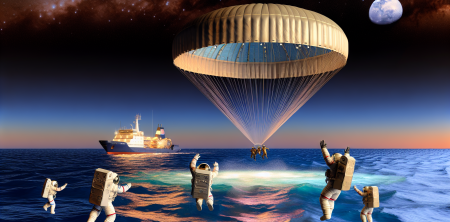
The excitement surrounding NASA's Artemis II mission reached a thrilling climax on April 11, 2026, when the crew successfully splashed down in the Pacific Ocean near San Diego. This momentous event marks the conclusion of a groundbreaking 10-day journey that not only represented humanity's return to lunar exploration but also set new records for space travel.
The Artemis II Crew
The Artemis II mission was manned by a team of four extraordinary astronauts: Commander Reid Wiseman, Pilot Victor Glover, Mission Specialist Christina Koch, and Canadian astronaut Jeremy Hansen. Each member brought their unique expertise and experiences to this historic flight, contributing to its success and the wealth of data gathered during the mission.
A Journey Beyond
Launching on April 1, 2026, aboard the Orion spacecraft, aptly named Integrity, the Artemis II crew embarked on a voyage that pushed the boundaries of human spaceflight. The mission aimed to test the capabilities of the Orion spacecraft, which achieved a remarkable feat by traveling farther from Earth than any human has ever gone, exceeding 252,000 miles and shattering the previous record set by the Apollo 13 mission in 1970.
Innovative Observations
Throughout the mission, the Artemis II crew made several groundbreaking observations, including:
- Viewing the lunar far side in daylight for the very first time, which opened new avenues for scientific research and understanding of the Moon's surface.
- Experiencing a solar eclipse from behind the Moon, providing a unique perspective that will enhance our knowledge of solar phenomena.
- Detecting possible meteorite impact flashes, which could provide critical data for identifying potential landing sites for future lunar missions.
These observations not only informed scientists about the Moon's environment but also laid the groundwork for future exploration efforts as part of NASA's broader Artemis program.
The Significance of Artemis II
The Artemis II mission is a pivotal step in humanity's return to the Moon, as it serves as a precursor to subsequent missions, including Artemis III, which aims to land astronauts on the lunar surface. This mission is particularly significant because it represents the first crewed lunar mission in over 50 years, rekindling the spirit of exploration that characterized the Apollo era.
Moreover, the Artemis program is designed not just to return humans to the Moon, but to establish a sustainable presence there, paving the way for future missions to Mars. The data collected during Artemis II will be instrumental in this endeavor, ensuring that future astronauts can safely explore the lunar surface and beyond.
The Splashdown Event
As the Artemis II crew approached Earth for their splashdown, anticipation filled the air. Scheduled for approximately 10:07 AM AEST, the crew's return was eagerly watched by millions around the globe. The public was invited to witness the historic event live, highlighting the renewed interest in space exploration and the importance of international collaboration in scientific endeavors.
Upon their return, the crew was greeted with cheers and applause from mission control and supporters who had followed their journey closely. The successful splashdown marked not only the end of the mission but also the beginning of a new chapter in space exploration.
The Future of Lunar Exploration
The successful completion of the Artemis II mission is a testament to NASA's commitment to advancing human exploration capabilities. With the data gathered and experiences gained, the agency is now better equipped to plan for future missions that will further explore the Moon and eventually send humans to Mars.
As we look forward, the Artemis program signifies a collaborative effort to push the boundaries of human discovery. With contributions from international partners, including the Canadian Space Agency, the program exemplifies how global cooperation can yield remarkable achievements in space exploration.
Conclusion
The splashdown of the Artemis II crew marks a significant milestone in the annals of space exploration. As humanity stands on the brink of a new era of lunar exploration, the lessons learned from this mission will undoubtedly influence the trajectory of future endeavors in space. With Artemis II concluding successfully, the world eagerly anticipates the next steps in humanity's journey to the Moon and beyond.

