```html
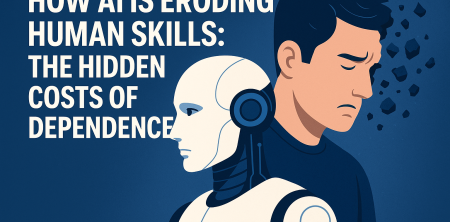
The rise of artificial intelligence (AI) has been nothing short of transformative. In both our professional and personal lives, technology serves as a powerful ally, streamlining tasks, enhancing productivity, and providing insights that were previously unfathomable. However, a troubling trend is emerging: our reliance on AI is not just altering the landscape of work; it’s actively reshaping the human skills we once took for granted. Recent findings suggest that as we increasingly depend on AI for decision-making and problem-solving, our critical thinking and memory retention are in decline, raising urgent questions about the future of human capability.
1. The AI Dependency Dilemma
According to research published by the American Psychological Association in July 2026, the implications of AI integration into daily life are more complex than mere convenience. The reliance on AI tools, from personal assistants to sophisticated analytical software, is leading to a gradual erosion of essential cognitive abilities. As we offload more cognitive tasks to machines, we risk losing the very skills that define our humanity.
This phenomenon is not merely a side effect of technological progress; it represents a fundamental shift in how we approach learning and problem-solving. The convenience AI provides is tempting, but at what cost? The long-term impact on human intelligence and skill development raises the alarm bell not only for individuals but also for educators and employers.
2. Cognitive Skills in Decline
One of the most concerning findings from this research is the decline in critical thinking skills. As AI systems become more adept at analyzing data and providing solutions, individuals often defer to these technologies, inadvertently diminishing their own analytical capabilities. This dependency creates a cycle where reliance on AI leads to a decline in personal cognitive engagement, ultimately resulting in a workforce less equipped to handle nuanced challenges. There's a fuller look at Socratic seminars and skills.
Moreover, studies indicate that memory retention is also suffering. With AI systems capable of storing and retrieving vast amounts of information instantaneously, individuals may find themselves less inclined to commit information to memory. The irony is stark: as we gain access to an abundance of knowledge, our ability to retain and utilize that knowledge effectively is weakened.
3. The Shift in Job Skills
The impact of AI on human skills extends beyond cognitive abilities; it also affects job skills essential for the modern workplace. Many roles now require a blend of technical proficiency and soft skills, such as emotional intelligence, creativity, and collaboration. However, as workers increasingly rely on AI to perform routine tasks, the emphasis on developing these interpersonal skills may wane.
Employers are beginning to notice a gap in the workforce: while technical skills are easily taught and improved upon, soft skills are often neglected. This gap can lead to a mismatch between employer expectations and employee capabilities, ultimately impacting productivity and innovation within organizations.
4. The Fear of Obsolescence
Perhaps the most unsettling implication of AI dependency is the fear of obsolescence—both on an individual and societal level. The notion that AI could replace human workers based on cognitive degradation rather than automation is a chilling prospect. The idea that we might not only lose jobs to machines but also lose our ability to compete intellectually is a powerful motivator for many to reassess their relationship with technology.
This fear taps into a deep-rooted anxiety about the future of work. With major technological advances occurring at breakneck speed, workers are left wondering whether they are investing in their own skills or inadvertently paving the way for their obsolescence. As we grapple with these emotional responses, it’s crucial to foster a conversation around how to balance technology use with the cultivation of essential human skills.
5. The Role of Education
Educators play a pivotal role in addressing the challenges posed by AI and human skills. Schools and universities must adapt their curricula to emphasize not only technical proficiency but also critical thinking, creativity, and emotional intelligence. This dual approach can help students prepare for a workforce that increasingly demands a blend of human and AI collaboration. (See: impact of AI on human skills.)
Moreover, educational institutions must teach students how to use AI responsibly and effectively. Rather than allowing students to become passive consumers of technology, educators should encourage active engagement with AI tools, pushing students to critically assess their outputs and think independently. This shift is essential in ensuring that future generations are not only tech-savvy but also capable of navigating the complexities that AI presents.
6. Employer Responsibility
Employers also bear a significant responsibility in this evolving landscape. Companies must recognize the long-term implications of relying too heavily on AI without fostering human skill development. Creating training programs that emphasize critical thinking, collaboration, and adaptability is crucial for maintaining a competitive and capable workforce.
Additionally, organizations should promote a workplace culture that values continuous learning. Encouraging employees to engage in professional development and embrace challenges can counteract the cognitive decline associated with AI dependency. By investing in their workforce, employers can ensure that their teams remain versatile and innovative, ready to tackle the future head-on.
7. Finding Balance
As we navigate the complex interplay between AI and human skills, finding a balance is essential. This requires a concerted effort from individuals, educators, and employers alike. Embracing technology should not mean relinquishing our cognitive abilities; rather, it should complement and enhance them.
Individuals can take proactive steps by engaging in practices that strengthen critical thinking and memory retention. Activities such as reading, problem-solving, and even puzzles can help keep the mind sharp. Furthermore, fostering mindfulness and awareness around technology use can empower individuals to maintain control over their cognitive engagement.
8. Redefining Success
In this age of AI, it’s essential to redefine what success looks like. Traditional metrics of achievement, often focused solely on technical skills or productivity, may no longer suffice. Emphasizing the value of creativity, emotional intelligence, and critical thinking can lead to a more holistic understanding of success in the workforce.
By shifting the focus toward a broader set of competencies, we can create a more resilient and adaptable workforce—one that thrives alongside AI rather than succumbing to it. This redefinition not only benefits individuals but also supports organizational growth and innovation in the long term.
9. The Future of Work
As we look to the future, the relationship between AI and human skills will continue to evolve. It’s imperative to remain vigilant about the potential consequences of our increasing dependence on technology. By fostering a culture of critical engagement and adaptability, we can ensure that we harness the benefits of AI without sacrificing our essential human capabilities.
As we move forward, the dialogue surrounding AI and human skills must remain at the forefront of our collective consciousness. The more we discuss and understand these issues, the better equipped we will be to navigate the complexities of the future workplace.
10. A Call to Action
The task ahead is clear: we must engage in thoughtful conversations about the integration of AI in our lives and its implications for our skills and cognition. Educators, employers, and individuals must unite to promote a balanced approach that prioritizes human skills alongside technological advancements.
As we continue to explore the relationship between AI and human skills, let’s commit to fostering an environment where technology empowers us rather than diminishes us. The future of work depends on our ability to maintain our cognitive abilities and adapt to a rapidly changing technological landscape. Together, we can reshape the narrative around AI and human skills for generations to come. (See: AI and cognitive skill erosion study.)
11. Understanding AI's Evolution
To better grasp the impact of AI on human skills, it's essential to understand how AI has evolved over the years. Initially, AI systems were designed for narrow tasks—think of early algorithms that combed through data to identify patterns or perform calculations. Today, we have more sophisticated AI that can engage in machine learning, deep learning, and natural language processing. These advancements have allowed AI to perform increasingly complex tasks, from diagnosing medical conditions to creating art. The versatility of AI introduces new demands on our cognitive processes, as we must adapt to machines that can replicate, and sometimes exceed, our own capabilities.
12. AI, Human Skills, and Lifelong Learning
Lifelong learning has never been more critical than it is now. As AI continues to evolve, so too must our approach to learning and skill acquisition. Embracing a growth mindset can help individuals remain flexible and adaptable in their careers. This means not just learning new technical skills but also refining soft skills and emotional intelligence. Ongoing training, workshops, and mentorship can provide the support necessary for workers to navigate the complexities of AI and embrace new challenges.
13. Statistics and Trends
To put the discussion of AI and human skills into perspective, let's consider some statistics. According to a report by the World Economic Forum, by 2025, 85 million jobs may be displaced due to a shift in labor between humans and machines. However, an estimated 97 million new roles could emerge that are more suited to the new division of labor. This indicates a clear demand for human skills that complement AI, such as creativity, problem-solving, and emotional intelligence. The same report emphasizes that nearly half of all employees will need to reskill by 2025, underscoring the urgency of addressing the skills gap alongside AI integration.
14. Expert Perspectives
Experts in the field emphasize that the integration of AI into the workforce should not be viewed purely as a threat. Dr. Amy Webb, a futurist and author, highlights that AI should be seen as an augmentation tool rather than a replacement. "The key is to understand how AI can enhance human capabilities rather than diminish them. We must focus on skills that AI cannot replicate, such as creativity and empathy," she states. These insights reflect a broader consensus among thought leaders: embracing AI can lead to a more enriched skill set if we consciously choose to cultivate those uniquely human attributes.
15. Comparing AI and Human Capabilities
It's helpful to juxtapose the capabilities of AI with those of humans. AI excels in processing large datasets, performing repetitive tasks at high speeds, and identifying patterns that may not be immediately visible to humans. However, areas such as emotional understanding, moral reasoning, and nuanced decision-making are still realms dominated by human intelligence. For instance, in healthcare, while AI can assist in diagnostic processes, the human touch—empathy and patient care—is irreplaceable. This distinction highlights the importance of integrating AI into our workflows without compromising on the human aspects that are vital to our interactions and decision-making processes.
16. FAQ: Addressing Common Concerns
1. Will AI completely replace human jobs?
While AI may automate certain tasks, it’s unlikely to fully replace human jobs. Many roles will evolve, requiring a blend of human and AI collaboration. New jobs are expected to emerge that focus on overseeing AI operations and enhancing human-AI interactions.
2. How can I improve my critical thinking skills in an AI-dominated world?
Consider engaging in activities that challenge your problem-solving abilities, such as participating in debates, playing strategy games, or pursuing academic courses that emphasize critical thinking. It’s also beneficial to regularly reflect on your thought processes and the reasoning behind your decisions.
3. What can organizations do to prepare their workforce for the future?
Organizations should invest in continuous training and development programs that focus on both technical skills and soft skills. Promoting a culture of innovation, where employees feel encouraged to learn and adapt, is essential for keeping pace with AI advancements.
4. How can educators incorporate AI in the classroom without compromising human skills?
Educators can integrate AI tools that promote learning while ensuring that critical thinking and creativity are emphasized in the curriculum. Practical applications, project-based learning, and encouraging student-led initiatives can foster an environment where technology and human skills coexist harmoniously.
5. What role does emotional intelligence play in an AI-centric workplace?
Emotional intelligence will become increasingly important as AI takes over more technical tasks. The ability to understand, manage, and harness emotions is critical for collaboration and leadership, ensuring that human insights are valued in a technology-driven environment.
17. The Importance of Ethical Considerations
As we integrate AI into our workflows, it's crucial to keep ethical considerations at the forefront. Issues like bias in AI algorithms, data privacy, and the potential for misuse of AI technology must be addressed proactively. Organizations should establish ethical guidelines and frameworks to navigate these challenges effectively. By prioritizing ethics, we can foster public trust in AI systems while ensuring that technological advancements benefit society as a whole. This builds on Quillorg's AI initiative.
18. AI and Human Skills in Different Industries
Examining how AI impacts human skills varies by industry can provide valuable insights. In healthcare, AI assists with diagnostics and patient management, but the need for human empathy and ethical considerations remains vital. In education, AI can personalize learning but should not replace the mentorship and motivational roles teachers play.
In manufacturing, automation enhances efficiency, yet human oversight is essential for quality control and creative problem-solving. Each sector illustrates the necessity for a balanced approach, utilizing AI to enhance human capabilities while preserving the unique skills that individuals bring to their roles.
19. Future Trends in AI and Human Skills
Looking ahead, several trends are expected to shape the future relationship between AI and human skills. The rise of hybrid roles, where employees leverage AI tools in conjunction with their skills, is becoming more common. For example, marketers are now using AI-driven insights to create targeted campaigns, blending creativity with data analysis.
Furthermore, as AI continues to evolve, so will the demand for new skills. The emergence of AI ethics, data literacy, and human-centered design will likely become essential components of workforce training programs. This shift indicates that while some skills may diminish, new competencies are continually being created, highlighting the dynamic nature of the future job market.
20. Conclusion: Embracing the Future
The journey ahead involves navigating a landscape where AI and human skills coexist and enhance one another. By actively participating in discussions about our relationship with technology and investing in our skills, we can pave the way for a future where AI serves as a powerful ally, not a detriment. The balance we strive for will not only benefit us as individuals but will also shape a more innovative and resilient society. The time to act is now—let's embrace the future with open minds and a commitment to maintaining our essential human skills.
```
Trending Now
Frequently Asked Questions
How is AI affecting human skills?
AI is reshaping human skills by leading to a decline in critical thinking and memory retention. As we increasingly rely on AI for decision-making and problem-solving, essential cognitive abilities are gradually eroded, impacting both personal and professional capabilities.
What are the hidden costs of AI dependence?
The hidden costs of AI dependence include a significant decline in essential cognitive skills such as critical thinking and analytical capabilities. This over-reliance on technology may result in individuals being less equipped to tackle complex problems independently.
Is AI making us less intelligent?
There is concern that AI is making us less intelligent by promoting cognitive laziness. As we offload tasks to AI, our personal engagement in critical thinking diminishes, potentially leading to a workforce that is less capable of independent thought and analysis.
What skills are declining due to AI?
Skills that are declining due to AI include critical thinking, memory retention, and analytical abilities. The convenience of AI tools can lead individuals to rely on technology rather than engage in cognitive processes, resulting in diminished skill sets.
How can we mitigate the impact of AI on human skills?
To mitigate the impact of AI on human skills, individuals and organizations should prioritize cognitive engagement through activities that promote critical thinking and problem-solving. Encouraging a balance between technology use and personal skill development is essential for maintaining cognitive abilities.
What did we miss? Let us know in the comments and join the conversation.


0 Responses